
A case study on machining a 6061-T6 black anodized humanoid robot thigh bracket with arc support surfaces, long base, end mounting blocks and hole-group control.
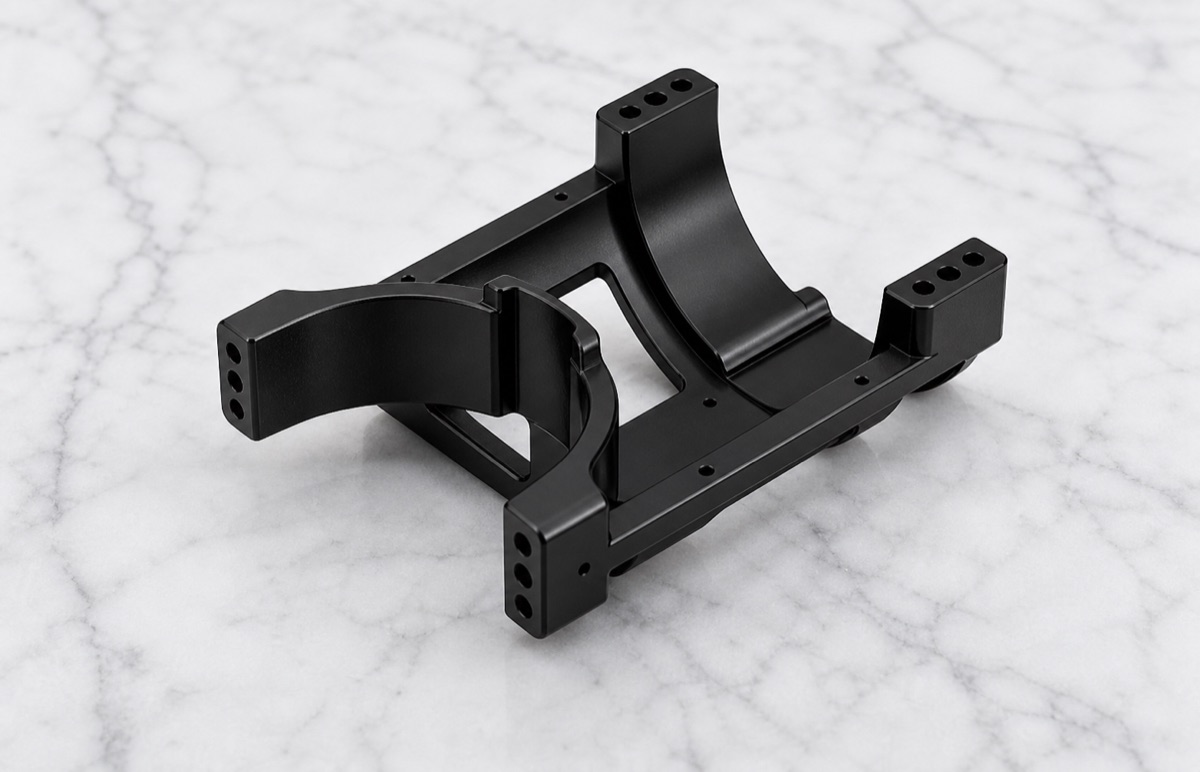
A humanoid robot thigh bracket is a support component, but it should not be treated as an ordinary bracket. Its arc support surface, long base, end mounting blocks and multiple threaded hole groups must work together so the lower-limb actuator or adjacent cylindrical housing can seat and fasten consistently.
This case covers a 6061-T6 aluminum thigh bracket with black anodizing. The structure includes a large semi-circular support surface, a long base, end mounting blocks, local windows and M3/M4 threaded holes. OEMach planned the work around the relationship between the arc support and the hole groups.
Project Snapshot
| Item | Project detail |
|---|---|
| Part type | Lower-limb thigh support bracket for humanoid robot structure |
| Material | 6061-T6 aluminum |
| Structure | Large arc support, long base, end mounting blocks, local window features, ribs and M3/M4 hole groups |
| Finish | Black anodizing, with pre-finish deburring and post-finish inspection |
| Process focus | Arc support profile, base flatness, end-block hole groups, thin ribs, window edges and anodizing preparation |
| Inspection focus | Arc profile, hole-group position, threaded go/no-go, side perpendicularity, window edges, black appearance and particle-free holes |
Why the Arc Support Surface Matters
The arc support surface defines how a neighboring cylindrical part, joint shell or actuator housing contacts the bracket. If the arc profile is unstable, the assembly may still start, but the contact load can concentrate locally and the hole groups may lock unevenly.
The end mounting blocks provide the fastening reference. Through holes and threaded holes must keep their pitch, chamfers, perpendicularity and thread quality stable. For a black anodized part, hole-edge burrs and clamping marks can also affect the customer's first inspection impression.
The long base ties the entire structure together. If roughing removes material without enough support, the base, arc and hole groups may shift relative to each other even when individual features look acceptable.
Machining Challenges
The first challenge is the large arc. Toolpath blend marks, local chatter and uneven roughness can become more visible after black anodizing. The arc should therefore be finished with a stable tool strategy and reviewed before surface treatment.
The second challenge is the long base with windows and thin ribs. Local support must be planned so roughing does not introduce deformation that later affects the arc-to-hole relationship.
The third challenge is hole-group control. End blocks include concentrated through holes and threaded holes, so bore size, thread go/no-go, chamfer, spacing and side-wall perpendicularity need to be checked together.
OEMach Manufacturing Solution
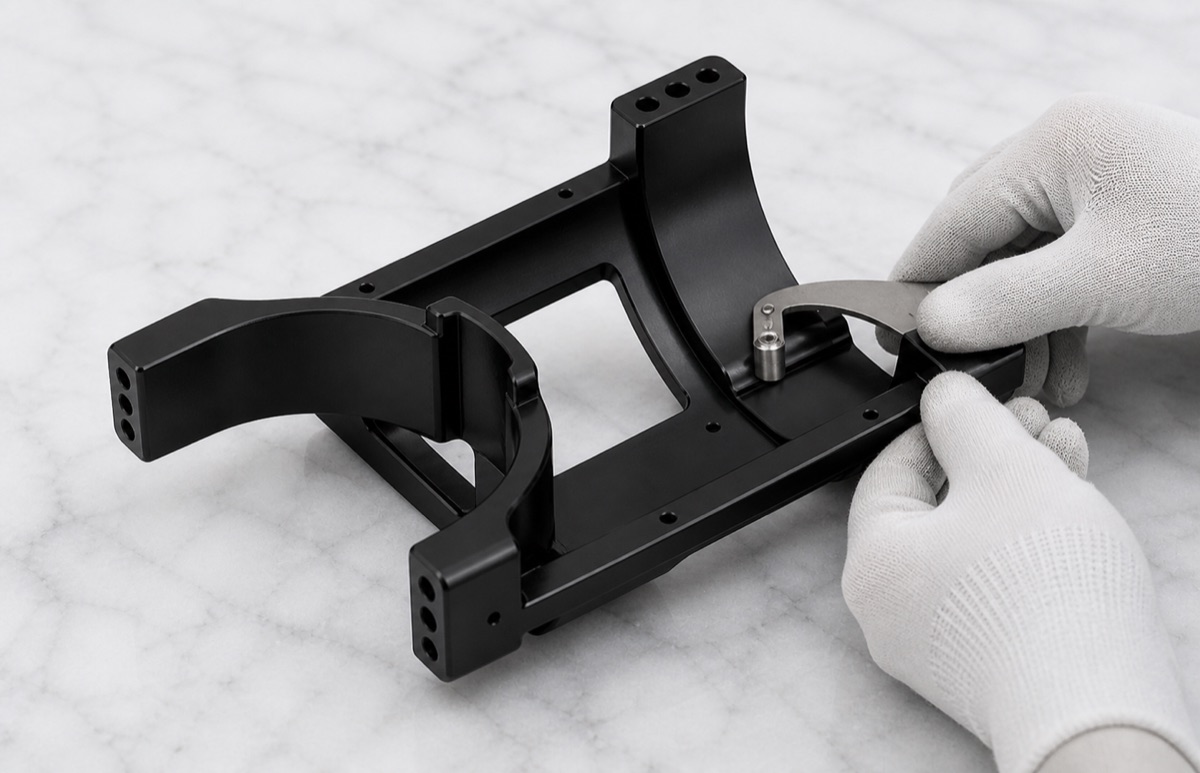
OEMach placed the arc support surface, long base and end mounting blocks into one datum plan. Rough machining removed most stock while leaving finishing allowance on the critical support surface and hole groups, so later operations would not disturb completed features.
During finishing, the arc surface and the end-block hole groups were controlled as one relationship. For windows and thin ribs, toolpath direction and cutting load were managed to reduce visible chatter and edge damage.
Before black anodizing, all-around deburring and cleaning were completed. After anodizing, OEMach rechecked hole mouths, the arc surface, mounting blocks and visible faces to confirm that both appearance and assembly readiness were acceptable.
Inspection and Delivery Control
First-article inspection should cover the arc support profile, long-base plane, end hole-group position, M3/M4 thread go/no-go, window edges, side perpendicularity and black anodized appearance. The relationship between the arc and hole groups is the key to repeatable assembly.
During process inspection, tool wear should be monitored because it can change hole size, thread quality and the arc finish. Post-anodizing inspection is important because film buildup, cleaning residue and handling marks can affect hole-mouth condition.
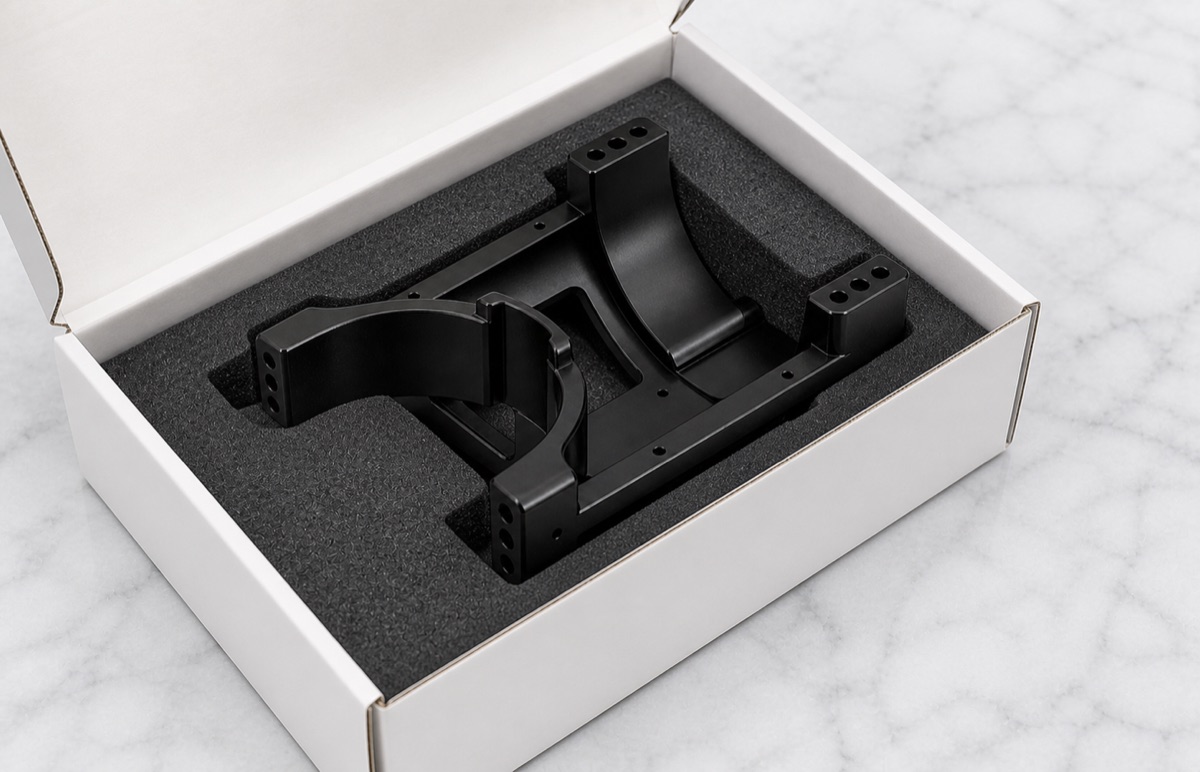
For delivery, the bracket should be isolated in thick form-fit foam. The arc support surface and end hole mouths deserve special protection because cosmetic scratches or edge damage after anodizing are much harder to recover than preventing contact during shipment.
FAQ
Why is the arc support surface critical?
It controls contact with the adjacent cylindrical part or joint housing. Arc error can transfer into uneven fastening load and poor assembly repeatability.
Does black anodizing hide machining marks?
No. Black anodizing can make burrs, scratches and local chatter more visible, so pre-finish deburring and appearance review are important.
What should be inspected at prototype stage?
At minimum, arc profile, hole groups, M3/M4 threads, side perpendicularity, window edges and black surface condition should be reviewed.
Why use form-fit foam packaging?
The foam limits movement and protects the arc support, hole mouths and black visible faces from rubbing or impact during transport.
Ready to get a quote for your CNC machined parts?
Submit your engineering drawings to qiancj@oemach.com. We support prototype sampling and small-batch production with strict tolerance control.