
In a humanoid robot waist structure, a long link arm often carries load transfer, positioning and lightweight connection functions. It may look like a simple frame, but the machining difficulty is significant: the two circular end bores define the assembly axis, the central lightening pocket defines weight and stiffness, and the thin frame directly tests fixturing and deformation control.
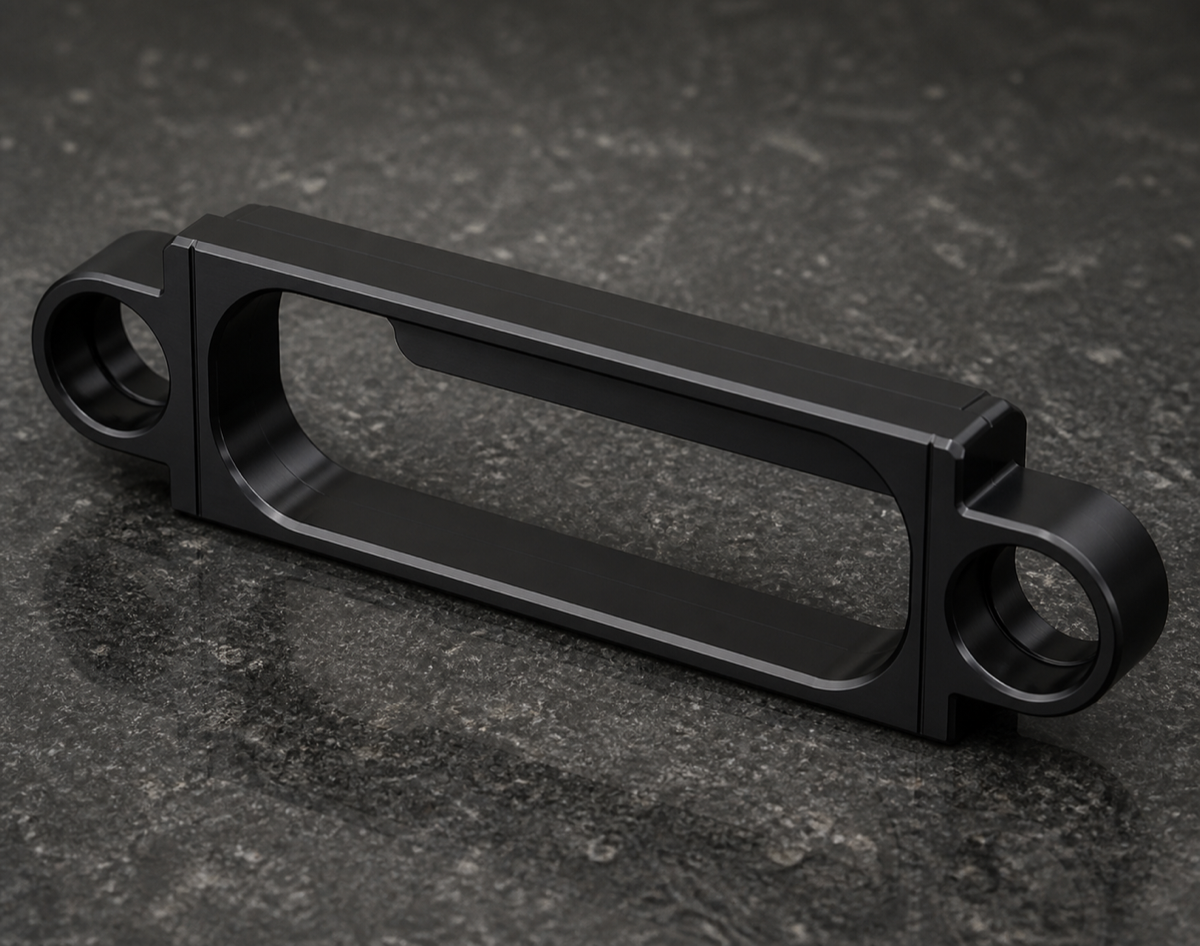
This case study shares a 6061-T6 aluminum waist link arm with black anodizing. The part has a long rectangular lightweight frame, two circular end ears, precision end bores, a large central pocket, thin walls, steps and chamfered edges. OEMach focused on end-bore coaxial relationship, long-frame deformation, pocket-edge quality and finished-state assembly stability.
Project Snapshot
| Item | Project detail |
|---|---|
| Part type | Humanoid robot lightweight waist link arm |
| Material | 6061-T6 aluminum |
| Surface finish | Black anodizing |
| Structure | Long open frame, two circular end ears, precision end bores, central lightening pocket and chamfers |
| Process focus | End bore coaxiality, low-deformation machining, pocket edge quality and datum control |
| Inspection focus | End bore size, bore relationship, frame straightness, burrs, appearance and packaging protection |
Part Function and Industry Context
A humanoid robot waist joint needs rotation, support and posture control in a limited space. Long link arms often sit in the load path, and the relationship between the two end bores and the frame stiffness affects joint smoothness and assembly stress.
If the end bores shift, the axis can become eccentric. If the long frame bends, assembly clearance may change. If the lightening pocket has burrs or impact marks, cleanliness and assembly feel can be affected. Lightweight design cannot come at the cost of stability.
Machining Challenges
The first challenge is keeping the two end bores aligned. Diameter, roundness, entrance chamfer and relative position all matter. Checking only one bore diameter does not fully prove that the link arm is ready for assembly.
The second challenge is deformation of the long frame. The central pocket removes a large amount of material, leaving relatively thin walls. After roughing, residual stress can create slight bending or twisting if the process sequence and support strategy are not planned.
The third challenge is burr control inside the lightening pocket. Internal corners and long pocket edges can leave small rollover burrs when tool clearance, chamfering and manual review are not coordinated.
The fourth challenge is the finished state after black anodizing. Bore entrances, mounting faces and exterior edges may change in feel or appearance after treatment, so the final delivery condition must be checked, not only the CNC-off-machine state.
OEMach Manufacturing Solution
OEMach first confirmed the relationship between the two end bores, the central pocket, outside frame datum and mounting faces. The process established a stable clamping basis, then separated roughing and finishing to avoid excessive one-time material removal.
For the end bores, OEMach aimed to finish both ends under a consistent datum strategy and controlled diameter, roundness, chamfer and position relationship. For the pocket and thin-wall frame, allowance control, balanced machining and deburring review were used to reduce deformation and edge defects.
Before black anodizing, OEMach checked inside pocket edges, bore mouths, outside chamfers, step transitions and handling marks. After treatment, the team reviewed bore passability, hole-mouth condition, surface color and packaging protection.
Inspection, Packaging and Result
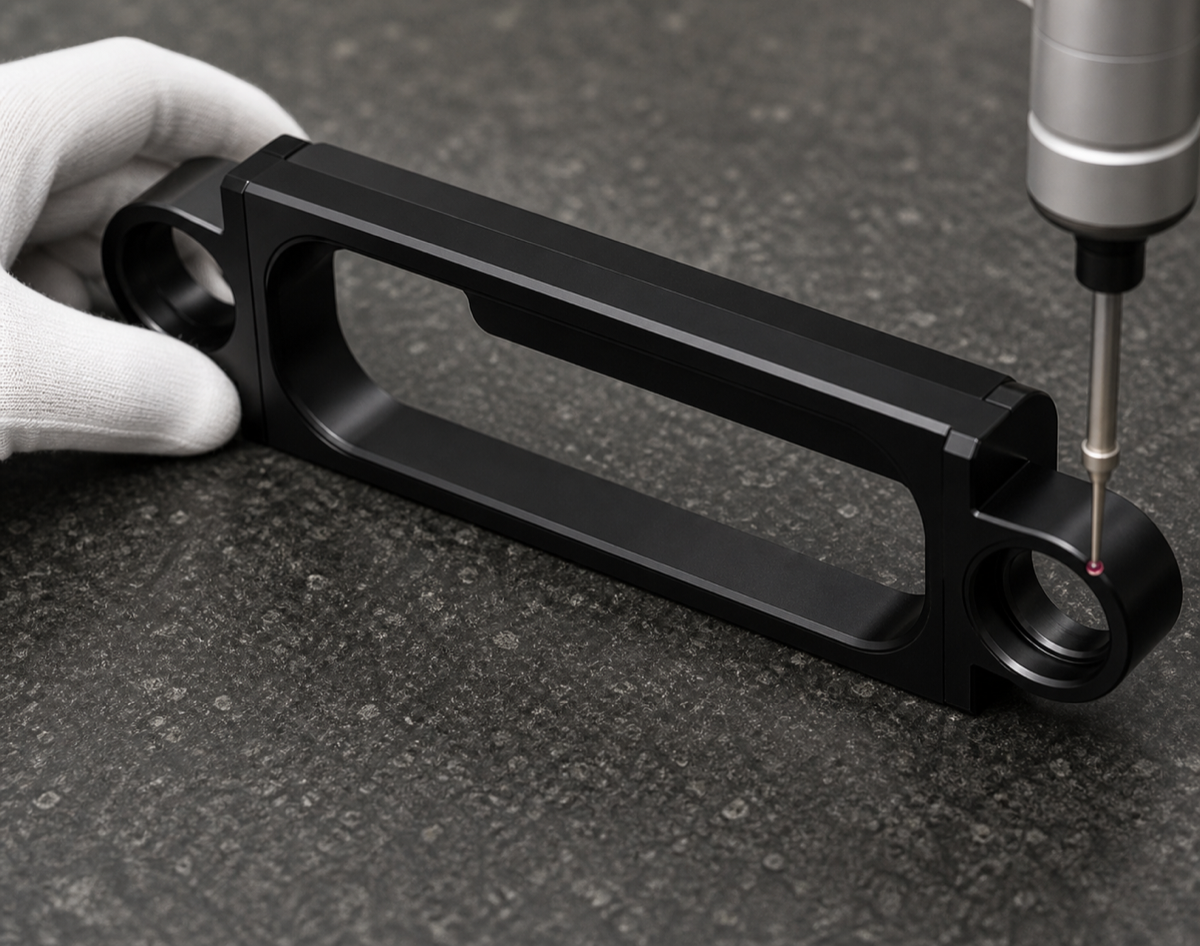
Inspection for a waist link arm includes end bore diameter, bore-to-bore relationship, coaxiality, frame straightness, pocket-edge burrs, outside dimensions, black anodized appearance and hole-mouth condition. When needed, CMM can check how both end bores relate to the outer frame datum.
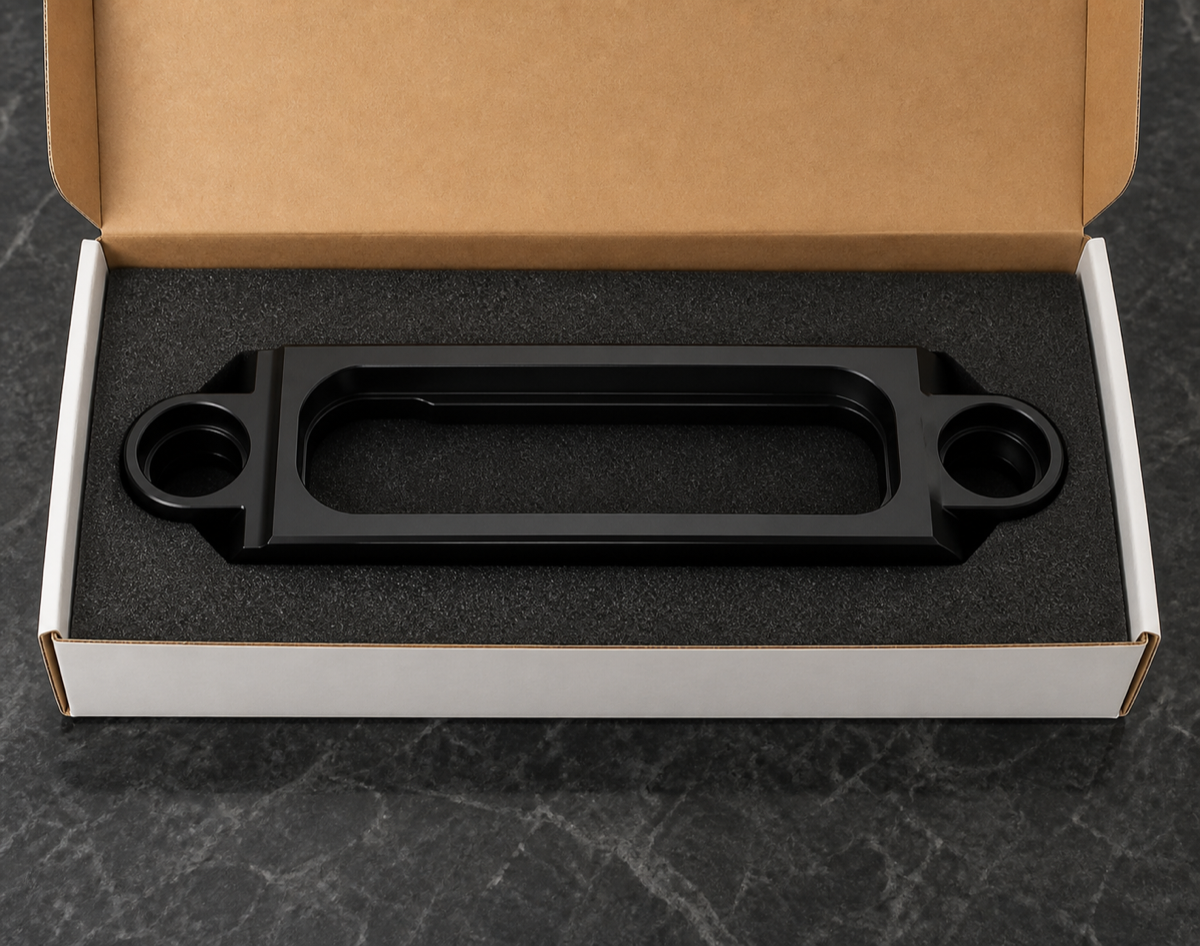
Long black anodized parts should not be shipped loose. The end bores and visible faces are vulnerable to rubbing, impact and edge damage. OEMach used custom foam to support the two end ears and central frame so the component remains fixed during transport.
This case shows that lightweight link arm machining is about stability. The larger the central pocket, the more important frame stiffness becomes; the more important the end bores are, the more carefully datum and bore relationship must be controlled.
FAQ
Why is end bore coaxiality important on a waist link arm?
The end bores often work with shafts, pins or neighboring connectors. Poor alignment can create eccentric assembly, rough movement or local stress.
What risks come from a large central lightening pocket?
Large material removal reduces local stiffness, can create deformation and can leave burrs on internal corners and long edges if not reviewed carefully.
Why use individual foam packaging for black anodized link arms?
Black anodized surfaces show scratches and impacts easily. Foam positioning protects end bores, the outer frame and cosmetic faces during transport.
Ready to get a quote for your CNC machined parts?
Submit your engineering drawings to qiancj@oemach.com. We support prototype sampling and small-batch production with strict tolerance control.