
The proximal phalanx is shaped like an elongated skeleton, but both ends are equipped with rotation, positioning and micro-fastening features. For this type of part, we don’t start from a single mating hole, but first connect the entire functional chain with a length of 45 mm.
Project Overview
| Project | Project Description |
|---|---|
| Industry scenario | Humanoid robot and dexterous hand/finger proximal segment main load-bearing joint parts |
| Material and condition | 7075 aluminum alloy; natural finishing state, focusing on controlling the total length of 45±0.02 mm, the joint positions at both ends, the cooperation of g6 and JS7, the micro hole system and the longitudinal deformation |
| Article positioning | Engineer case sharing: function, process, testing, delivery and packaging delivery |
The functions performed by the joints at both ends are not the same
The parts are made of 7075 aluminum alloy. The upper and lower ends are joint seats of different diameters, with a long shallow groove, local bosses and multiple sets of M2 and M1.6 micro holes in the middle.
OEMach includes the main joint position, opposite end matching position and middle mounting surface in the same datum chain, and does not use local outer contours for separate alignment.
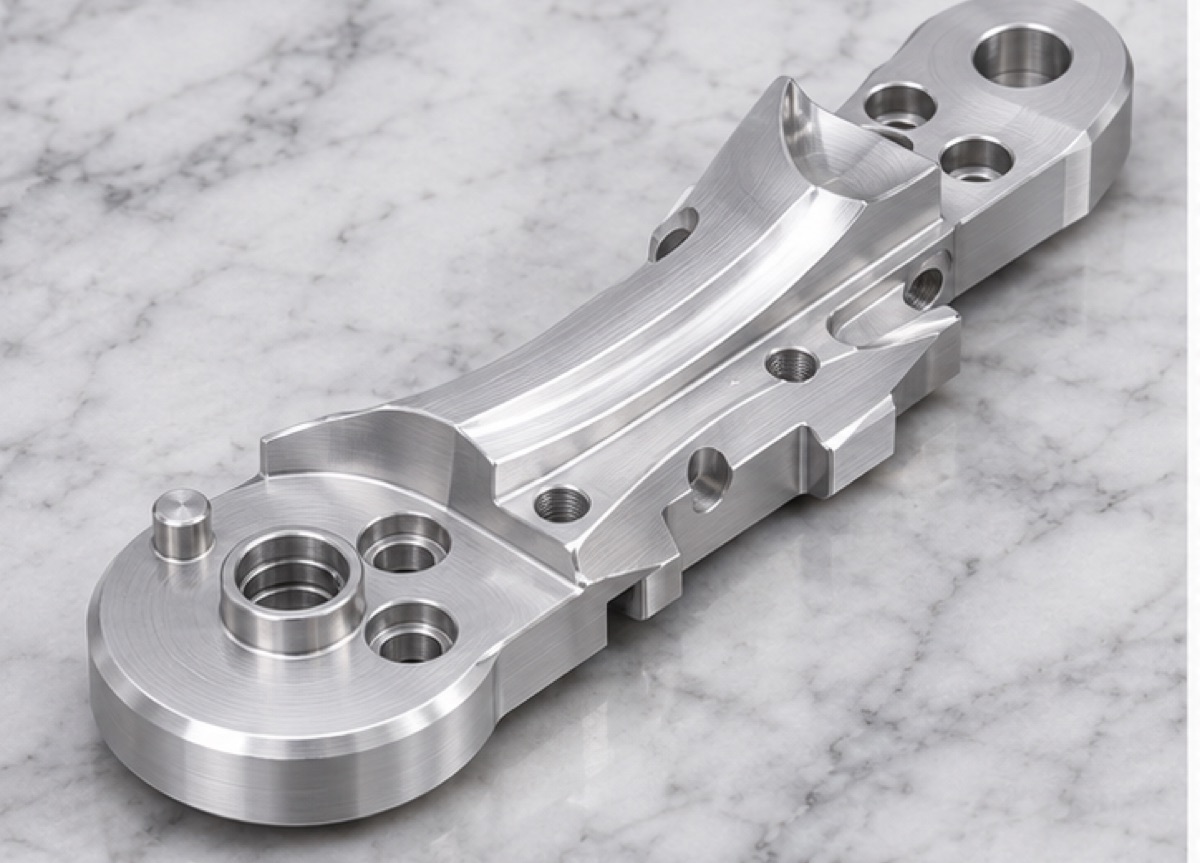
7075 Overall contour, functional benchmarks and micro-hole locations of the proximal phalanx of the dexterous hand.
The left and right sides of the slender frame are unevenly removed
The long grooves, curved surfaces and local steps in the middle make the material distribution asymmetrical. If the parts are continuously re-cut from one side, slight bowing may occur after the parts are loosened.
The tolerance levels of the mating features at both ends are different, and dimensional changes caused by clamping force and cutting heat must be evaluated separately.
Balanced removal of materials along length direction
During rough machining, a stable support is first established, and the material is removed from the circular bosses at both ends, the middle groove and the contour area, leaving a uniform margin at the matching position.
After loosening the clamp and letting it rest, return to the main installation surface, and complete the matching of g6 and JS7 and the end faces at both ends. The small threads and auxiliary holes are placed after the main features are stabilized.
Test across the entire length of the phalanx
The first piece is constructed based on the main joint axis and end face, and the other end's mating position, 45mm total length, middle hole system and local height are evaluated.
Use the inner diameter measuring tool or special plug to check the matching holes, check the threads one by one, and check for burrs at the bottom of the long groove and cross holes under magnification.
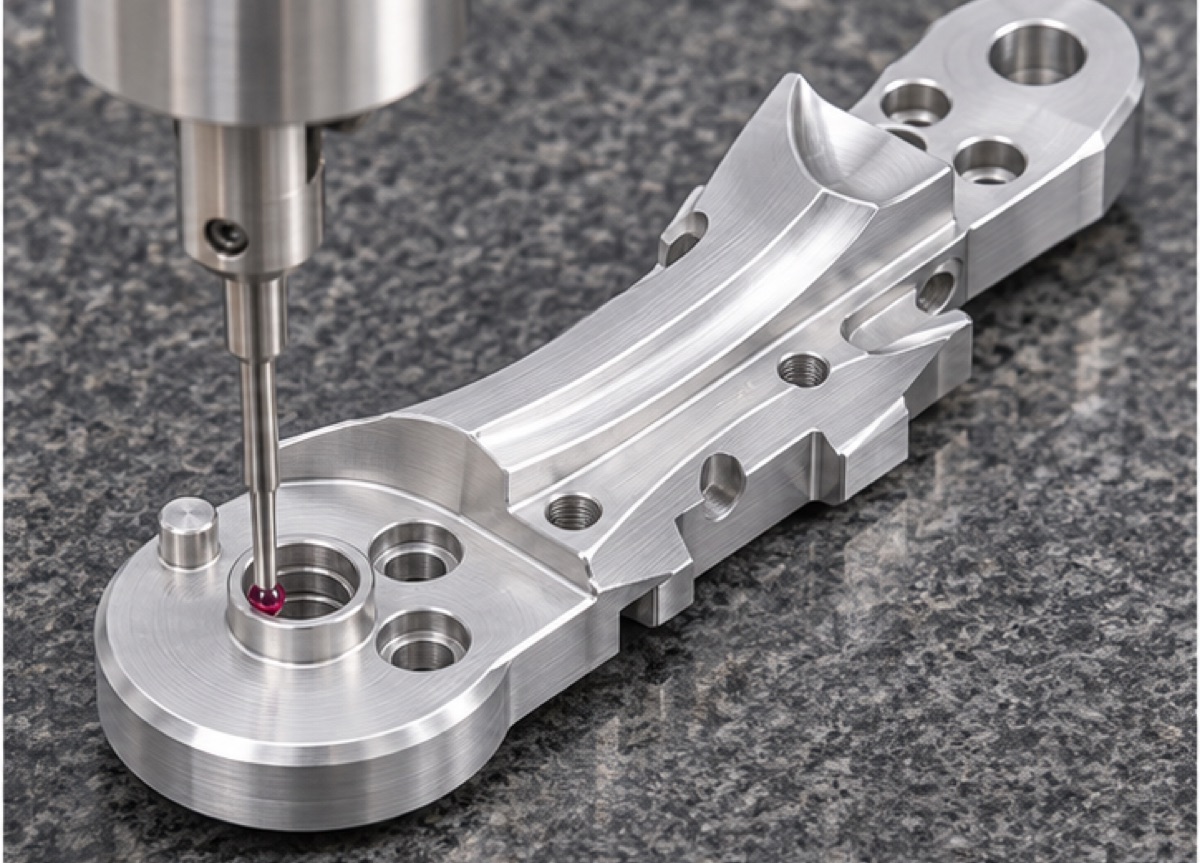
A review was conducted focusing on the fitting position, hole system and free state of the proximal phalanx of the 7075 dexterous hand.
Too many small holes do not make cleaning the last resort.
Fine chips tend to stay in the bottom of the groove, stepped holes and small threads. Clean them in a directional manner before each turning to prevent hard chips from being pressed into the positioning surface.
The natural 7075 mating surface maintains a uniform tool marks, and there is no need for heavy polishing to modify the orifice. The dimensions must be reviewed after manual machining.
The sample cycle should leave time for retesting of longitudinal deformation.
For this type of 7075 proximal phalanx, samples are usually evaluated in 6 to 9 working days, and small batches are planned in 9 to 14 working days.
OEMach fixes the clamping force and inspection coordinates in the first part stage, and then adjusts the small batch compensation based on the free-state recheck data.
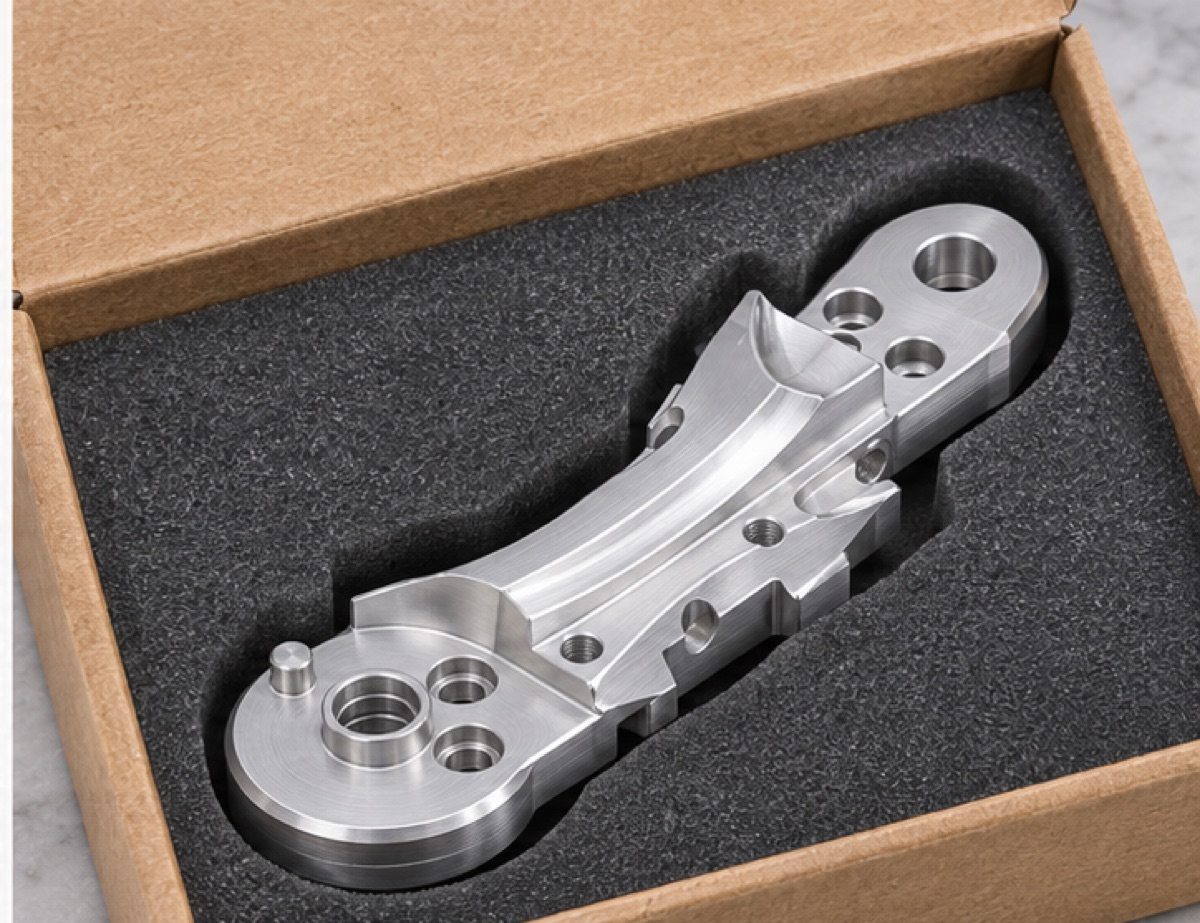
7075 Single-piece positioning protection for the proximal phalanx of the dexterous hand to avoid damage to small holes, thin walls and mating surfaces.
Case Summary
The core of the proximal phalanx is that the two ends of the joint maintain the correct distance and direction in a free state and can be pulled back to the target position without relying on assembly force. The packaging uses thick joint seats at both ends as supporting points, and the long groove and small boss in the middle are suspended to avoid bending forces during transportation.
Ready to get a quote for your CNC machined parts?
Submit your engineering drawings to qiancj@oemach.com. We support prototype sampling and small-batch production with strict tolerance control.