
DFM does not have a fixed savings ratio that applies to all parts. It changes the cost structure of a specific project by reducing unnecessary material, setups, long tool extensions, tight tolerances, unmeasurable features and the risk of rework.
The amount of savings can only be verified by comparing the blanks, processes, machine hours, tooling, testing and outsourcing lists of the original plan and the DFM plan one by one. The specific process still needs to be combined with blank size, material utilization, tool accessibility, fillet wall thickness, clamping times, standard tools, inspection methods, outsourcing and change risk confirmation.
Typical problems, causes, controls and evidence
| Problem | Likely cause | Control action | Acceptance evidence |
|---|---|---|---|
| The material cost is high and most of them turn into chips. | The blank specifications do not match the shape or the structure does not allow for near-net blanks | Compare the total cost of board stock, sawn imposition, and near-net stock | Blank size, material utilization and purchase quotation |
| Seems simple but requires multiple clamping operations | Feature directions are dispersed, the datum is unstable or the tool is inaccessible | Align manufacturable features and unify functional baselines and machining directions | Clamping times, tooling plans and position relationship reports |
| Quotes rise sharply after tolerances tighten | Non-functional dimensions are over-tightened, increasing inspection and rework costs. | Classify tolerances by function and clarify measurement methods | Tolerance list, inspection hours and quotes before and after changes |
First break the quotation into comparable cost items
NIST's design cost study separates material usage, material loss, machine tool rates, setup and machining time, labor and tooling. In small batches, the proportion of fixed costs such as programming, setup and first article is often higher. The DFM assessment should retain the original design quotation baseline, and then record the materials, labor hours and risks affected by each modification, to avoid the irreversible conclusion that "it is cheaper after optimization".
Blank and shape determine material loss
If parts are hollowed out from too thick plates or too large square materials, a large amount of material will turn into chips, and the machine time will also increase. DFM can compare standard plate thicknesses, bar stock, sawn panels, extruded profiles or near-net blanks, but also evaluates purchase order quantities, material certifications, deformations and subsequent finishing. Improved material utilization should not come at the expense of higher blank risk or longer procurement cycles.
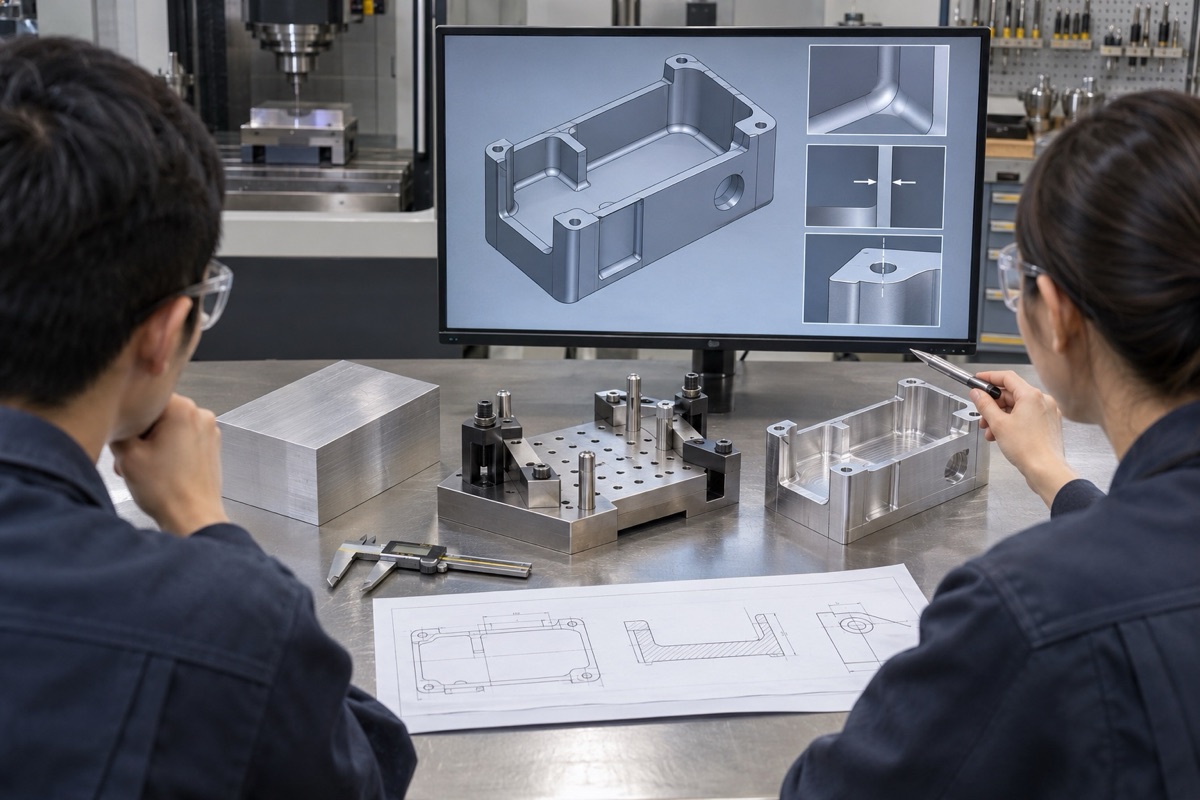
DFM requires linking structural modifications to specific processes, tools, and inspections.
Fillet wall thickness and deep cavities affect tool costs
Too small an internal fillet will force the use of small-diameter tools. Deep cavities and narrow grooves require long extensions, which are prone to vibration, tool breakage and reduced feed. Properly enlarging non-functional fillets, unifying tool radii, and reducing unnecessary aspect ratios can reduce tool changes and slow-speed machining. If the thin wall lacks support, it will also increase the risk of staged processing, loose clamping retesting and scrapping.
The direction of the feature determines the number of clamping and alignment times
Each additional processing direction may increase turning, tooling, alignment and position errors. DFM can allow related holes, surfaces and slots to be arranged around a common datum as much as possible, or add removable process bosses to reduce temporary alignment. The function and assembly boundaries must be confirmed before adjusting the structure, and the load path or interface relationship cannot be destroyed in order to save one clamping.
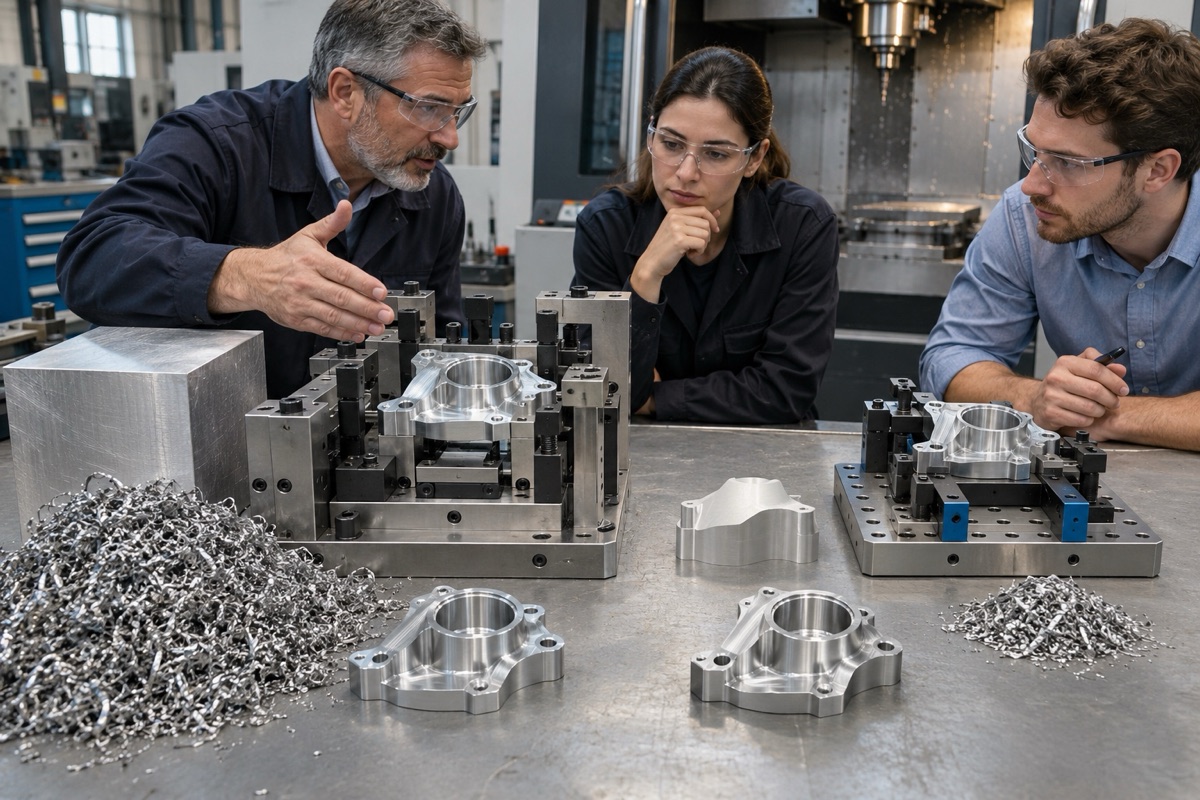
The amount of savings should be calculated item by item from materials, machine hours, tooling and inspection differences.
Tolerances and inspections are also manufacturing costs
Non-functional dimensions are all marked to tight tolerances, which will increase finishing, environmental stabilization, measuring tools, CMM procedures and retesting. Some deep holes, freeform surfaces or closed structures are even difficult to measure reliably. DFM should distinguish between key characteristics and ordinary dimensions, and clarify the measurement standards and methods. Relaxed tolerances must be approved by design and the effects on fit and performance documented.
Quantify with front and back routes without committing to uniform proportions
OEMach (OEMach) will compare the blank weight, clamping times, estimated machine time, special tooling, cutting tools, inspection items, surface treatment and rework risk before and after DFM. Savings are equal to the difference between these items and are subject to volume. When there are no drawings and supply conditions, a uniform percentage is not promised; sometimes the greatest value of DFM is to reduce the delivery risk rather than immediately reducing the unit price.
Summary
The amount of savings can only be verified by comparing the blanks, processes, machine hours, tooling, testing and outsourcing lists of the original plan and the DFM plan one by one. The specific process still needs to be combined with blank size, material utilization, tool accessibility, fillet wall thickness, clamping times, standard tools, inspection methods, outsourcing and change risk confirmation.
FAQ
Will DFM definitely change the appearance of the product?
Not necessarily. Many suggestions focus on fillets, datums, process bosses, non-critical tolerances and inspection accessibility. Functional and appearance boundaries need to be confirmed by the design.
Why DFM is more important when quantities are small
Small batches make it difficult to dilute programming, tooling and first-piece costs, and one rework will also significantly affect delivery time and unit price.
How to prove that DFM saves costs
Keep the process routes and quotations before and after modification, and compare materials, clamping, machine time, tools, inspection, outsourcing and risks item by item.
Ready to get a quote for your CNC machined parts?
Submit your engineering drawings to qiancj@oemach.com. We support prototype sampling and small-batch production with strict tolerance control.