
"Post-factory" is not a government-certified title, but the functional definition of an external flexible manufacturing partner in this article: undertaking DFM, rapid prototypes, small batch reproduction, changes and quality data, so that the R&D team does not have to build complete processing capabilities prematurely.
Huangdai's advanced manufacturing direction and local collaborative conditions provide the foundation, but geographical location cannot replace process audits; the real value depends on response, replication and evidence chain. The specific process still needs to be combined with industry direction, supplier process capabilities, geographical response, material outsourcing, testing resources, change management and delivery evidence confirmation.
Typical problems, causes, controls and evidence
| Problem | Likely cause | Control action | Acceptance evidence |
|---|---|---|---|
| The distance is close but the engineering response is still slow | There is no fixed window, version rules and problem upgrade time limit | Establish a single interface, version signing and exception upgrade mechanism | Review minutes, signing time and problem closure records |
| Well-equipped but the first piece is repeatedly reworked | Supplier has not completed DFM and inspection planning around functional baselines | Validate datums, tooling, tools and measurement plans with representative drawings | DFM Checklist, Routing and First Article Report |
| Outsourcing of local supporting equipment is still out of control | Heat treatment, surface treatment or inspection outsourced opacity | Confirm outsourcing list, technical agreement, batch traceability and incoming factory re-inspection | Outsourcing certificate, transfer record and final release |
First, let’s explain the basis for disclosure of Huangdai’s industrial environment.
Public information released by the Xiangcheng District Government in 2023 positioned Huangdai Jinlong Area as a high-end intelligent manufacturing area dominated by biomedicine, advanced materials, optoelectronic information and intelligent equipment. In 2024, the Suzhou (Huangdai) Construction Robot Industrial Park will be unveiled, targeting the intelligent manufacturing of complete machines and core components. In 2026, Xiangcheng District’s industrial land information will continue to focus on intelligent robots, auto parts and high-end equipment. This information illustrates regional manufacturing directions, but it cannot be deduced that every processing company has precision capabilities.
What the R&D side needs is pluggable manufacturing capabilities
The needs of start-up teams and R&D departments usually include multiple varieties, small quantities, and rapid version changes. The investment in self-built equipment, measurement and special process chains is high, and the use of external "post-factory" can call on programming, processing, testing and outsourcing resources on a project-by-project basis. Partners need to understand the goals of this round of verification and be able to deliver drawing benchmarks, process routes and quality evidence together, rather than just completing cutting.
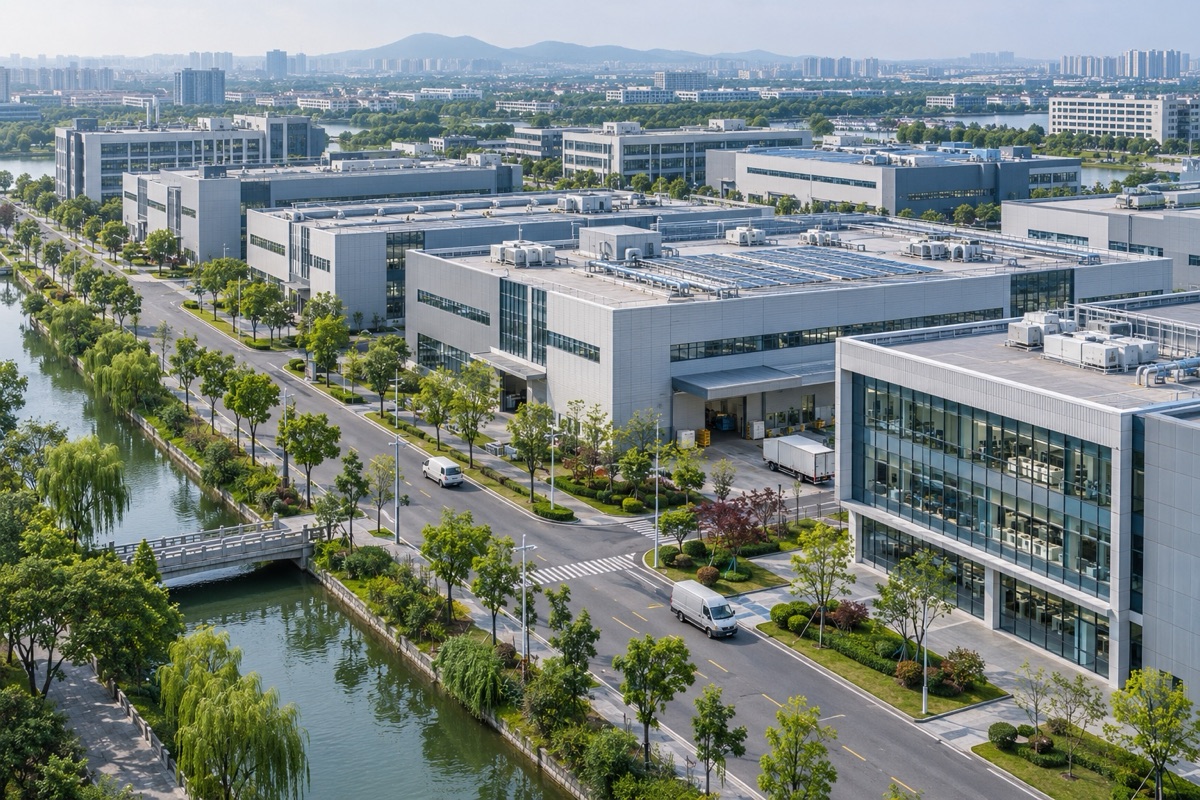
The regional industrial base provides resource conditions for R&D, proofing and small-batch collaboration.
The local distance is shortened by the feedback chain
R&D personnel, design engineers and processing engineers are close to each other, which is conducive to quickly reviewing physical objects, confirming burrs and appearance, handling trial assembly issues and iterating drawings. Urgent items can also reduce cross-regional logistics waiting. However, the distance is only effective when both parties use a unified version, a fixed window, and a clear approval time limit; if changes still rely on scattered chat files, the distance will also cause rework.
Industrial supporting facilities should be based on transparency rather than slogans
Small batches of parts may involve material sawing, heat treating, grinding, anodizing, cleaning and CMM inspection. Suppliers should explain which capabilities are in-house and which are outsourced, as well as outsourced technical agreements, batch traceability and in-factory re-inspection. The R&D team should not only rely on "local one-stop" to judge risks, but should confirm who is responsible for each key process and how to release it.
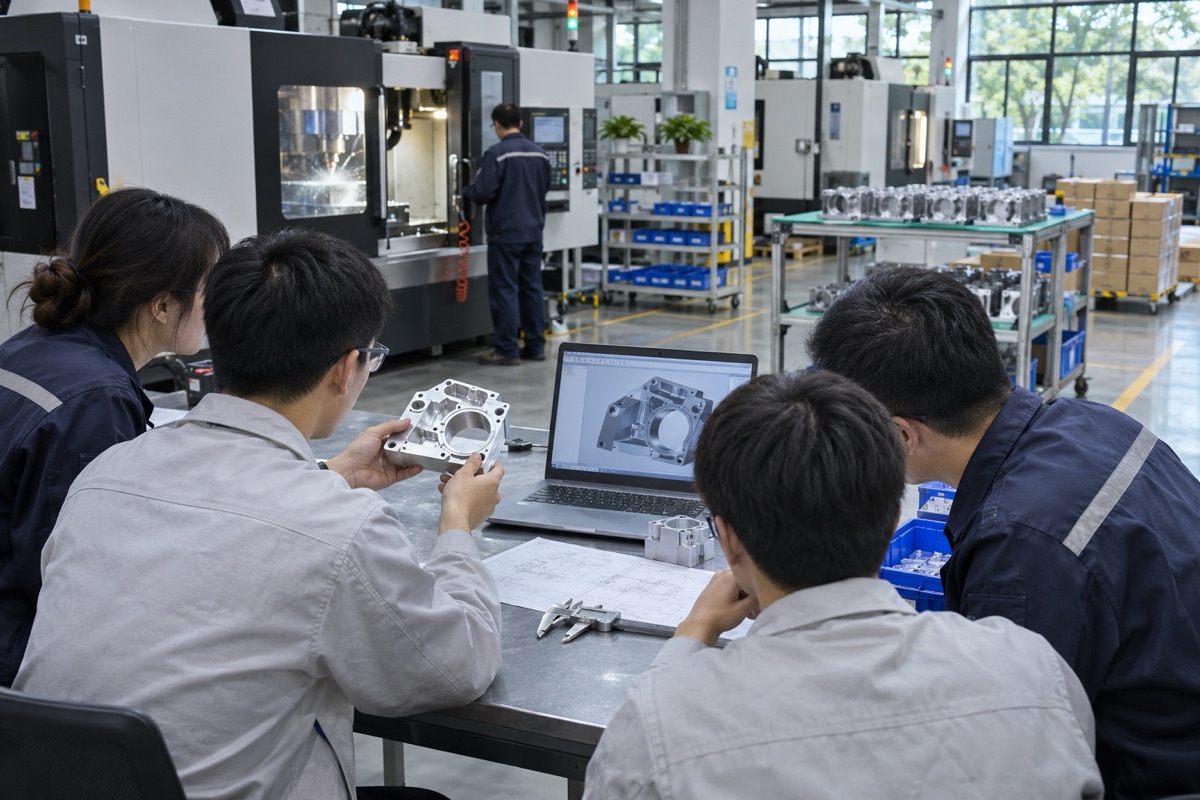
The core of "post-factory" is process collaboration, version control and quality evidence.
Verify process capability with representative drawings
When screening partners, you can choose a real part that contains thin walls, deep cavities, hole systems, or surface treatments, and ask the other party to explain the datum, clamping, tooling, deformation, and inspection. After the first piece, check the size report, exception record and version signature, and then arrange for small batch reproduction. The equipment list can only illustrate the resources, and the quality and response of two consecutive batches are closer to the real cooperation capabilities.
The Boundaries of OEMach’s Role in the ‘Post-Factory’
OEMach (OEMach) is located in the Suzhou manufacturing collaborative environment and can provide project services around drawing review, sample processing, small batch delivery and testing data. Public articles do not use government industrial plans to endorse corporate capabilities, nor do they fabricate the number, delivery dates, or yield rates of regional companies. Specific projects still need to be evaluated based on materials, structure, quantity, tolerances and outsourcing conditions.
Summary
Huangdai's advanced manufacturing direction and local collaborative conditions provide the foundation, but geographical location cannot replace process audits; the real value depends on response, replication and evidence chain. The specific process still needs to be combined with industry direction, supplier process capabilities, geographical response, material outsourcing, testing resources, change management and delivery evidence confirmation.
FAQ
Is "Post Factory" the official name of the park?
No. This article uses it to describe external flexible manufacturing partners that serve the R&D side. Official public information uses expressions such as high-end intelligent manufacturing areas and related industrial parks.
Is distance the most important thing when choosing a Huangdai processing plant?
Distance helps communication and logistics, but baseline understanding, tooling, testing, change and exception closed loops are more important.
Can local suppliers ensure that all processes are carried out in the factory?
Cannot be preset. Clarify responsibilities for outsourced projects, supplier management and final release upon request.
Ready to get a quote for your CNC machined parts?
Submit your engineering drawings to qiancj@oemach.com. We support prototype sampling and small-batch production with strict tolerance control.