
The sample cup holder is not just a set of cup holes machined. The container fit, installation interface, materials and cleaning requirements will all affect the operation of the equipment. OEMach can participate in data confirmation before non-standard CNC prototyping, helping the project party clarify key dimensions and delivery requirements in advance.
The sample cup holder often looks like a plate with multiple round holes or cup positions, but it connects the sample container, movement mechanism, sensing or needle position, and the cleaning and maintenance space inside the equipment. If you only confirm that "the hole can fit in" before processing, it is easy to ignore the relationship between the cup mouth height, hole pitch, positioning features, cleaning space and installation interface.
When in vitro diagnostic equipment is still being prototyped or revised, the sample cup holder often faces changes in material selection, appearance, cleaning methods and fit dimensions at the same time. The most effective way is not to make a prototype first and then rely on on-site repairs, but to confirm the information directly related to the function in layers before quoting.
Design inputs, machining controls and delivery impact
| Confirm direction | need clear information | Implications in processing and delivery |
|---|---|---|
| Material | Grade, surface condition, whether in contact with specific media | Determine processing methods and subsequent processing boundaries |
| Cup positioning | Container outer diameter, height, positioning method, clearance | Avoid cup jamming, shaking or interference with picking and placing |
| Installation interface | Bottom datum, hole position, transmission or positioning relationship | Guaranteed duplicate location after installation on device |
| Cleaning and packaging | Cleaning methods, protected areas, packaging requirements | Reduce the risk of contamination during turnaround and pre-assembly |
The hole in the sample cup holder is not an ordinary through hole
The diameter, depth, entrance chamfer and bottom space of the cup hole determine whether the container can be put in, taken out and positioned repeatedly. If the equipment has rotation, push or automatic sampling actions, the pitch and relative center relationship between the holes will also affect the movement path of the manipulator or needle.
Therefore, in addition to the aperture itself, the container shape, assembly direction, whether there is a sealing ring or support ring, the action range of the pick-and-place mechanism, and which positions are critical functional dimensions should also be stated.
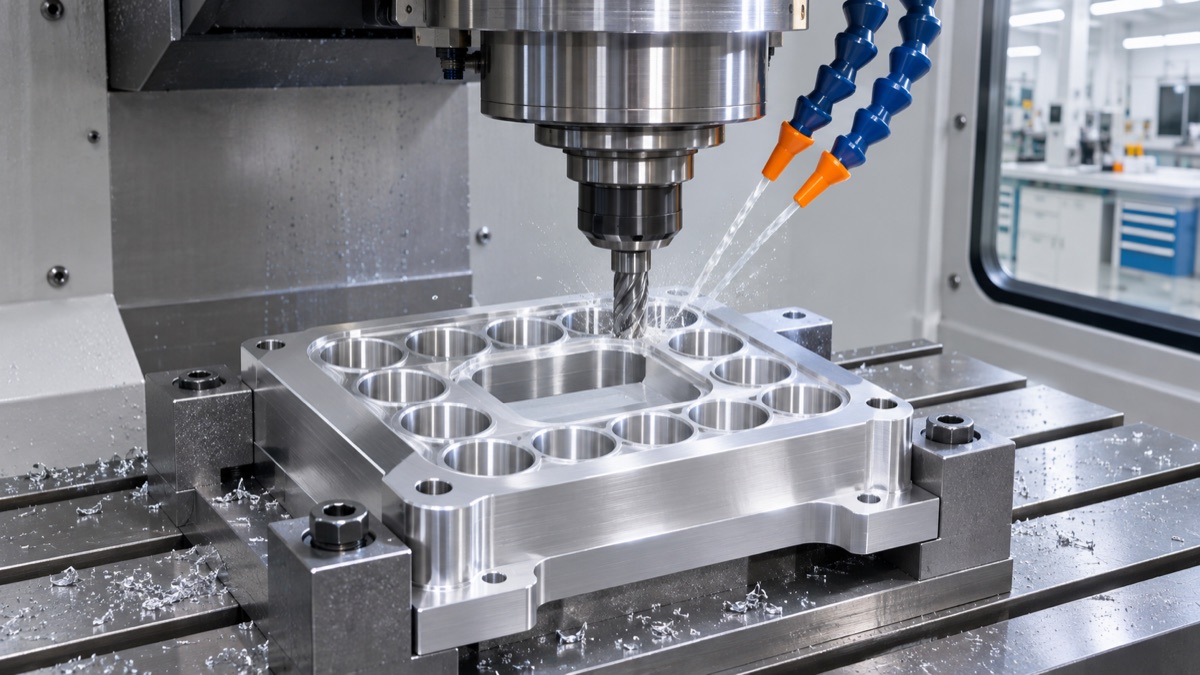
Porous CNC machining scene of sample cup holder parts
Material Cleaning and Fitting Dimensions Should Be Confirmed Separately
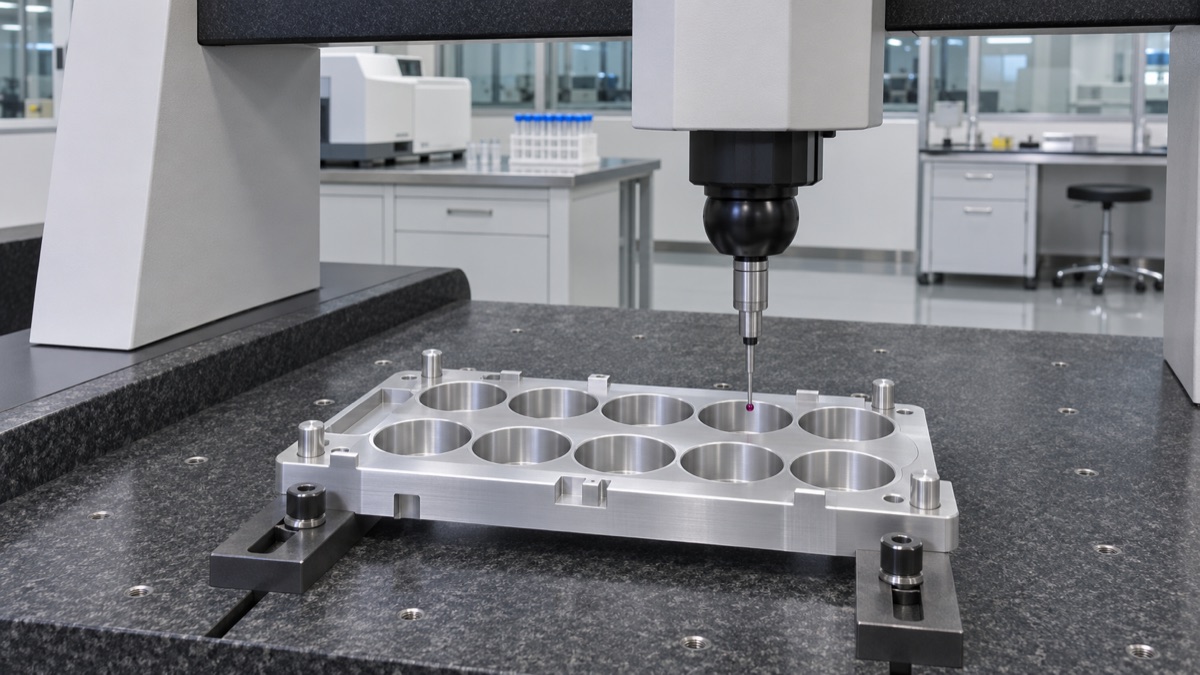
Dimensional review of cup holes, locating features and mounting surfaces
Cleaning requirements do not mean just wiping once
Different equipment has different understanding and acceptance of cleaning. For the fabricator, it’s important to know which areas cannot contain chips, which holes and grooves need to be cleanable, and which surfaces need to be protected against scratches. For the purchaser, cleaning, packaging and surface condition should also be written into the delivery requirements rather than being replenished after the finished product arrives.
If the parts are to be anodized, plated or otherwise treated, whether dimensional changes in cup holes, positioning holes and mounting surfaces are allowed should also be stated in advance. The pre- and post-processing requirements for critical dimensions must correspond to the assembly method.
Confirm the assembly logic with the first piece first
For small batches of sample cup holders, it is not appropriate to just look at a size report and go directly to subsequent batches. A more valuable first-piece confirmation is to install representative sample cups, positioning parts or related mechanisms to verify loading, removal, positioning and cleaning space. This enables earlier detection of differences between the drawing dimension chain and the behavior of the real equipment.
OEMach can assist in completing DFM communication, process confirmation, first article inspection and small batch CNC machining evaluation based on part drawings, matching containers, equipment interfaces and delivery requirements. When actual regulations or biocompatibility requirements are involved, the project party should provide applicable standards and verification requirements.
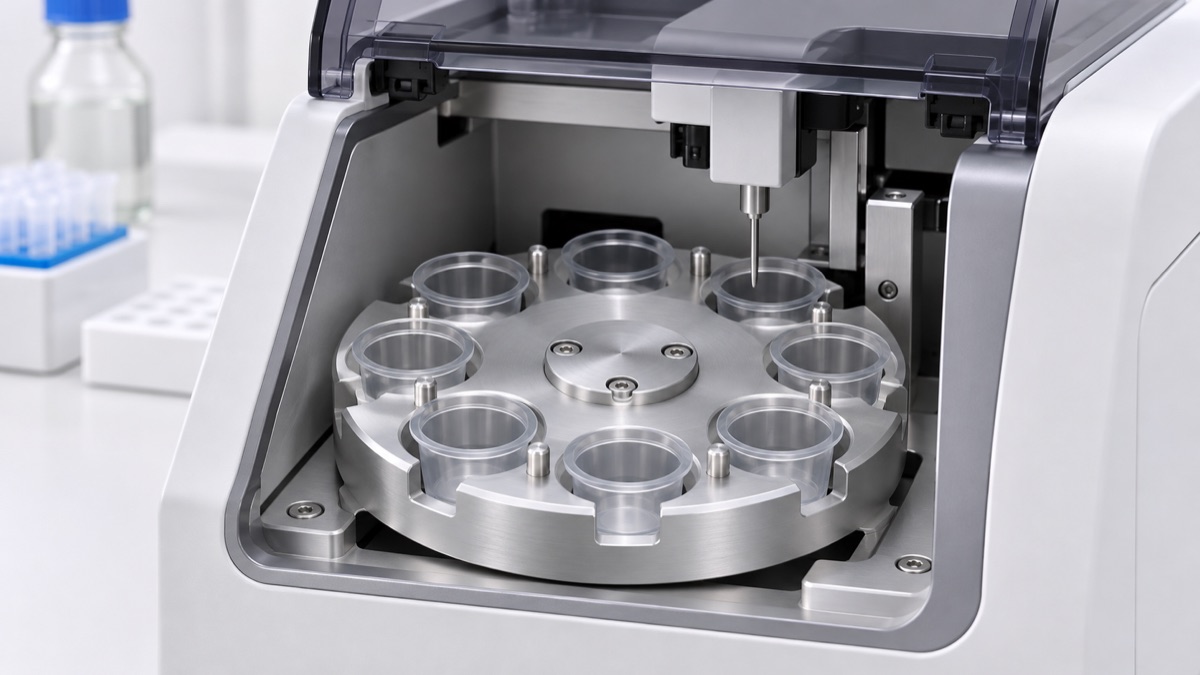
Assembly diagram of the sample cup holder in the analytical equipment module
Summary
The focus of non-standard parts such as sample cup holders is to make the container, equipment movement, installation interface and cleaning requirements established in the same set of design and processing logic. After providing drawings, matching containers, materials, quantities and delivery requirements, OEMach can assist in completing the evaluation of DFM and CNC machining solutions.
FAQ
I only have sample cup dimensions and no complete machine model. Can I make a sample cup holder?
A preliminary assessment can be made first, but it is best to provide the cup height, pickup and placement direction, adjacent mechanism space and installation interface at the same time to avoid processing only according to the hole diameter.
Is the sample cup holder made of aluminum alloy or engineering plastic?
It needs to be judged based on rigidity, weight, cleaning method, contact environment, service life and the overall structure of the equipment. You cannot choose based on cost alone.
Do the positions of multiple cup holes need to be fully inspected?
Should be graded by function. It is recommended to focus on the hole positions directly related to positioning, sampling or transmission. Rules for other hole positions can be formulated according to project requirements.
Will surface treatment affect cup size?
It may affect the final size of key holes, steps and mating surfaces, and the requirements before and after treatment should be clear in the drawings or technical requirements.
How to confirm that small batch samples can enter the next batch?
It is recommended to confirm the size report, representative container trial assembly, relevant mechanism actions and appearance clean status before freezing the version.
Ready to get a quote for your CNC machined parts?
Submit your engineering drawings to qiancj@oemach.com. We support prototype sampling and small-batch production with strict tolerance control.