
The main contradiction in R&D projects is not the pursuit of the lowest single-piece cycle time, but the need to quickly obtain credible feedback under the conditions of frequent version changes, small quantities, and different verification objectives.
Flexible factories use modular resources, controlled changes, and reusable knowledge to shorten wait times; flexibility does not mean inserting orders at will, nor does it mean lowering quality standards. The specific process still needs to combine multi-variety production scheduling, modular tooling, program and tool reuse, engineering changes, rapid changeover, quality release and knowledge accumulation and confirmation.
Typical problems, causes, controls and evidence
| Problem | Likely cause | Control action | Acceptance evidence |
|---|---|---|---|
| Frequent order insertion causes all orders to slow down | Missing capacity rules and priority boundaries | Set fast lane capacity and visually schedule key resources | Load, changeover, work in progress and delivery trends |
| Work clothes are remade for every new product | No common benchmarks and modules are precipitated by product family | Build modular positioning clamping and standard tool packages | Tooling reuse rate, changeover time and first article record |
| Design changes cannot be transmitted to the site | There is no synchronization mechanism for models, drawings, programs and inspection templates | Changes are signed in a unified manner and trigger re-approval of relevant documents | Change impact list, live version and re-inspection |
R&D orders fluctuate in different ways
Mass production emphasizes stable rhythm and long-term capabilities, while R&D may only produce 1 to 20 pieces at a time, and materials, structures and tolerances will change in the next round. If suppliers can only operate on fixed batch routes, programming, changeover and communication costs will become the main wait, and engineering feedback will be difficult to use in time for the next round.
Flexibility comes from product families and modularity
The flexible factory will establish universal positioning datums, module fixtures, standard tool packages, program templates and inspection templates based on similar parts, so that only the necessary parts can be modified for new parts. NIST's information on rapid changeover and unit flow explains that reducing changeover and waiting can help shorten delivery time, but only if the boundaries of standard work and resources are clear.
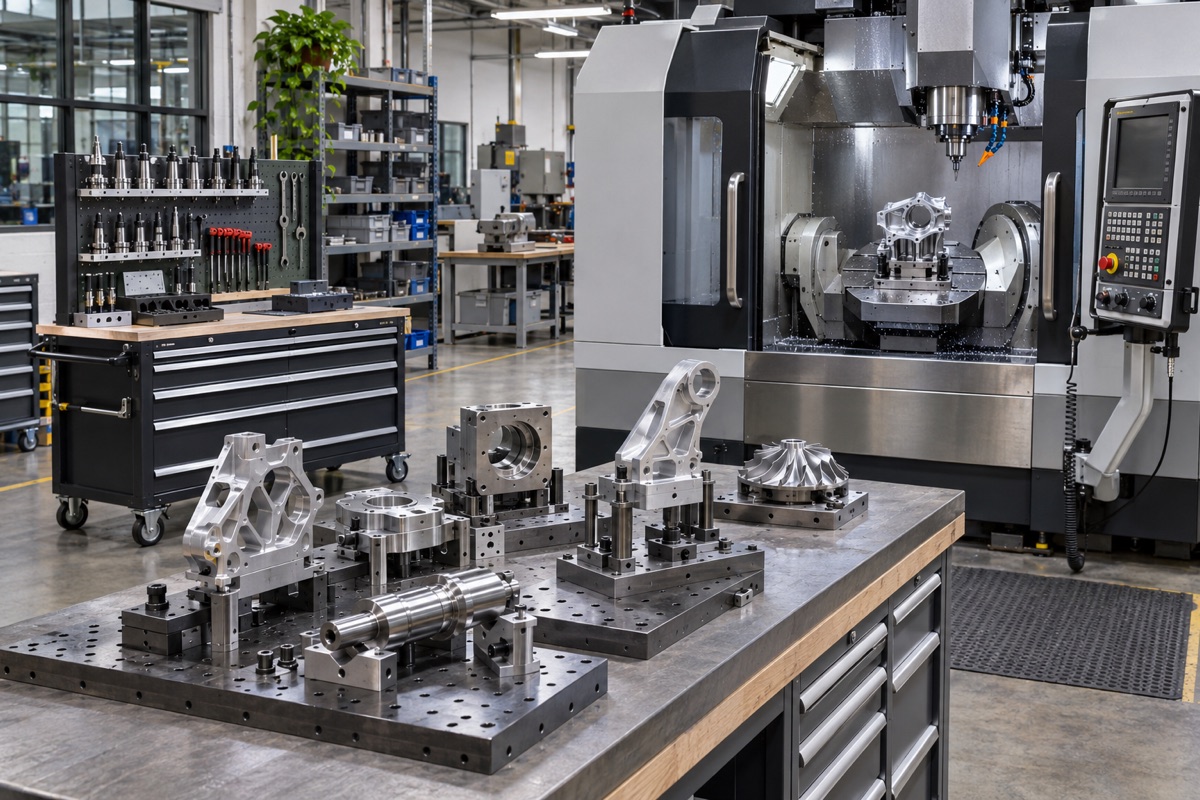
Flexibility comes from reusable datums, tooling, tools and standard work.
Engineering communication must go directly into the process
R&D prototypes often contain designs that are not fully mature. Suppliers need to be able to point out thin walls, inaccessible tools, missing datums and unreasonable tolerances before processing, and record their suggestions as DFM matters that can be approved. Relying solely on business translation will lose technical semantics, and changes will easily be out of sync with procedures and inspections.
Iterate quickly while maintaining version traceability
Each prototype run should have a unique version, verification objectives, key characteristics and deviation records. The assembly, measurement and failure data of the previous round must be written back to the next round, rather than relying on chat records to remember. In this way, even if the number of parts is small, the test results can still indicate which design and which process conditions are effective.
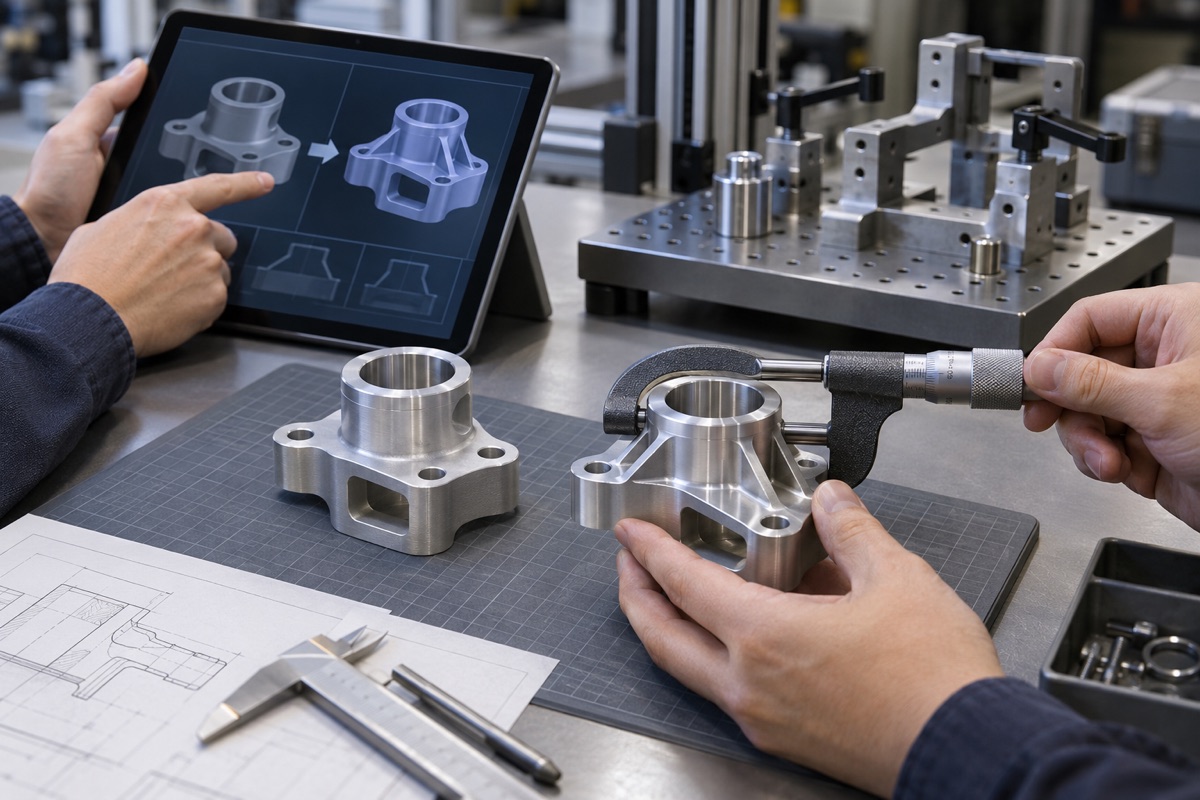
Each round of design, process and verification results should form version evidence.
Flexible production scheduling requires clear priorities
Unlimited order insertion will slow down all orders. Mature flexible management will set capacity, deadline and upgrade rules for fast tasks, and perform visual load management on bottleneck equipment, CMM and outsourcing. Customers should also freeze inputs in a timely manner to avoid transferring delays in internal decision-making to expediting by suppliers.
Choosing a flexible partner depends on knowledge accumulation
OEMach recommends evaluating whether the supplier can reuse tooling and inspection solutions, whether it records each round of process changes, and whether it can transfer problems into the next version of design input. Teams that can continuously reduce repeated clarifications and repeated trials and errors are truly suitable for R&D-oriented enterprises.
Summary
Flexible factories use modular resources, controlled changes and reusable knowledge to shorten wait times; flexibility does not mean inserting orders at will, nor does it mean lowering quality standards. The specific process still needs to combine multi-variety production scheduling, modular tooling, program and tool reuse, engineering changes, rapid changeover, quality release and knowledge accumulation and confirmation.
FAQ
Are flexible factories necessarily more expensive than mass production factories?
The unit price may be higher, but with less waiting, rework, and iterations, the total project cost may be more reasonable.
Do small batches require process control?
It is still needed, but the focus of control is more towards version, first article, key features and change traceability.
Does inserting orders at any time mean strong flexibility?
Doesn't mean. Inserting orders without capacity and priority rules can undermine overall delivery.
Ready to get a quote for your CNC machined parts?
Submit your engineering drawings to qiancj@oemach.com. We support prototype sampling and small-batch production with strict tolerance control.