
The ISO 9001 certificate proves that the system has been audited, but whether customer orders are controlled still depends on on-site evidence. Traceability of precision machining must link technical versions, materials and each key process to specific parts or batches.
Convert system terms into order-level actions and records, and verify effectiveness through internal audits, exception closed loops and management reviews; certificates cannot replace process capabilities. The specific process still needs to be combined with contract review, versions and procedures, material batches, equipment measuring tools, process records, non-conformities, suppliers and release traceability confirmation.
Typical problems, causes, controls and evidence
| Problem | Likely cause | Control action | Acceptance evidence |
|---|---|---|---|
| Certificate is valid but live version is messed up | System documents are out of touch with order-level drawings and program control | Establish unique version baselines, change signoff, and legacy isolation | Version records, on-site spot checks and first article after change |
| Unable to trace the specific batch if an exception occurs | Materials, equipment, tools, outsourcing and inspection records are not associated | Use order or batch identification throughout the entire process | Material batches, process history, outsourcing certificates and release records |
| Problem reoccurs | Unqualified products will only be reworked without reasons, corrections and effectiveness verification. | Perform cause analysis, corrective actions and subsequent batch validation | Nonconformity orders, action responsibilities, verification and trend analysis |
First confirm the standard version and conversion status
ISO 9001:2026 has been released in September 2026, and organizations using the 2015 version certification are in the transition period. Enterprises should develop conversion plans based on certification bodies and accreditation arrangements, while ensuring that existing systems continue to be effective. This article discusses implementation logic and does not make any judgment on the certification status of any company.
Contract review is the starting point of the traceability chain
Before placing an order, the drawings and model versions, materials, special processes, key tolerances, test reports, delivery dates and customer special requirements should be confirmed. Unsatisfactory or ambiguous content requires clarification and deviation approval. If the contract input is not controlled, even if the subsequent processing records are complete, the wrong requirements will only be fully implemented.
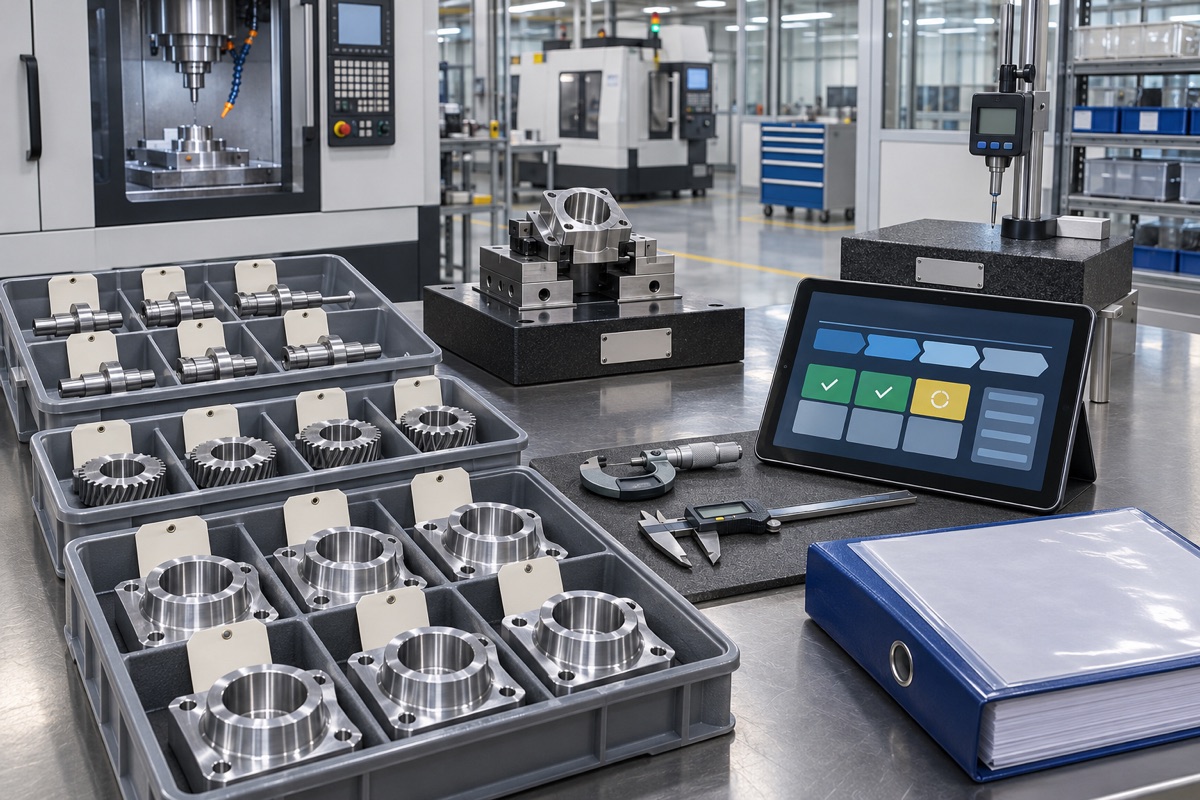
Order-level traceability relates to materials, processes, outsourcing and final release.
Drawings, procedures and tooling must be synchronized and controlled
Version management is not only for PDF drawings, but also includes 3D models, CAM programs, tool lists, tooling drawings, CMM programs and work instructions. Changes should identify the scope of impact, sign off, roll back the old version and decide whether the first change needs to be redone. The configuration management ideas of ISO 10007 can be used to keep these technical objects consistent.
Create a unique link from material to release
Material batches or batches, blanks, equipment, operators, tools, key parameters, outsourcing certificates, inspection results and non-conformity dispositions should be related through order, batch or serial numbers. The traceability granularity is determined by risk. It is not necessary to record everything, but it must be possible to define the scope of impact and find evidence when exceptions occur.
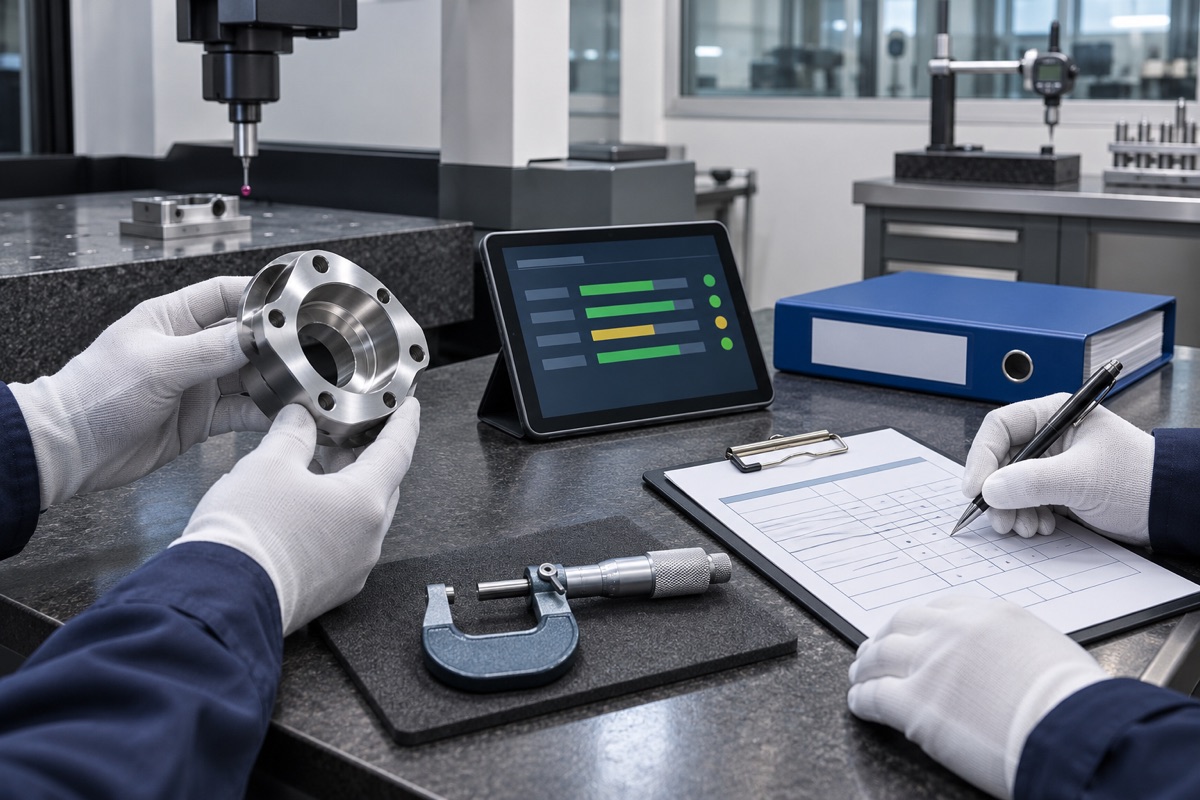
The effectiveness of the system is proven by reproducible records and abnormal closed loops.
Measurement and outsourcing are both system processes
Gauge calibration only solves part of the problem. Measurement procedures, benchmarks, environment and personnel must also be controlled. Outsourcing such as heat treatment and surface treatment should be evaluated, and the procurement requirements must be fully communicated and re-inspected according to risks after returning to the factory. Supplier certificates do not automatically replace the company's own release responsibilities.
System effectiveness depends on whether the abnormalities are reduced
OEMach believes that the true implementation of ISO 9001 should be reflected in whether repeated problems can be identified, whether the cause is closed, whether the measures are verified in subsequent batches, and whether management allocates resources based on delivery, rework and customer feedback. Without these results, no matter how many forms there are, it will be difficult to prove that the system is effective.
Summary
Convert system terms into order-level actions and records, and verify effectiveness through internal audits, exception closed loops and management reviews; certificates cannot replace process capabilities. The specific process still needs to be combined with contract review, versions and procedures, material batches, equipment measuring tools, process records, non-conformities, suppliers and release traceability confirmation.
FAQ
Does passing ISO 9001 mean that the parts must be qualified?
Doesn't mean. Certification focuses on the management system, and specific parts still need to be released according to drawings, workmanship and inspection requirements.
Will the 2015 version certificate become invalid immediately after the 2026 version is released?
No. There is a conversion period, and the specific arrangements shall be subject to the certification body and accreditation rules.
Is it necessary to trace the serial number of each part?
Not necessarily. The granularity should be determined by risk, contractual and regulatory requirements, and the key is to be able to define the scope of impact.
Ready to get a quote for your CNC machined parts?
Submit your engineering drawings to qiancj@oemach.com. We support prototype sampling and small-batch production with strict tolerance control.