
What really lengthens the delivery time is often not pure cutting time, but information waiting, incomplete materials, dedicated resources, first piece release and abnormal rework. Focusing solely on machine tool schedules will underestimate the critical path.
Complete the process route and critical path review before the promised date, convert the five types of hidden dangers into nodes, responsible persons and evidence, and reschedule changes. The specific process still needs to be combined with version freezing, materials and outsourcing, tooling and tools, first article inspection, rework path, production capacity load and delivery buffer confirmation.
Typical problems, causes, controls and evidence
| Problem | Likely cause | Control action | Acceptance evidence |
|---|---|---|---|
| It was only after the material arrived that it was discovered that it was not suitable. | Incomplete grade, specification, status or certification requirements | Lock material specifications and confirm availability and substitution approval at the time of inquiry | Materials list, supply confirmation and supporting documents |
| Waiting for special tools or tooling during processing | Accessibility and clamping risks not identified before programming | In the DFM stage, the tool tooling list is completed and a complete set of nodes is set up. | Tooling drawings, tool lists and complete inspection |
| The first piece is completed but has been delayed in release | Testing methods, procedures or outsourcing reports are not confirmed in advance | Synchronously prepare measuring tools, CMM procedures and outsourcing acceptance during production scheduling | First article planning, measurement plans and release records |
Hidden danger 1: Drawings and models are not frozen
Inconsistency between 2D, 3D, BOM and order versions, or continuous modification of hole locations, tolerances and surface treatments during processing will trigger reprogramming, tooling modifications, material scrapping and re-inspection. Before placing an order, the version baseline, issue list, and change deadlines should be clearly defined; the impact of emergency changes should also be re-confirmed instead of just issuing a new document.
Hidden danger 2: Incomplete material specifications and certificates
If a brand is specified but lacks product form, heat treatment status, specifications or certification requirements, the thickness, hardness or heat batch discrepancy may be discovered only after arrival. Availability, blanking allowance and substitution approval should be confirmed during the inquiry stage, and the complete set of materials should be set as a formal node. "The warehouse must have it" cannot be defaulted in the plan.
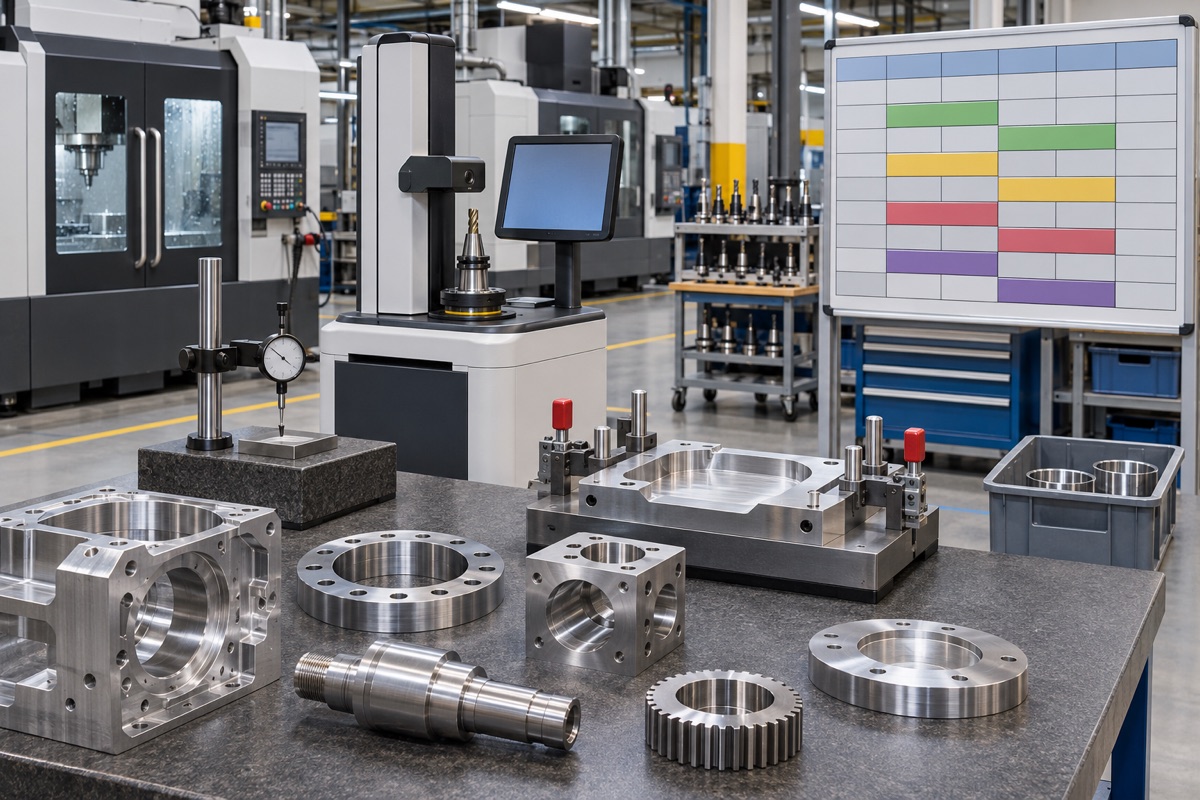
Delivery assessment should cover information, materials, tooling and testing nodes.
Hidden danger three: Identification of special tooling and tools too late
If deep cavities, undercuts, thin walls, long tools or special-shaped clamping are exposed after programming, they will wait for non-standard tools, soft jaws or clamps. DFM should complete accessibility, clamping and measurement reviews before production scheduling, form a tool tooling list, and arrange design, procurement, manufacturing and trial assembly in parallel.
Hidden danger 4: The first piece is completed but cannot be inspected
Without advance scheduling for CMM programs, special gauges, shape instruments, or external laboratories, parts will stop at "Processed but Not Released." The first article plan should also define benchmarks, features, measuring tools, reports and reviewers; when approaching tolerance boundaries, time should be reserved for retesting and dispute resolution.
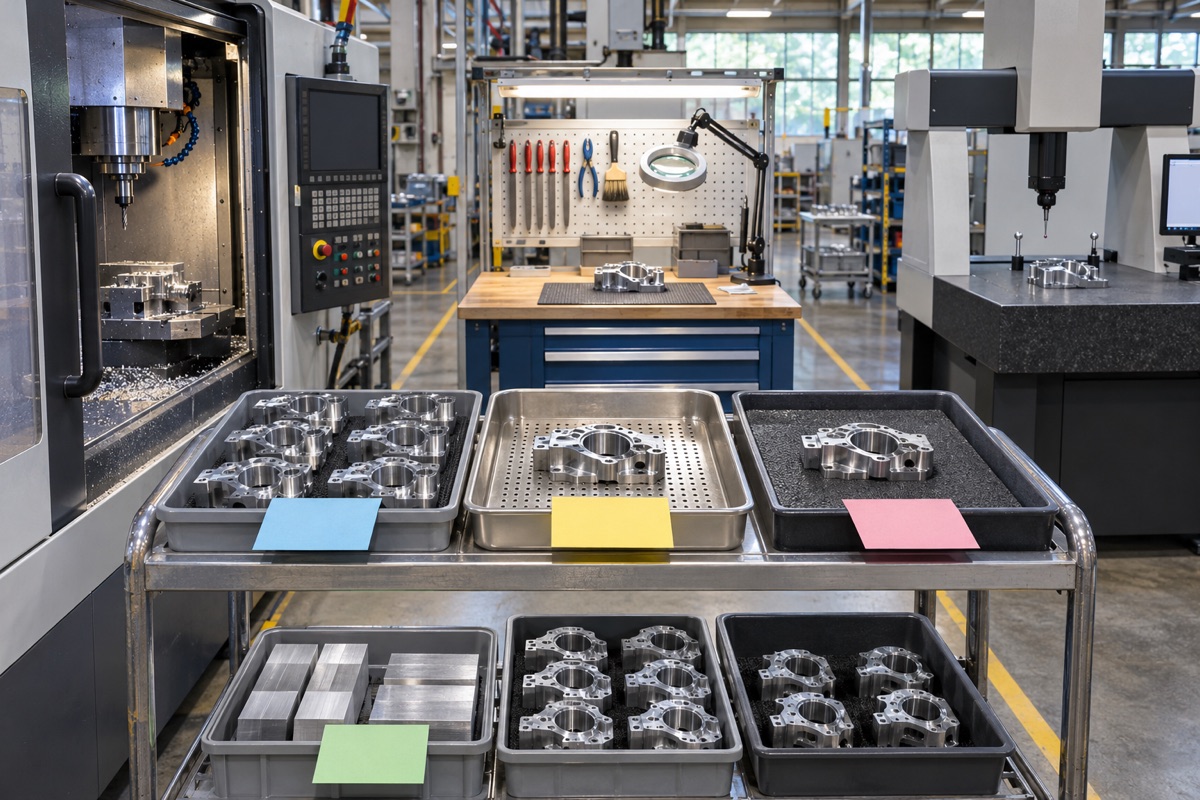
Bottlenecks and WIP waits tend to affect the overall cycle time more than pure cutting time.
Hidden danger five: There is no closed loop between outsourcing and rework
Heat treatment, grinding, surface treatment and cleaning are often on the critical path, and outsourcing batches, transportation and return to the factory for re-inspection can all be delayed. The process route should clearly define outsourced suppliers, acceptance standards, and return-to-factory inspections; rework or remake decisions should be planned in advance for high-risk steps, rather than finding solutions only after an exception occurs.
Manage delivery dates with visual critical path
NIST's value stream and rapid changeover materials emphasize the impact of information flow, waiting, and changeover on cycles. OEMach recommends putting materials, procedures, tooling, first article, outsourcing and release in the same plan, recording the actual completion time and reasons for obstruction, so that subsequent quotations can use real data rather than optimistic estimates.
Summary
Complete the process route and critical path review before the promised date, convert the five types of hidden dangers into nodes, responsible persons and evidence, and reschedule changes. The specific process still needs to be combined with version freezing, materials and outsourcing, tooling and tools, first article inspection, rework path, production capacity load and delivery buffer confirmation.
FAQ
The processing time is only two hours, why does the delivery time take how many days?
The total cycle also includes review, materials, programming, clamping, queuing, inspection, outsourcing and release.
Should I just jump in line and get on the plane if I want to rush?
No. It is also necessary to confirm whether materials, cutting tools, tooling, testing and outsourcing are all available at the same time.
Is the more delivery buffer the better?
Buffers should be placed at high-uncertainty nodes and reduced through process improvements, rather than masking problems with vague promises.
Ready to get a quote for your CNC machined parts?
Submit your engineering drawings to qiancj@oemach.com. We support prototype sampling and small-batch production with strict tolerance control.