
Define the contact tip as a mechanical component
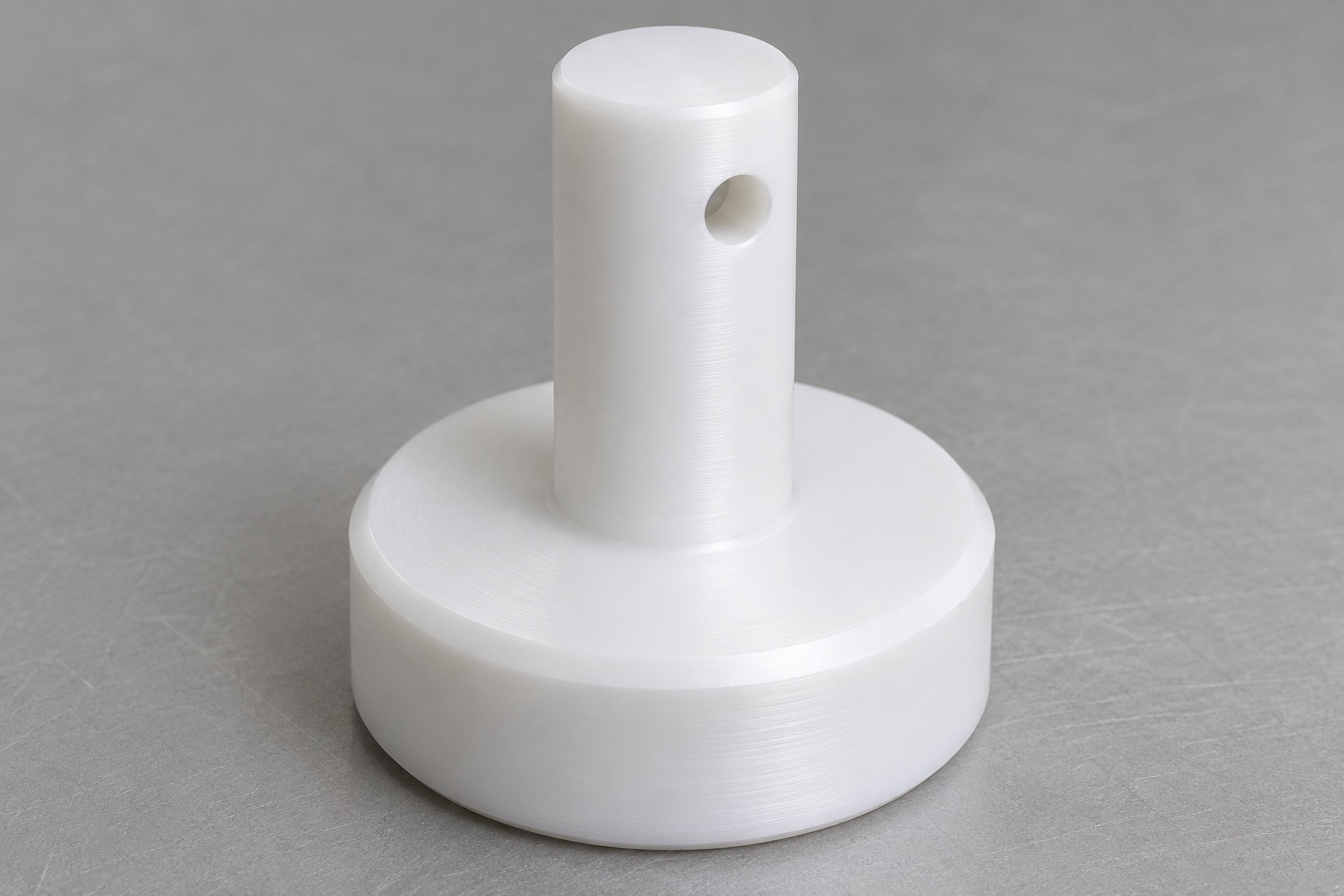
An inhaler actuation test bench may use a removable contact tip between its moving fixture and a dummy device surface. The representative tip discussed here is machined from white unfilled POM-C acetal. It has a broad solid circular pad, a smaller cylindrical mounting stem and one transverse pin hole near the stem end. Precision plastic CNC machining should define those mechanical interfaces before selecting a turning route. This component discussion is limited to non-operating bench assembly with a dummy device. It does not specify drug delivery, actuation force, timing, aerosol performance or a qualified inhaler testing method, and it makes no clinical claims.

Relate the pad face to the stem axis
The broad pad face contacts the mating dummy surface, while the stem locates the tip in a holder. Their relationship matters more than a convenient overall outside diameter. The drawing should define pad flatness, orientation to the stem axis and any relevant concentricity or runout requirement using an appropriate geometric specification. A stem that fits its holder can still present a tilted contact face. Conversely, an attractive turned pad does not establish reliable mounting alignment. Describe the assembly reference and measurement condition so both supplier and buyer evaluate the same geometry rather than choosing different surfaces as the starting datum.
Select an identifiable POM-C grade
POM-C describes a material family, not a complete procurement specification. State the manufacturer grade or approved equivalent, color, filler condition and stock form. This example assumes white unfilled acetal copolymer, not glass-filled plastic or a visually similar alternative. Retain material identification through cutting and avoid mixing unidentified remnants into a batch. Any additional chemical, cleanliness or regulatory requirements must be reviewed separately against actual supplier evidence. The use of acetal in a test fixture does not automatically establish suitability for drug contact, patient contact or repeated disinfection. Those applications require a defined scope and a separate material compatibility assessment.
Allow for temperature and elastic response
Plastic dimensions can respond to temperature and measurement force more noticeably than an equivalent metal feature. Define the conditioning environment and measurement method rather than forcing an arbitrary tight tolerance onto an unstable setup. Allow freshly machined parts to reach the agreed inspection condition before acceptance. A heavy micrometer force may compress a small stem and create a misleading reading. Similarly, a warm part checked immediately after cutting can change as it equilibrates. Precision POM-C CNC turning should therefore consider machining heat, storage and inspection together. The drawing owner should set tolerances that are both functionally justified and realistically verifiable for the selected material.
Turn the stem and pad with a coherent reference
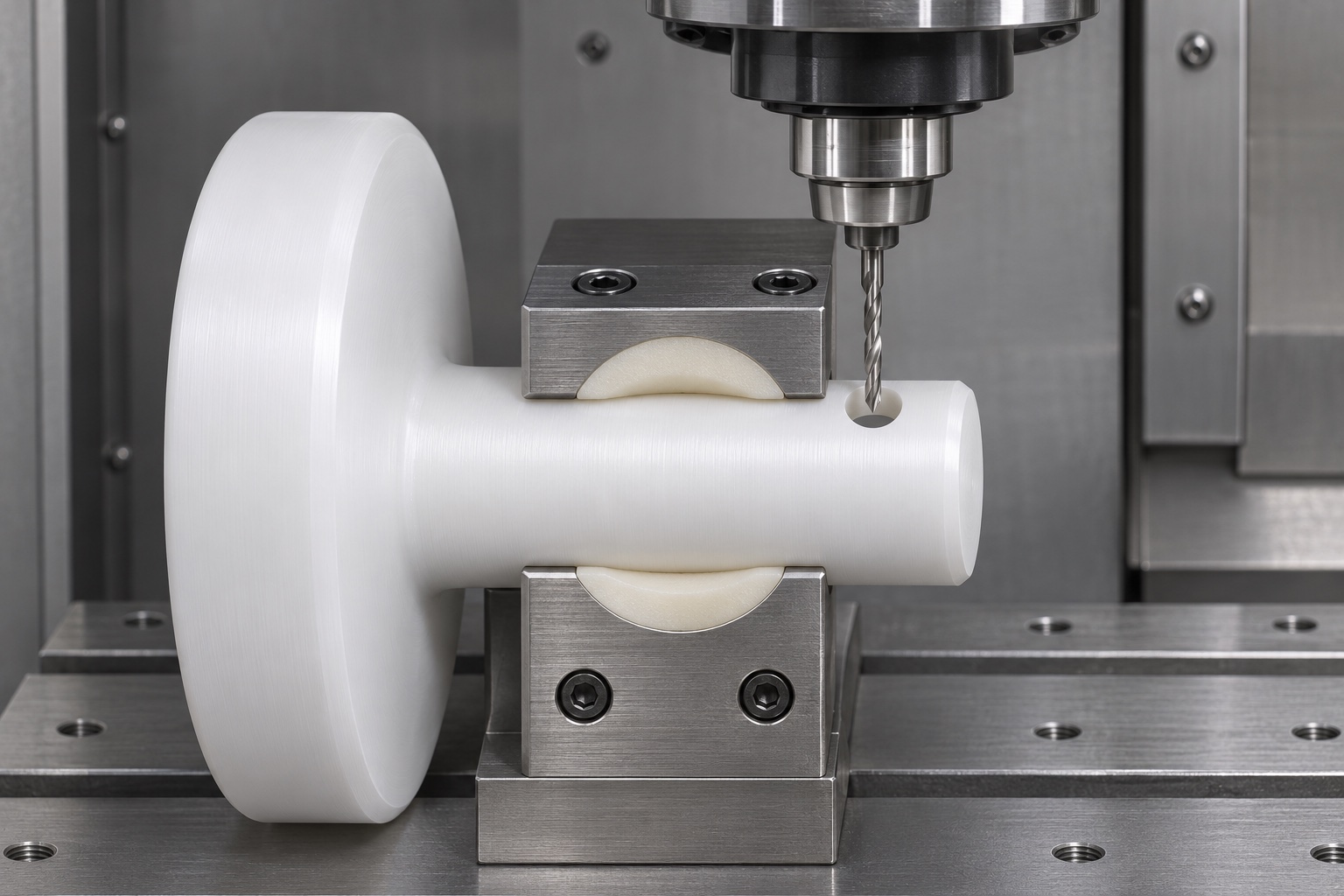
A turning plan can produce the stem, pad outside diameter and shoulder in a common setup where stock and tool access permit. The broad contact face may require a separate facing operation depending on workholding. Identify which operation establishes the final stem axis and which surface supports the next setup. Sharp, suitable tooling and controlled chip evacuation help avoid rubbing, torn edges and heat accumulation. No universal cutting parameters are implied by this example. Process selection should reflect the actual grade, tool geometry and machine behavior, with trial inspection confirming that the proposed sequence produces the specified geometry after release from workholding.
Hold the stem without crushing or marking it
Soft collets, split bushes or other distributed-contact fixtures can support a small plastic stem without concentrating clamp pressure at a few points. Workholding still needs enough grip for safe cutting. Review contact length, chip clearance and pad access before adopting a setup. Excessive force may deform the stem during machining, while inadequate force can allow motion or ejection. Evaluate the released part rather than measuring it only inside the fixture. For custom acetal contact pad machining, fixture marks on a mounting surface should be judged against the drawing and assembly needs, not dismissed simply because the component is made from plastic.
Machine one transverse mounting pin hole
The representative stem contains a single cross hole, with its axis perpendicular to the stem axis. It is not an axial bore, fluid passage or threaded feature. Define hole size, position from the shoulder or stem end, and any angular relationship that the assembly actually requires. Support the stem during drilling and plan how to control exit burrs without enlarging the hole. A rough pin check can supplement inspection, but it should not replace a specified hole measurement or position check. If the holder requires a different retention method, revise the interface drawing rather than adding an extra hole as an informal adjustment.
Protect the functional face during edge finishing
The pad perimeter may need a controlled edge break to remove a fragile sharp rim. That treatment should not consume the defined contact area or produce an uncontrolled crowned face. The stem end and pin-hole exits also require attention, especially where loose plastic strands can remain attached. Use appropriate magnification and a method that does not smear material into the hole. A broad polishing pass is not a substitute for a specified surface condition. Identify whether turned texture is acceptable and what defects are prohibited. Surface appearance alone cannot establish contact behavior under load or the cleanliness level required by an actual testing procedure.
Clean to an agreed protective condition
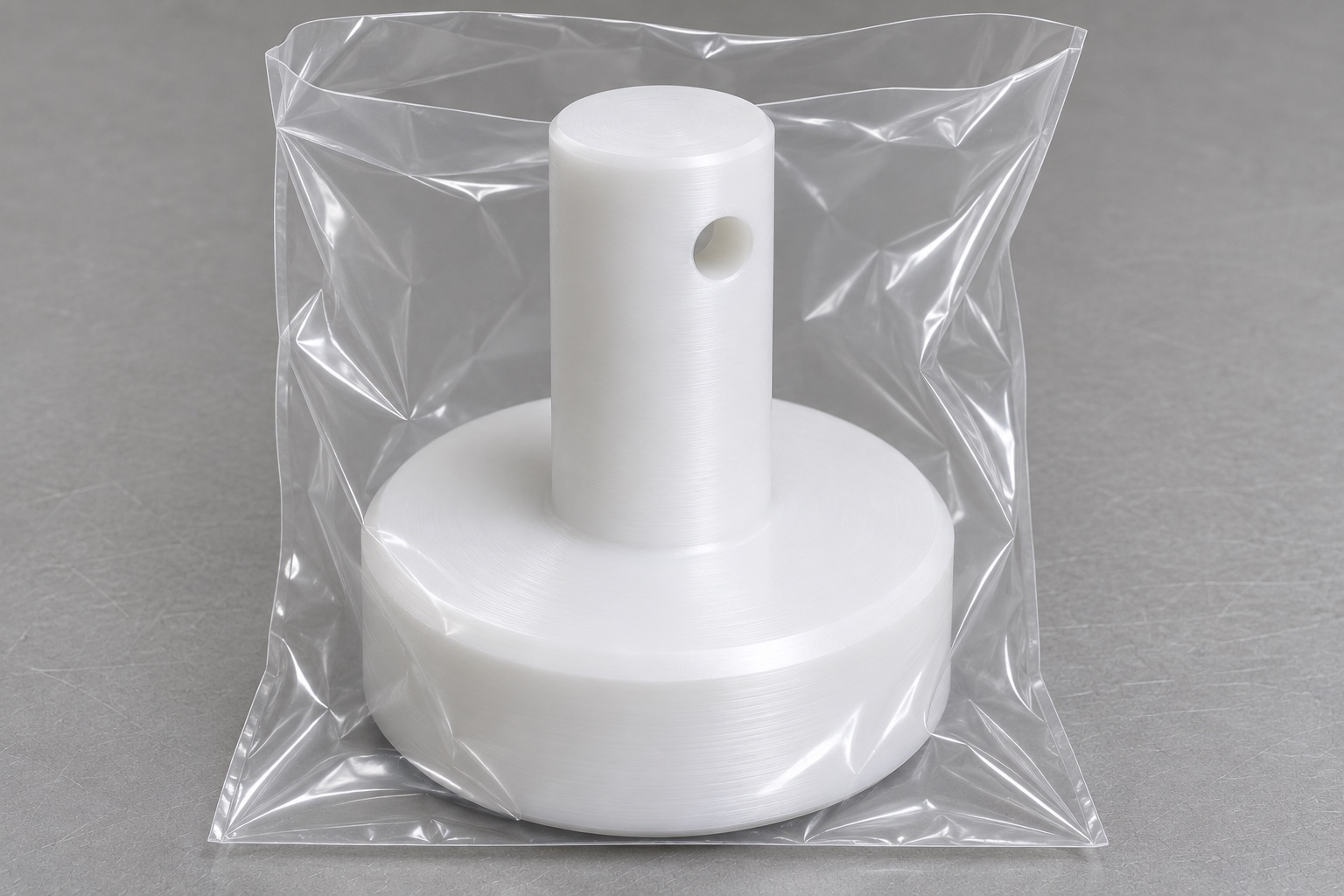
Remove machining chips and process residue using materials compatible with the specified acetal grade. Inspect the transverse hole because it can retain small fragments that are not obvious from the outside. Choose handling methods that avoid scratching the pad face or introducing fibers. If the order requires a quantified cleanliness level, define the sampling and acceptance method before production. Ordinary shop cleaning and protective bagging should not be described as sterile processing or validated medical cleaning. The supplier can document the agreed preparation condition, while the responsible laboratory or equipment team remains responsible for any additional preparation required by its controlled testing workflow.
Inspect the assembled geometry, not isolated sizes alone
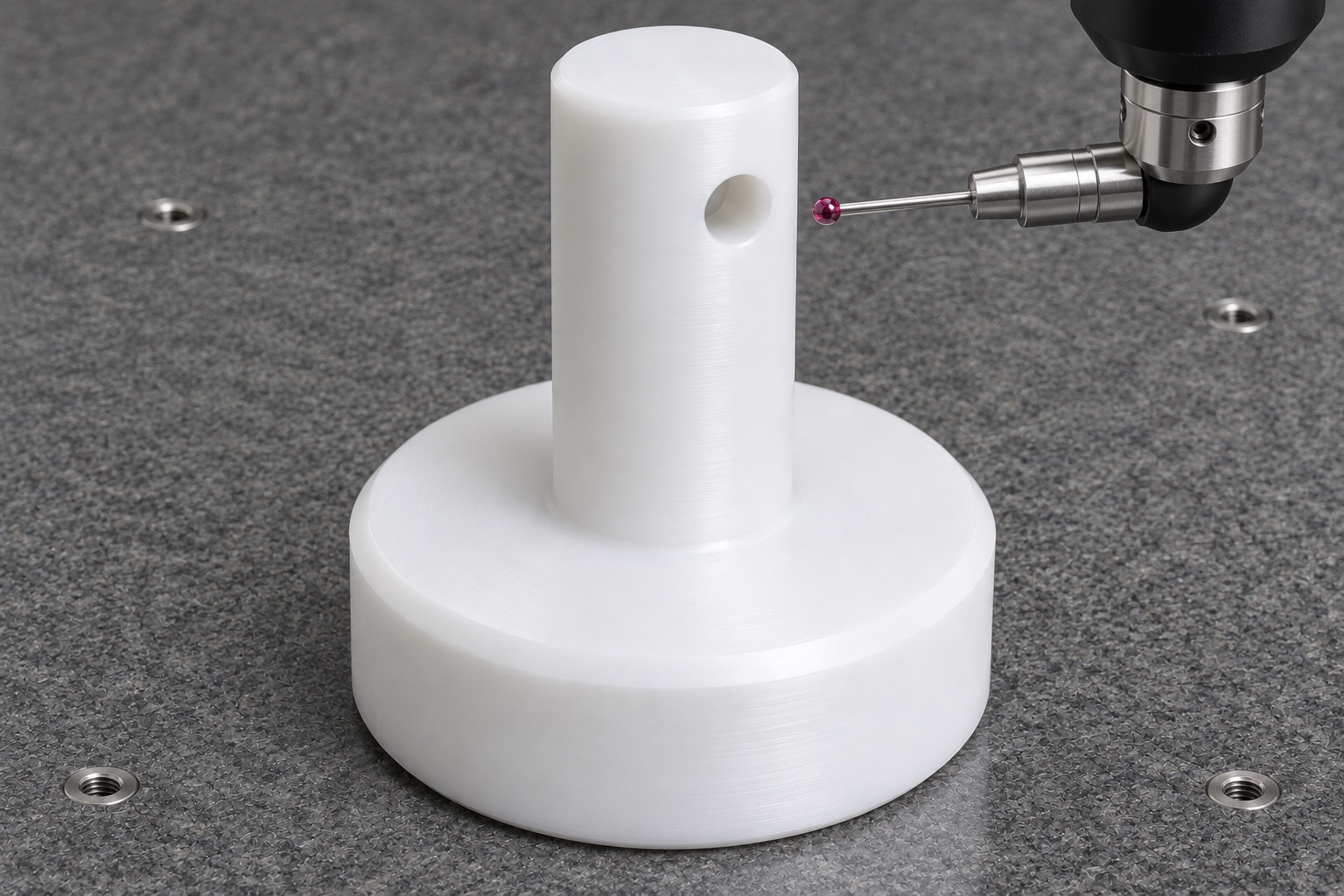
An inspection plan should cover stem size, pad size, pad thickness, face orientation, shoulder relationship and pin-hole location as required by the drawing. Use low-force or noncontact methods where contact pressure could influence results. Accessible coordinate measurements can be supplemented by optical checks of hole edges and local surface defects. State the conditioning period, datum arrangement and instrument in the report. A pair of diameter readings does not establish the perpendicularity of the contact face to the mounting axis. Where the drawing uses a restrained condition, document that restraint so the result is not confused with free-state geometry.
Keep a dummy fit check separate from testing
Fit the tip into a traceable holder with a matching pin and inspect seating against a non-operating dummy surface. Record the holder and dummy revisions. The check can expose interference, excessive play or an obvious contact mismatch, but it does not validate an inhaler test method. Do not infer dosing consistency or aerosol results from a smooth mechanical assembly. If the contact appears uneven, review face orientation, holder alignment and dummy geometry before changing the pad shape. The correct response may be a fixture correction rather than tighter machining tolerances. Engineering approval should govern changes to the interface and any subsequent reinspection.
Quote custom plastic machining with complete requirements
A useful quotation package includes the controlled drawing, CAD revision, specified POM-C grade, quantities, mating-holder information, pin requirements, inspection condition and packaging expectations. Identify the contact face and any surface that must remain free of clamp marks. Separate general dimensional inspection from any laboratory qualification or performance test so the supplier's deliverables are clear. Individually protect the face and stem during transport and retain the part identity with its documentation. Medical equipment test fixture parts can then be manufactured and assessed against an explicit mechanical specification, without turning familiar medical terminology into an unsupported claim of certification, patient suitability or validated analytical performance.
FAQ
Is POM-C automatically suitable for drug or patient contact?
No. Material family and color do not establish those applications. The responsible team must specify and assess the exact grade, contact conditions and required evidence.
Why relate the pad face to the mounting stem?
The stem establishes the installed axis. A tilted pad face can create uneven contact even when both outside diameters meet their individual size requirements.
Is the hole in the stem an axial bore?
No. This representative tip has one transverse pin hole. The pad and stem remain solid along their main axis unless a different drawing is approved.
Can a high-force micrometer distort the measurement?
It can influence a plastic feature. Select a measurement method and force appropriate to the material, size and specified acceptance condition.
Does a successful dummy fit validate inhaler testing?
No. It confirms only the observed mechanical assembly condition. Actuation, dosing and aerosol testing require separate controlled methods and qualification.
What should be specified for protective packing?
Identify surfaces needing scratch protection, individual separation, permitted packaging materials, cleanliness requirements and identification documents. Do not assume sterile packaging unless explicitly required and validated.

tanghangyun@oemach.com