
One-piece minimum order addresses the minimum order quantity and does not automatically equal zero lead time. Rapid prototyping depends on whether the information is complete, whether the materials are available, whether the tooling can be modularized, and how the first article is released.
Trade clear verification goals and frozen versions for speed; prepare materials, tooling, procedures and inspections in parallel while retaining necessary first-piece evidence. The specific process still needs to be confirmed based on the current round of verification objectives, drawing versions, material availability, general tooling, key tolerances, inspection scope and change cutoff points.
Typical problems, causes, controls and evidence
| Problem | Likely cause | Control action | Acceptance evidence |
|---|---|---|---|
| Drawings continue to change after quotation | The verification target and freezing time are not agreed upon | Freeze the baseline before placing an order and re-evaluate the cost and cycle when changes are made | Version sign-off, change list and re-confirmation record |
| A single piece is waiting for a long time in the production schedule | Materials, tooling and testing resources are not confirmed in advance in parallel | DFM stage synchronously locks blanks, general tooling and measuring tools | Material status, tooling plan and first article plan |
| Prototype is fast but cannot be used for testing | Critical tolerances or materials are relaxed by default and not approved | Establish a list of key features and document all substitutions and deviations | Deviation approval, dimensional reports and fit-out results |
Let me first ask what needs to be verified for this
R&D prototypes may be used for space confirmation, assembly, movement, sealing, durability or final performance. Different goals determine whether materials, heat treatment, tolerances and surface treatment must be in place at once. If the verification goal is unclear, the factory can only quote the most conservative plan, or make a part that is fast but cannot answer the research and development questions.
Quick quote requires minimum complete input
At a minimum, controlled drawings or models, materials and condition, quantities, critical tolerances, surface preparation, inspection requirements and expected dates should be provided. Conflicts between 2D and 3D, undefined threads, missing datums, or marking all dimensions to tight tolerances can waste time in back-and-forth clarification instead of machining.
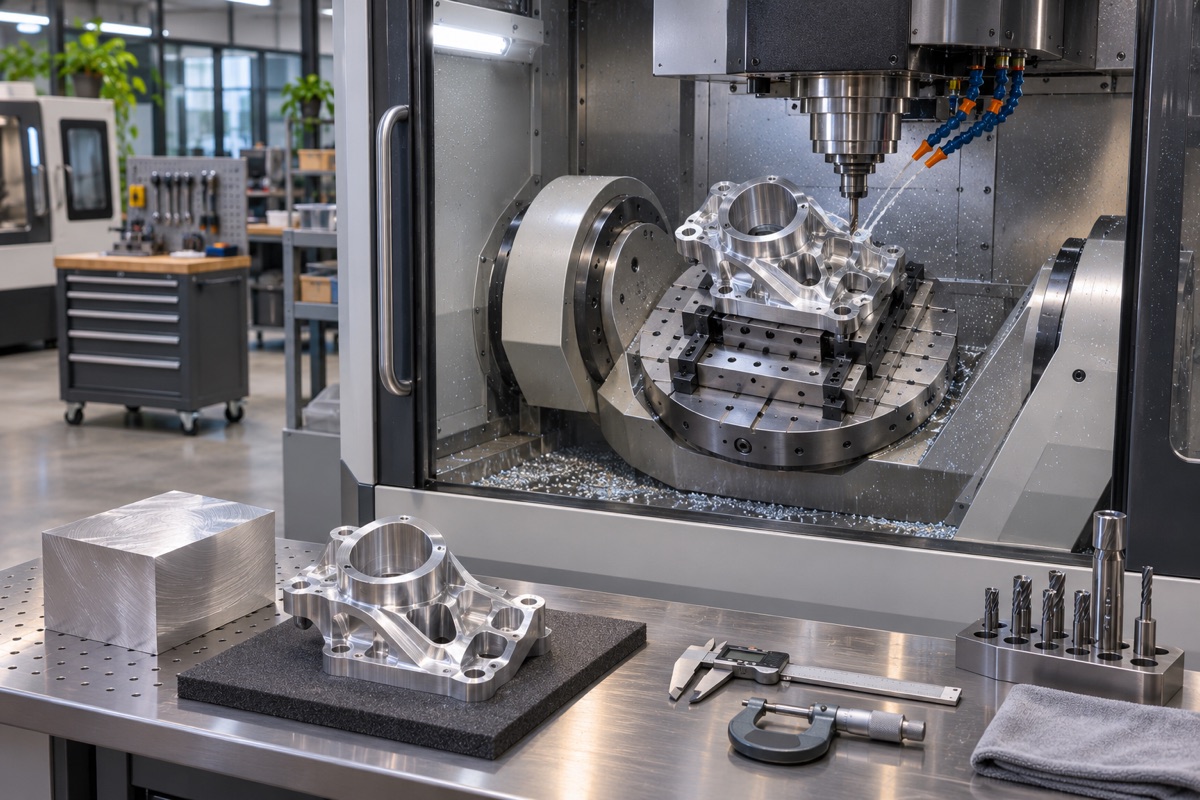
Single-piece rapid prototyping relies on module tooling and pre-process review.
Flexibility comes from common resources and pre-review
Factories that support a one-piece minimum order usually require universal blank channels, modular fixtures, standard tool packages, quickly reusable programming templates and schedulable inspection resources. DFM identifies tool accessibility, clamping deformation, special outsourcing and measuring tool problems before accepting an order, which can avoid discovering that the route is unfeasible only after parts are put on the machine.
Separate critical tolerances from alternatives
The R&D team can flag the key features that really impact the trial this round and set up approved alternative paths for non-critical appearance, material brand, or treatment color. Any relaxation should be written in the deviation record and cannot be defaulted by the processing party to "make do with the sample first", otherwise the test conclusion cannot be traced.
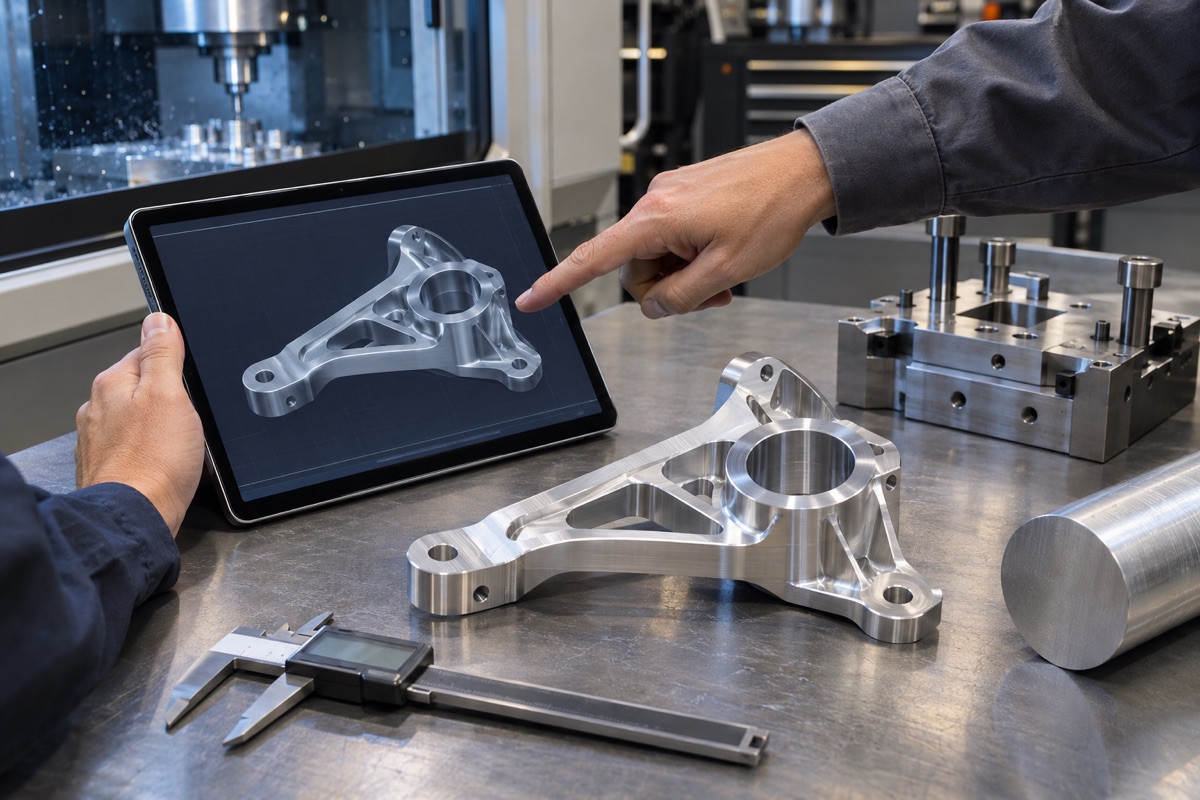
Versions, key characteristics and acceptance evidence are confirmed before processing.
First article inspection is not an elliptical wait
An order itself is the first item. Inspection should be prepared synchronously with the processing plan. Key holes, datums and assembly relationships should be confirmed on the machine first, and finally independently reviewed according to the agreed method. If CMM, heat treatment or surface treatment is required, these nodes should be included in the promised delivery time, rather than just reporting the end time of machining.
When evaluating suppliers, you need to look at a closed loop
OEMach recommends using a real project to observe the response: whether the problem is clarified at once, whether the risks are clear, whether the version is controlled, and whether the delivery contains usable reports. Really fast sampling is about shortening the wait under controlled conditions, rather than exchanging quality evidence for surface speed.
Summary
Trade clear verification goals and frozen versions for speed; materials, tooling, procedures and inspections are prepared in parallel while retaining necessary first-piece evidence. The specific process still needs to be confirmed based on the current round of verification objectives, drawing versions, material availability, general tooling, key tolerances, inspection scope and change cutoff points.
FAQ
Only the STEP model can quickly quote
A preliminary assessment can be made, but critical tolerances, material condition, surface treatment and acceptance requirements still need to be added.
Why is the unit price so high when ordering one piece?
Fixed costs such as programming, setup, first article and inspection cannot be diluted by volume.
Is it possible to produce samples on the same day?
Depends on materials, construction, tooling, equipment, testing and outsourcing and should not depart from drawing commitments.
Ready to get a quote for your CNC machined parts?
Submit your engineering drawings to qiancj@oemach.com. We support prototype sampling and small-batch production with strict tolerance control.