
Public rankings usually lack a unified caliber and cannot reflect specific materials, structures, tolerances, batch sizes and delivery times. A more reliable approach is to set elimination items and project weights, and then verify them through on-site evidence and test orders.
There is no fixed answer for “best factory” off the project; a supplier is only suitable if the process, measurement, communication and delivery capabilities match the current part. The specific process still needs to be combined with equipment and personnel matching, representative processes, testing capabilities, calibration and external laboratories, version control, abnormal shutdown, outsourcing transparency, delivery time and intellectual property management confirmation.
Typical problems, causes, controls and evidence
| Problem | Likely cause | Control action | Acceptance evidence |
|---|---|---|---|
| There are many devices but delivery is still unstable | Lack of process solidification, maintenance, personnel and quality closed loop | Review representative processes, equipment status, tooling, and historical abnormal shutdowns | Procedure records, maintenance, first articles, trends and corrective actions |
| The so-called ranking cannot be used for the current project | The evaluation caliber, material, accuracy and batch size do not match the project | Establish project weights and elimination items, and use test orders to verify key capabilities | Scoring matrix, on-site evidence, trial order data and review records |
| The test certificate is complete but the report is not credible enough | Mismatch in calibration ranges, measurement procedures, or external laboratory capabilities | Verify calibration and accreditation scope and review task-specific measurement plans | Certificate scope, procedures, environment, uncertainties and raw data |
Define the project first rather than looking for rankings first
Projects should identify material status, maximum dimensions, critical tolerances, annual usage, surface treatment, certification, delivery and confidentiality requirements. A factory that specializes in aluminum alloy five-axis prototypes may not necessarily be suitable for batch grinding of steel parts; a supplier of large structural parts may not be suitable for micro parts. The evaluation calibers are different, and simple rankings are not comparable.
Hard power depends on the matching of equipment and technology
Review equipment strokes, spindles, mill-turn or five-axis capabilities, tooling, tool presetting, cleaning and environment, and see how these resources can be used on similar structures. Having engineers on-site explain the datum, setup, deformation, tool accessibility and post-processing of representative parts can differentiate between "owning the equipment" and "mastering the process."
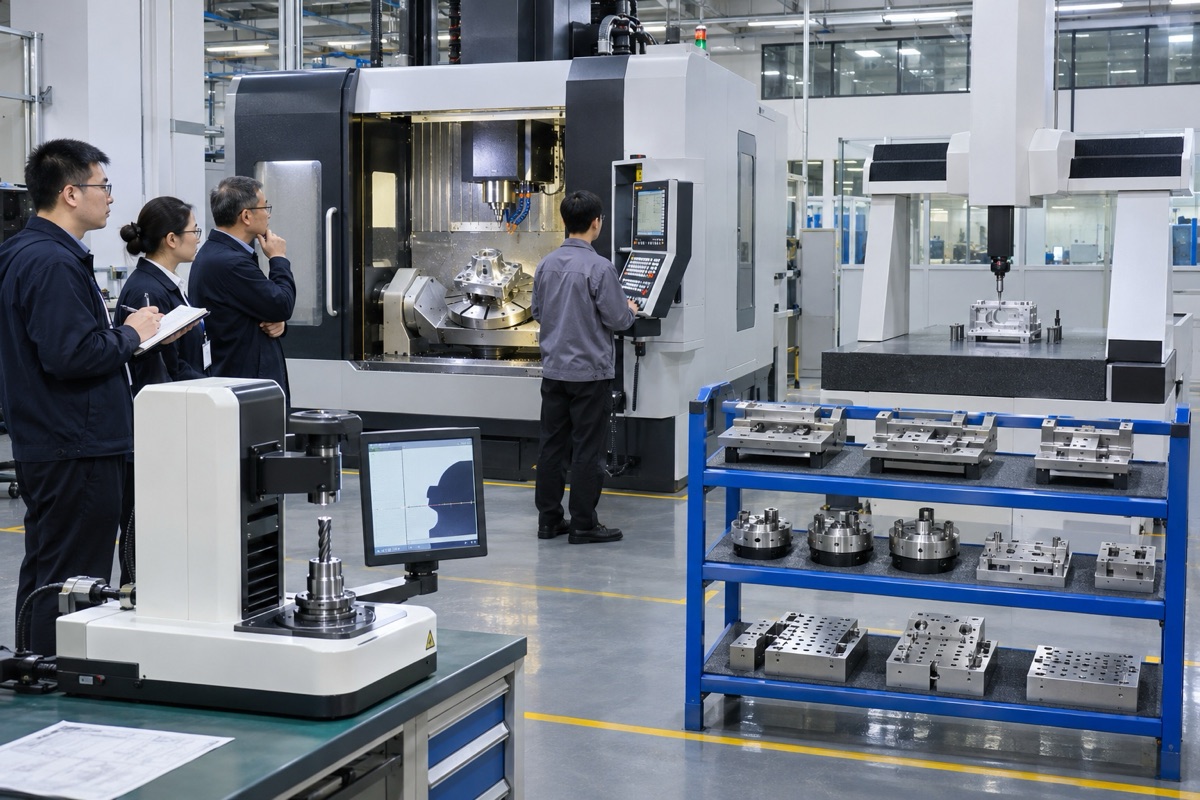
Equipment lists need to be evaluated along with evidence of workmanship for the specific project.
Measurement capabilities need to verify the scope of tasks
CMMs, profilometers and roughness gauges require calibration, maintenance and qualified personnel. Whether the external calibration laboratory is accredited according to ISO IEC 17025, it is also necessary to verify whether the accreditation scope covers the required quantities. For specific parts, the probe, sampling point, support, environment and measurement uncertainty should be reviewed. The number of certificates cannot replace the task measurement plan.
Soft capabilities determine change and abnormal costs
R&D projects are frequently revised, and suppliers need reliable file sending and receiving, version validation, old material isolation, and problem closure. During the audit, you can see how to record the cause of a real exception, isolate the batch, implement corrections, and verify the effect. Fast response does not mean just replying quickly in the group. Important conclusions must be converted into traceable documents.
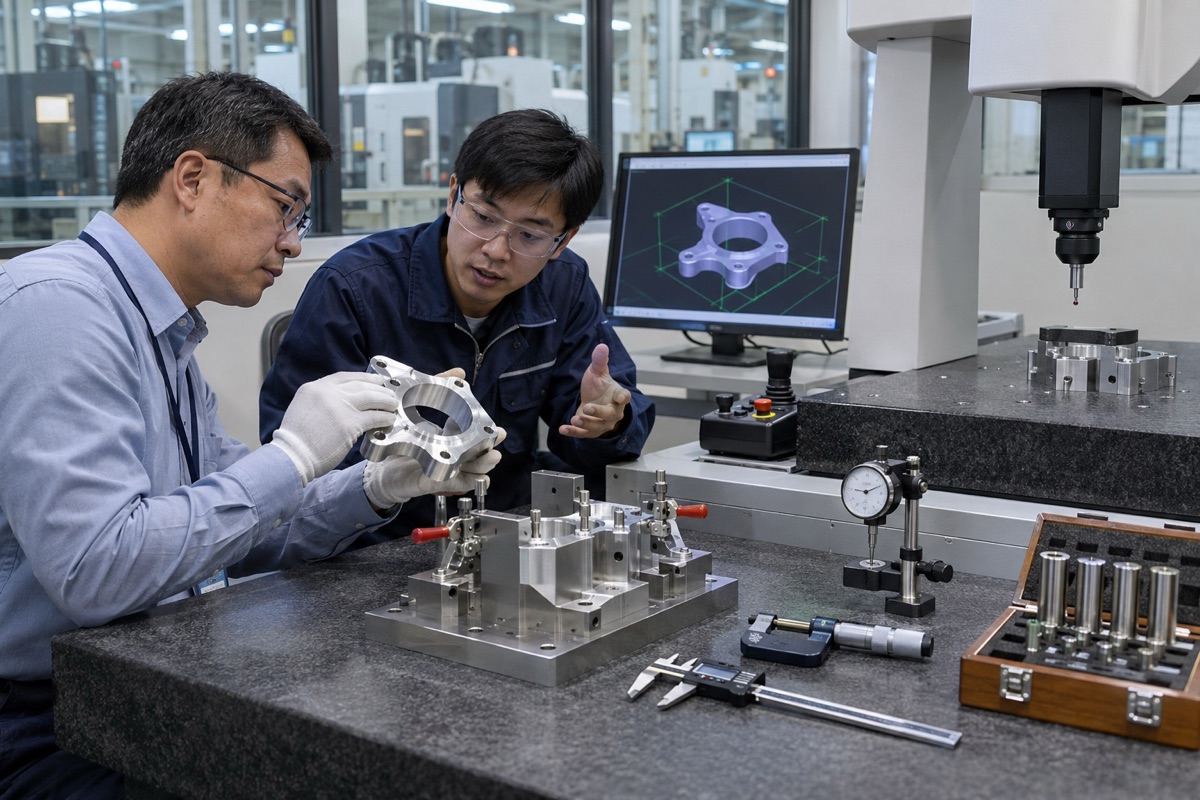
Soft capabilities must be verified through version, exception and trial order processes.
Outsourcing transparency and delivery recovery are equally important
Heat treatments, surface treatments and special processes are often done externally. Suppliers should disclose approved sources, batch traceability, alternative resources, and responsibility boundaries, and describe how to recover from equipment failure, gage outage, or outsourcing delays. Short delivery times in quotations should be viewed with caution if there is no evidence of bottlenecks or backups.
Complete final verification with a trial order
It is recommended to use a representative part instead of the simplest part as a test order. Evaluate DFM quality, first article cycle, report completeness, problem communication and re-inspection results. OEMach, as a processing service provider in Suzhou Xiangcheng, should also accept the same evidence standards; the article does not provide fictional rankings, only reusable evaluation methods.
Summary
There is no fixed answer for “best factory” off the project; a supplier is only suitable if the process, measurement, communication and delivery capabilities match the current part. The specific process still needs to be combined with equipment and personnel matching, representative processes, testing capabilities, calibration and external laboratories, version control, abnormal shutdown, outsourcing transparency, delivery time and intellectual property management confirmation.
FAQ
Is there any authoritative unified ranking of Suzhou processing plants?
There is usually no unified authoritative ranking that applies to all projects, and evaluation calibers and project requirements vary widely.
Does more equipment mean stronger capabilities?
Not necessarily. Also look at equipment status, tooling, personnel, procedures, measurements and process stability.
What is the difference between ISO 9001 and ISO IEC 17025
The former is oriented to organizational quality management systems, while the latter is oriented to testing and calibration laboratory capabilities. The applicable objects and scope of certification are different.
Ready to get a quote for your CNC machined parts?
Submit your engineering drawings to qiancj@oemach.com. We support prototype sampling and small-batch production with strict tolerance control.