
While the prototype phase can rely on engineer attention and ad hoc modifications, small batch trials must repeat the results with continuous production, formal tooling, and approved input. The focus of assessment has therefore shifted from "can it be done" to "can it be replicated stably".
Qualified suppliers should demonstrate that processes, measurements and supply chains are controlled within schedule and can identify the impact, approve changes and resume delivery when materials, tooling, equipment or outsourcing changes. The specific process still needs to be combined with sample process handover, formal tooling, program and tool versions, production capacity verification, first batch consistency, process capability, outsourcing management, change control and emergency capability confirmation.
Typical problems, causes, controls and evidence
| Problem | Likely cause | Control action | Acceptance evidence |
|---|---|---|---|
| The prototype is successful but the yield rate of small batches decreases | Samples are repaired using temporary tooling, selected tools or manual repairs | Complete continuous trial production with formal tooling and approved parameters, and unauthorized modifications are prohibited | Trial production quantity, tooling version, key feature trends and rework records |
| Delivery time deteriorates rapidly after orders increase | The quoted production capacity does not cover model change, testing, outsourcing and equipment maintenance. | Verify bottleneck production capacity and record actual cycle times, model changeovers and outsourcing cycles | Capacity drills, equipment loading, outsourcing plans and delivery recovery plans |
| First batch behaves differently than subsequent batches | Materials, procedures, tool life or supply chain changes are not controlled | Establish configuration and change approval, and trace key inputs by batch | Material batches, program verification, tool records, change orders and installation feedback |
First convert sample experience into formal technology
Temporary platens, manual offsets, selected tools and manual trimming during prototyping must be identified. Before entering trial production, the approved process route, procedures, tooling, tool list, inspection plan and packaging requirements should be published, and which parameters can be adjusted within the window. If implicit experience is only in the hands of a certain master, it cannot form supply capabilities.
Trial production should reproduce future production conditions
Small batch trial production should use the planned equipment, shifts, tooling, outsourcing and measurement methods, and the quantity should cover tool changes, shift changes or key beats, rather than just making a few display samples. After the first piece passes, it is still necessary to observe subsequent trends and record downtime, compensation, rework and scrap. If a temporary deviation is approved, the time limit for correction should be clearly stated.
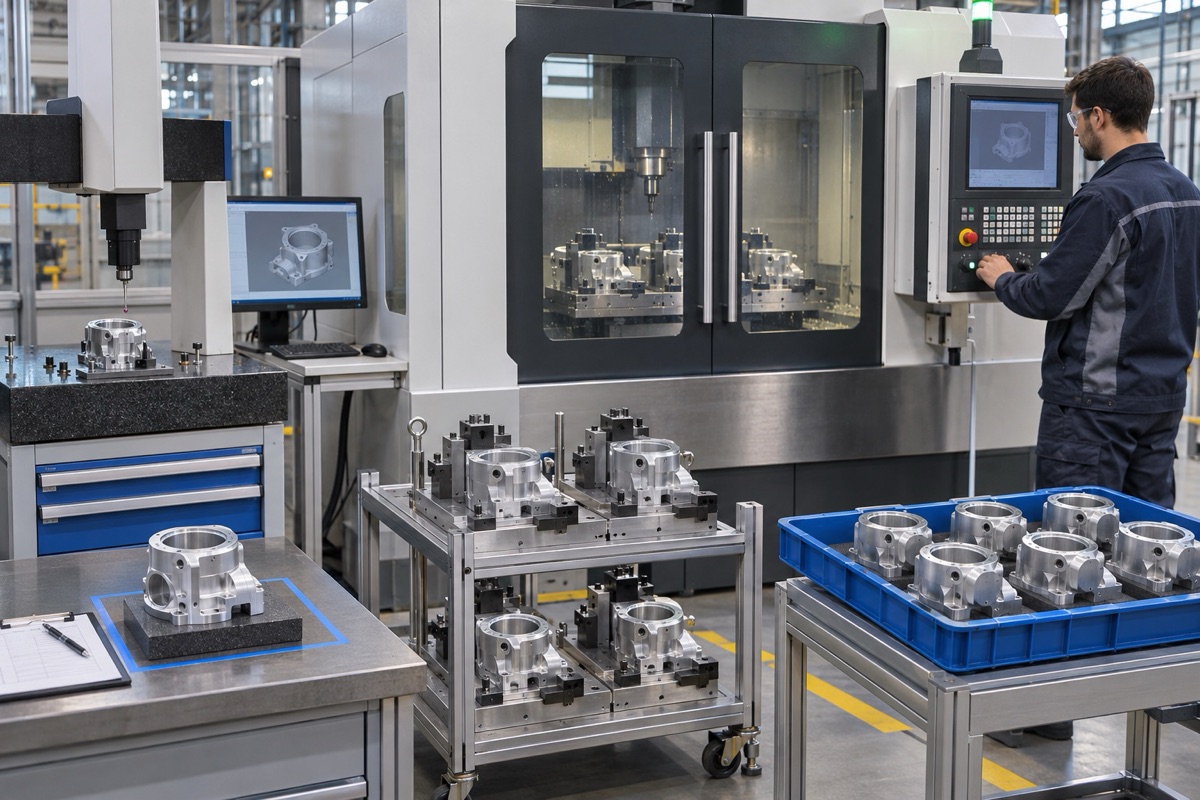
Trial production should replicate the equipment, tooling and measurement conditions of future production.
Capacity verification requires finding the real bottleneck
Machine cycle time is only one part of productivity. Changeovers, tool presetting, CMM, cleaning, surface treatment and outsourced shipping can all limit deliveries. Suppliers should give actual takt time, effective start-up time, bottleneck load and backup plan, and verify them through a planned number of capacity drills, rather than just calculating them in theoretical hours.
Quality assessment looks at both results and process
Check first articles, critical characteristic trends, gage and process status, material traceability, and exception closures. ISO 9001:2026 provides quality management system requirements, and ISO 11462-1:2026 provides SPC implementation guidance; neither certification nor control charts can replace specific drawings and control plans. Process capability indicators are only meaningful when the process is stable, the measurements are reliable, and the sample range is clear.
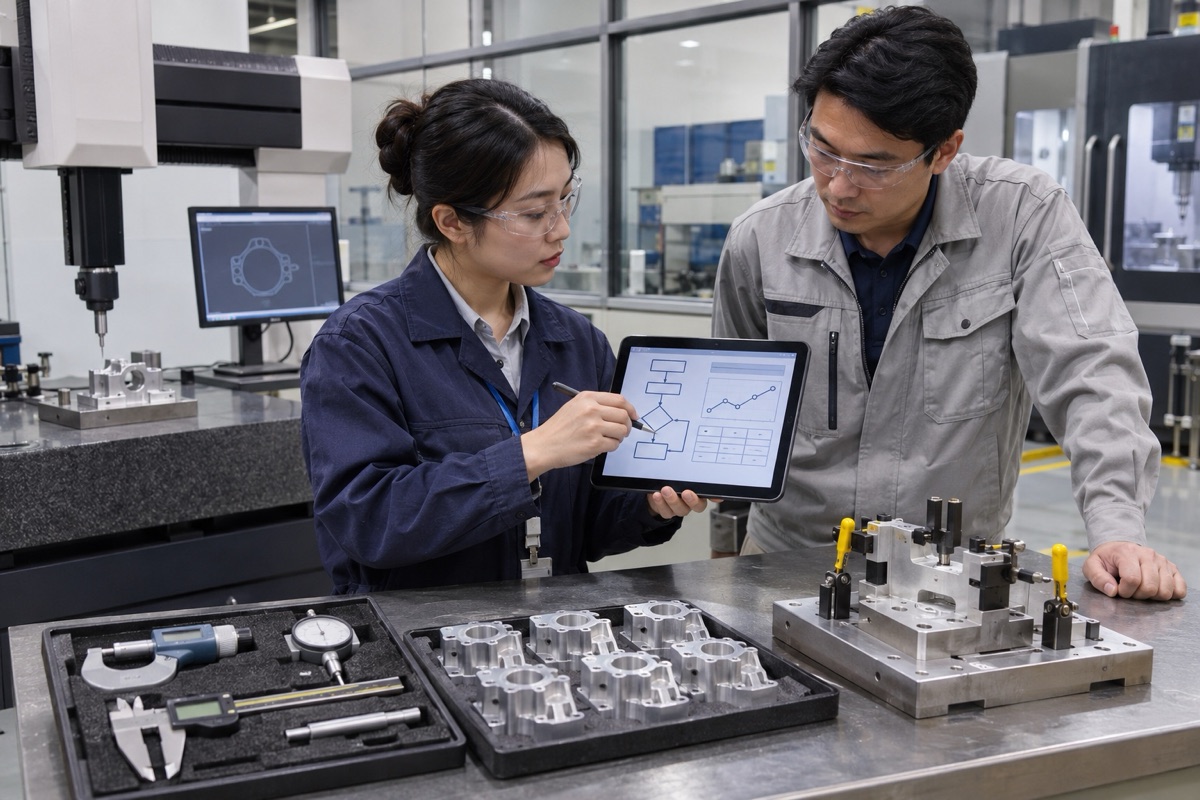
The assessment requires on-site evidence and continuous trial production data.
Outsourcing and changes must be transparent
Heat treatments, surface treatments and special processes should list approved sources, batch traceability and substitution rules. Changes in materials, tools, procedures, tooling, equipment or outsourcing need to assess the impact on key characteristics and re-first article or verify as agreed. Unannounced "equivalent substitutions" can make subsequent issues difficult to track.
Using staged scoring to decide on expansion orders
Supplier assessment can be divided into four stages: admission, sample, small batch and stable supply. Hard elimination items include out-of-control versions, non-traceable measurements, and unauthorized changes; scoring items include one-time delivery inspection, delivery time, problem closure, and cost improvement. OEMach recommends using real trial production data to determine order volume, and not replacing it with a visit or a high-quality sample.
Summary
Qualified suppliers should demonstrate that processes, measurements and supply chains are controlled within schedule and can identify the impact, approve changes and resume delivery when materials, tooling, equipment or outsourcing changes. The specific process still needs to be combined with sample process handover, formal tooling, program and tool versions, production capacity verification, first batch consistency, process capability, outsourcing management, change control and emergency capability confirmation.
FAQ
Does ISO 9001 certification mean mass production is possible?
No. Certification describes the system framework, and projects still need to verify processes, measurements, throughput and change control.
Is the larger the number of trial productions, the better?
Not necessarily. Key risks, tool life and cycle times should be covered while controlling R&D costs, with quantities determined by validation objectives.
Can manual repairs at the prototype stage be retained?
If the function requires it, it should be defined as a controlled process and the consistency should be verified; otherwise, it should be eliminated through design or process.
Ready to get a quote for your CNC machined parts?
Submit your engineering drawings to qiancj@oemach.com. We support prototype sampling and small-batch production with strict tolerance control.