
The core of TC4's difficulty in machining is not simply hardness, but the combination of low thermal conductivity, high temperature strength, chemical activity and elastic rebound. Parameters must be bound to material status, tool, machine tool and cooling conditions.
Stable machining of TC4 requires controlling heat input in the cutting zone and removing chips in a timely manner, managing tools with predictable wear thresholds, and verifying parts with free-state dimensions and surface integrity. The specific process still needs to be combined with TC4 material standards, low thermal conductivity, cutting zone temperature rise, tool geometry, cutting fluid direction, tool wear, thin-wall springback and surface integrity confirmation.
Typical problems, causes, controls and evidence
| Problem | Likely cause | Control action | Acceptance evidence |
|---|---|---|---|
| The tool is broken or notched in a short period of time | High temperature in the cutting area, re-cutting, cutting edge or parameters do not match the working conditions | Reduce unreasonable heat input, stabilize cutting thickness, directional sufficient cooling and monitor wear | Tool models, parameters, cooling status, wear photos and life trends |
| Springback of thin-walled titanium parts after processing | Low elastic modulus, clamping deformation and removal sequence superposition | Low force support, symmetrical layered material removal, coarse and fine separation, and retesting in the loose clamp state | Recording of free state contours, clamping force and final dimensions at each stage |
| Risk of strain or hardened layer on the surface | Dull tool friction, hesitation or chip adhesion increases thermal and plastic deformation | Maintain sharp edges and continuous cutting, avoid scraping, and change tools according to the wear threshold | Surface roughness, microscopic inspection, tool wear and process alarms |
First verify the standard correspondence between TC4 and Ti6Al4V
TC4 usually corresponds to the Ti-6Al-4V alloy, but the chemical composition, state, size and acceptance requirements are still subject to procurement standards and material certification. TIMET's Ti-6Al-4V data shows that the annealed room temperature thermal conductivity is about 6.6 W per meter Kelvin, and explains that the performance is affected by the thermal mechanical history. This data is used to understand low thermal conductivity characteristics and is not a substitute for specific heat lots and standards.
Low thermal conductivity concentrates heat in the cutting zone
Titanium alloys transfer less heat into the workpiece body, and the tool edges and chips bear a higher thermal load. As the cutting edge becomes dull, friction and temperature continue to rise, causing accelerated wear. The process should avoid long scraping, pauses and chips re-entering the cutting zone, and control heat and force through low and reasonable cutting speeds, stable cutting thickness and short tool extension.
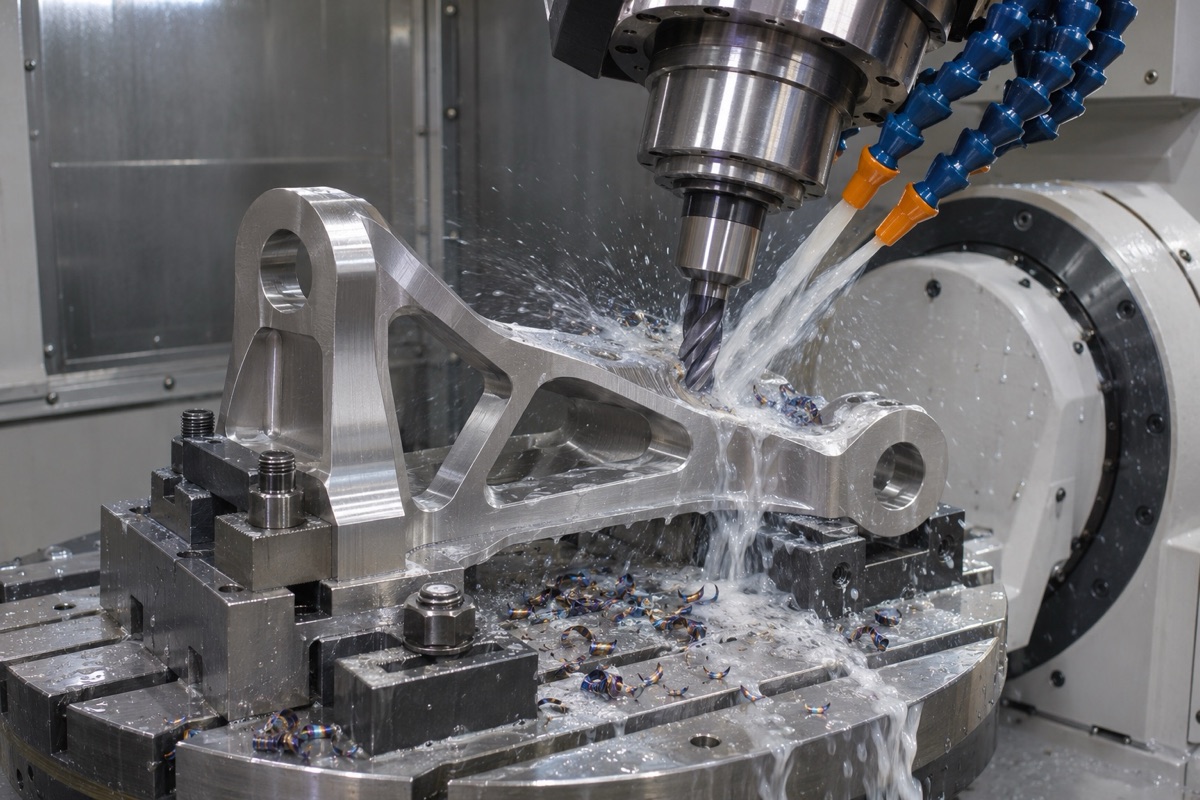
Cutting heat, chip evacuation and tool load need to be controlled simultaneously.
Vendor parameters can only be used as a specific starting point
The speed, cutting and high-pressure cooling recommendations in Sandvik and Seco materials are bound to specific cutting tools, material hardness, equipment and working conditions. Public cases cannot be directly turned into TC4 general parameter tables. The project should start with the tool manufacturer's window on the current tool, test cutting with a representative configuration, record spindle load, sound, chips, wear and dimensions, and then approve the parameter range.
Directional cooling is responsible for both cooling and chip removal
Titanium alloy machining requires the cutting fluid to continuously reach the cutting edge and take away the chips. The higher the high pressure, the better. The pressure and flow rate should match the nozzle hole, tool and machine tool capabilities. Intermittent or erratic cooling can cause thermal cycling and debris buildup. Deep cavities, drilled holes and enclosed areas must especially verify chip removal. Do not assume that cooling is effective just by seeing liquid in the nozzle.
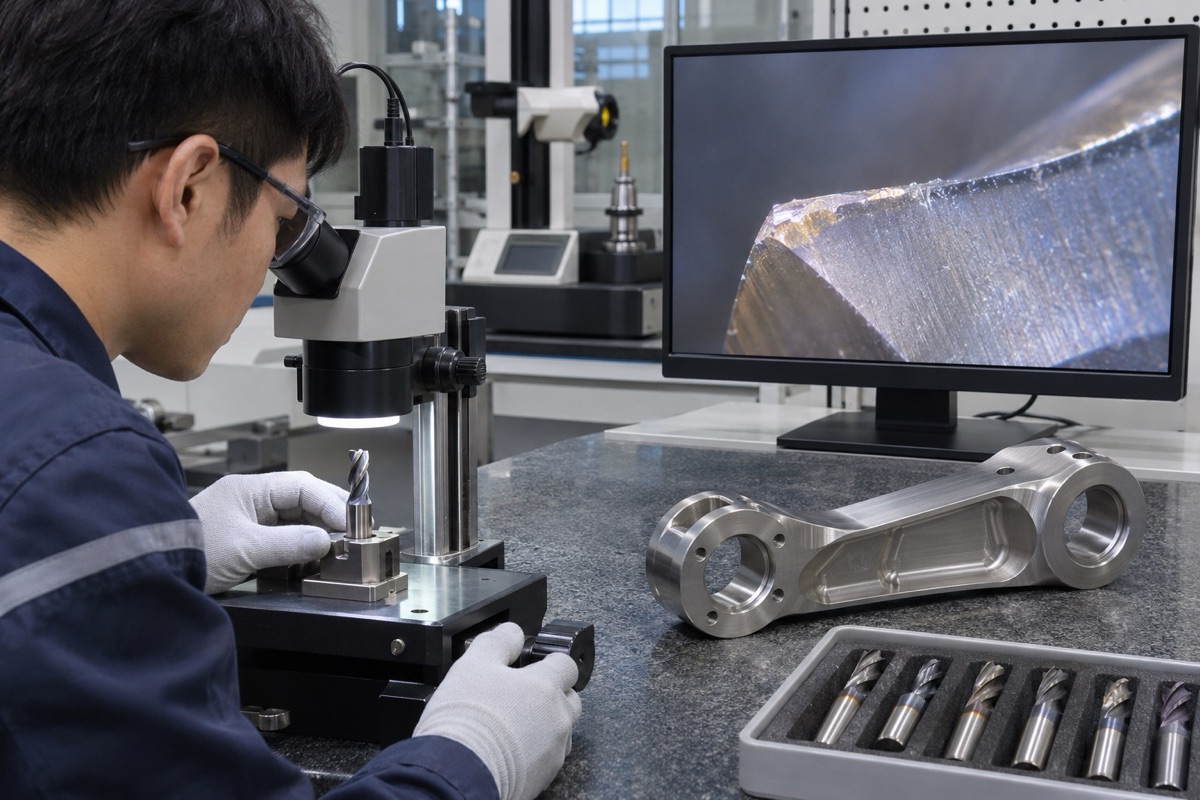
Tool change points should be determined by correlating wear and part results.
Wear pattern determines tool replacement strategy
A distinction should be made between flank wear, notch wear, chipping and sticking. The notch position is related to the depth of cut line, work hardening and chip impact; random chipping may come from runout, clamping or chip evacuation. The first trials will take photos of the edge at a uniform magnification, correlate wear with machining time, size and surface, and set a tool change threshold before sudden failure.
Thin wall and surface integrity require separate verification
Titanium alloys have a low elastic modulus and thin walls can deflect and spring back under clamping and cutting forces. Finishing operations should reduce radial loads, maintain sharp edges, and retest after loosening. For robot connectors that are subject to fatigue, burrs, strains, and abnormal thermal effects should also be controlled; without verification, functional risks cannot be judged solely based on size qualification and have been eliminated.
Summary
Stable machining of TC4 requires controlling heat input in the cutting zone and removing chips in a timely manner, managing tools with predictable wear thresholds, and verifying parts with free-state dimensions and surface integrity. The specific process still needs to be combined with TC4 material standards, low thermal conductivity, cutting zone temperature rise, tool geometry, cutting fluid direction, tool wear, thin-wall springback and surface integrity confirmation.
FAQ
Can TC4 directly use aluminum alloy parameters?
No. Titanium alloys have different thermal conductivity, strength, chemical reactivity and chip behavior, requiring specialized tools and parameter windows.
Does high-pressure cooling definitely extend tool life?
Not necessarily. It also depends on pressure, flow rate, nozzle hole direction, tool and working conditions, and should be verified by trial cutting.
Does the surface of the tool appear to be in good condition and can it continue to be used?
You can't just rely on your naked eyes. Wear should be checked according to a unified method and judged based on size, surface and spindle load trends.
Ready to get a quote for your CNC machined parts?
Submit your engineering drawings to qiancj@oemach.com. We support prototype sampling and small-batch production with strict tolerance control.