
The main risk in the R&D stage is usually not the production capacity of a single device, but the wrong version, too many in-process products, lost contact with outsourcing and incomplete first-piece evidence. This article provides practical management links.
Small-batch, multi-variety production should put part versions, process versions, batch status and quality evidence in the same traceability chain; only by stabilizing the flow of information can equipment and supplier resources truly shorten the R&D cycle. The specific process still needs to be combined with the material version, product family process route, small batch scheduling, work in progress isolation, outsourced batches, first article evidence and engineering change closure confirmation.
Typical problems, causes, controls and evidence
| Problem | Likely cause | Control action | Acceptance evidence |
|---|---|---|---|
| Wrong version or mixed materials in multiple varieties of orders | Drawings, programs, tooling and material versions are not bound and can only be identified by file name on site. | Establish configuration baseline and effective batch, isolate old version, double confirmation of picking and first article | Version signing, picking records, program verification and first article report |
| Frequent order insertion leads to out-of-control delivery | Schedule production only according to equipment availability, without considering tooling, cutting tools, outsourcing and inspection bottlenecks | Establish route and capability matrices by product family, limit work in progress and set freeze windows | Scheduling changes, work-in-progress, bottleneck loads and on-time delivery records |
| Samples are qualified but repeated batches fluctuate | Temporary compensation and manual repair have not formed a standard process | Solidify formal tooling, tool life and measurement procedures, and maintain windows with trend data | Process versions, tool change records, key feature trends and abnormal shutdowns |
R&D materials first establish a configuration baseline
From stage 0 to stage 1, the robot will simultaneously iterate the structure, motors, sensors and control interfaces. ISO 10007 applies configuration management to the entire product life cycle. The core is to identify configuration items, control changes and record status. The project should bind the three-dimensional model, two-dimensional drawings, materials, surface treatment, procedures, tooling and inspection specifications to the same version, and the on-site is not allowed to judge whether the document is new or old based only on the modification date.
Arrange processes by product family instead of individual parts
Temporarily arranging dozens of parts one by one will cause changeovers and waiting. Product families can be established based on materials, equipment, clamping methods, outsourcing and testing methods to form a process route and capability matrix. Similar parts can share preparation actions, but procedures or inspection requirements cannot be mixed. Scheduling needs to consider tooling, tooling, heat treatment, surface treatment and CMM at the same time, rather than just looking at machine tool idleness.
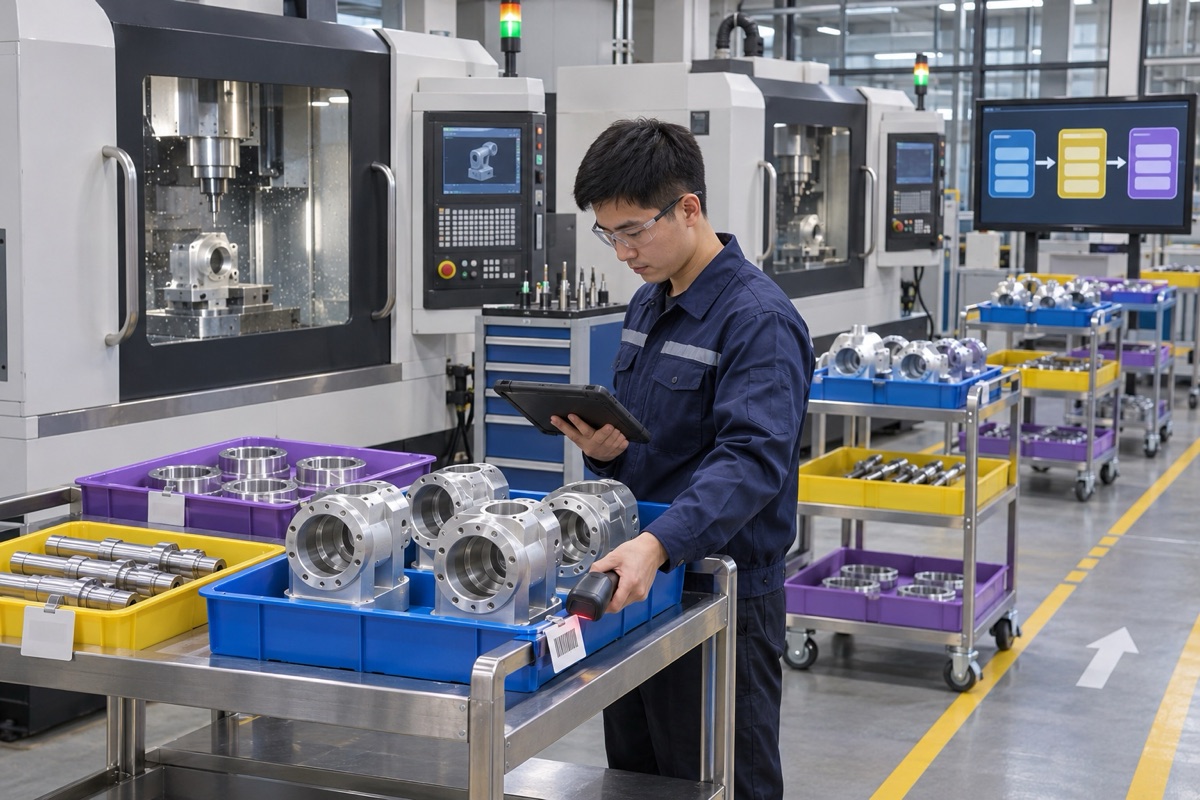
The information version, material batch and site status must be consistent.
Limiting WIP is more important than blindly starting work
In a high-mix environment, putting all tasks into production too early increases mix-ups, queuing, and change scrap. Projects can be set up with short-term freezing windows and clear priorities, and will only be released when drawings, materials and deliverables are in place. Maintaining a clear status for each batch and setting up physical separation for paused, pending and scrapped parts can reduce the situation where "everything looks like it is being done, but nothing is actually done".
The outsourcing process should be included in the same batch traceability
Heat treatment, anodizing, grinding or special inspection often determine the overall cycle time. Suppliers need to disclose outsourcing routes, responsible persons, batch identification and incoming and outgoing inspections, and confirm whether old parts continue to circulate when changes are made. Short distance cannot replace traceability, and outsourcing certificates cannot replace return-to-factory re-inspection of key dimensions and appearance.
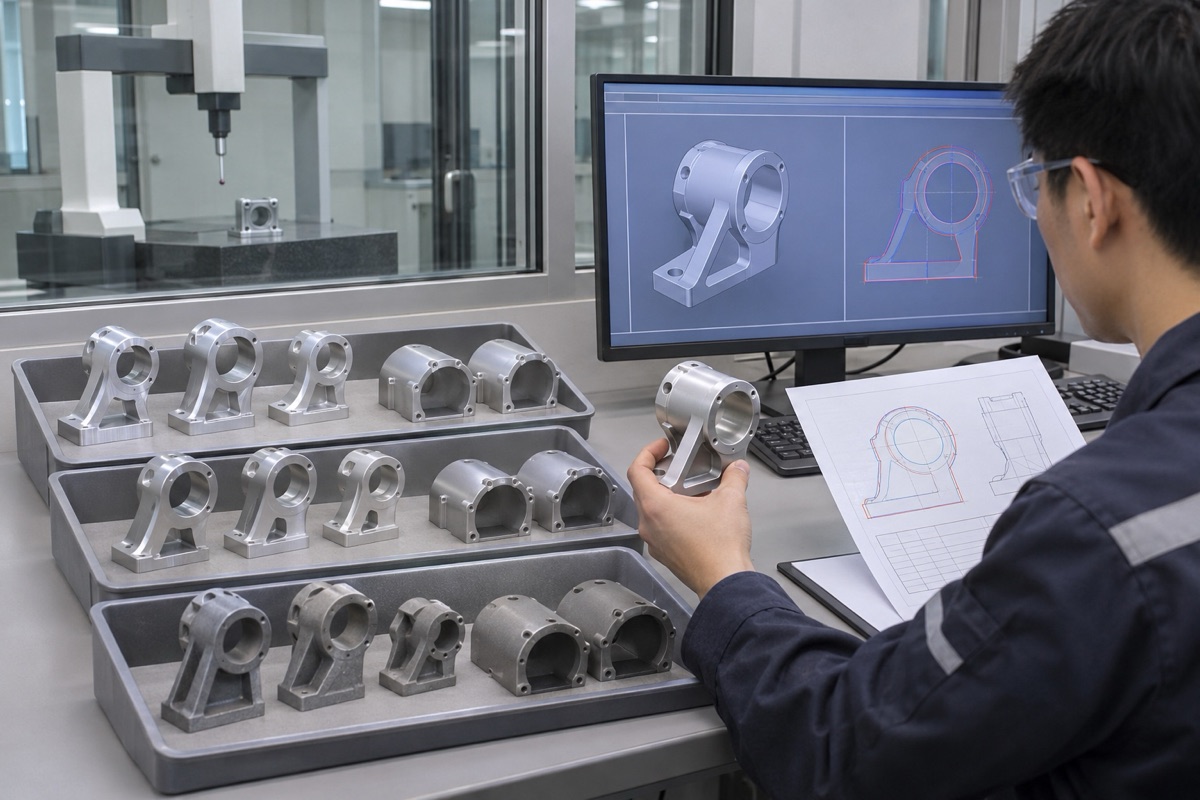
Configuration changes must cover parts, procedures, tooling, and inspection requirements at the same time.
First article reports are used in the approval process rather than individual items
The first article should demonstrate that materials, equipment, tooling, procedures, and measurement protocols can produce acceptable results under the specified version. When a small batch is transferred to the next round, it is necessary to distinguish between design changes and process compensation, and record the effective batch. If the sample is passed through manual repair, the repair risk should be fed back to the design and cannot be hidden as a normal process.
Observe supply chain health with a handful of metrics
It can track the number of version misuses, first-time delivery inspection pass rate, outsourcing on-time rate, WIP residence time and change closure cycle. ISO 9001:2026 provides a quality management framework, and ISO 11462-1:2026 gives guidance on the implementation of statistical process control, but specific product requirements are still defined by customer drawings and project control plans. Metrics should help locate bottlenecks, not create additional reports.
Summary
Small-batch, multi-variety production should put part versions, process versions, batch status and quality evidence in the same traceability chain; only by stabilizing the flow of information can equipment and supplier resources truly shorten the R&D cycle. The specific process still needs to be combined with the material version, product family process route, small batch scheduling, work in progress isolation, outsourced batches, first article evidence and engineering change closure confirmation.
FAQ
Does small batches require formal tooling?
Not necessarily. If critical datums, thin walls, or repeated fixtures affect results, formal or repeatable modular tooling may still be necessary.
Is it possible to make changes while making frequent changes?
It can be released in stages, but the baseline, effective batch and old material disposal must be clearly configured, and the approved version cannot be verbally overwritten.
Can ISO 9001 certification prove small batch delivery capabilities?
cannot be proven individually. Certification describes the quality system framework and needs to be verified with project-specific process, inspection, change and delivery data.
Ready to get a quote for your CNC machined parts?
Submit your engineering drawings to qiancj@oemach.com. We support prototype sampling and small-batch production with strict tolerance control.