
This article emphasizes obtaining the real temperature spectrum and thermal path of the part first, and then selecting materials and insulation solutions to avoid over-designing based only on the maximum temperature of the welding arc zone or missing weak links in the system.
The temperature resistance of the wrist is determined by materials, heat treatment, bearings, lubrication, sealing, cables and heat insulation; replacing a single shell with heat-resistant steel cannot automatically solve the problem of thermal accuracy and lifespan. The specific process still needs to be confirmed by combining the real temperature spectrum of the wrist, heat radiation and conduction paths, peak values and duration, material high temperature performance, thermal expansion, bearing lubrication, sealing and cable limitations.
Typical problems, causes, controls and evidence
| Problem | Likely cause | Control action | Acceptance evidence |
|---|---|---|---|
| hot revert tight | Thermal expansion of housing, shaft and bearings are different and internal clearance is eaten away | Establish a thermal dimensional chain and verify motion under real temperature spectrum | Thermal gap, torque and temperature curves |
| Premature bearing or seal failure | Mismatch in lubricant, cage, seal and material temperature limits | Select according to the lowest temperature limit of the entire set of components and add insulation/cooling | Component specifications, thermal cycling and life verification records |
| Room temperature dimensions are acceptable but high temperature drift | Material high temperature strength, stress relaxation and thermal gradients are not considered | Select verified material status and retain post-heat retest | Pre-heat and post-heat position, shape and material batch data |
Obtain the real temperature spectrum before selecting materials
The welding arc, workpiece, and spatter create radiant and localized heat sources, but the temperatures experienced by wrist parts depend on distance, attitude, tempo, heat shield, cooling, and thermal conduction paths. The instantaneous peak value, cycle temperature and long-term stable temperature should be distinguished and measured under typical and worst-case operating conditions. Taking the arc zone temperature directly as the bearing seat temperature will lead to distortion in material selection.
Materials depend on their performance at high temperatures
Room temperature strength and hardness cannot represent load-bearing, creep, oxidation and dimensional stability at high temperatures. Aluminum alloys are light, but their modulus and strength change with temperature and have large thermal expansion; alloy steel or heat-resistant stainless steel has higher temperature potential, but the quality, processing, corrosion and cost are different. Specific grades must be evaluated based on temperature spectrum, load and material data sheets, and a unified answer cannot be given outside of the working conditions.
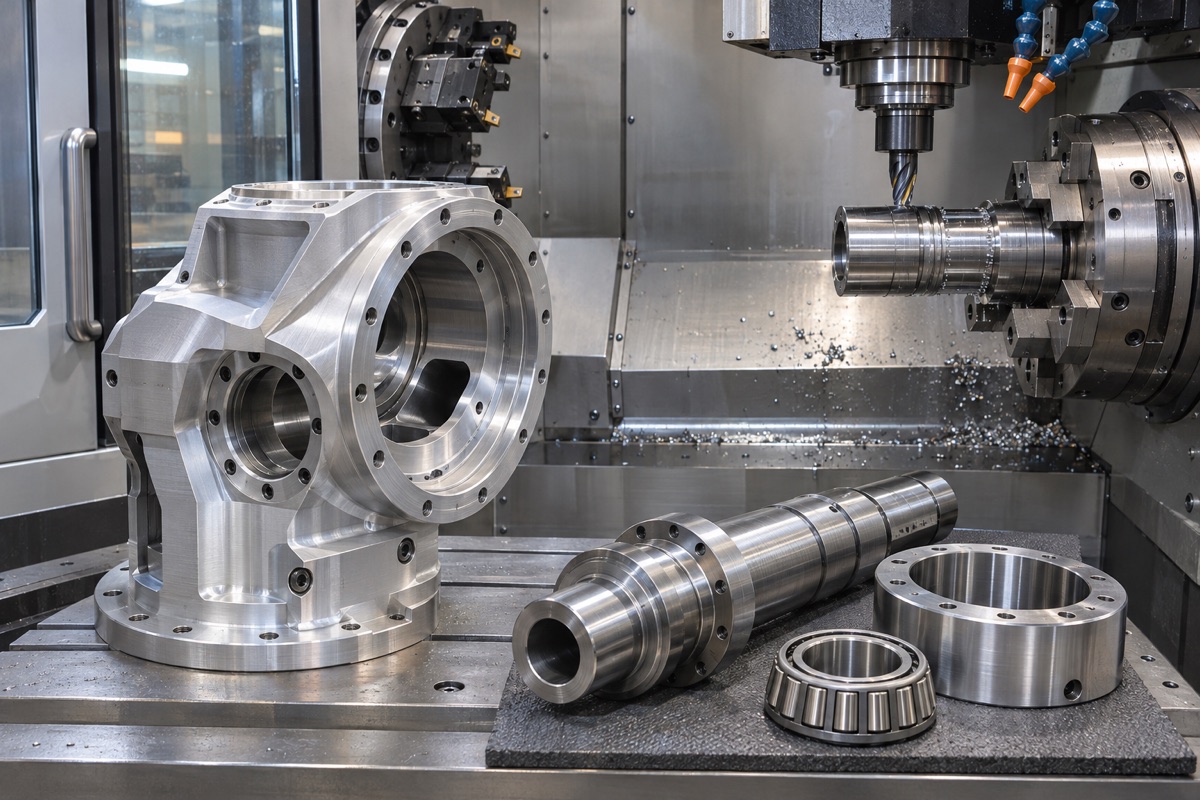
Under high temperature working conditions, it is still necessary to ensure the stability of the hole system and matching reference.
Thermal expansion changes bearings and fits
Housing, shaft, bearing ring and fastener materials are different, and the fit and internal clearance will change after heating. An increase in interference may cause the rotation to tighten, while a decrease in interference may cause crawling. The process review should establish a thermal dimensional chain to control bearing position roundness, cylindricity and coaxiality, and retest after thermal cycling. Surface coating thickness and stability also enter into the fit analysis.
Lubrication, sealing and cables often reach their limits first
SKF data points out that the allowable temperature of bearings may be limited by lubrication or materials. High temperatures will reduce the viscosity and thermal stability of the lubricant; cages, seals and cables also have their own temperature limits. Wrist design should be evaluated against the minimum constraints of the entire system, not just the metal casing. Use heat shielding, air/water cooling, or rearrange cables to reduce actual temperatures if necessary.
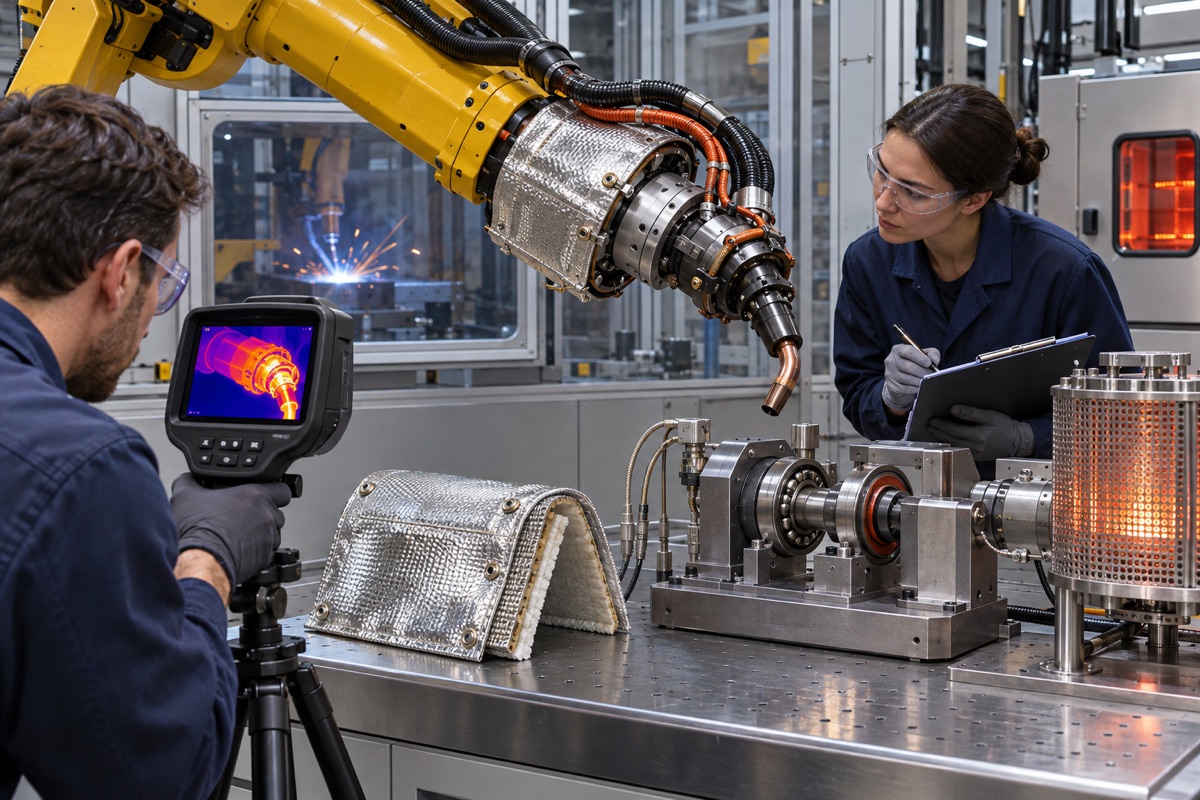
Material selection should be based on real temperature spectra and cover bearing, sealing and cable limitations.
Processing requires controlling heat treatment and residual stress
The material condition of heat-resistant steel, quenched and tempered steel or stainless steel affects processing distortion and final high temperature stability. Roughing and finishing machining, heat treatment and grinding should be arranged around functional benchmarks to avoid insufficient key hole margins after heat treatment. Welding or coating processes may also introduce deformation, and bearing locations, end faces, and hole systems should be retested before final assembly.
Approved with exercise data after thermal cycling
Room temperature dimensional qualification can only prove the initial state. Verification should record wrist position drift, rotational torque, vibration and recovery after cooling under specified load, attitude and temperature cycles. If the material or insulation scheme changes, it should be re-validated. The temperature examples in public articles cannot directly become product limits. The project must be based on the actual measured temperature spectrum and component supplier requirements.
Summary
The temperature resistance of the wrist is determined by materials, heat treatment, bearings, lubrication, sealing, cables and heat insulation; replacing a single shell with heat-resistant steel cannot automatically solve the problem of thermal accuracy and lifespan. The specific process still needs to be confirmed by combining the real temperature spectrum of the wrist, heat radiation and conduction paths, peak values and duration, material high temperature performance, thermal expansion, bearing lubrication, sealing and cable limitations.
FAQ
Does the wrist shell have to be made of heat-resistant stainless steel?
Not necessarily. It is necessary to combine the real temperature spectrum, load, mass, corrosion and insulation solution selection.
Is it enough to just increase the temperature resistance of the material?
Not enough. Bearings, lubrication, seals, cables and fits may reach limits earlier.
How to verify thermal state accuracy
Record the temperature, position drift, rotational torque and cooling recovery under specified working conditions, and correlate the part geometry.
Ready to get a quote for your CNC machined parts?
Submit your engineering drawings to qiancj@oemach.com. We support prototype sampling and small-batch production with strict tolerance control.