
Bulk magnesium can be machined under controlled conditions, but fine chips, dust, heat and unsuitable equipment create distinct hazards. Alloy, product form and each operation need a documented risk assessment.
This guide describes management boundaries rather than executable fire-response instructions. Site controls must follow the material safety data, equipment guidance, applicable law and qualified EHS and fire professionals.
Safety and process controls
| Risk | Control | Evidence |
|---|---|---|
| Chip accumulation | Use the approved removal and segregated collection system | Shift cleaning and container logs |
| Abnormal heat with worn tools | Use suitable sharp tools and managed life limits | Tool change and load records |
| Staff cannot respond to an event | Qualified EHS defines and trains the site plan | Assessment, training and drill records |
Confirm alloy and risk scenario
Obtain the material certificate and safety data, then assess stock form, chip size, dust-producing operations, ventilation, mixed-metal contamination and equipment internals. Machining approval belongs to trained, authorized personnel.
Use sharp, stable tooling
Dull edges, rubbing geometry and excessive overhang increase friction and heat. Tooling must match the alloy and operation and be replaced through a monitored plan. Universal speeds or feeds are inappropriate; machine, tool and safety trials must approve the actual process.
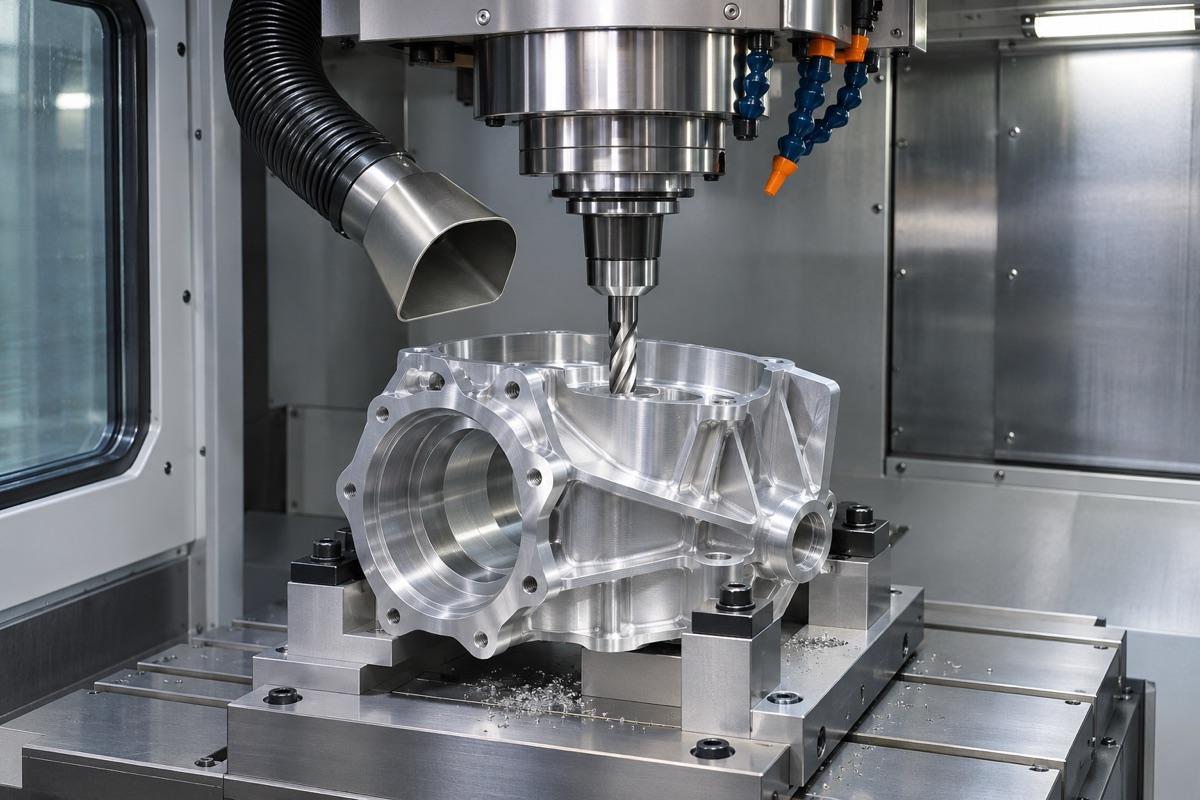
Sharp tools, controlled chip removal and compatible equipment are basic requirements.
Build a closed chip-management system
Chip extraction, collection media, filters, containers, cleaning tools and transfer rules must be proven compatible with magnesium and the expected chip form. Chips should not accumulate, mix with incompatible waste or remain near heat sources. Abnormal heat, smoke or extraction failure triggers the site's stop and emergency procedure.
Let professionals define fire response
Fire detection, separation, extinguishing resources and response actions are site-specific and must be set by qualified EHS and fire specialists under applicable codes and the SDS. Quality review should also audit tool life, machine cleanliness, chip containers, media condition and training after every material or process change.
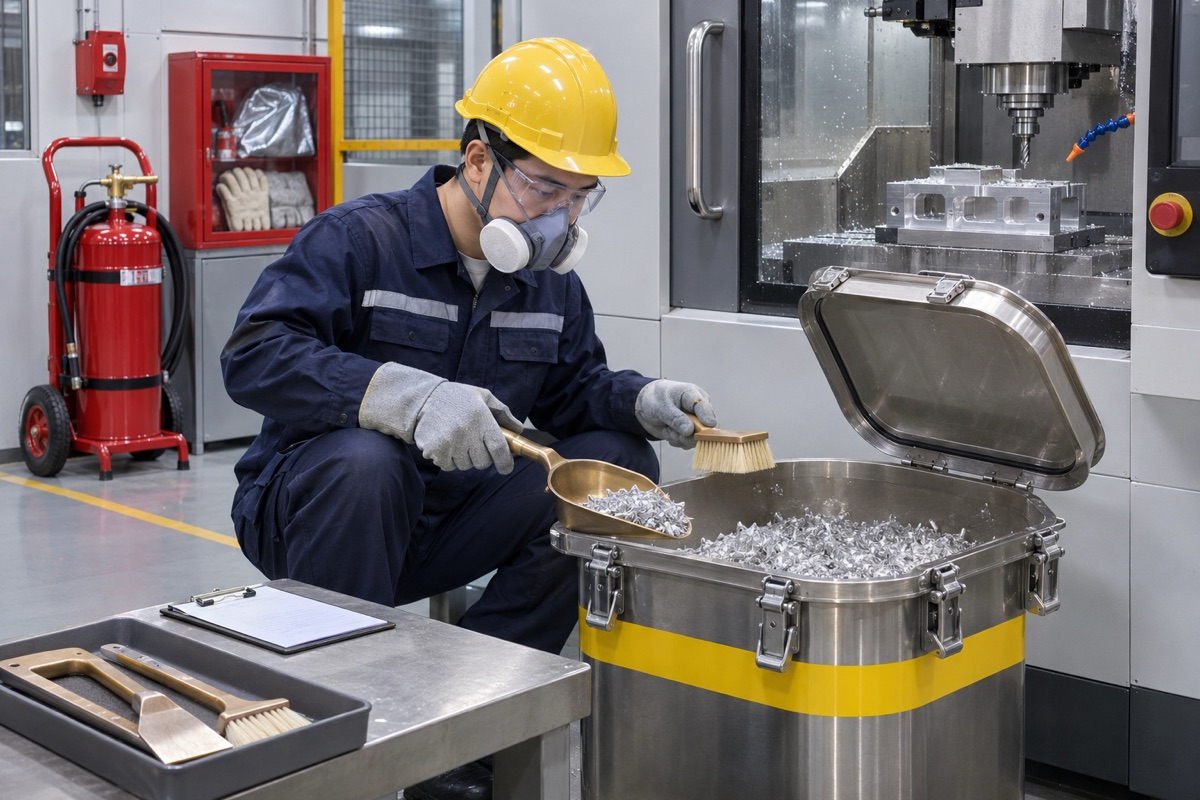
Chip handling, training and emergency resources must form a documented system.
Summary
Magnesium machining is a controlled professional process requiring material identification, sharp tooling, compatible chip handling and a trained site-specific safety system.
FAQ
Does magnesium ignite whenever it is machined?
No. Bulk material can be machined, but chips, dust, heat and unsuitable controls increase risk.
Can an aluminum machine run magnesium without review?
No. Extraction, media, cleaning, fire and cross-contamination must be approved.
Can an online article choose the extinguishing method?
No. Qualified site professionals must define it for the actual material, facility and law.
Ready to get a quote for your CNC machined parts?
Submit your engineering drawings to qiancj@oemach.com. We support prototype sampling and small-batch production with strict tolerance control.