
Vacuum level determines the material, sealing, cleaning and test boundary. Before machining, define target pressure, allowable leak rate, bakeout range, residual-gas expectations and interface type.
A dimensionally correct chamber is not proven vacuum-ready until material history, welds, sealing faces, contamination control, leak testing and background behavior form a consistent evidence chain.
Vacuum-chamber risks and controls
| Risk | Control | Evidence |
|---|---|---|
| Localized helium leak | Protect seals; use approved welding, cleaning and testing | Leak location and retest record |
| Background remains high | Remove traps and apply approved cleaning/bakeout | Cleaning batch, pump-down curve or RGA |
| Flange will not assemble | Stabilize after welding and restore common datums | Face form, hole location and trial fit |
Define vacuum class before process selection
High vacuum and ultra-high vacuum do not share identical material and cleanliness requirements. Stock route, alloy state, weldability, bakeout and interface standard must be approved before a route is quoted. Material certificates and batch identity should remain traceable.
Design out contamination traps
Blind holes, unvented threads, laminations and closed crevices can create virtual leaks or retain process residues. Cutting fluids, marking compounds, tapes and rust preventives require compatibility review; suitability for ordinary parts does not prove vacuum compatibility.
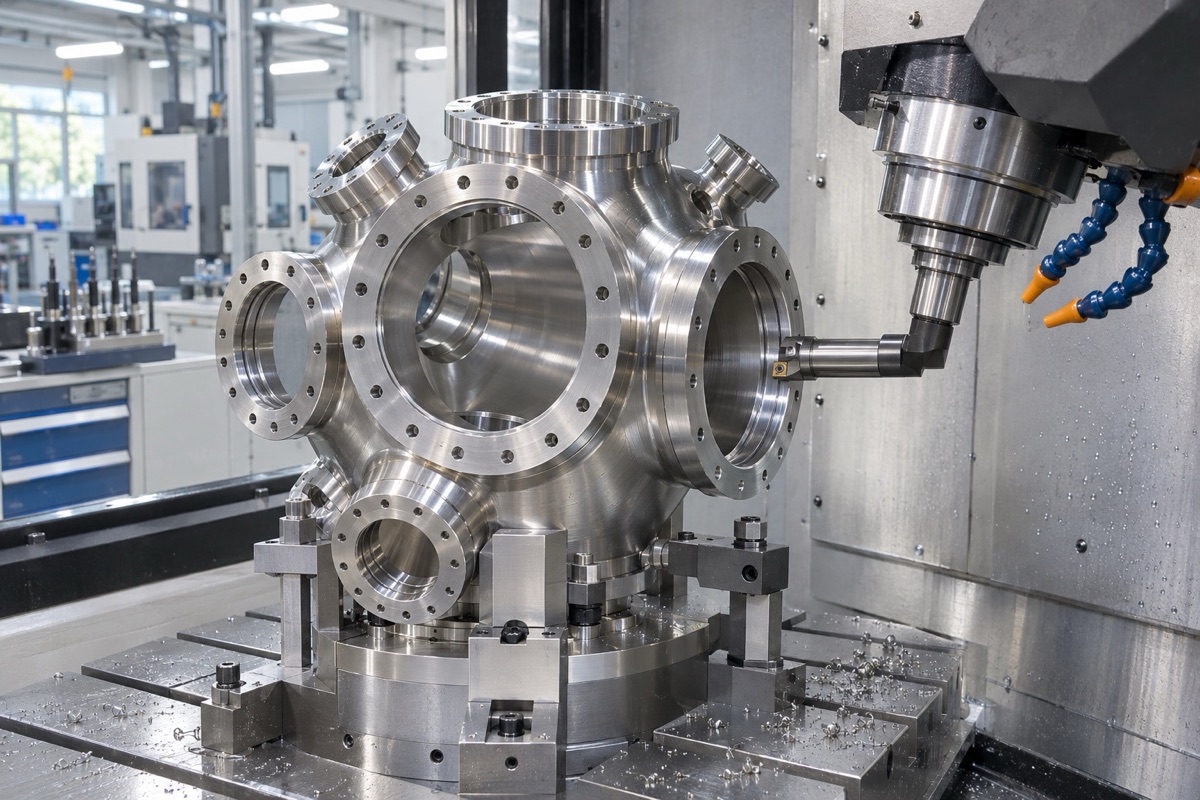
Sealing faces, hole patterns and chamber datums must be restored after welding and stabilization.
Protect seals and recover geometry after welding
Metal seals depend on specific edge and face geometry. Scratches, handling damage and weld distortion can cause leakage. Plan weld allowance, stabilization and post-weld datum recovery, and protect completed sealing faces with clean compatible covers.
Treat cleaning, packaging and testing as manufacturing
Use the approved degreasing, rinsing, drying, handling and packaging sequence for the material and vacuum target. Helium leak testing identifies through-leaks; pump-down curves or residual-gas analysis address outgassing, contamination and virtual leaks. Reports must state method, equipment, temperature and test duration.
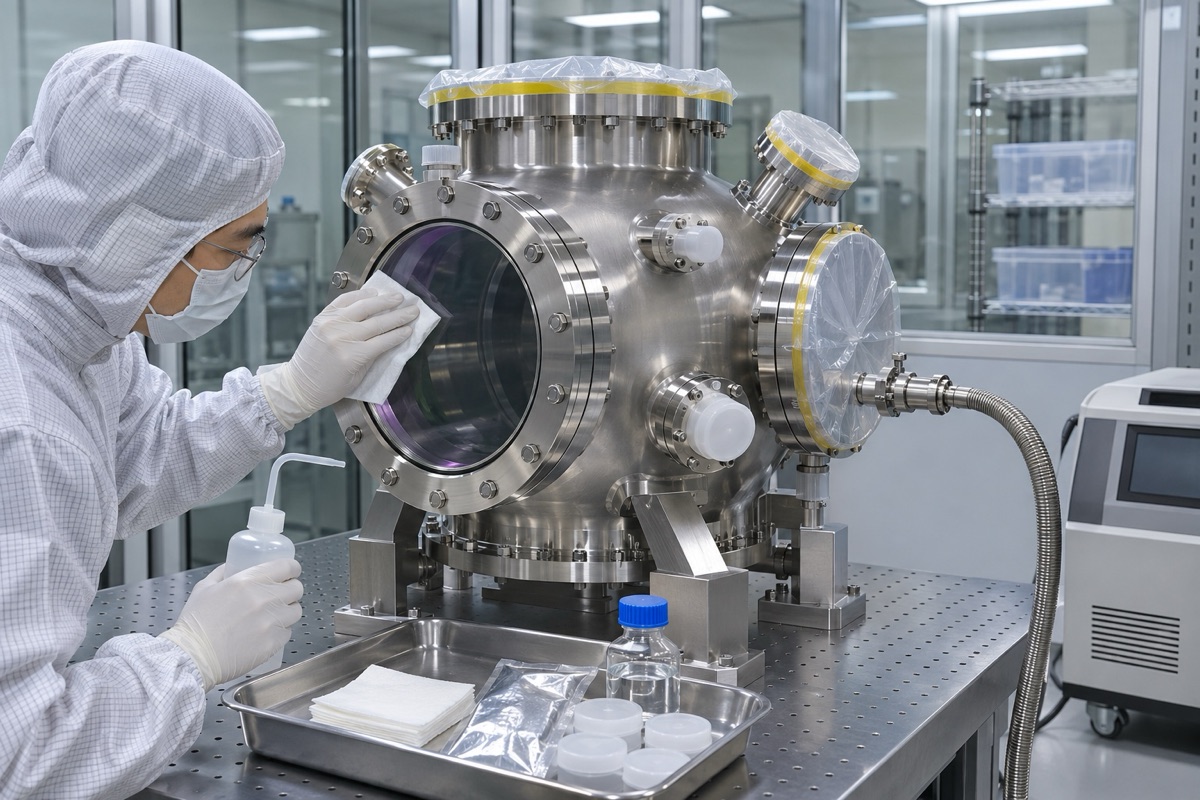
Cleaning, protected handling, packaging and testing form one traceable manufacturing chain.
Summary
Vacuum chamber quality depends on traceable material, cleanable design, protected sealing geometry, controlled post-weld machining and separate leak and background evidence.
FAQ
Does a smoother internal surface always mean better vacuum?
No. Material outgassing, contamination, crevices, seals and test conditions also matter.
Can an alcohol wipe replace vacuum cleaning?
Usually not. Cleaning must match the contaminant, material and approved vacuum requirement.
Does a helium-leak pass prove low outgassing?
No. Leak testing and outgassing/background testing address different failure modes.
Ready to get a quote for your CNC machined parts?
Submit your engineering drawings to qiancj@oemach.com. We support prototype sampling and small-batch production with strict tolerance control.