
AGV wheel shafts combine wheel load, drive torque, frequent starts, steering and floor impact. Hardness alone cannot prevent fretting, runout or early bearing-seat failure.
The process should select material, treatment and fit from the real load direction, then restore journal form and a common rotation axis after treatment and verify the assembled result.
Wear and accuracy risks
| Risk | Cause | Control |
|---|---|---|
| Fretting at bearing seat | Loose fit, form error or impact | Select fit by load and control journal form |
| Hard surface fails early | Shallow layer, stress concentration or grinding damage | Verify case depth, radii and surface integrity |
| Wheel runs out | Journals, hub and key feature use different axes | Organize turning, treatment and grinding around one axis |
Determine load and ring movement
Confirm wheel load, torque path, side load, overhang and which bearing ring rotates relative to load. These conditions guide fit and surface-strengthening choices.
Treat wear resistance as a material system
Through hardening, induction hardening, carburizing or another route changes distortion and finishing needs. Specify hardness, effective case depth or material-state evidence and protect shoulder radii.
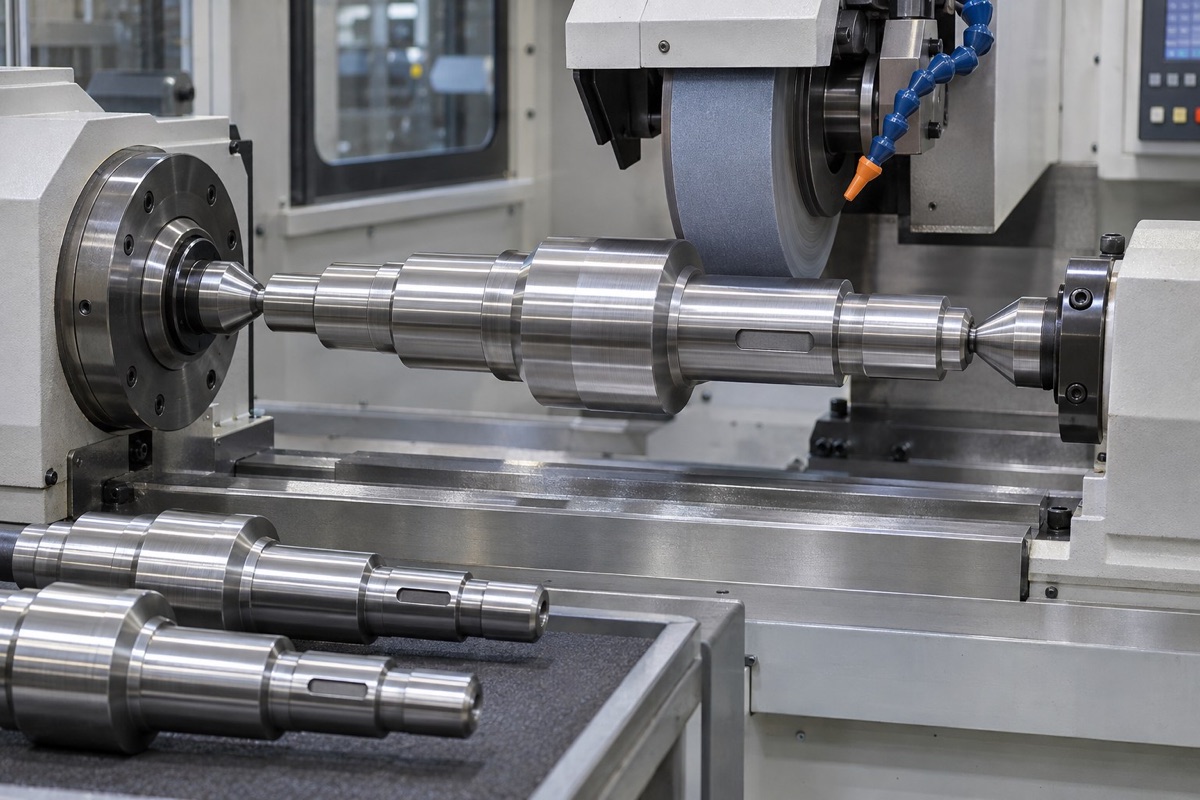
Bearing journals and wheel interfaces should be restored around one rotation axis after heat treatment.
Balance bearing fit
Too little interference can permit micro-movement; too much can alter bearing internal condition and assembly risk. Fit selection also considers size, temperature, service method and bearing guidance.
Restore one rotation axis after treatment
Preserve recoverable references and feature-specific stock. Check straightness first, then grind or hard-turn journals and wheel interfaces so one good diameter does not hide whole-shaft runout.
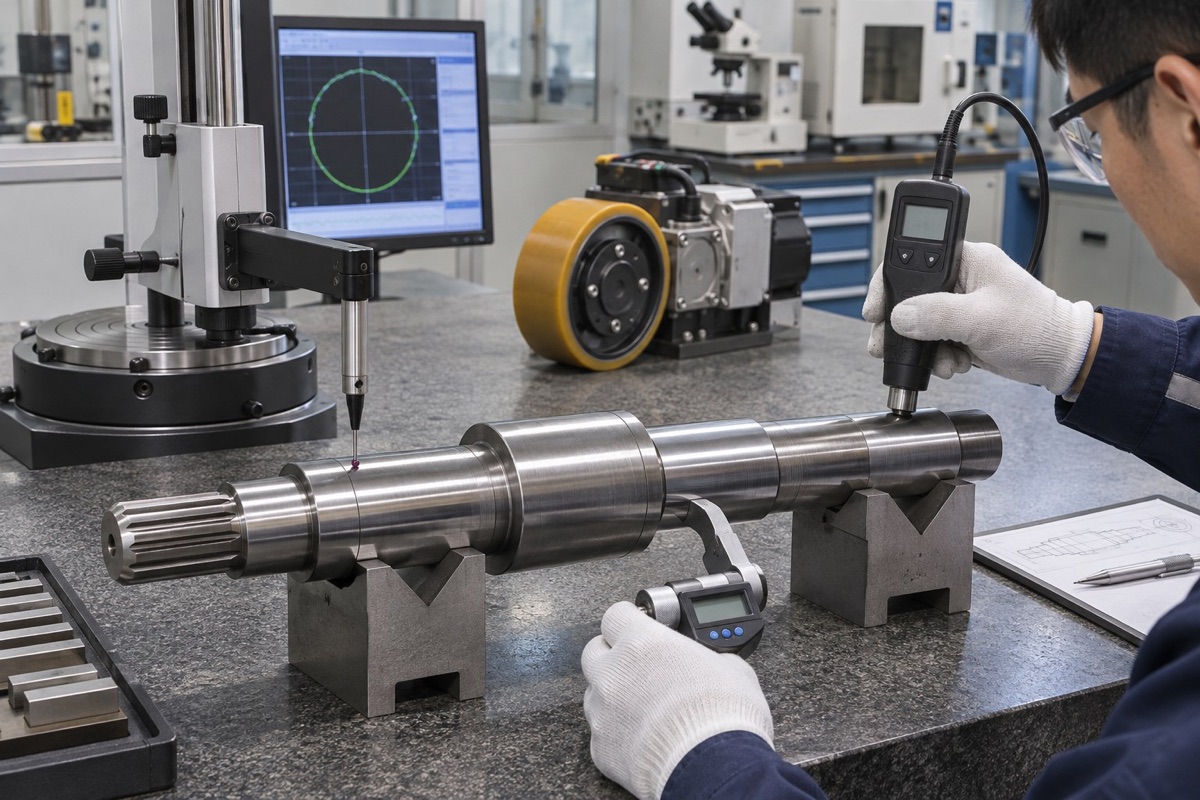
Hardness or case depth should be reviewed together with journal form, runout and assembly data.
Connect geometry to assembly behavior
Verify journal roundness, cylindricity, shoulder squareness and surface, then record starting torque, runout, temperature and wear pattern from first assemblies with heat-treatment and finishing traceability.
Summary
AGV shaft life depends on the combination of load-based fit, verified hardened condition, one restored rotation axis, intact surfaces and assembly evidence; higher hardness cannot replace geometry.
FAQ
Does higher shaft hardness always increase life?
No. Toughness, case depth, surface integrity and real contact condition must also be suitable.
Why can a size-correct bearing seat still wear?
Roundness, cylindricity, surface, fit choice and shaft bending can create uneven support or fretting.
Must every wheel shaft be ground?
No. The final process depends on material, treatment, accuracy and equipment; the required geometry and surface are what matter.
Ready to get a quote for your CNC machined parts?
Submit your engineering drawings to qiancj@oemach.com. We support prototype sampling and small-batch production with strict tolerance control.