
Fast machining does not guarantee a fast development loop. Waiting for material, unclear test goals, file mismatches and poorly documented failures often consume more time than cutting.
Each prototype round should answer a limited question and end with evidence that supports the next decision. This keeps speed from becoming repeated rework.
Iteration delays and controls
| Delay | Cause | Control |
|---|---|---|
| Core issue remains after several rounds | Unclear goal or too many variables | Define one test objective and exit criteria |
| Wrong revision is made | Model, drawing and order disagree | Release one signed version baseline |
| Acceptance differs by person | Undefined datum or method | Agree the measurement plan before machining |
Define the purpose of each build
Decide whether the round checks space, motion, strength, heat, surface or manufacturability. Material, tolerance and finishing can then be matched to that purpose with design approval.
Complete useful DFM before release
Review tool access, radii, thin walls, datums, burr direction, treatment distortion and measurement access. Record accepted actions in the controlled drawing or change record.
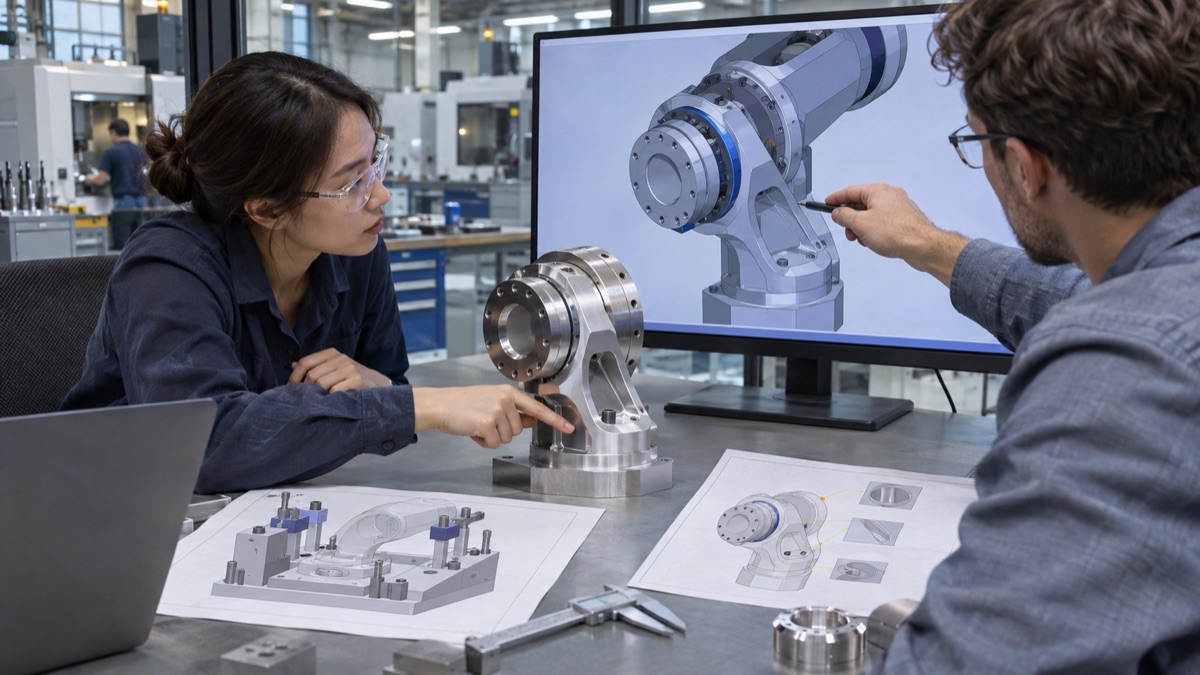
Design, machining and inspection teams should align files, risks and evidence before release.
Prepare long-lead resources early
Identify special stock, tools, heat treatment, coating and gauges at kickoff. Reuse soft jaws, baseplates and inspection fixtures when interfaces and datums remain stable.
Control every versioned file
The 3D model, 2D drawing, BOM, finish specification and issue list need one revision identity. On a change, decide explicitly whether work in progress is used, reworked or scrapped.
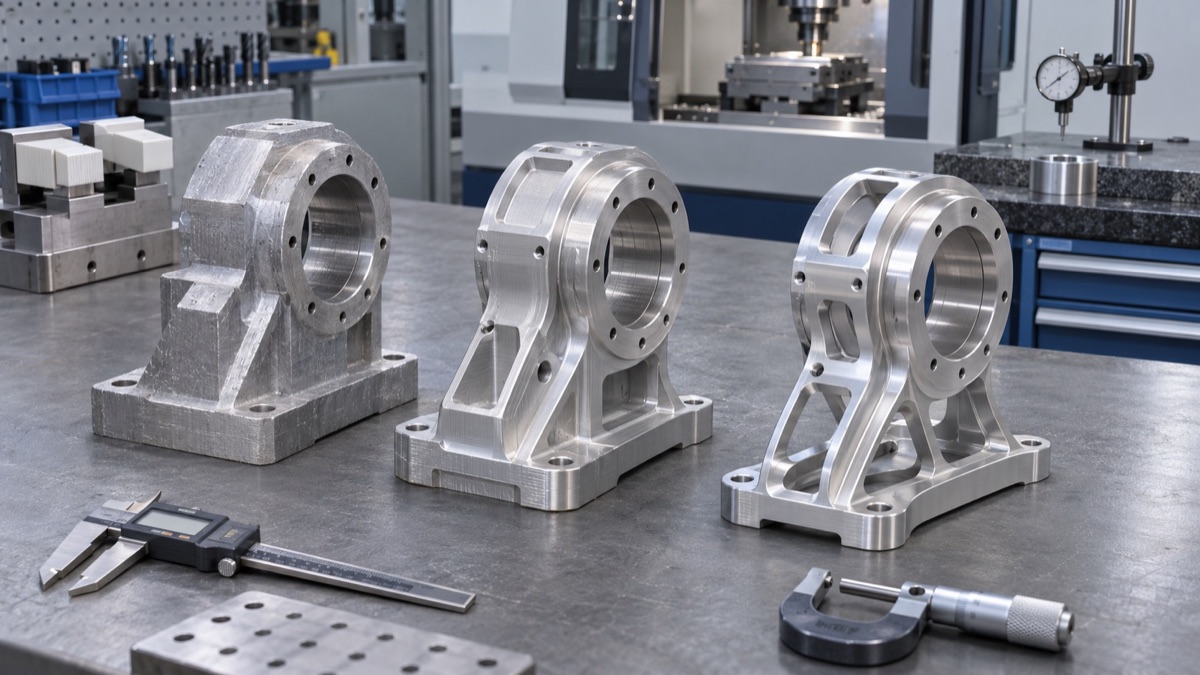
Each build should answer a defined question and preserve reusable datum and fixture decisions.
Close problems with measured evidence
Record actual dimensions, assembly location, load and images rather than only saying a part does not fit. Separate design, machining, measurement and assembly causes and define the proof required next round.
Summary
Short prototype cycles come from focused test goals, early risk review, one controlled file baseline, advance planning for long-lead work and evidence-based closure. Prototype success still requires a separate production validation.
FAQ
Must the first prototype use final material?
Only when the test depends on weight, stiffness, heat or surface behavior. Space checks may permit an approved substitute.
Must every dimension use final tolerance?
No. Critical characteristics can be prioritized, but any relaxation must be approved and clearly identified.
When should production fixtures be planned?
Planning can start when interfaces and datums are stable; final investment waits for the released design and process review.
Ready to get a quote for your CNC machined parts?
Submit your engineering drawings to qiancj@oemach.com. We support prototype sampling and small-batch production with strict tolerance control.