
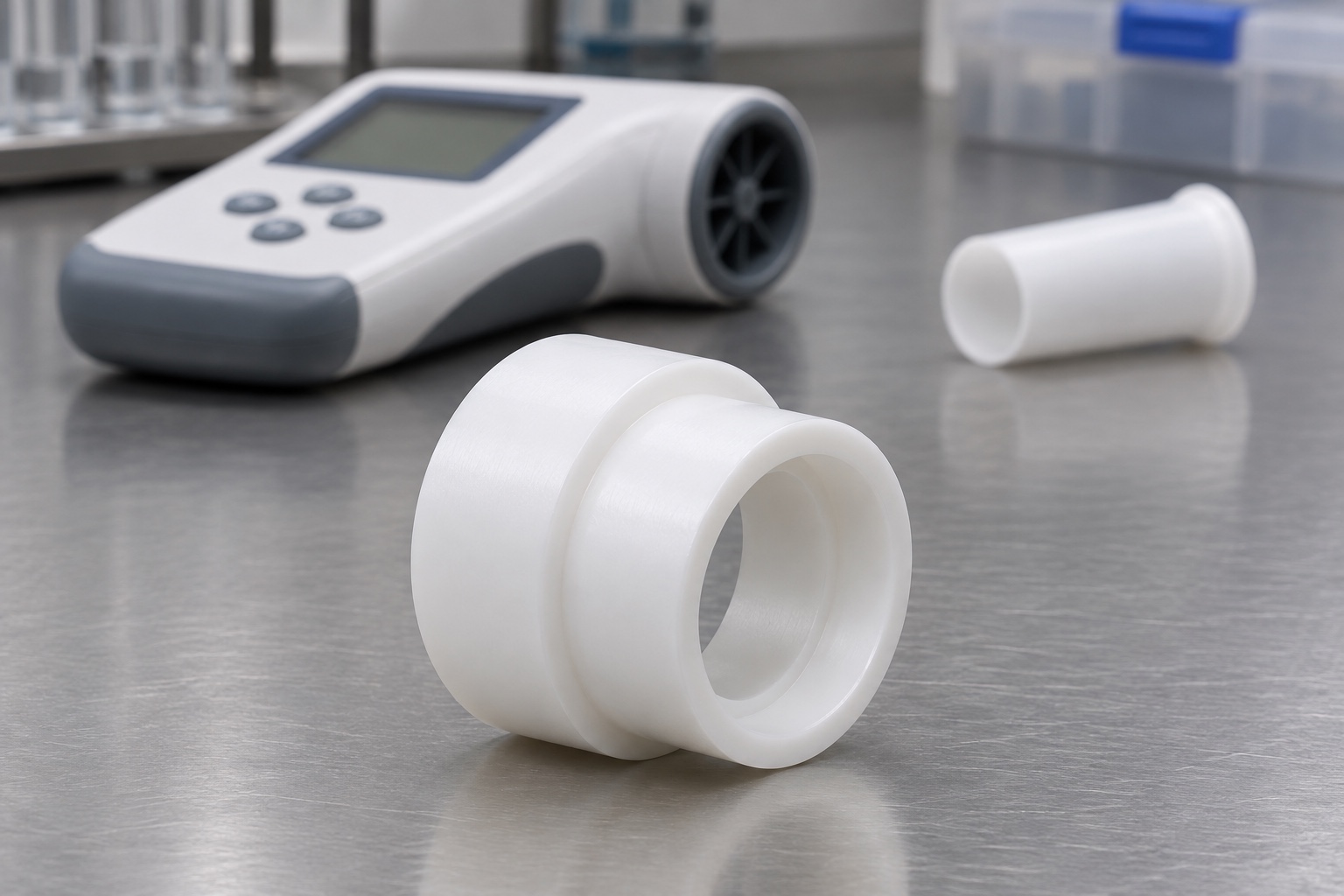
Separate a fit gauge from a breathing accessory
A spirometry system may specify its own mouthpiece and interface. A bench sleeve can be useful when checking selected outside dimensions on a rigid surrogate, but it is not a breathing tube, device accessory or airflow simulator. Define exactly what the gauge must check: maximum envelope, insertion clearance, shoulder position or another named characteristic. A part that slides into a sleeve is not necessarily compatible with a real spirometer. This discussion is restricted to dimensional and mechanical observations away from patients and powered medical equipment.

Identify the functional part of the bore
A typical sleeve concept may include an entry chamfer, a straight guide region, an internal shoulder and an exit relief. Each region has a different function. The chamfer helps entry but should not be reported as the measured guide diameter. The relief should not become a hidden seat. Draw a section of the sleeve and the intended surrogate in both the inserted and seated conditions. If the surrogate has a seam or molded land, make sure it cannot contact an unintended feature before the designated shoulder seats.
Choose whether the gauge measures or screens
A shop may use a sleeve as a simple fit screen or as part of a measurement arrangement with a depth indicator. Those purposes call for different documentation. A screen can reveal interference under its approved conditions but does not output a dimension. A measuring setup must define where the reference starts, the measurement direction and how the surrogate is supported. Do not combine multiple findings into a single pass mark if they answer different drawing requirements. Write the observed condition or measured value next to its specific criterion.
Trace the surrogate and its dimensional limits
A fit observation on a convenient production piece cannot stand in for the whole tolerance range. Use an identified surrogate or a controlled set that represents relevant conditions and document what is not represented. If a reference is worn, damaged or revised, compare it with its record before using it. A rectangular storage box containing similar-looking sleeves is not a reference system. Identify each gauge and surrogate outside the functional surfaces and define how the receiving team can check their revisions and calibration status where applicable.
Specify material, storage and handling
Machinable engineering polymer can make a lightweight gauge, but an actual specification must identify the grade and condition. The measured size may depend on handling, temperature and the force applied in the setup. Agree which conditions matter to the inspection and how they will be recorded. Do not claim the material is suitable for breathing gas, contact with a patient, or an approved cleaning protocol. The proposed material is selected for a mechanical bench concept, and any other use would require separate review, evidence and authorization.
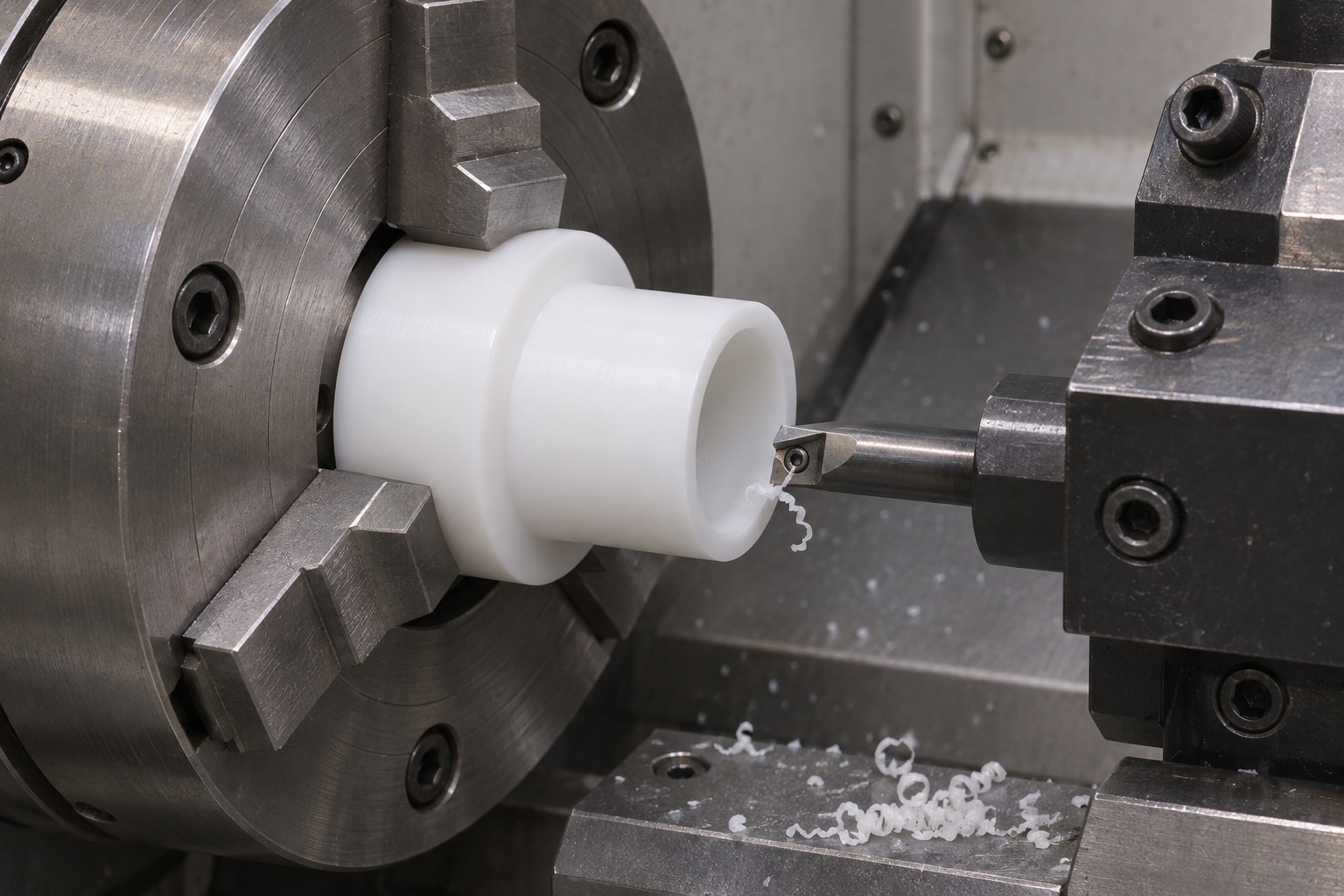
Start the machining from a stable axis
For a stepped sleeve, a turning setup may establish the exterior reference, face and bore from a common axis. If a mill is used instead, define the reference and choose an interpolation process capable of achieving the required bore geometry. Releasing a clamped polymer part may change its shape. Plan adequate support and inspect after release in the stated condition. Keep enough allowance for a final pass if the rough part moves. The visible surface finish or nominal tool path does not demonstrate the actual circular form of the finished bore.
Finish the shoulder without changing the depth reference
The internal shoulder and the front face can define a measurable axial relationship. Provide tool and probe access to the usable annular surface and exclude the corner transition from the reading. If the shoulder is interrupted by a relief, mark where the probe can contact without bridging it. Deburr the aperture without rounding a functional land. A poorly controlled edge break can make insertion easier while changing the characteristic the gauge was meant to screen. Verify any approved correction against the drawing rather than treating a smooth entry as acceptance.
Measure the bore over its useful length
Choose a method appropriate to the bore diameter, material and specified uncertainty. A single entrance reading may miss taper, local deformation or an obstruction near the shoulder. Define measuring stations and orientation, and record whether the sleeve was free or supported. If a plug gauge is used, record its identity and the agreed force or handling rules. A go observation does not give a full profile or prove shoulder position. Keep bore size and shoulder depth as separate results to make a later diagnosis easier.
Check seating without connecting equipment
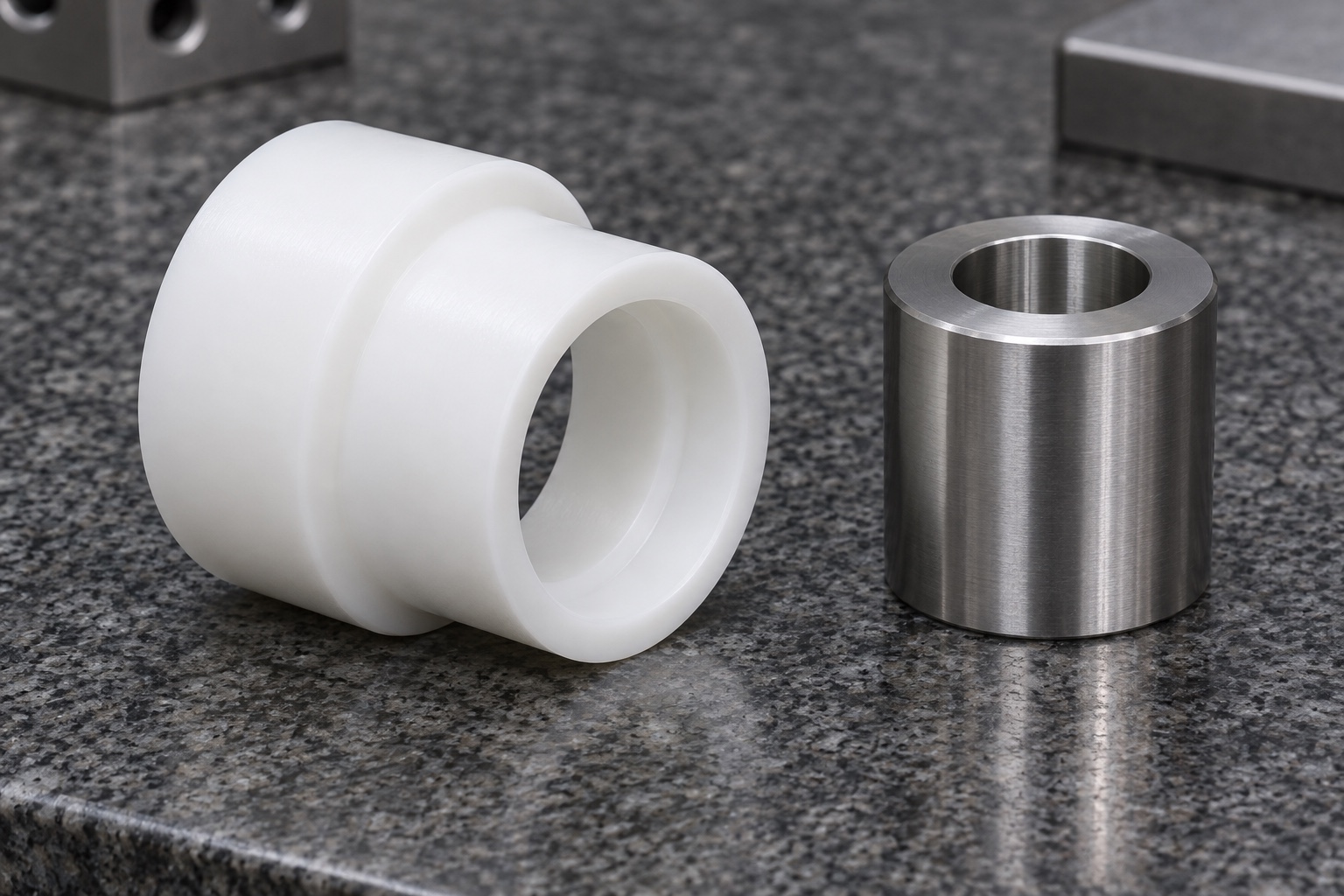
Insert an inert reference on a bench and observe whether it meets the intended shoulder without binding on another feature. Mark the seating orientation and note any gap visible after release. If a result changes after removal and reinsertion, examine the support, edge condition and reference identity first. A setup that uses a forceful push can deform a polymer sleeve or hide a local interference. Record only what the trial can show. It does not establish airflow, pressure drop, leakage, respiratory measurements or suitability of a real mouthpiece.
Distinguish contamination from material removal
A loose chip can make a sound bore appear undersized. Inspect and remove machining residue with the approved bench handling method before changing the dimension. If cleaning changes the observed fit, record the before-and-after conditions separately. Do not polish the guide bore or scrape the shoulder simply to make a reference fit. Document any approved rework and repeat affected checks. An apparently clean gauge is not a sterile accessory, and cleaning it for shop use does not define a reprocessing method for patient-contact equipment.
Protect the bore and front face in transit
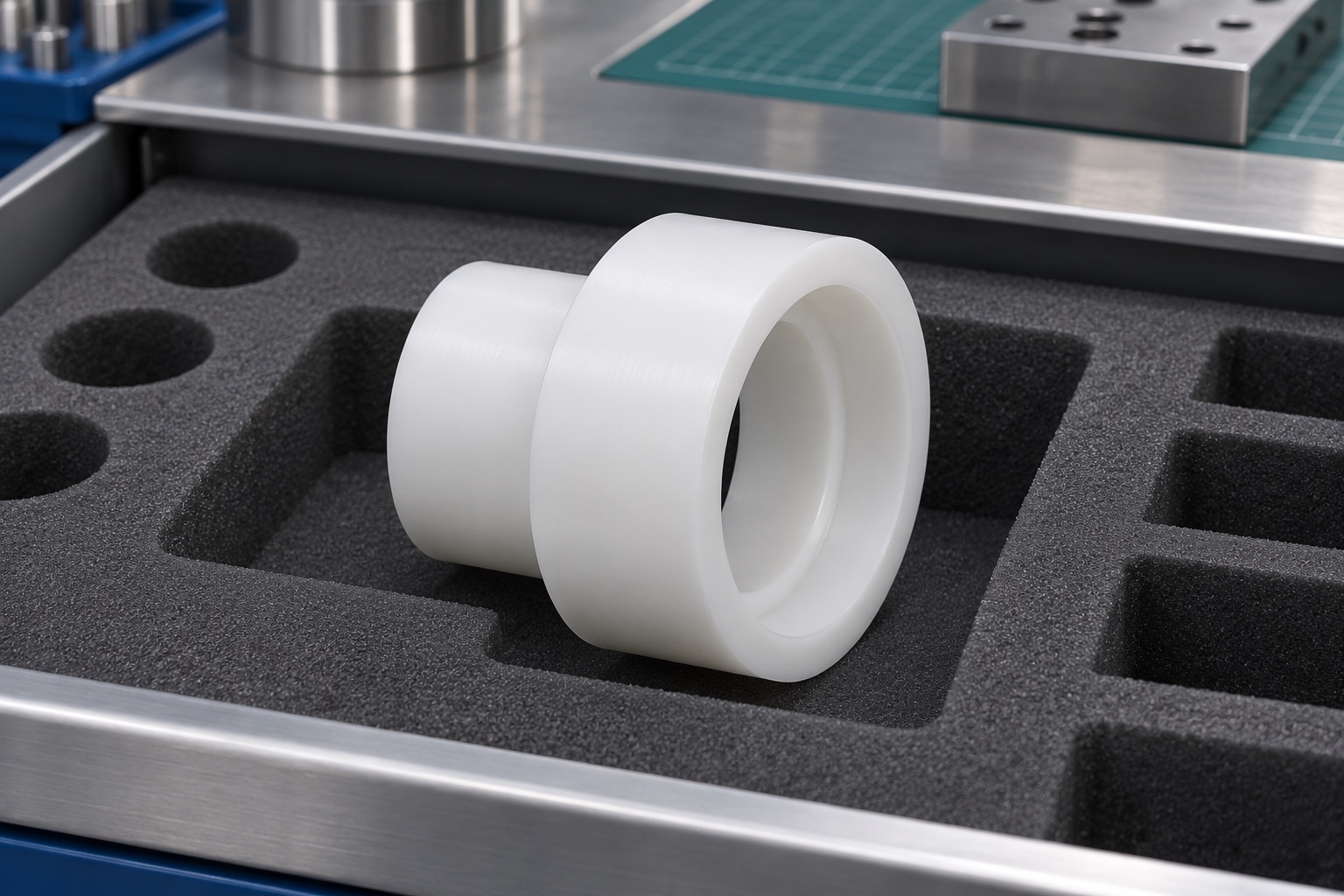
A fitted insert can support the sleeve outside the measuring surfaces. Do not plug the bore with loose material that can shed fragments or push against the shoulder. If a protective cap is specified, make sure it contacts only an approved exterior area and does not deform the sleeve. Include the part identifier and revision in the packaging so they remain accessible after unpacking. If the package is damaged, inspect the bore edge and face before relying on the earlier results. Ordinary packaging does not imply a cleanroom or sterile condition.
Request documentation that matches the job
Send the controlled sleeve and surrogate drawings, material, reference features, measuring stations and receiving requirements. Request a dimensional record and a separate fit observation if both are needed. Keep approval of any spirometer accessory, airflow path or patient-contact use outside the machining order. Where the drawing leaves a condition open, ask the owner before selecting a limit or giving an acceptance result. The deliverable should explain which geometry was checked and under which conditions, not make a broader claim about respiratory measurement or device compatibility.
Manufacturer background reference: nddmed.com.
FAQ
Is this a mouthpiece or flow adapter?
No. It is an off-device sleeve for checking defined geometry on a rigid surrogate. It is not intended to carry respiratory gas or contact a patient.
Why measure the bore at more than one depth?
An entrance reading can miss taper or a restriction farther inside. The drawing should specify the guide region and where the readings apply.
Does a successful fit establish airflow performance?
No. A bench fit only describes the mechanical interaction of the chosen surrogate and sleeve. Flow performance and device verification are separate tasks.
Does the sleeve have to be made from POM-C?
No. Select the grade and condition for the stated bench use. Material designation alone does not prove an acceptable result or approve patient contact.
What is the purpose of the internal shoulder?
It can provide a defined seating stop. The relevant dimension is the relationship between the usable shoulder and the stated reference face.
How should a failed fit be investigated?
Check the surrogate identity, support, debris and edge condition before changing a diameter. Compare measured dimensions and fit observations separately.

tanghangyun@oemach.com