
AGVs in new-energy factories and traditional industrial robots both depend on precision components, but they do not impose the same requirements on every part.
A mobile AGV must carry payload while crossing floor joints, accelerating, braking and steering. A fixed industrial robot is more strongly defined by joint-axis accuracy, reducer interfaces, stiffness and repeatable tool motion.
The drawings, materials, surface treatment and inspection plan should therefore follow the operating function rather than reuse one general robot-part specification.
AGV and industrial robot part requirements compared
| Decision area | AGV in a new-energy factory | Traditional industrial robot |
|---|---|---|
| Primary loads | Payload, wheel impact, braking, steering and chassis vibration | Joint torque, bending stiffness, acceleration and repeated motion |
| Critical interfaces | Wheel hubs, steering modules, suspension mounts, chassis and battery supports | Bearing seats, reducer faces, joint bores, arm links and tool flanges |
| Environment | Floor dust, oil, cleaning chemicals, debris and frequent service access | Cell-specific dust or coolant with more controlled fixed installation |
| Weight priority | Mass influences range, energy use and braking | Mass influences inertia, dynamic response and payload |
| Inspection focus | Alignment, impact-related fits, chassis interfaces and replaceability | Axis relationships, runout, joint geometry and repeatability-related datums |
AGV Parts See Mobile Loads And Floor Input
An AGV wheel mount or steering bracket receives repeated shock from floor joints, local unevenness, acceleration and braking. Load direction can change during steering, and service events may require the module to be removed and reinstalled.
Critical features include wheel-bearing seats, steering axes, motor mounts, suspension interfaces and chassis locating holes. Their specifications should reflect impact, fatigue and replacement alignment, not only static dimensional tolerance.
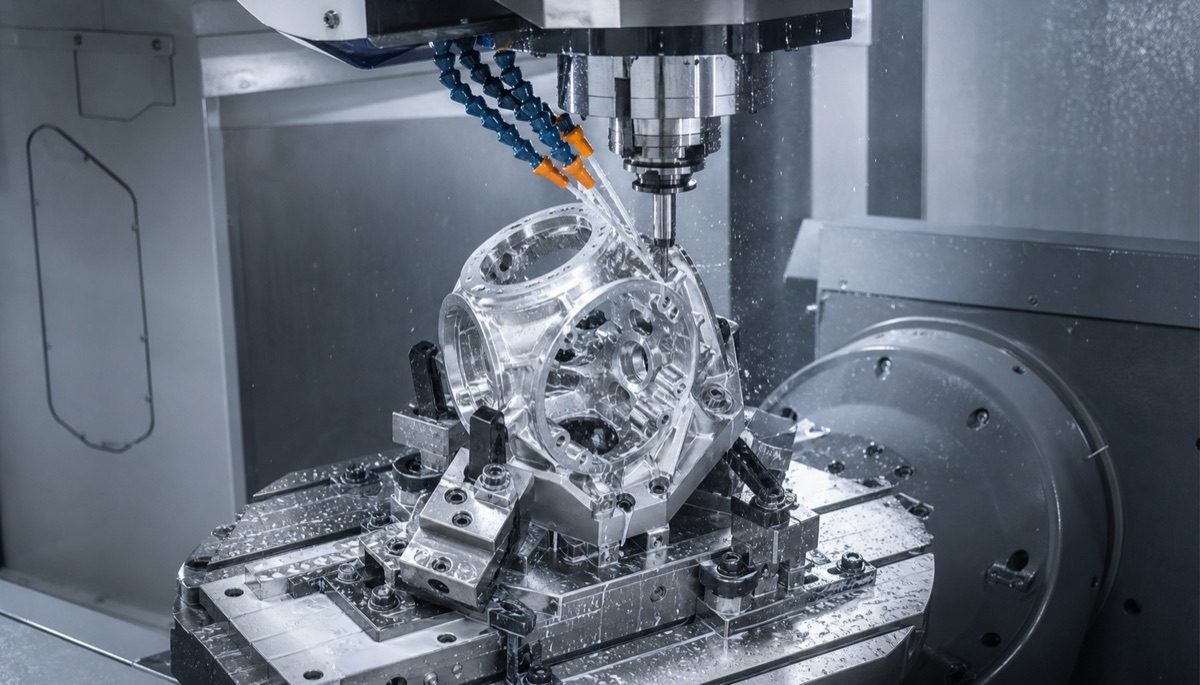
AGV and industrial-robot components can use similar CNC processes, but the functional datums and acceptance plan must follow their different loads and interfaces.
Industrial Robot Parts Protect Joint Geometry
An industrial robot joint must maintain the relationship between bearings, reducer seats, motor pilots and arm interfaces while transmitting torque through repeated cycles. Small axis or face errors can appear as runout, backlash or tool-center variation.
These parts often place tighter control on coaxial features, face runout, hole-pattern position and stiffness around the joint. The inspection coordinate system should reproduce the assembly datum chain.
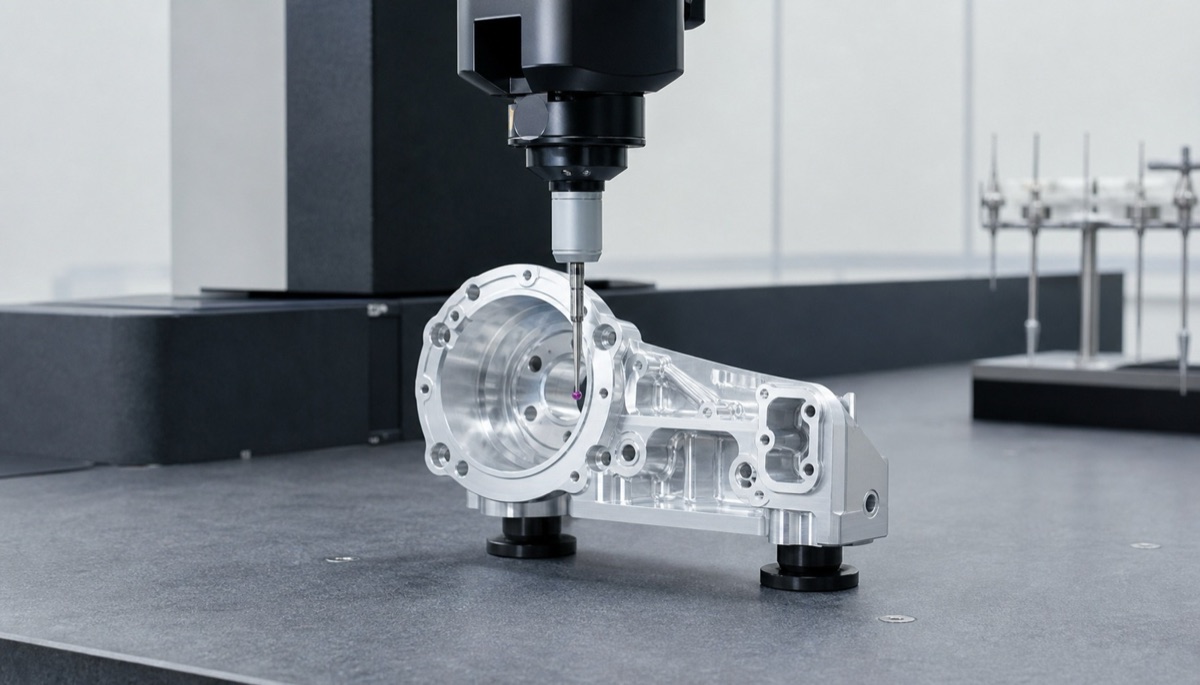
AGV wheel-module and chassis interfaces require controlled position and alignment, while industrial-robot joint parts emphasize axis and reducer-seat relationships.
Material And Surface Treatment Follow Different Risks
AGV structures often balance 6061 or 7075 aluminum, steel inserts and localized reinforcement to reduce moving mass without sacrificing wheel-module stiffness. Corrosion protection, sealed interfaces and durable edges matter in floor-level service.
Industrial robot joints may use aluminum housings, alloy-steel shafts and hardened bearing or reducer interfaces. Surface treatment is chosen around wear, fit, electrical contact, appearance and the controlled environment. Neither application benefits from applying one coating to every surface.
Lightweighting Has Different System Effects
Reducing AGV mass can improve range and braking demand, but thin chassis or wheel-module parts must still resist impact and fastener preload. Pocketing should preserve load paths and service-thread strength.
On an industrial robot, lower moving mass reduces joint inertia and can improve dynamic response, especially toward the wrist. However, lost stiffness can reduce positioning stability. In both cases, finite-element results should be connected to machinable wall thickness, fillets and inspection access.
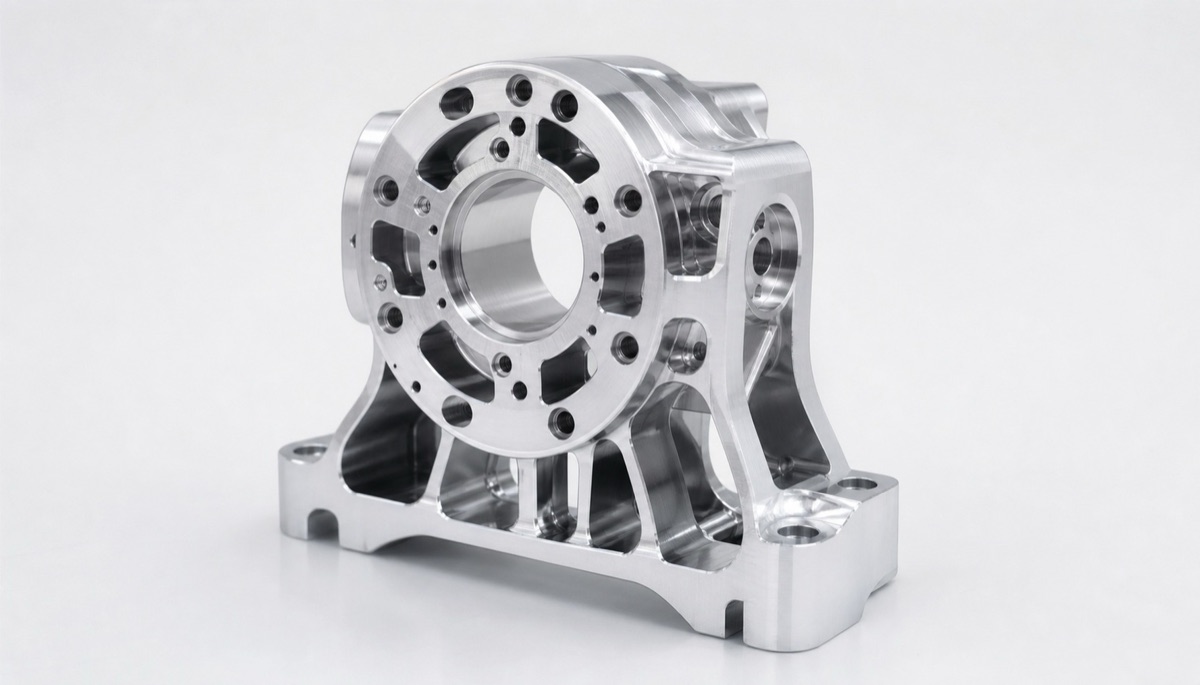
Material removal, stiffness, corrosion protection and service access should be balanced differently for a mobile AGV and a fixed robot joint.
Inspection And Maintenance Strategy Should Be Specified
AGV acceptance may combine bearing and steering fits, wheel alignment, chassis-hole position, protective finish and module interchangeability. Industrial robot acceptance more often centers on joint axes, reducer interfaces, bearing seats, runout and critical hole patterns.
Not every AGV dimension needs joint-grade tolerance, and not every industrial-robot surface needs CMM inspection. Use risk-based first-article checks, functional gauges and repeat-batch trend data for the characteristics that affect field performance.
Information To Send With The RFQ
A supplier can separate real functional risk from ordinary geometry only when the operating context is clear.
- Robot type, payload, speed, duty cycle and expected service life
- AGV floor conditions, impact input, steering arrangement and maintenance interval
- Industrial-robot joint stack, reducer, bearing, motor and tool-interface datums
- Material and temper, inserts, heat treatment and surface protection
- Critical-to-function characteristics, mating parts and inspection state
- Prototype quantity, repeat-batch volume, first-article report and interchangeability requirement
Summary
AGV parts prioritize mobile shock, chassis and wheel-module interfaces, low mass, floor-level protection and serviceability. Industrial robot parts prioritize joint-axis relationships, reducer and bearing interfaces, stiffness and repeatable motion. Similar CNC equipment can make both, but the datum, tolerance, material and inspection strategy must be application-specific.
FAQ
Do AGV parts need lower precision than industrial robot parts?
Not necessarily. AGVs still need precise steering, bearing, encoder and locating interfaces. The difference is where tight tolerance creates functional value, not a universal precision ranking.
Why is weight especially important for AGVs?
The vehicle must accelerate and brake its own structure as well as the payload. Lower mass can reduce energy demand, but stiffness and impact resistance must remain adequate.
Can one CNC supplier make both AGV and industrial robot parts?
Yes, if the supplier can manage different datum systems, materials, surface treatments, inspection methods and batch rhythms instead of applying one generic process.
Which AGV features are commonly critical?
Wheel and steering bearing seats, motor mounts, suspension interfaces, chassis locating holes, encoder interfaces and replaceable module datums are common priorities.
Ready to get a quote for your CNC machined parts?
Submit your engineering drawings to qiancj@oemach.com. We support prototype sampling and small-batch production with strict tolerance control.