
TC4 titanium can be attractive for optical frames that need strength, corrosion resistance and lower mass than steel. Its thermal expansion is lower than aluminum, but TC4 is not a near-zero-expansion substitute for Invar.
The right choice depends on allowable optical drift, structural stiffness, vibration, environment, geometry and manufacturing cost. Material labels alone do not determine stability.
Where TC4 fits in an optical structure decision
| Decision area | TC4 characteristic | Engineering implication |
|---|---|---|
| Thermal stability | Lower expansion than common aluminum alloys, higher than dedicated low-expansion alloys | Use the complete system drift budget, not a general low-expansion label |
| Lightweight strength | High specific strength and good fatigue capability | Useful for load-bearing brackets, frames and vibration-sensitive structures |
| Machinability | Low thermal conductivity, tool wear and heat concentration | Use sharp tooling, stable engagement, effective cooling and staged machining |
| Cost and lead time | Higher material and cutting cost than common aluminum | Apply TC4 where the performance benefit justifies the process |
TC4 Is Thermally Better Than Aluminum, Not Invar
For the same geometry and temperature change, a TC4 component generally expands less than a common aluminum component. That can reduce datum movement, but it does not make TC4 a dedicated low-expansion alloy.
An optical system should convert temperature range, datum length and allowable line-of-sight shift into a drift budget. Low-expansion steel, Invar, ceramic interfaces or compensation may still be needed at the most sensitive reference.
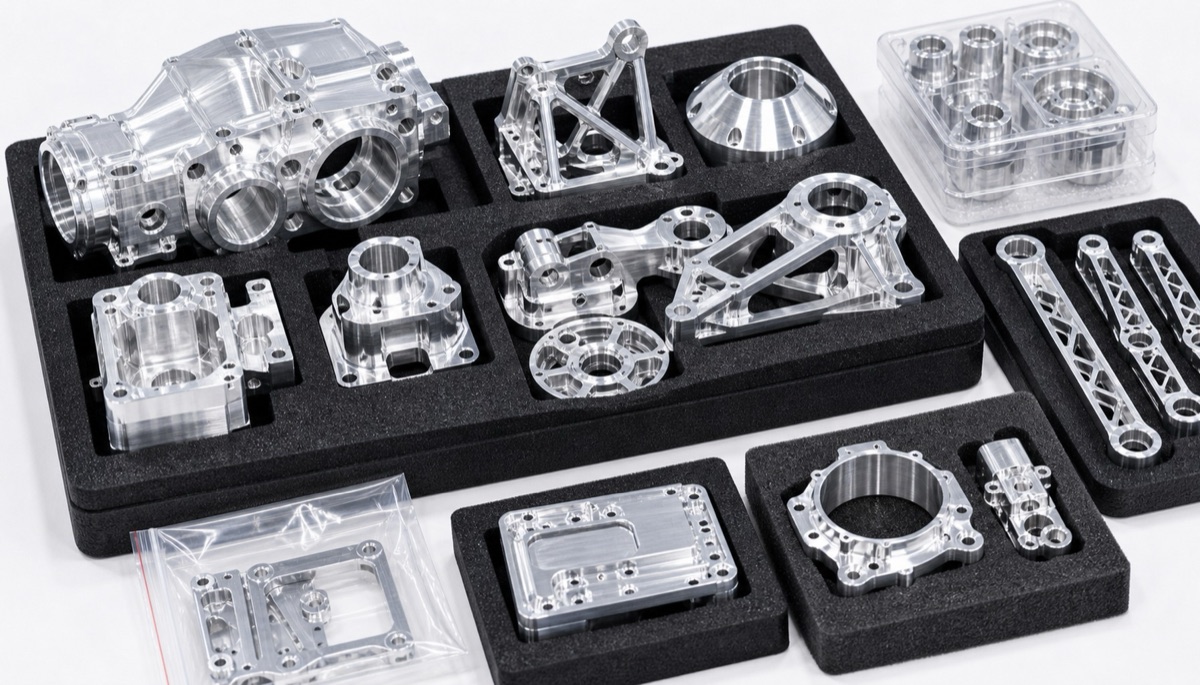
Material should be selected by the system thermal budget, stiffness, corrosion environment, mass and manufacturing cost rather than appearance alone.
Use TC4 Where Specific Strength Has Value
TC4 is useful when a bracket or frame carries load, sees vibration, must resist corrosion or cannot accept the mass of steel. It can support thinner or more open geometry while retaining strength, although stiffness still depends strongly on section shape.
A titanium part is not automatically stiffer or more stable than an aluminum one. Elastic modulus, wall layout, joint design, preload and thermal gradients determine the assembly response.
Control Heat And Tool Wear During Machining
Titanium conducts cutting heat poorly, so heat remains near the tool edge. Rubbing, excessive engagement or a worn tool can accelerate wear, change size and damage surface integrity.
The route uses sharp suitable tooling, stable chip load, effective coolant delivery and controlled engagement. Multi-axis positioning can shorten tools and reduce setups, but simulation and fixture rigidity remain essential.
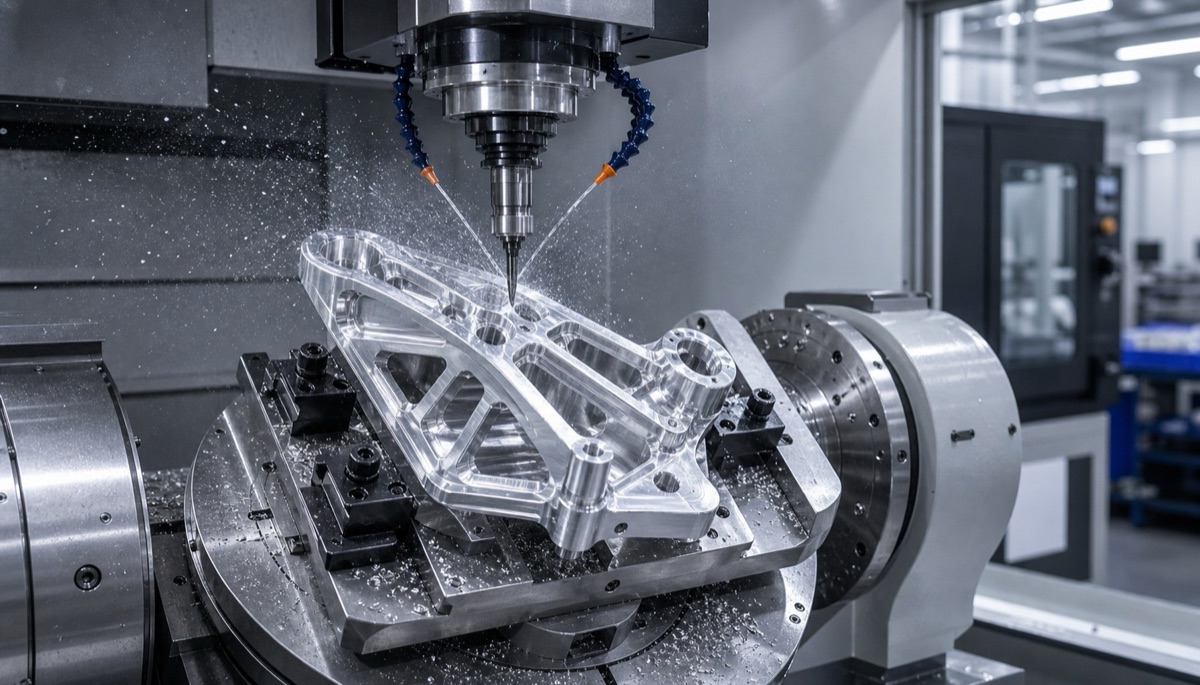
Complex ribs, pockets and multi-face interfaces require rigid support, controlled heat input and a planned datum strategy.
Stage Thin-Wall Material Removal
Lightweight optical structures often contain ribs, pockets and thin webs. Heavy one-sided stock removal can release stress and move datums before finishing.
A robust route separates roughing, semi-finishing, stabilization and final machining. Symmetric stock removal, low-stress clamping and finish passes after relaxation help preserve bore position, face flatness and interface alignment.
Inspect Geometry At A Controlled Temperature
First-article inspection should follow the functional datums and cover mounting faces, precision bores, hole position, flatness, perpendicularity and multi-face relationships. The part should reach thermal equilibrium before tight measurements.
For an optical assembly, a useful report also states measurement temperature, datum setup, free or constrained condition and any post-process inspection after cleaning or surface treatment.
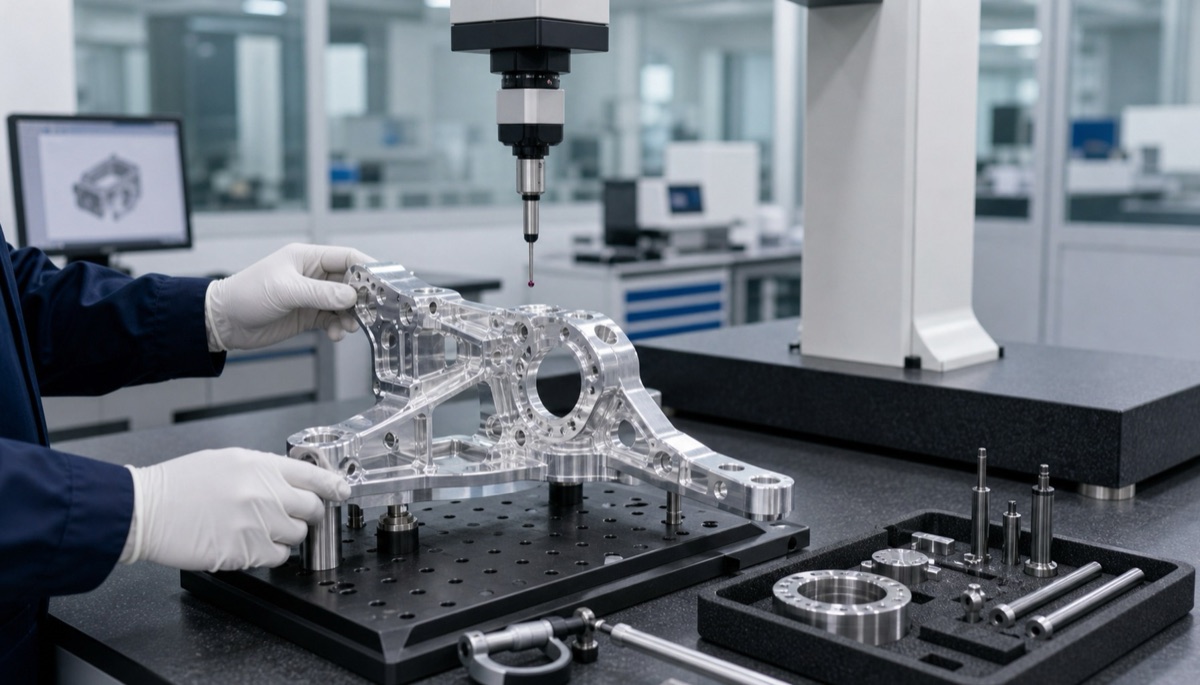
Critical bores, mounting faces and structural datums should be verified after the part has stabilized from machining and handling.
Information Needed Before Quotation
A reliable quotation needs the system requirements that explain why TC4 is being considered.
- Operating temperature range and allowable displacement or optical-axis drift
- Priority among mass, stiffness, strength, corrosion resistance and cost
- Wall thickness, pockets, threads, deep features and access constraints
- Material grade and condition, surface treatment, vacuum or cleanliness requirements
- Datum scheme, measurement temperature, first-article report and assembly validation method
Summary
TC4 can balance mass, strength, corrosion resistance and lower expansion than aluminum, but it is not an Invar replacement. Select it from the full thermal and structural budget, then control cutting heat, tool wear, stress release, datums and temperature-aware inspection.
FAQ
Is TC4 a low-expansion material?
It expands less than common aluminum alloys, but it is not comparable to dedicated low-expansion alloys such as Invar. The system drift budget should decide suitability.
Is a titanium bracket always more stable than an aluminum bracket?
No. Geometry, stiffness, joint preload, heat-source distribution, residual stress and datum design can outweigh the material difference.
Why is TC4 machining slower and more expensive?
Low thermal conductivity concentrates heat at the cutting edge, while strength and chemical reactivity increase tool wear. Conservative engagement and reliable cooling raise cycle cost.
When is TC4 most attractive for optical equipment?
When high specific strength, corrosion resistance and lower expansion than aluminum provide a system benefit that justifies the higher material and machining cost.
Ready to get a quote for your CNC machined parts?
Submit your engineering drawings to qiancj@oemach.com. We support prototype sampling and small-batch production with strict tolerance control.