
More axes do not automatically produce a better or cheaper part. The right machine is the one that reaches the required features, protects the functional datum chain and delivers the needed quantity with acceptable setup, inspection and cycle cost.
There is also an important terminology point: a horizontal machining center describes spindle and machine architecture, not a higher axis level. A horizontal machine commonly includes a rotary table and can be configured with different controlled axes.
A DFM review should therefore compare complete process routes rather than machine names alone.
Where each CNC configuration usually fits
| Configuration | Best fit | Main advantage | Main limitation or question |
|---|---|---|---|
| 3-axis vertical | Planar features, pockets, hole patterns and parts needing few setups | Simple programming, broad availability and economical setup | Side features require refixturing; deep access may increase tool overhang |
| 4-axis | Radial holes, indexed side faces and cylindrical features | Reduces manual indexing and can maintain one rotary datum | Indexed versus simultaneous motion, workholding clearance and rotary accuracy |
| 5-axis | Angled bores, complex surfaces and tightly related multi-face features | Improves access and can reduce setup count and tool length | Programming, collision control, calibration and fixture capability |
| Horizontal machining center | Box parts, deep cavities and repeat production across multiple faces | Good chip evacuation, palletization and multi-face productivity | Higher fixture and machine investment; not automatically needed for prototypes |
Start With Features And Datums, Not Axis Count
Mark the faces, bores and hole patterns that must stay related after assembly. Then ask whether a second setup is permitted, how that datum will be transferred and whether the resulting error budget still supports the drawing.
A simple part with one critical face may be more stable on a well-planned 3-axis setup than on an unnecessarily complex route. Conversely, a multi-face housing can justify rotary or five-axis positioning even when no sculptured surface is present.
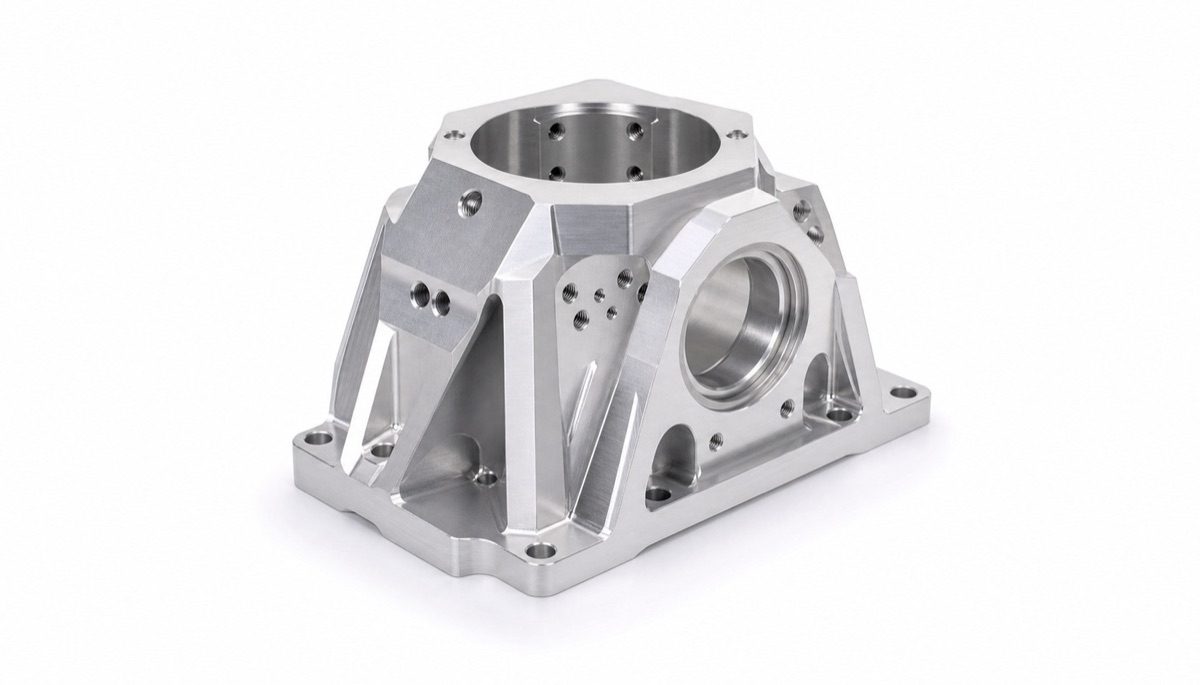
Part geometry, tool access, batch size and the functional datum chain determine whether 3-axis, 4-axis, 5-axis or horizontal machining is justified.
When 3-Axis Is The Most Efficient Choice
Three-axis machining is well suited to flat faces, pockets, vertical holes and common prismatic parts. It often gives the lowest programming and fixture cost for prototypes and small batches with limited side work.
The limit appears when side holes, opposing bores or angled features require repeated setups. Each transfer adds locating time, inspection work and a possible relationship error. The decision should compare that added cost with a rotary solution.
What A Fourth Axis Adds
A fourth axis rotates the workpiece for indexed 3+1 machining or, on a capable machine and program, coordinated motion. It is useful for radial holes, features around a cylinder and several side faces that share a centerline.
The fixture must clear the spindle and preserve stiffness at every angle. Rotary-axis accuracy, work offset strategy and the difference between indexed and simultaneous cutting should be confirmed before quotation.
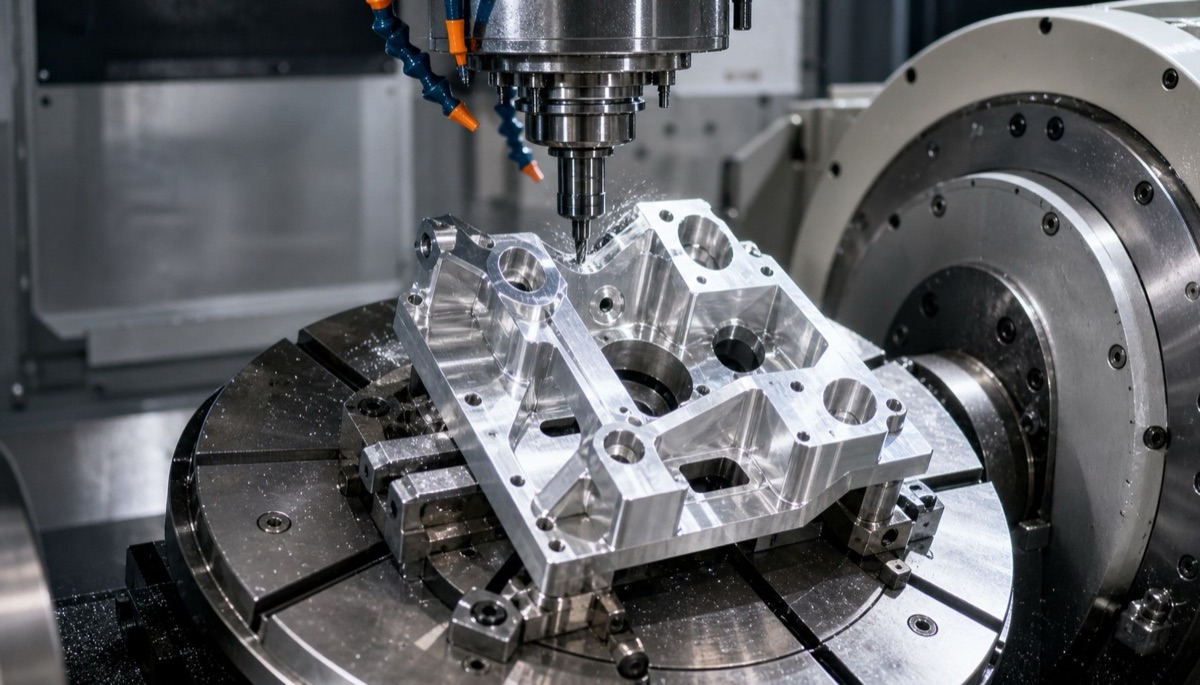
Rotary positioning can expose side faces and angled features while reducing manual refixturing and datum transfer.
When Five-Axis Is Justified
Five-axis machining is valuable when the tool must approach angled bores, compound surfaces or tightly related features from several directions. Shorter tools and fewer setups can improve rigidity and reduce datum transfer.
Five-axis is not automatically simultaneous cutting. Many parts are efficiently produced by 3+2 positional machining. True simultaneous motion is reserved for geometry that requires continuous orientation, and it adds programming, simulation and verification demands.
Why Horizontal Machining Centers Excel On Box Parts
A horizontal spindle helps chips fall away from deep cavities and can expose several faces through a rotary table. Pallet systems and tombstone fixtures make the architecture attractive for repeat production, especially when loading and cutting can be separated.
For a one-off simple part, that productivity may not repay fixture and setup effort. For repeated housings with deep pockets and multiple faces, it can reduce handling and stabilize cycle time.
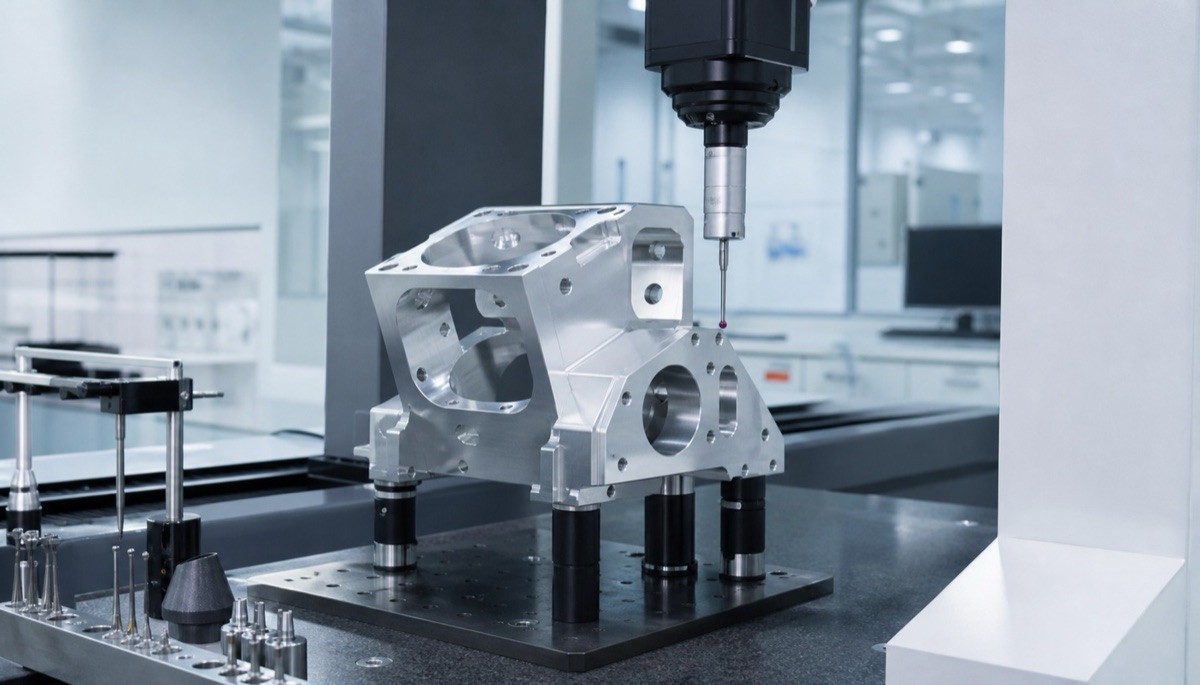
The machine choice is only useful when the inspection plan verifies the relationships between bores, faces and hole patterns.
Information To Send For Machine-Route Selection
The supplier needs more than a 3D envelope. Include the functional relationships and production context that drive setups, access and inspection.
- 3D model and drawing with angled holes, deep cavities, undercuts and multi-face features
- Critical datum chain and whether key faces may be separated across setups
- Material, part size, thin walls, tool-reach and collision constraints
- Prototype and batch quantities, repeat frequency and target cycle time
- Critical tolerances, surface finish, first-article and CMM reporting requirements
Summary
Use 3-axis for accessible prismatic work, 4-axis for indexed or radial multi-face features, 5-axis for demanding access and related angled geometry, and horizontal machining for productive box-part routes with strong chip evacuation. Select the complete process by datums, access, quantity and total cost.
FAQ
Can a 5-axis machine replace every 3-axis job?
Technically it can machine many simple parts, but the additional machine rate, programming and setup may offer no benefit. A capable 3-axis route is often faster and more economical.
Is a horizontal machining center the same as 4-axis machining?
No. Horizontal describes spindle orientation and machine architecture. Many horizontal centers include a rotary table, but axis configuration must be checked separately.
Does five-axis always mean simultaneous cutting?
No. Many five-axis parts use 3+2 positional machining, where rotary axes position the part and three linear axes perform the cut.
What is the main advantage of a horizontal machining center?
For box parts and repeat work, it combines multi-face access, effective chip evacuation and pallet or tombstone productivity.
Ready to get a quote for your CNC machined parts?
Submit your engineering drawings to qiancj@oemach.com. We support prototype sampling and small-batch production with strict tolerance control.