
There is no universal speed-and-feed table for all copper alloys. Free-machining brass often permits higher cutting speed and stable chip formation, commercially pure copper tends to smear and build up on the edge, and beryllium copper changes significantly with alloy and heat-treatment condition.
A reliable setup starts with the exact material designation and temper, then uses the tool manufacturer's range as a controlled trial. Tool diameter, flute count, overhang, machine rigidity, coolant and feature geometry determine the final values.
For purchasing and engineering teams, the useful deliverable is not one isolated RPM number but a documented process window linked to first-article dimensions, surface finish, burrs and tool wear.
How the three copper alloy families change the machining strategy
| Material | Typical behavior | Tool and feed direction | Main control |
|---|---|---|---|
| Brass | Generally good chip breaking; grade dependent | Rigid setup, positive geometry and stable feed; higher speed may be possible | Small-hole burrs, lead-free grade behavior and surface finish |
| Commercially pure copper | Ductile, sticky and prone to built-up edge | Very sharp polished edge, positive rake and enough chip load to cut | Heat, smearing, long burrs, thin-wall distortion and chip evacuation |
| Beryllium copper | Higher strength; strongly dependent on temper and aging | Rigid setup, wear monitoring and conservative validated trials | Material condition, tool life, airborne-dust control and compliance |
| All copper alloys | High thermal conductivity and grade variation | Begin from verified supplier data and short test cuts | Do not copy aluminum parameters or identify alloy by color |
Why One Parameter Set Does Not Work
Cutting speed and feed per tooth are only meaningful with tool diameter, flute count, radial and axial engagement, edge geometry and machine capability. The same nominal alloy can also machine differently after tempering, cold work or heat treatment.
Start with the material certificate and tooling supplier guidance. Run a short test on representative stock, then record spindle load, chip form, temperature, sound, burr, surface and tool wear before expanding to the full part.
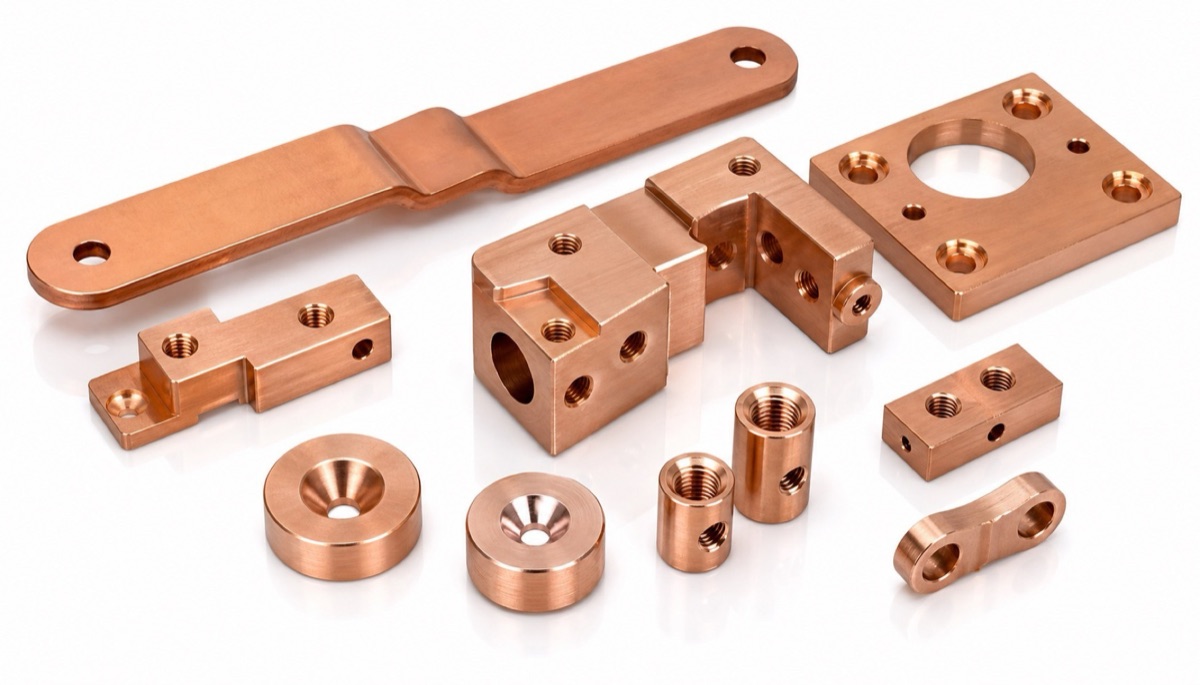
Brass, commercially pure copper and beryllium copper can look similar while requiring different cutting, deburring and safety controls.
Brass Usually Offers The Widest Window
Many brasses machine cleanly and break chips well, allowing relatively high speed and productive feed. That does not make every brass identical. Lead-free grades, thin features and very small holes can narrow the process window.
Use a rigid setup and sharp positive-cutting tools. Watch exit burrs, drill wandering, thread quality and staining from unsuitable coolant or cleaning. The drawing and certificate should name the exact grade.
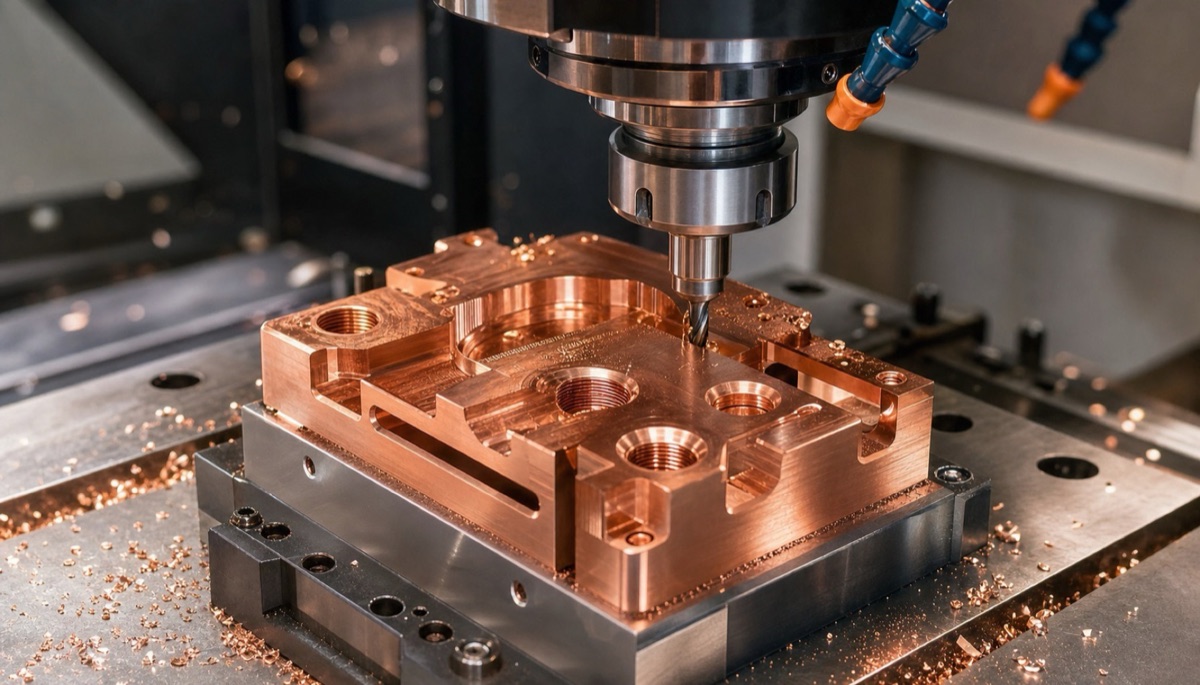
Tool geometry, edge condition, chip load and coolant strategy must match the exact alloy and temper rather than the material color.
Pure Copper Needs A Sharp Edge And Real Chip Load
Commercially pure copper is ductile and can rub instead of cut. A sharp polished edge, positive rake, controlled engagement and sufficient feed help prevent built-up edge. Weak feed or a worn edge often increases heat and smearing rather than protecting the tool.
Plan chip evacuation and coolant delivery around the feature. Thin walls, deep pockets, fine threads and contact faces need support and a deburring strategy because copper can stretch into long, attached burrs.
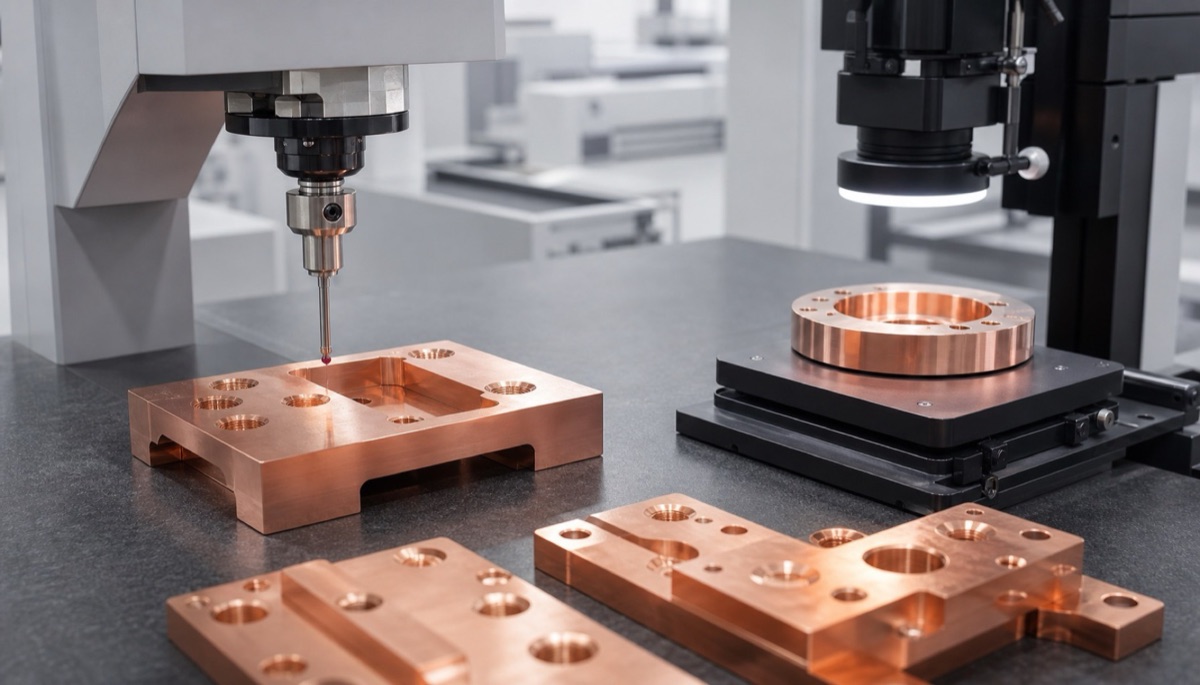
First-article data should connect dimensions and surface condition with the tool, setup and parameter window used.
Beryllium Copper Requires State And Safety Control
Beryllium copper combines useful strength, spring behavior and conductivity, but machining response depends strongly on alloy and whether the material is solution treated, cold worked or aged. Process development must therefore reference the supplied condition.
Operations that generate airborne dust or fume require engineering controls, housekeeping, personal protection and compliance with the current safety data sheet and applicable occupational limits. A finished solid part is not the same exposure condition as grinding or other dust-generating work.
What To Send Before Quotation
A useful RFQ lets the supplier select a starting window and define the trial evidence. Without grade, condition and acceptance criteria, a quoted cycle time is only a rough assumption.
- Exact alloy designation, temper, heat-treatment condition and certificate requirement
- Tool material, coating, diameter, flute count and maximum overhang where specified
- Machine spindle limits, workholding rigidity, coolant and chip-removal constraints
- Critical dimensions, surface roughness, threads, thin walls and permitted burr
- Required first-article data, tool-wear record, cleaning and safety documentation
Summary
Brass, pure copper and beryllium copper need different CNC strategies. Establish parameters from exact alloy and condition, verified tooling data and representative test cuts, then lock the window with dimensional, surface, burr and tool-wear evidence.
FAQ
Can brass and pure copper use the same cutting parameters?
It is not recommended. Their chip formation, ductility, built-up-edge tendency and heat behavior differ, and the final values also depend on tool and feature geometry.
Why does pure copper stick to the cutting edge?
Its high ductility and affinity under pressure can form built-up edge, especially with a dull tool, insufficient chip load, rubbing or poor evacuation.
What matters most when machining beryllium copper?
Confirm alloy and heat-treatment state, control tool wear and use compliant controls for any operation that can create airborne dust or fume.
Should aluminum parameters be used as a starting point?
Not blindly. Use data for the exact copper alloy and tool, then validate it with a short representative cut on the actual machine and setup.
Ready to get a quote for your CNC machined parts?
Submit your engineering drawings to qiancj@oemach.com. We support prototype sampling and small-batch production with strict tolerance control.