
Five materials can be coordinated through one supplier, but only if that supplier can manage different sourcing, machining, deburring, cleaning, finishing and inspection routes without losing part identity or drawing revision.
The key question is not whether one machine shop can physically perform every operation. It is whether one accountable engineering interface controls the BOM, material certificates, qualified subcontractors, first articles, changes and delivery sequence.
For prototype and small-batch programs, this coordination can reduce communication load and version mismatch, but it does not automatically produce the lowest unit price.
Checks before assigning a multi-material package to one supplier
| Control area | Required capability | Evidence to request | Failure if missing |
|---|---|---|---|
| Material sourcing | Grade, temper and batch traceability | BOM lock, certificates and approved substitution rules | Mixed stock or unapproved material replacement |
| Process routing | Separate parameters, tools and contamination controls | Route card by part and material family | Poor finish, burrs or cross-contamination |
| Outside processing | Qualified anodizing, heat treatment and plating control | Purchase specification and return inspection | Late discovery of coating or hardness defects |
| Quality interface | One revision and inspection window | First-article plan, deviation log and delivery matrix | Parts pass individually but fail as an assembly |
One Supplier Does Not Mean One Process
Aluminum, stainless steel, copper alloys, engineering plastics and titanium need different cutting data, workholding, coolant, deburring and cleaning. A capable integrator separates these routes while keeping one commercial and engineering interface for the customer.
The supplier should also be open about which operations are performed internally and which are assigned to qualified partners. Ownership of specifications and return inspection matters more than claiming every process is in-house.
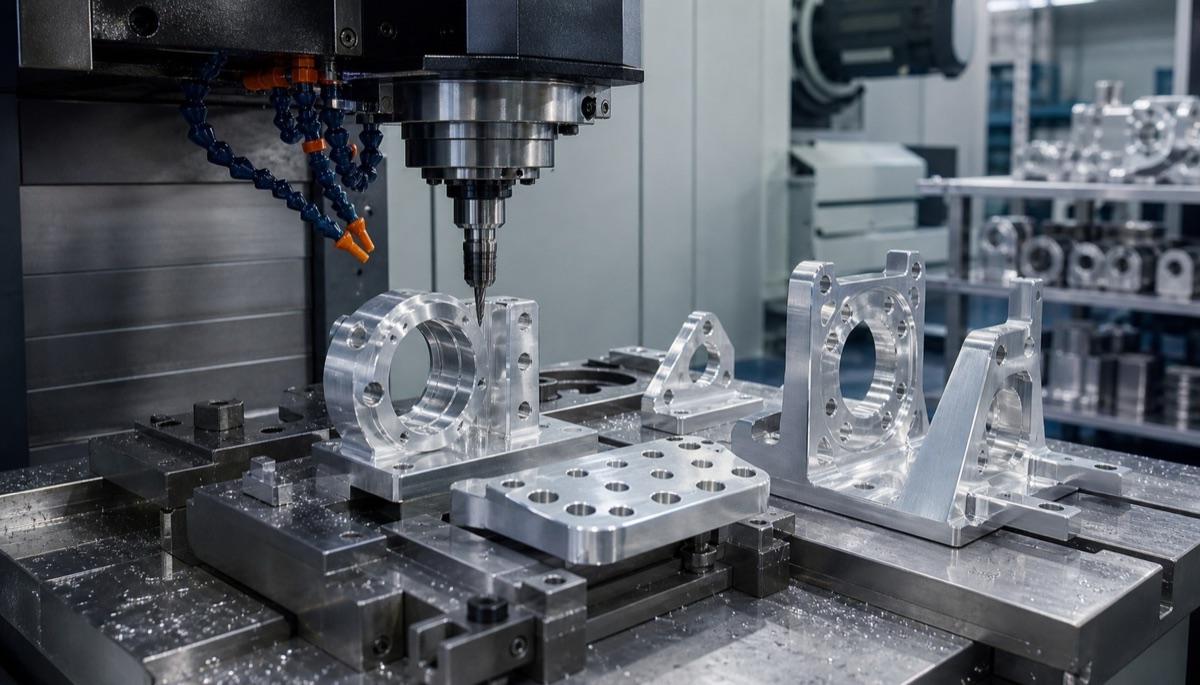
This machining scene illustrates multi-part routing; a true five-material program still requires separate material identification, tools, parameters and cleaning rules.
Lock The BOM, Revision And Material Identity
Every part number should link to drawing revision, 3D model, material grade and condition, quantity, finish, critical dimensions and delivery priority. Approved substitution rules must be explicit; a verbal 'equivalent material' is not enough.
Material certificates, receiving labels, segregated containers and route travelers preserve identity from stock cutting through machining and outside processing. Parts that look similar should not depend on operator memory or color alone.
Build A Separate Route For Each Material Family
Aluminum may prioritize chip evacuation and cosmetic protection, stainless steel work-hardening control, copper built-up-edge prevention, plastics heat and clamping control, and titanium heat concentration and tool-life management. The route card should translate those differences into tools, feeds, coolant, deburring and cleaning instructions.
Shared equipment is possible when changeover and cleaning are controlled. Where contamination or surface chemistry matters, dedicated tools, fixtures, containers or process zones may be necessary.
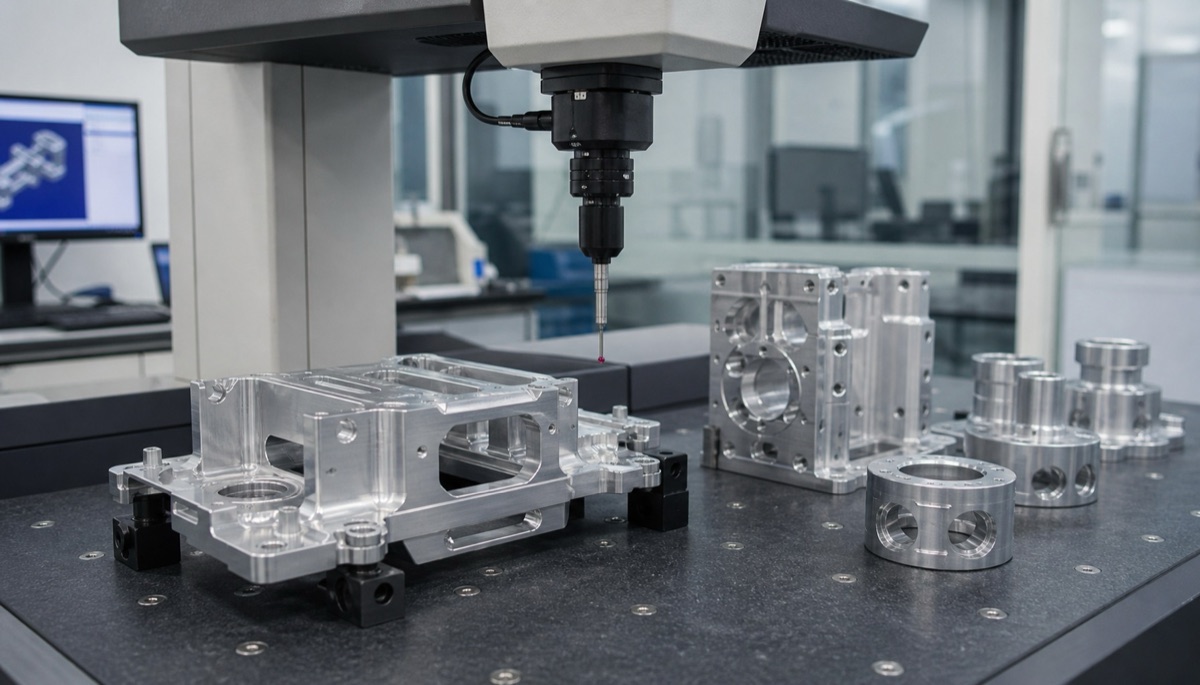
A unified quality interface should connect each part number to its material batch, drawing revision, critical characteristics and inspection result.
Control Heat Treatment And Surface Finishing As Part Of The Route
Anodizing, passivation, plating, heat treatment and specialty cleaning cannot be left as a final purchasing step. The purchase specification should define masking, contact points, coating allowance, hardness, appearance, cleanliness and reporting.
Return inspection checks dimensions, threads, distortion, coating condition and certificate data before the parts rejoin the delivery lot. This prevents a late external-process defect from blocking the complete assembly package.
Use One Quality And Change-Control Interface
A unified first-article plan should identify which characteristics are measured on each part and which relationships are checked at assembly level. Deviations and engineering changes need one owner, one revision log and a clear decision on affected work in progress.
Delivery can then be organized by assembly set or build priority rather than by whichever material finishes first. This is often the practical value of a single coordinating supplier.
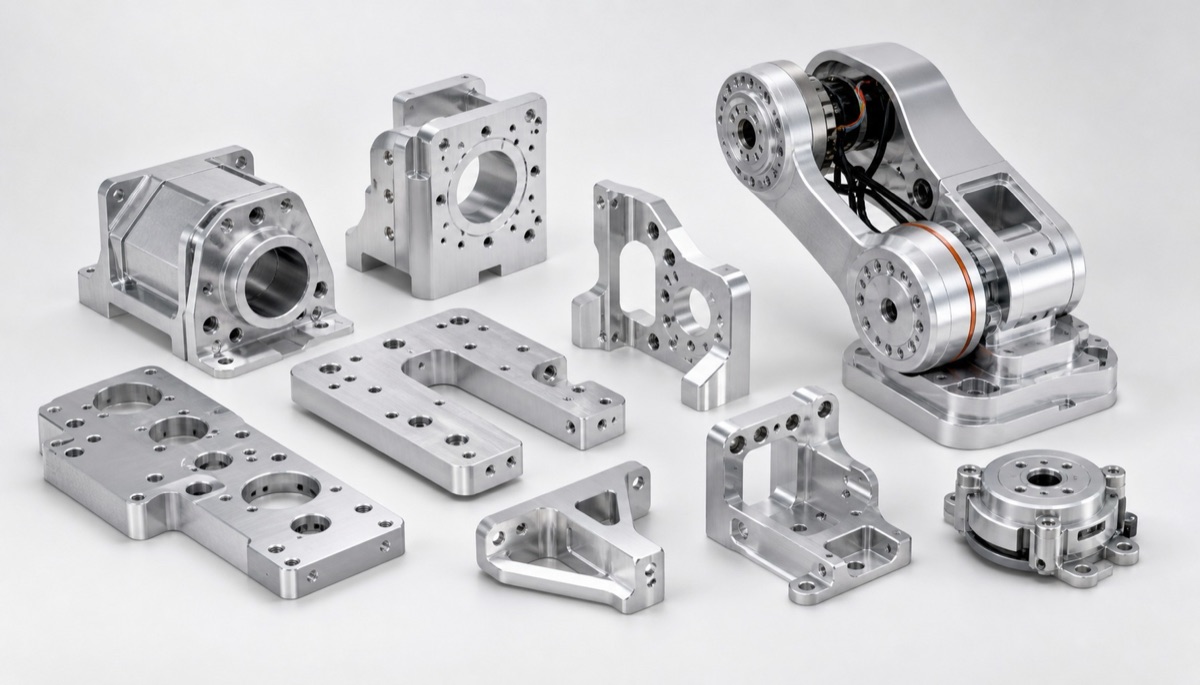
The image shows a multi-part assembly, not five visible material grades; BOM and traceability records establish the actual material identity.
Information To Send For An Accurate Quote
A package containing only 3D models is not enough for multi-material planning. The supplier needs the acceptance rules and delivery relationships that determine purchasing, process capacity and inspection effort.
- BOM, part numbers, drawing revisions, quantities and required build sets
- Exact grade, condition and approved substitution boundary for every material
- Critical dimensions, common assembly datums and inspection reports required
- Heat treatment, surface finish, cleaning, packaging and certificate requirements
- First-article, change, deviation and staged-delivery approval workflow
Summary
A single supplier can coordinate five materials when it separates material-specific routes and maintains one controlled BOM, revision system, subcontractor network and quality interface. The benefit is fewer handoffs and version errors, not a guarantee of the lowest price or shortest route for every part.
FAQ
Is one supplier always cheaper for a multi-material project?
No. Coordination can reduce communication, freight and version-mismatch cost, but material, machining and outside-process prices should still be compared as separate cost drivers.
How can mixed materials be prevented?
Use part numbers, batch labels, material certificates, segregated containers, route travelers and first-article records throughout the process.
Should the supplier perform every process in-house?
Not necessarily. Qualified subcontracting is acceptable when specifications, supplier approval, traceability and return inspection remain under one accountable system.
How should deliveries be scheduled?
Schedule by assembly set, test priority or build milestone rather than allowing each material to ship independently without regard to the customer program.
Ready to get a quote for your CNC machined parts?
Submit your engineering drawings to qiancj@oemach.com. We support prototype sampling and small-batch production with strict tolerance control.