
Brass, commercially pure copper and beryllium copper solve different engineering problems. Brass is commonly selected for machinability and stable structural features, pure copper for electrical and thermal performance, and beryllium copper for strength, spring response and fatigue resistance.
The alloy name alone is not a complete specification. Grade, temper, heat-treatment condition, conductivity target, contact pressure, operating temperature and surface finish can all change the right choice and the manufacturing route.
For a small batch, material selection should start with the function of the part, then connect that function to machining, deburring, cleaning, inspection and traceability requirements.
Selection boundaries for common copper alloys
| Material family | Typical fit | Manufacturing behavior | Main specification point |
|---|---|---|---|
| Brass | Fittings, valve parts, threaded components and general hardware | Usually easier to machine; behavior depends on grade and lead-free formulation | Strength, corrosion environment, conductivity and exact alloy |
| Commercially pure copper | Busbars, heat spreaders, electrodes and conductive contact faces | Ductile and prone to built-up edge and burrs; heat moves quickly through the part | Conductivity, oxygen content, temper, flatness and surface cleanliness |
| Beryllium copper | Spring contacts, resilient clips and fatigue-loaded conductive parts | Machinability and final properties depend strongly on condition and heat treatment | Grade, temper, aging route, conductivity and occupational controls |
| Mixed copper assembly | Parts combining electrical, thermal and structural functions | May need different tools, cleaning and finishing routes | Galvanic compatibility, press fits, plating and traceability |
Choose The Material By Function First
A connector body that mainly needs threads and dimensional stability does not require the same alloy as a heat spreader or a repeated spring contact. Ranking conductivity, thermal transfer, spring force, wear and corrosion before quotation prevents paying for properties the part does not use.
The drawing should name the exact grade and material condition, not only 'brass' or 'copper.' Free-cutting brass and lead-free brass can machine differently, while pure copper tempers and beryllium-copper heat-treatment states can change strength and distortion risk.
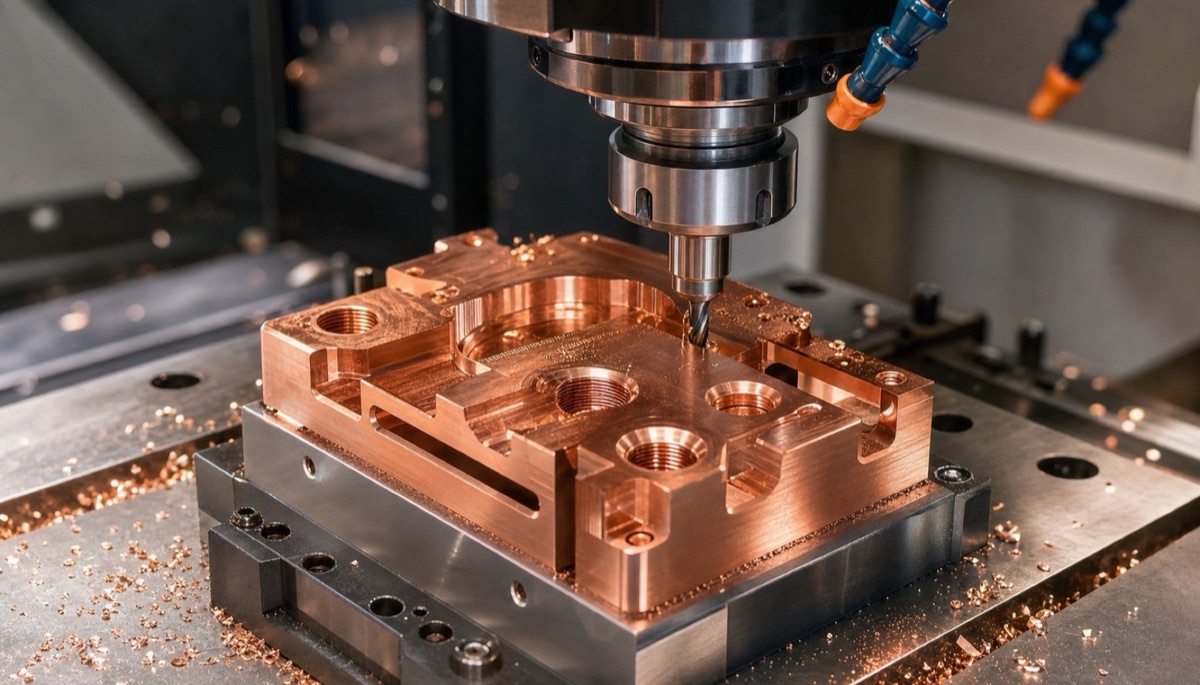
Copper-rich alloys require sharp tools, stable chip control and a strategy that limits built-up edge, burrs and heat at functional surfaces.
When Brass Is The Practical Choice
Brass is often suitable for fittings, valve components, threaded inserts and structural electrical hardware where good machinability, repeatable threads and moderate corrosion resistance matter more than maximum conductivity.
The supplier still needs the grade. Lead-free brass can behave differently from traditional free-cutting grades, and dezincification or chemical exposure may control the alloy choice in wet service. Conductivity should be specified when the component also carries current.
When Pure Copper Justifies The Machining Cost
Commercially pure copper is selected when electrical or thermal performance is the primary function: busbars, heat-transfer blocks, electrodes and conductive interfaces are common examples. Its ductility can produce built-up edge, long burrs and deformation around thin walls or threads.
Sharp geometry, controlled engagement, suitable coolant and planned deburring help protect functional faces. Flatness and contact-surface finish should be checked after stress-producing operations, cleaning and any plating process.
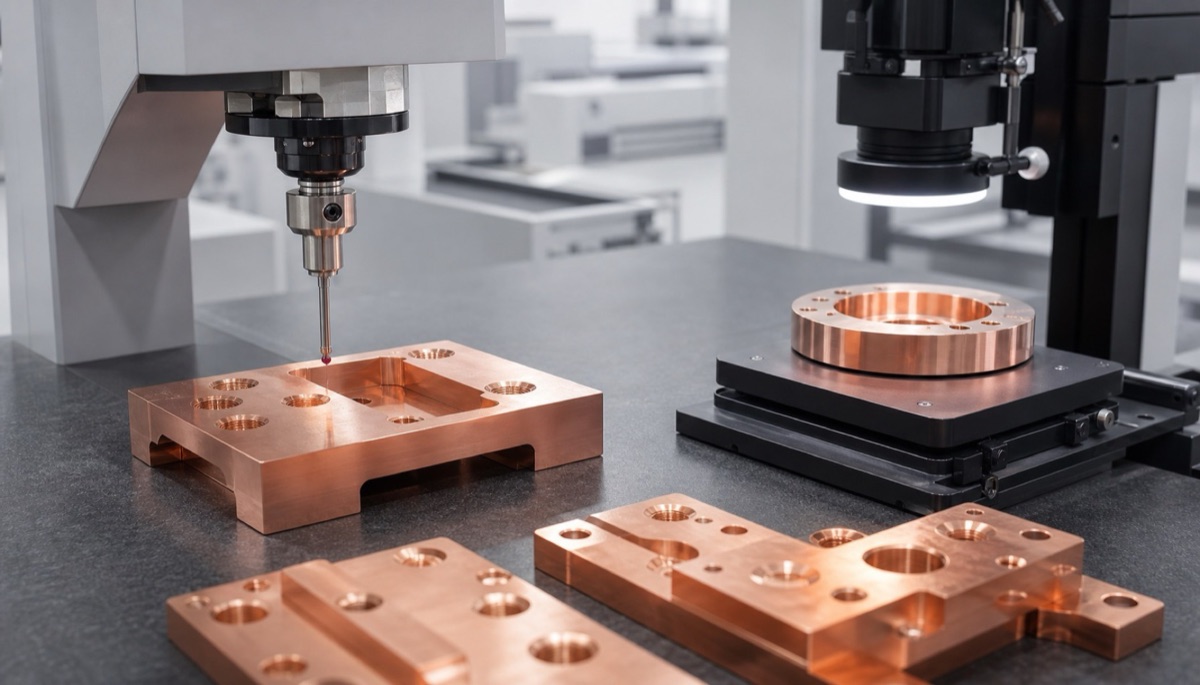
Material grade and condition should be linked to the inspection report because conductivity, hardness and machining response can vary by alloy and temper.
Use Beryllium Copper For Spring And Fatigue Requirements
Beryllium copper becomes valuable when the part needs repeated elastic movement, higher strength, wear resistance or fatigue life while retaining useful conductivity. Typical applications include spring contacts, resilient clips, sockets and precision conductive mechanisms.
Its properties depend on alloy and heat-treatment condition, so machining allowance and aging sequence must be agreed early. Operations that generate airborne dust or fume require appropriate engineering controls, housekeeping and compliance with applicable occupational-exposure rules. Normal handling of a finished solid part is a different risk condition from dust-generating work.
Information Required Before Quotation
Material certificates and batch identity are especially important when three visually similar copper alloys serve different functions. The inspection plan should connect functional requirements to measurable evidence instead of relying on color or a generic material label.
- Exact alloy designation, temper and heat-treatment condition
- Priority among conductivity, thermal transfer, spring force, wear and corrosion
- Operating temperature, contact pressure and expected fatigue cycles
- Critical datums, fits, threads, thin walls and permitted burr condition
- Plating, cleaning, material certificate and special safety requirements
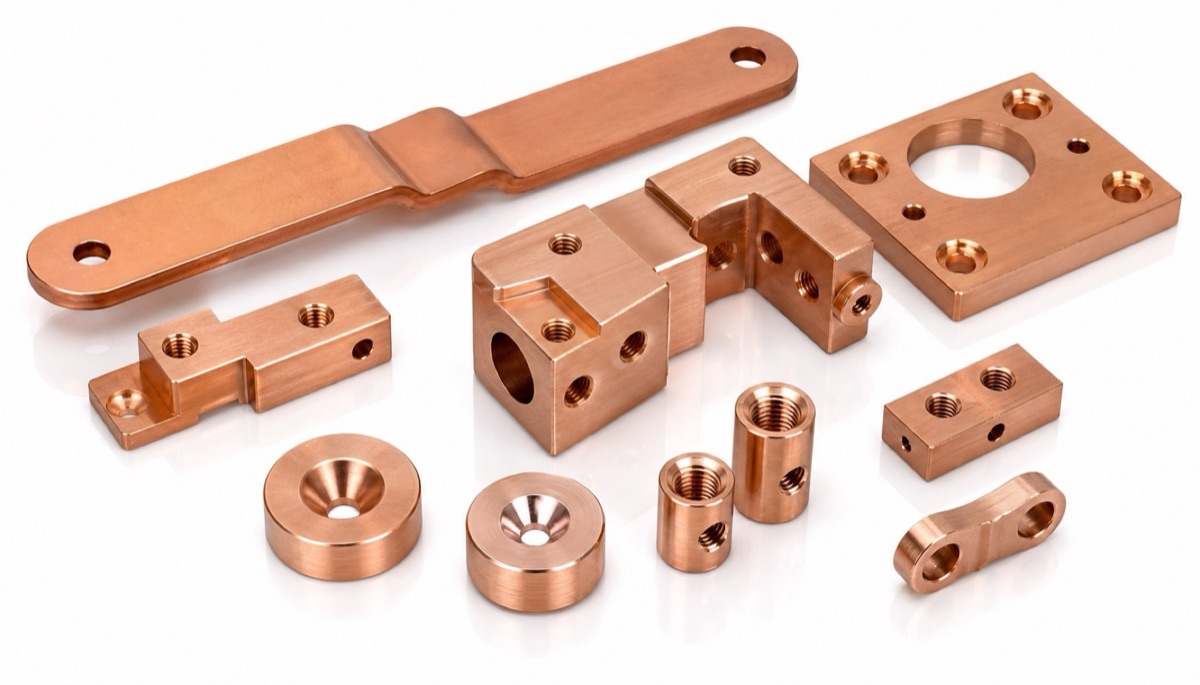
The image illustrates copper-colored machined parts; alloy identity must still be confirmed by material certificates and part-level traceability.
Inspection And Finish Must Follow The Function
Dimensional reports cover bores, threads, contact faces and assembly datums, but some projects also need conductivity, hardness, plating thickness or spring-force verification. The required tests should be stated before production because they affect material sourcing and lead time.
When copper alloys contact aluminum, steel or each other, the design should also review galvanic environment, plating compatibility and contamination control. Packaging must keep conductive and sealing surfaces clean and protected from oxidation or impact.
Summary
Brass is a strong default for machinable structural and threaded parts, pure copper for high electrical or thermal performance, and beryllium copper for spring strength and fatigue resistance. The correct small-batch choice depends on exact grade, condition, function, finishing, inspection and safe process control.
FAQ
When is beryllium copper worth the extra cost?
It is justified when stable spring force, fatigue life, wear resistance or higher strength is functionally required. Ordinary structural parts usually do not benefit enough to offset material and process complexity.
Is pure copper reliable for threaded parts?
It depends on load and assembly frequency. Because pure copper is soft and prone to wear, a different alloy, thread insert or revised joint design may be better for repeated fastening.
Is all brass easy to machine?
No. Machinability varies significantly by alloy and lead-free formulation, so the exact grade should be reviewed before cycle time and burr strategy are quoted.
Does finished beryllium copper require special handling?
A finished solid part is not the same exposure condition as dust- or fume-generating processing. Machining, grinding and thermal operations should follow the safety data and applicable occupational controls.
Ready to get a quote for your CNC machined parts?
Submit your engineering drawings to qiancj@oemach.com. We support prototype sampling and small-batch production with strict tolerance control.