
A hole above a 5:1 depth-to-diameter ratio is not automatically a gun-drill or BTA job, but it should be treated as a deep-hole risk. Tool guidance, chip evacuation, coolant delivery, spindle alignment and bore drift become increasingly important as the ratio grows.
Gun drilling is commonly evaluated for smaller to medium precision bores and high depth ratios. BTA drilling is generally favored for larger diameters, deeper holes and higher metal-removal rates on suitable equipment. Exact crossover depends on machine, tooling, material, tolerance and production volume.
The process should be selected from the completed-hole requirement, not only the drill diameter. Straightness, entry and exit position, surface finish, roundness and downstream honing or boring may control the route.
Gun drilling and BTA drilling compared
| Item | Gun drilling | BTA drilling |
|---|---|---|
| Typical use | Smaller to medium precision deep holes | Larger diameters and higher removal rates |
| Chip flow | Coolant through the tool; chips return along the external groove | Coolant supplied around the head; chips evacuate internally through the boring bar |
| Guidance | Guide pads and pilot/guide bush support a single cutting edge | Guide pads and a rigid pressure head support the cutting head |
| Equipment | Dedicated gun-drill machine or suitable machining center setup | Usually specialized machine, pressure head and high-flow filtration |
| Selection driver | Diameter, accuracy, straightness and lower-volume flexibility | Diameter, depth, productivity and stable production demand |
Why Risk Rises Above 5:1
A longer tool has less bending stiffness, chips travel farther and coolant loses effectiveness if pressure, flow or filtration are inadequate. Small alignment errors at the entry can become significant drift at the exit. Interrupted features or cross-holes can further disturb guidance and cutting forces.
A standard twist drill with through coolant and a controlled pecking cycle may still work for some moderate ratios and relaxed requirements. The choice depends on material, diameter, tolerance, straightness and machine rigidity rather than a single ratio rule.
How Gun Drilling Works
A gun drill normally uses one cutting edge with guide pads. High-pressure coolant travels through the tool, and chips return through an external V-shaped groove. A guide bushing or accurate pilot helps establish the initial axis before the pads support the bore.
The system can produce accurate deep holes with good finish, but alignment, tool runout, coolant cleanliness and entry conditions are critical. The tool should not enter an unsupported workpiece at cutting speed without the required guidance strategy.
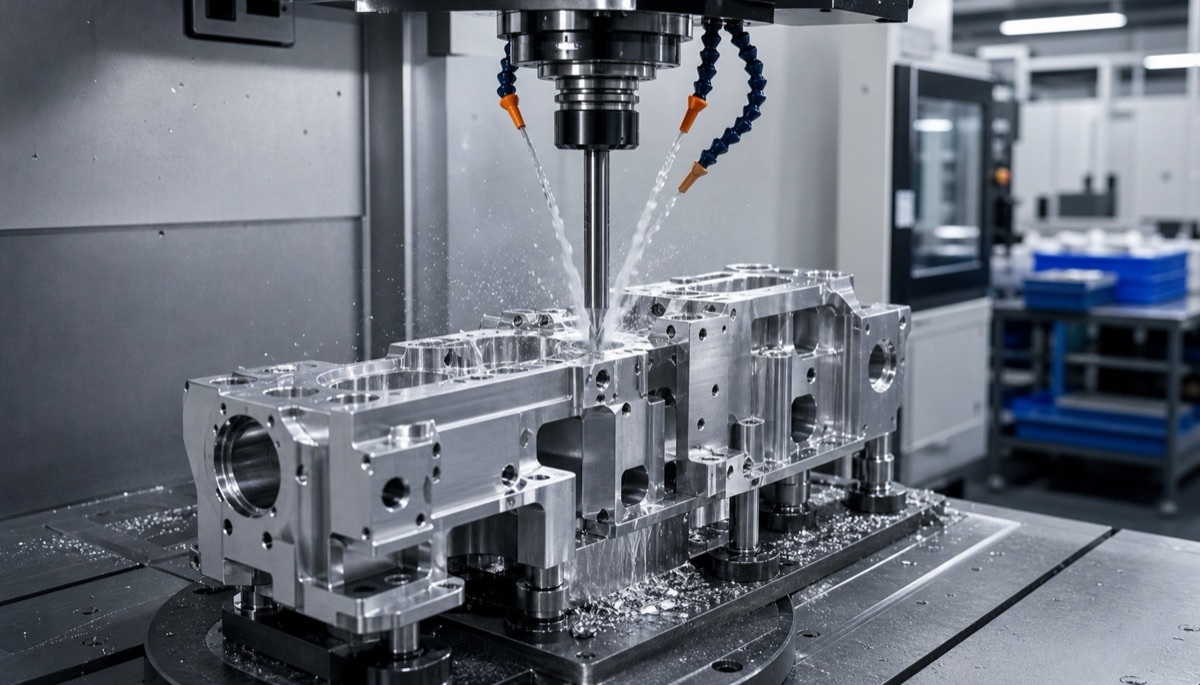
Once the depth-to-diameter ratio grows, guidance, alignment, coolant delivery and chip evacuation become as important as cutting parameters.
How BTA Drilling Differs
In a BTA system, coolant is supplied around the outside of the boring bar and chips flow through an internal passage. The larger chip path and rigid cutting head support higher removal rates and larger deep bores, but require a pressure head, sealing and high-flow filtered coolant.
BTA is usually not the economical first choice for very small bores or isolated prototypes. It becomes attractive when diameter, depth and production demand justify the specialized setup and productivity.
Plan Guidance, Coolant And Finishing
Before cutting, confirm pilot geometry or guide-bush length, workholding stiffness, spindle-to-bore alignment, coolant pressure and flow, filtration, and chip monitoring. Blind holes require a plan for bottom geometry and chip removal; cross-holes require a strategy for interrupted support.
Drilling may be followed by boring, reaming or honing when diameter, roundness or surface finish exceeds the drilling capability. The finishing stock and datum chain should be designed from the beginning rather than added after a drifting hole is discovered.
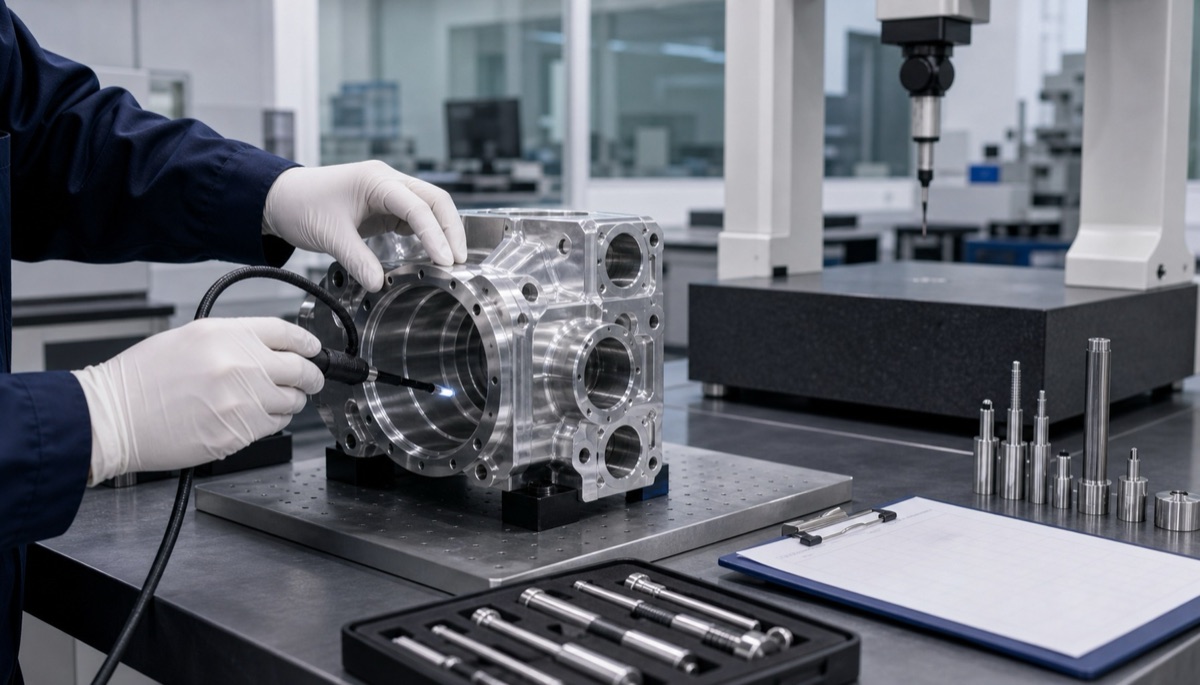
Diameter alone is not enough; straightness, drift, roundness, surface condition and entry-to-exit relationship may also be functional.
Information Required Before Quotation
In one hydraulic and precision-housing project, dedicated guidance and high-pressure internal coolant were combined with separate drilling, finishing and inspection checkpoints. Reusable setup and inspection records helped improve yield by about 30 percent.
- Hole diameter, depth, ratio and through-hole or blind-hole form
- Material grade, hardness and any interrupted or cross-hole features
- Diameter tolerance, straightness, roundness and surface finish
- Whether a pilot, guide feature or intermediate tool withdrawal is permitted
- Coolant, filtration, inspection method, quantity and required reports
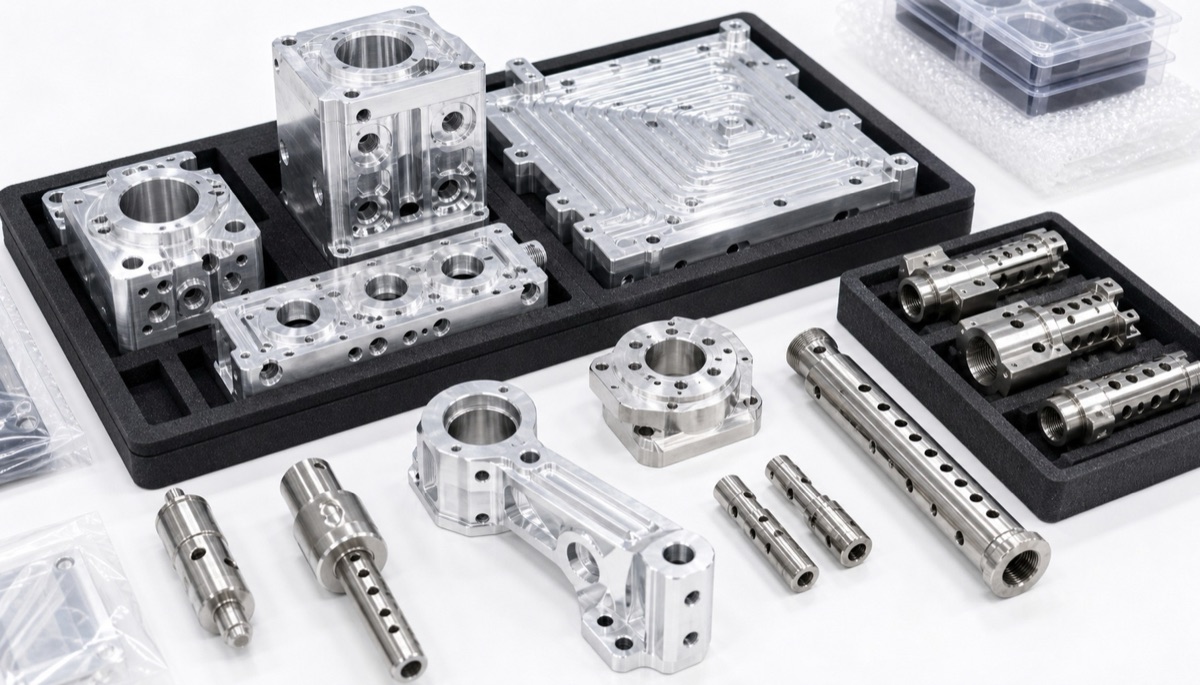
The drilling system and finishing route should be selected from hole diameter, depth, material, tolerance, surface finish and production volume.
Inspection Beyond Bore Diameter
Plug gauges or air gauges can verify size, but straightness and drift may need specialized probes, runout setups, coordinate measurement at accessible ends or process qualification samples. A borescope can reveal scoring, chip welding and surface damage inside the hole.
The report should match the functional requirement. If the hole carries fluid, guides a shaft or intersects another passage, location and surface condition may matter as much as nominal diameter.
Summary
Above 5:1, review deep-hole risk rather than automatically naming one tool. Gun drilling often suits smaller precision holes; BTA often suits larger, deeper and higher-productivity bores. Guidance, alignment, coolant, chip evacuation, finishing and inspection determine the final result.
FAQ
Does every hole above 5:1 require a gun drill?
No. Material, diameter, tolerance, straightness and equipment rigidity still decide the process, but a formal deep-hole review is appropriate.
Can BTA drilling make small holes?
Tool systems have different ranges, but BTA is generally less economical for very small bores and is commonly chosen for larger, productive deep-hole work.
What is the main chip-flow difference?
Gun drilling typically returns chips along an external groove, while BTA carries chips internally through the boring bar.
When is honing needed after drilling?
When the required diameter consistency, roundness, straightness correction or surface finish is beyond the drilling process alone.
Ready to get a quote for your CNC machined parts?
Submit your engineering drawings to qiancj@oemach.com. We support prototype sampling and small-batch production with strict tolerance control.