
Precision deburring is not the same as rounding every edge. A locating bore, sealing face, electrical contact, thread and thin wall can each have a different limit for residual burr and edge break. The correct method is selected only after those limits are defined.
Manual finishing offers flexibility, electrochemical deburring can reach selected internal intersections, and magnetic pin finishing can process many light burrs while improving surface appearance. Conventional ultrasonic cleaning mainly removes loose particles and residue; it does not reliably remove a firmly attached rollover burr.
The decision should start with burr location and function, then include material, part geometry, batch size, inspection method and post-process cleanliness.
Comparison of common precision deburring methods
| Method | Best fit | Main advantage | Main control point |
|---|---|---|---|
| Manual deburring | Exposed edges, prototypes and mixed features | High flexibility and local control | Operator consistency, scratches and excessive edge rounding |
| Electrochemical deburring (ECM/ECD) | Conductive parts, cross-holes and selected internal edges | No cutting force and fast localized removal | Tooling, current path, stray removal, electrolyte and cleaning |
| Magnetic pin finishing | Small batches with light burrs and overall smoothing | Processes multiple accessible edges together | Thin-wall impact, part collision and dimensional edge loss |
| Ultrasonic cleaning | Particles, oil and loose residue | Reaches cavities during cleaning | Not a substitute for removing attached burrs |
Reduce Burr Formation Before Secondary Finishing
Tool sharpness, exit direction, cutting order, support and chip evacuation determine the size and direction of the original burr. If a hole exits onto a sealing face or thin wall, the machining route should reduce rollover before a secondary operation is considered.
A drawing should identify edges that may be broken, edges that must remain sharp and areas that cannot be scratched. A general note such as 'deburr all edges' is not enough for precision fits or functional surfaces.
When Manual Deburring Is The Better Choice
Manual tools work well for exposed edges, prototypes and parts with several different local requirements. A trained operator can protect a bore while treating a neighboring clearance edge. The method is also practical when dedicated tooling would cost more than the small batch.
Its weakness is repeatability. Tool type, approach direction, number of strokes and visual magnification should be standardized. First-article approval and periodic checks are needed to prevent scratches, chatter marks or an oversized chamfer.
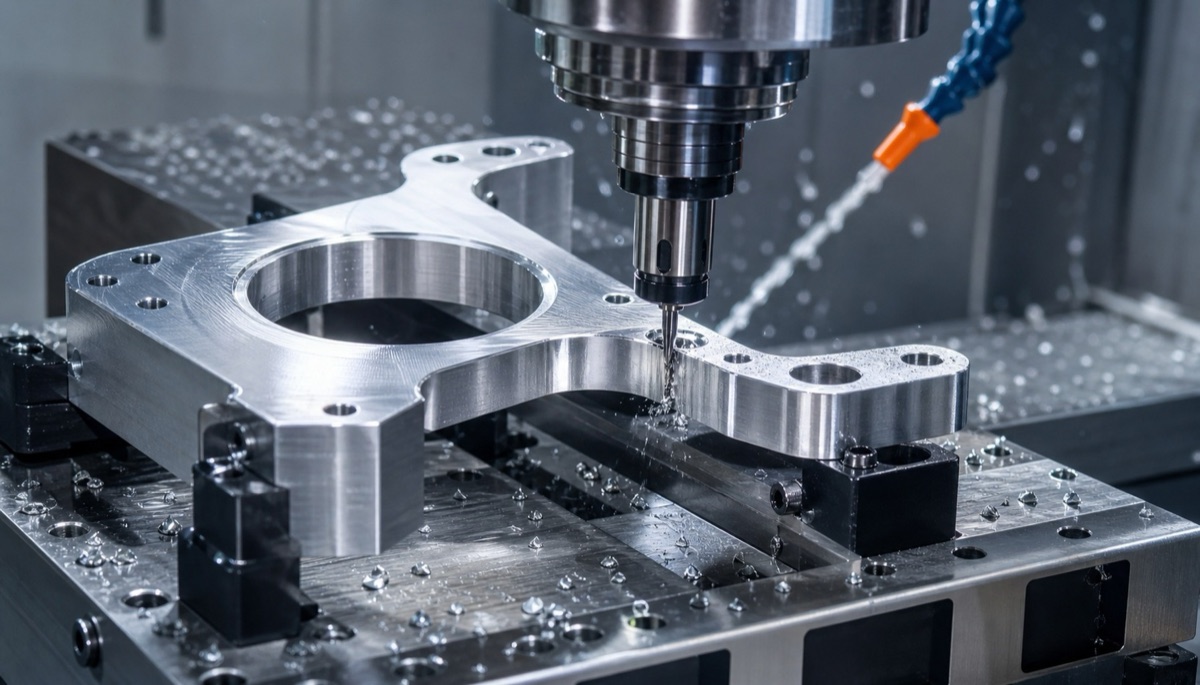
Burr control begins with tool exit direction, cutting strategy and edge accessibility before a secondary deburring process is selected.
Electrochemical And Magnetic Processes
Electrochemical deburring removes conductive material at a selected anodic location without mechanical cutting force. It is useful for internal cross-holes and inaccessible intersections, but it requires dedicated electrodes, controlled current and electrolyte flow. Stray removal, corrosion prevention and washing must be validated on the actual alloy.
Magnetic pin or abrasive finishing can remove light burrs and smooth many exposed features in a batch. It is less selective, so thin walls, sharp functional edges, threads and parts that can collide require trials, separation or masking. Cycle time and media must be locked after sample approval.
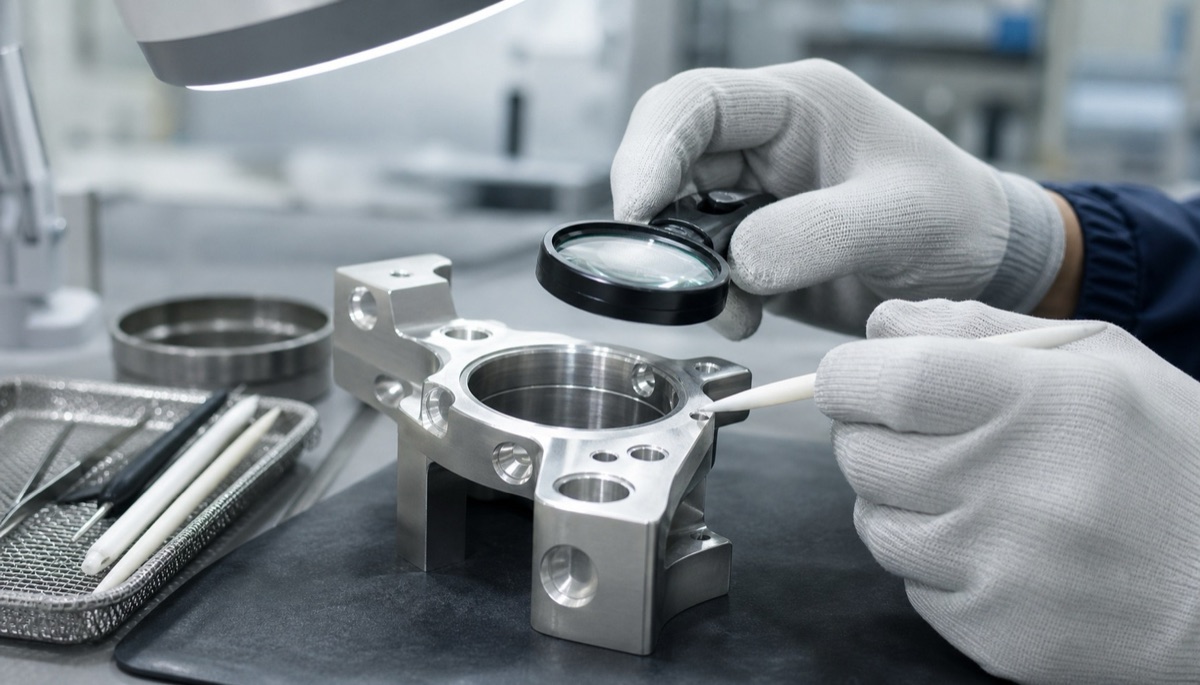
Acceptance should define remaining burr height, permitted edge break and protected functional surfaces instead of relying on touch alone.
What Ultrasonic Processing Can And Cannot Do
Ultrasonic cleaning is excellent for removing oil, particles and loose residue from holes and cavities. Cavitation can dislodge weak fragments, but ordinary cleaning cannot be specified as a reliable method for a strongly attached rollover or extrusion burr.
Specialized ultrasonic-assisted abrasive or machining processes do exist, but they are different from a standard cleaning tank and require their own validation. The purchasing specification should name the real process instead of using 'ultrasonic deburring' as a broad label.
Information To Define Before Quotation
In one precision hole-pattern and thin-wall project, critical holes were protected and the edge-break boundary was approved on samples before staged deburring. Reusable work and inspection instructions helped improve yield by about 30 percent.
- Exact burr location and maximum permitted residual height
- Allowed edge radius or chamfer and protected no-touch surfaces
- Material, heat treatment and surface-treatment stage
- Batch size, cycle target and presence of cross-holes or cavities
- Cleanliness, packaging and magnified-inspection requirements
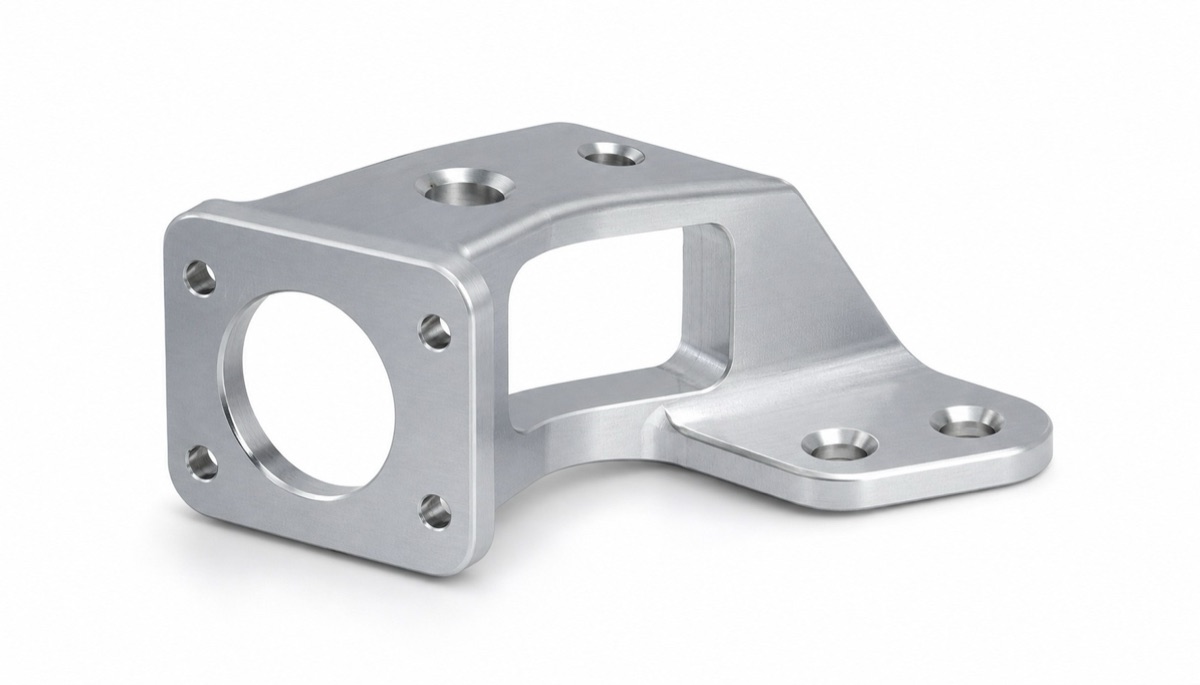
Locating bores, sealing faces, threads and thin edges need different deburring limits even when they belong to the same part.
How To Inspect Deburring Results
Inspection can combine magnification, lighting from multiple directions, tactile checks where permitted, edge-radius measurement and functional gauges. Internal intersections may require a borescope or sectioned process sample.
The result should be judged against measurable limits: no loose particles, no prohibited sharp burr, edge break within range, no damage to datums, threads, seals or cosmetic surfaces, and dimensions still within tolerance after finishing.
Summary
Select precision deburring by feature function and burr access, not by choosing the most aggressive process. Manual work suits local prototype control, ECM suits selected conductive internal edges, magnetic finishing suits light batch burrs, and ordinary ultrasonic cleaning is primarily a cleanliness step.
FAQ
Can ultrasonic cleaning remove a hole-edge burr?
It can remove loose particles and weak residue, but it does not reliably remove a firmly attached rollover burr. A validated deburring process is still required.
Is manual deburring always the cheapest method?
It is common for prototypes, but labor time and batch consistency can make it more expensive than a controlled automated process.
Does electrochemical deburring change dimensions?
It removes material in the energized zone, so electrode design, current, time and stray attack must be controlled and validated.
Can magnetic finishing damage thin walls?
Yes. Media impact and part-to-part collision can mark or deform delicate features, so trials and suitable separation are necessary.
Ready to get a quote for your CNC machined parts?
Submit your engineering drawings to qiancj@oemach.com. We support prototype sampling and small-batch production with strict tolerance control.