
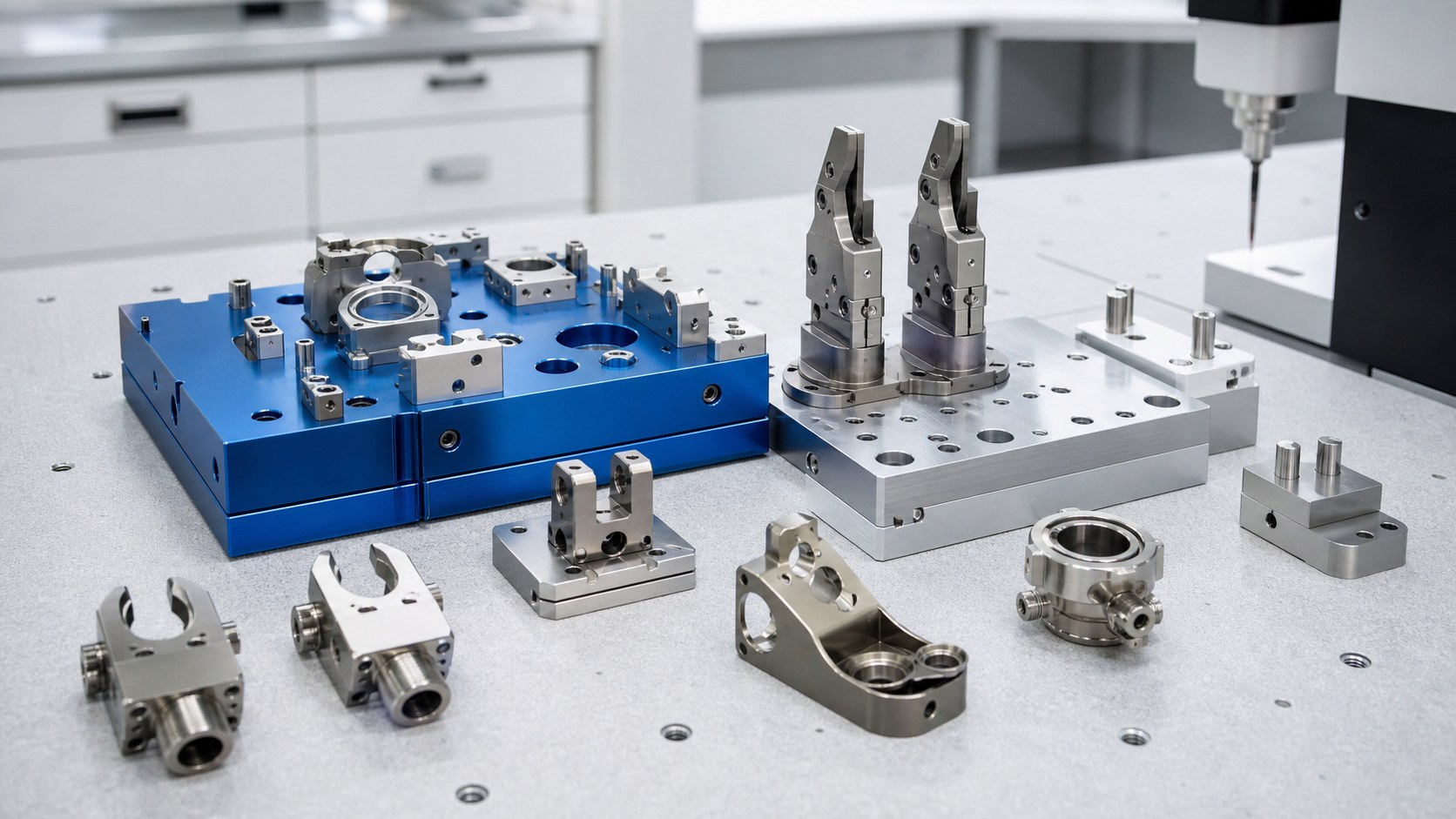
CNC Machining Surgical Robot End-Effector Interfaces: Miniature Datums, Jaw Alignment and Clean Assembly
Why end-effector interfaces deserve special control
Surgical robot end effectors translate instrument motion into clamping, cutting, grasping or positioning at a very small scale. The CNC-machined interface does not define clinical performance by itself, but it controls how pins, jaws, pull wires, sleeves and disposable tool features locate in the assembly. A few microns of mismatch can change jaw symmetry, preload, friction or repeatability. For this reason, the part should be reviewed as a functional motion interface rather than a generic stainless bracket.

Start from the motion stack
Before quoting the component, trace the complete motion stack from the robot drive to the jaw tip. Identify rotating pins, sliding slots, cable paths, stop faces, sterile-barrier interfaces and replaceable parts. The drawing should state which surfaces are load bearing, which are only clearance and which edges contact an instrument, sleeve or polymer insert. If the end effector is used in a disposable tool, reusable instrument or test fixture, that use case changes material, cleaning, documentation and validation expectations.
Material and finish selection
17-4PH stainless steel, 316L stainless steel and titanium alloys are common candidates depending on strength, corrosion behavior, mass and sterilization exposure. The final choice belongs to the device manufacturer and should be stated with grade, condition, certificate and heat-treatment requirement. Passivation or electropolishing can improve surface condition, but these processes may affect sharp transitions, pin bores and tiny slots. The drawing should define post-finish dimensions and surfaces that must retain a controlled edge.
Build usable datums at miniature scale
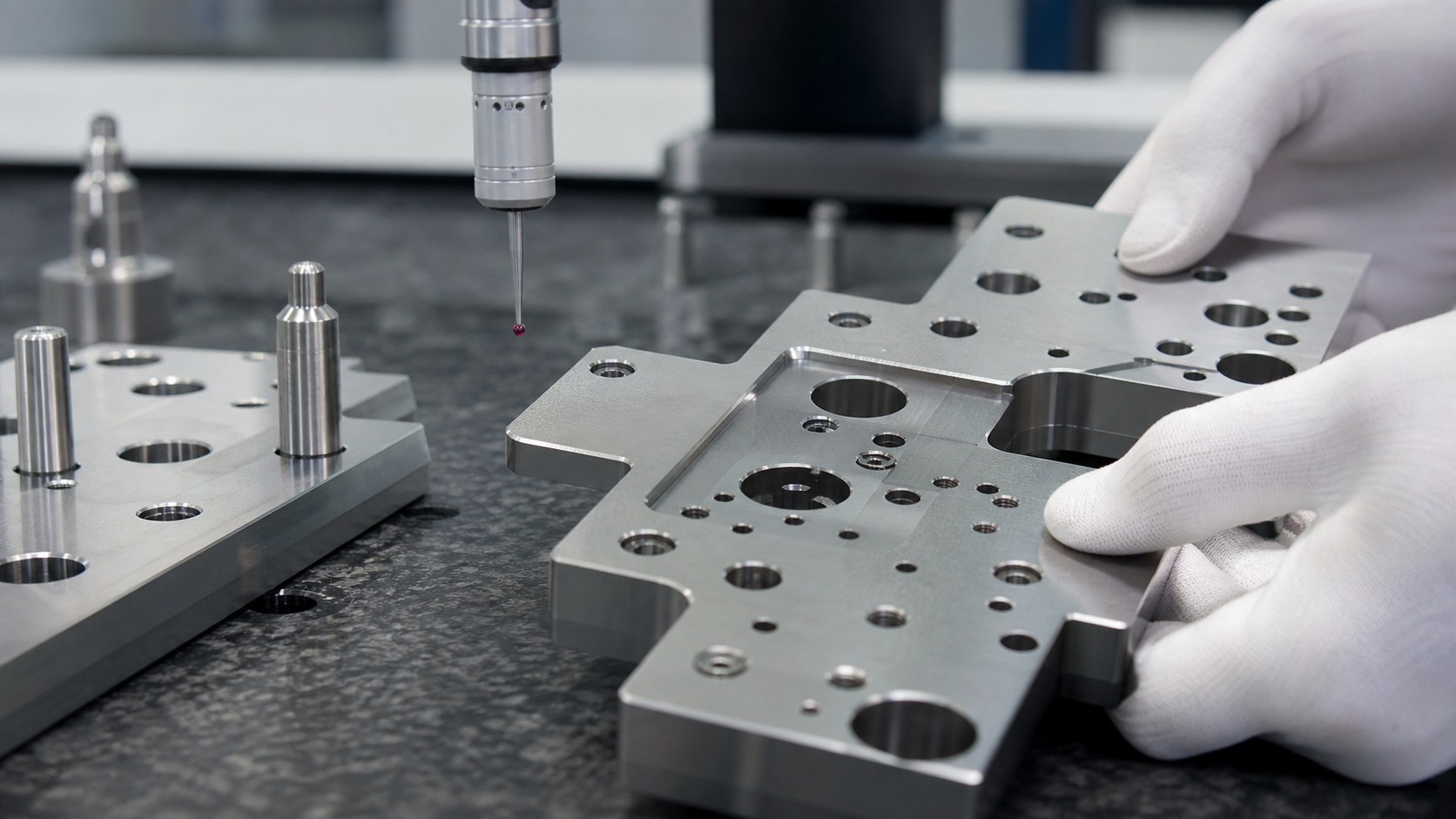
A miniature interface needs datums that can be held, machined and measured without ambiguity. A hinge bore, jaw seat or reference face may be more meaningful than an external contour. The datum scheme should keep paired features in the same coordinate system so jaw alignment, pin spacing and cable slot position can be evaluated together. Where a part is too small for conventional clamping, custom soft jaws or vacuum support may be needed, but the inspection report still needs a repeatable reference strategy.
Machining sequence and distortion control
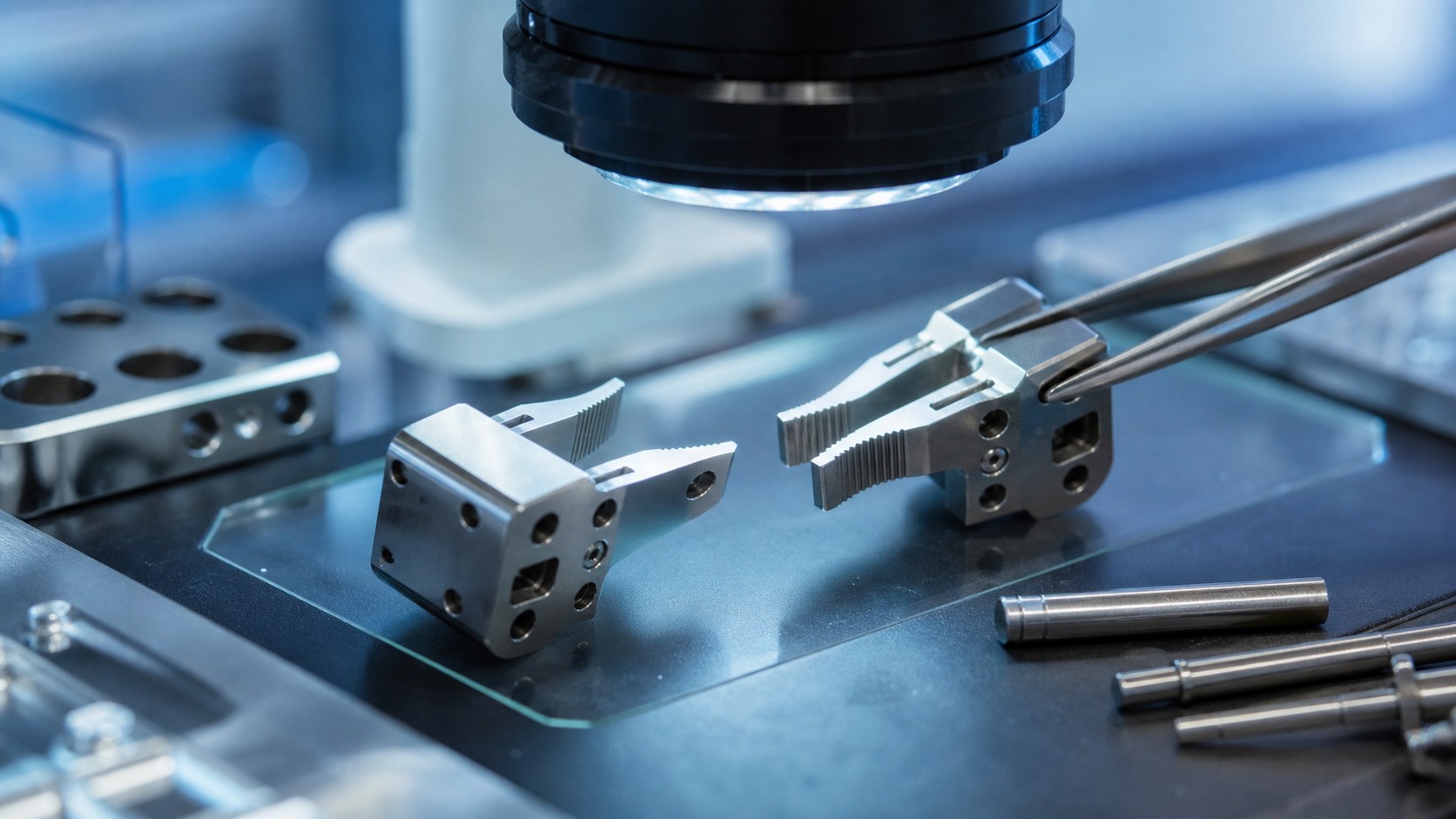
The process normally establishes a stable blank, creates primary references, roughs noncritical material and leaves motion features for finishing operations. Thin arms, narrow slots and small bores can move when residual stress is released, especially after heat treatment or aggressive one-sided machining. Tool paths should control chatter, avoid raised lips at slot exits and protect edges that will contact mating parts. Final inspection should be performed after unclamping because fixture pressure can temporarily hide spring-back.
Burr control in jaw and cable features
Small burrs can damage polymer liners, shed particles or change sliding friction. Burr removal must be specific rather than simply aggressive: a hinge bore may need a clean edge, while a stop face may require a crisp location. Cross holes, micro slots and deep pockets should be inspected with magnification or borescope access when direct viewing is limited. The acceptance plan should define allowable edge break, prohibited loose burrs and surfaces that must not be rounded.
Inspection of alignment and motion features
Critical checks often include bore diameter, coaxiality, slot width, jaw-seat symmetry, parallelism of paired faces, stop-face location and surface finish on sliding or bearing areas. A CMM can capture datum relationships, while optical measurement may be better for small slots and edge condition. For prototypes, it is useful to compare dimensional data with assembly feedback such as hinge smoothness, end-play and jaw closing symmetry. Measurement records should remain tied to material lot, fixture revision, program revision and finish batch.
Cleaning, packaging and traceability
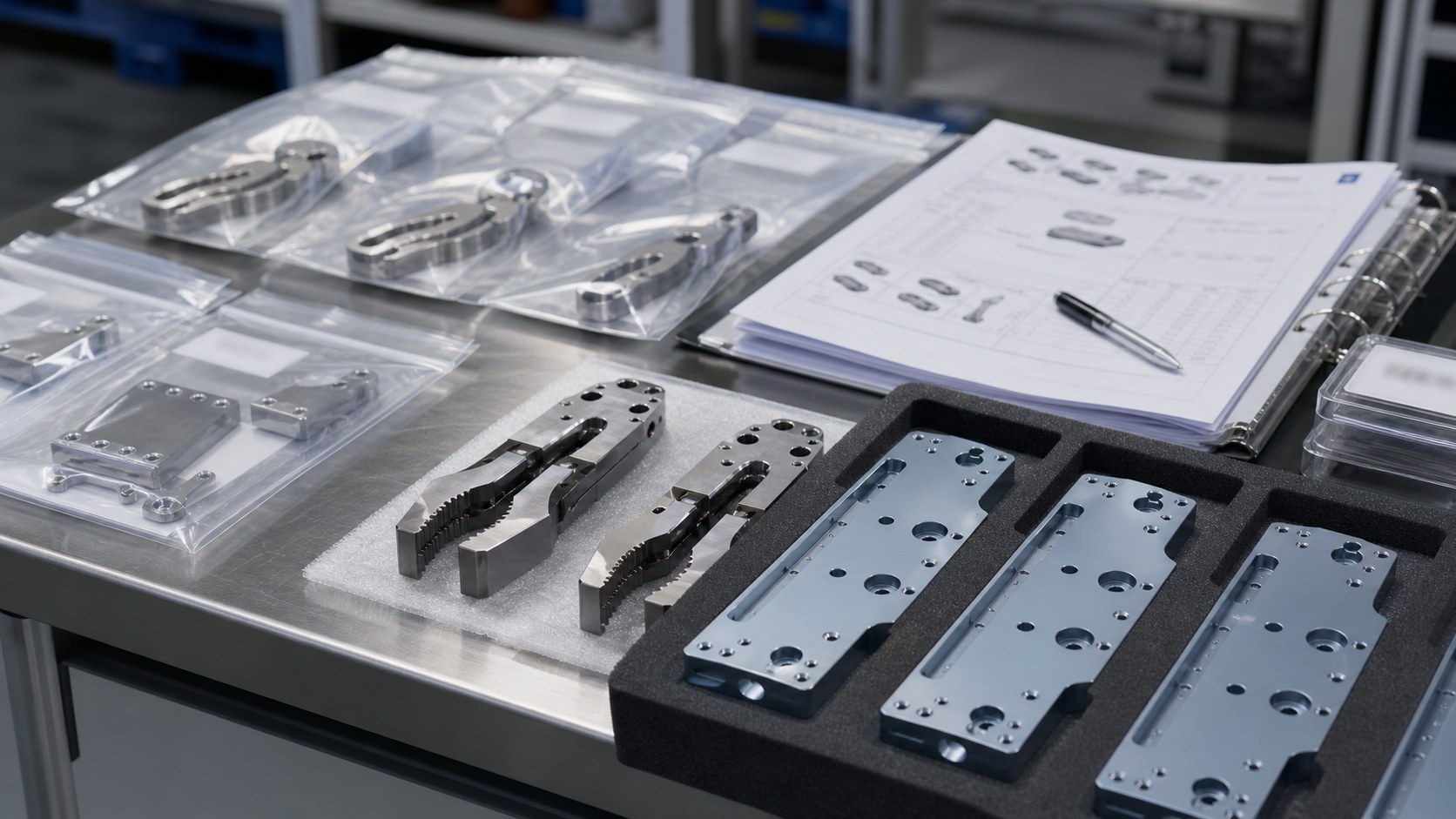
After machining and finishing, remove coolant, abrasive residue and loose particles from every slot, bore and blind pocket. Packaging should prevent tiny functional edges from contacting other metal parts. Labels should show part number, revision, lot, inspection status and any special handling requirement, without claiming sterility unless a validated sterile process is actually included. A complete RFQ includes drawings, 3D models, material, finish, critical features, quantities, cleaning level, inspection records and any customer-supplied assembly test.
Supplier and design handoff
A strong handoff makes assumptions visible. The device team defines clinical use, sterilization exposure, mating components, validation limits and acceptance tests. The machining supplier contributes manufacturability review, fixture planning, tool-life control, measurement feedback and repeat-production data. When jaw geometry, wire path, coating or heat treatment changes, the whole stack should be reviewed again because motion feel, wear and assembly yield may change together.
FAQ
Can CNC machining validate a surgical robot instrument?
No. Machining can provide controlled mechanical interfaces and records, while device-level performance, sterilization and regulatory validation remain with the medical device manufacturer.
Which features are usually most critical?
Hinge bores, jaw seats, pin spacing, cable slots, stop faces, datum faces and functional edges are commonly critical, depending on the released drawing.
Why is burr control so important?
Loose or rounded burrs can affect motion, damage mating parts or create particles, so the acceptance plan must define edge condition for each functional area.
Should dimensions be measured before or after passivation?
The drawing should state the required condition. Features affected by finishing normally need post-finish confirmation.
How are tiny slots inspected?
Optical measurement, CMM probing, pin gauges, profile checks or borescope review may be combined according to feature size and access.
What should be included in the RFQ?
Send 2D drawings, 3D models, material and finish requirements, critical tolerances, batch quantities, cleaning needs, inspection records and any assembly-test method.