
The short answer is simple: evaluate the part function first, then evaluate the machining method. Industrial robot parts are not finished just because the first prototype passes; the supplier must also be able to repeat the process and handle abnormalities.
These projects often appear during R&D prototyping, small-batch trial production or a change of outsourced supplier. OEMach does not quote such precision robot parts only by external shape. We first confirm assembly datums, critical tolerances, material condition, surface treatment and inspection method.
For purchasing teams, the real question is not whether a supplier advertises a very accurate machine. The question is whether the supplier can explain first-article data, process records and the conditions for the next repeat order.
5 Supplier Evaluation Criteria For Industrial Robot Parts
| Criterion | What to check | Good sign | Risk signal |
|---|---|---|---|
| Industry experience | Understanding of robot assembly | Asks about datums, load and inspection | Quotes only by shape or machine time |
| Process capability | 3-axis, 4-axis, 5-axis and combined processes | Can explain why a route is selected | Uses one solution for every part |
| Inspection capability | CMM and dedicated gauges | Reports include datum logic and measured values | Only says the part is qualified |
| Delivery stability | Records from first article to repeat order | Programs, fixtures and data are traceable | Every batch is rediscovered from zero |
| Abnormal response | Rework and communication mechanism | Can remeasure quickly and offer a plan | Delays, deflects responsibility or asks the customer to wait |
Use The Table Before Reviewing The Quote
The table should be used as a starting point for drawing review and quotation discussion. Each criterion should be connected to a drawing note, a process route or an inspection report. If it stays as a general promise, responsibility will be difficult to define when a later batch has a problem.
How The Process Route Should Be Discussed
A useful supplier discussion connects industry experience, DFM review, material sourcing, fixture design, CMM inspection, surface-treatment coordination and delivery communication. Making one part and making ten stable repeat batches are different abilities.
If the part has multi-face hole systems, deep cavities, thin walls or curved surfaces, 5-axis machining may reduce repeated clamping. Thin-wall parts may need soft jaws, vacuum support or profile fixtures. Structures that release stress should be planned with roughing, semi-finishing, stabilization or aging, and final finishing.
Do not force the entire part into one tight tolerance. Functional areas such as locating holes, bearing seats, optical mounting holes and sealing faces can be graded at +/-0.005 mm, +/-0.01 mm or +/-0.02 mm, while materials such as Al7075, 316L, TC4, PEEK, POM and PA need different tooling, feed, cooling and deburring strategies.
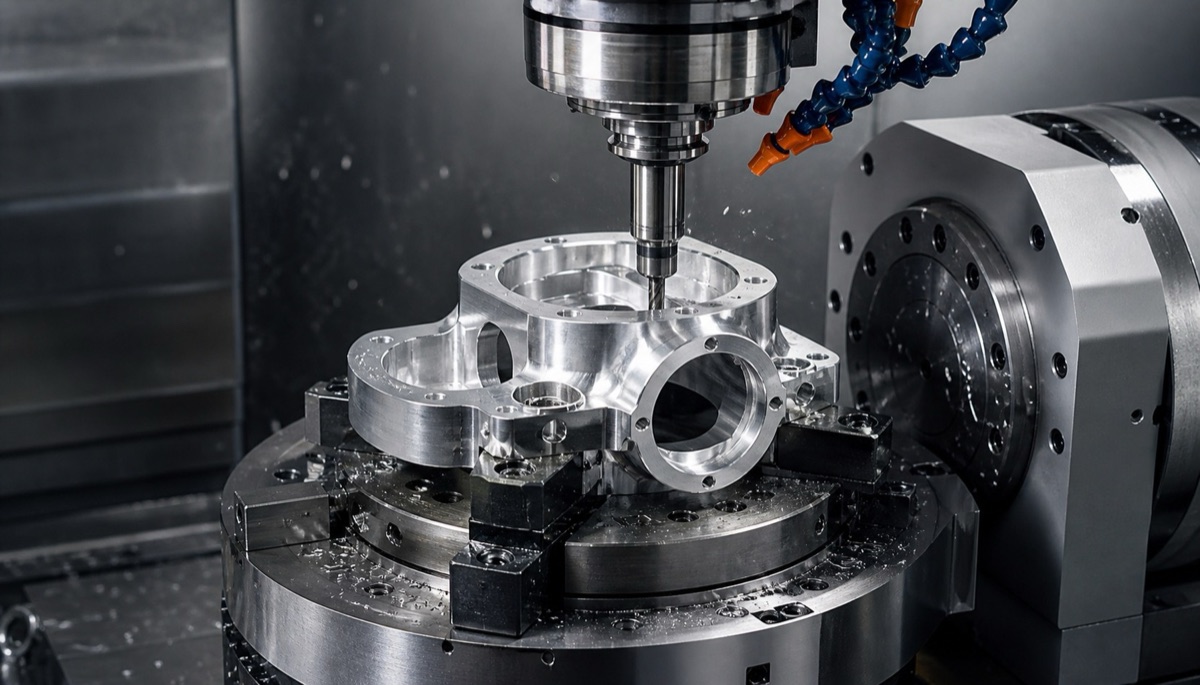
Supplier evaluation should start with the part function, not only with machine size or quoted machining time.
Information To Confirm Before Placing An Order
The earlier this information is shared with the factory, the closer the quotation will be to the real cost. Sending only a 3D model without critical tolerances, surface treatment and inspection requirements often produces a low-looking quotation that grows later.
- Check whether the supplier has experience with robot joint parts, flanges, brackets, sensor seats and protective covers.
- Confirm whether critical dimensions can be inspected with CMM or dedicated gauges.
- Ask how the supplier controls first article, trial production, small batches and repeat orders.
- Ask about the process for rework, remake, engineering changes and delivery delays.
- Compare quotation speed, technical feedback quality and file version management.
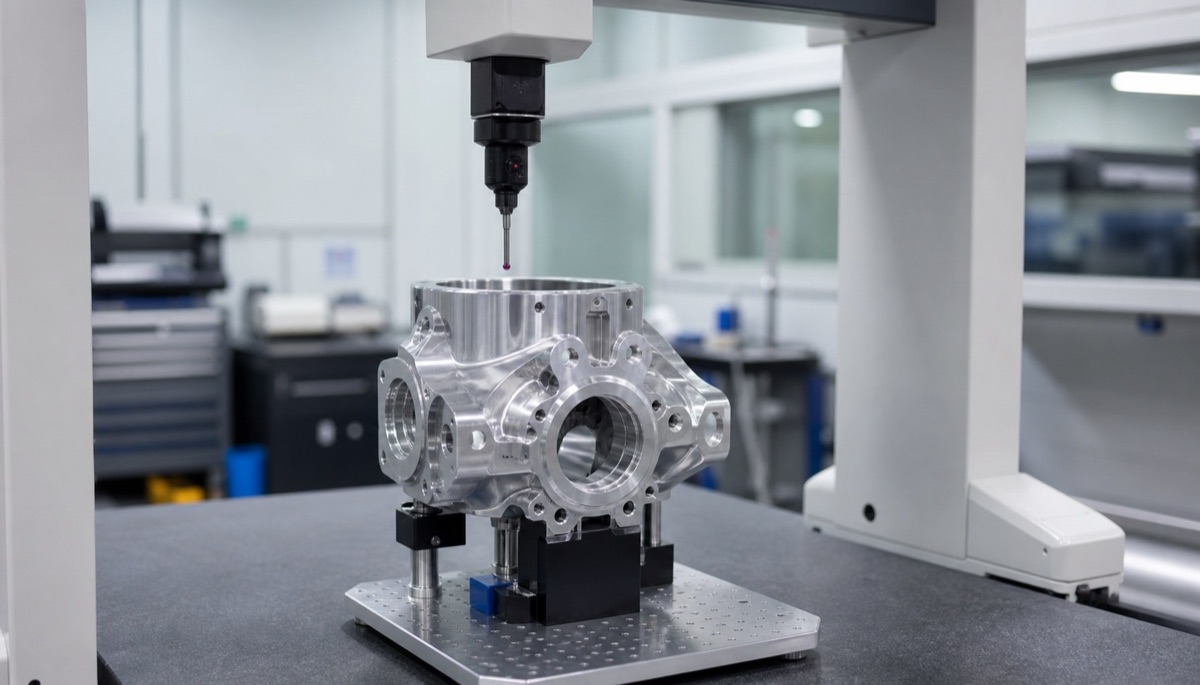
For critical datum holes, bearing seats and geometric tolerances, a supplier should be able to provide measured records, not only a verbal pass.
Project Experience: Turning Prototype Success Into Repeatable Delivery
In one industrial robot precision part project, OEMach used front-loaded DFM review, fixed first-article inspection and repeat-order process-record management. Key dimensions, clamping datums and inspection checkpoints were converted into reusable process records, helping improve yield by about 30 percent.
This is the difference between a price-only supplier and a technical service supplier. For R&D teams, a factory that can discuss machining risk, inspection method and repeat-order control is usually a better long-term partner than one that only returns a unit price.
Common Mistakes In Supplier Evaluation
The first mistake is treating a machine list as the same thing as machining capability. Equipment matters, but fixturing, tooling, inspection and repeat-order records decide delivery stability.
The second mistake is making every dimension unnecessarily tight. Critical functional features should be controlled, while ordinary clearance features should keep reasonable tolerance so cost and lead time remain manageable.
The third mistake is leaving surface treatment, cleaning and packaging until the end. Many precision-part assembly problems happen after machining is complete.
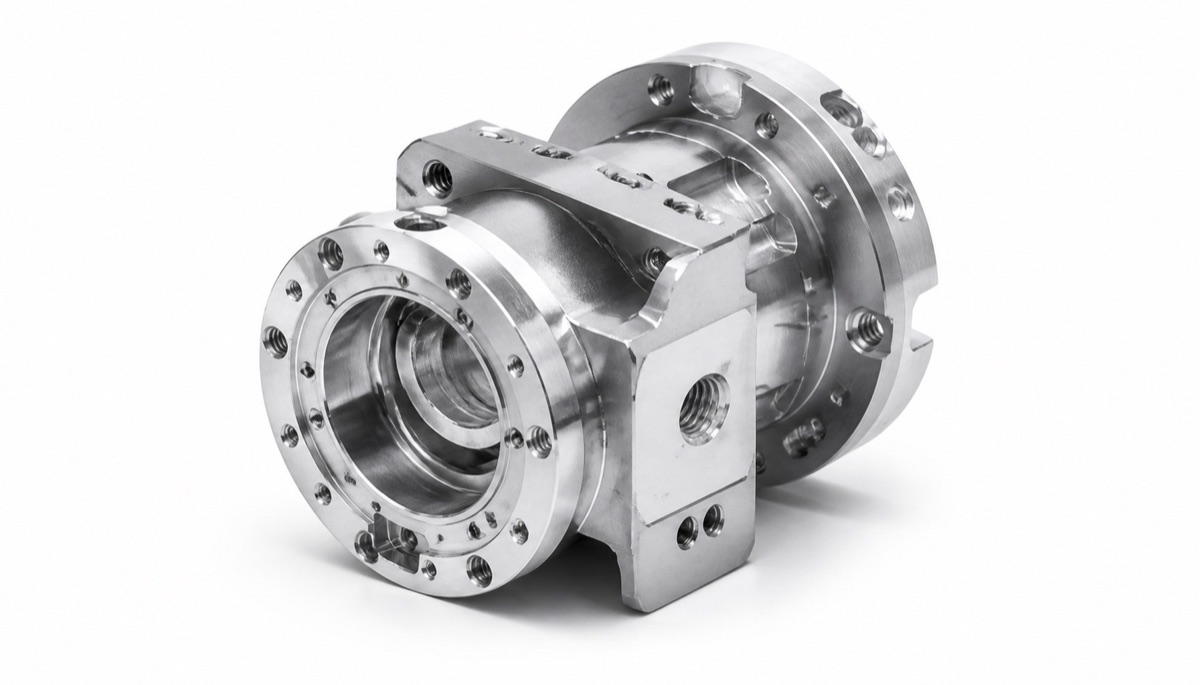
Repeatable delivery depends on controlled drawings, fixtures, inspection plans, process records and packaging, not on first-article success alone.
Summary
To evaluate an industrial robot parts supplier, first identify the function of the precision component, then fix the critical surfaces, critical holes and inspection method. A supplier's real value appears when prototype success can be converted into stable repeat delivery.
FAQ
What is the most important capability for an industrial robot parts supplier?
It is not one machine or one process. The key is the combined capability of drawing review, process planning, inspection, delivery and abnormal response.
How can I tell whether a supplier understands the robot industry?
See whether the supplier proactively asks about assembly datums, load positions, repeat-order batches and inspection requirements.
Is CMM inspection always required?
For parts with critical hole positions, geometric tolerances and multiple assembly datums, a CMM report is strongly recommended.
Is a prototype-only supplier suitable for long-term cooperation?
Only if the supplier can preserve process and inspection records. Prototype capability does not automatically mean repeat-batch stability.
What kinds of industrial robot parts are suitable for OEMach?
Joint brackets, mounting seats, flanges, protective covers, fixtures and small-batch precision non-standard parts are typical projects.
Ready to get a quote for your CNC machined parts?
Submit your engineering drawings to qiancj@oemach.com. We support prototype sampling and small-batch production with strict tolerance control.