
CNC Machining Surgical Navigation Components: Sterile Adapter Plates, Tracker Brackets and Orthopedic Positioning Parts
Surgical navigation equipment depends on a chain of small mechanical references. A tracker bracket, sterile adapter plate, clamp jaw or dowel pin may look simple on a drawing, yet each one influences how accurately the system transfers image data to the surgical tool or orthopedic guide. CNC machining for these parts therefore has to consider repeatable location, cleanability, sterilization exposure and practical assembly at the same time.
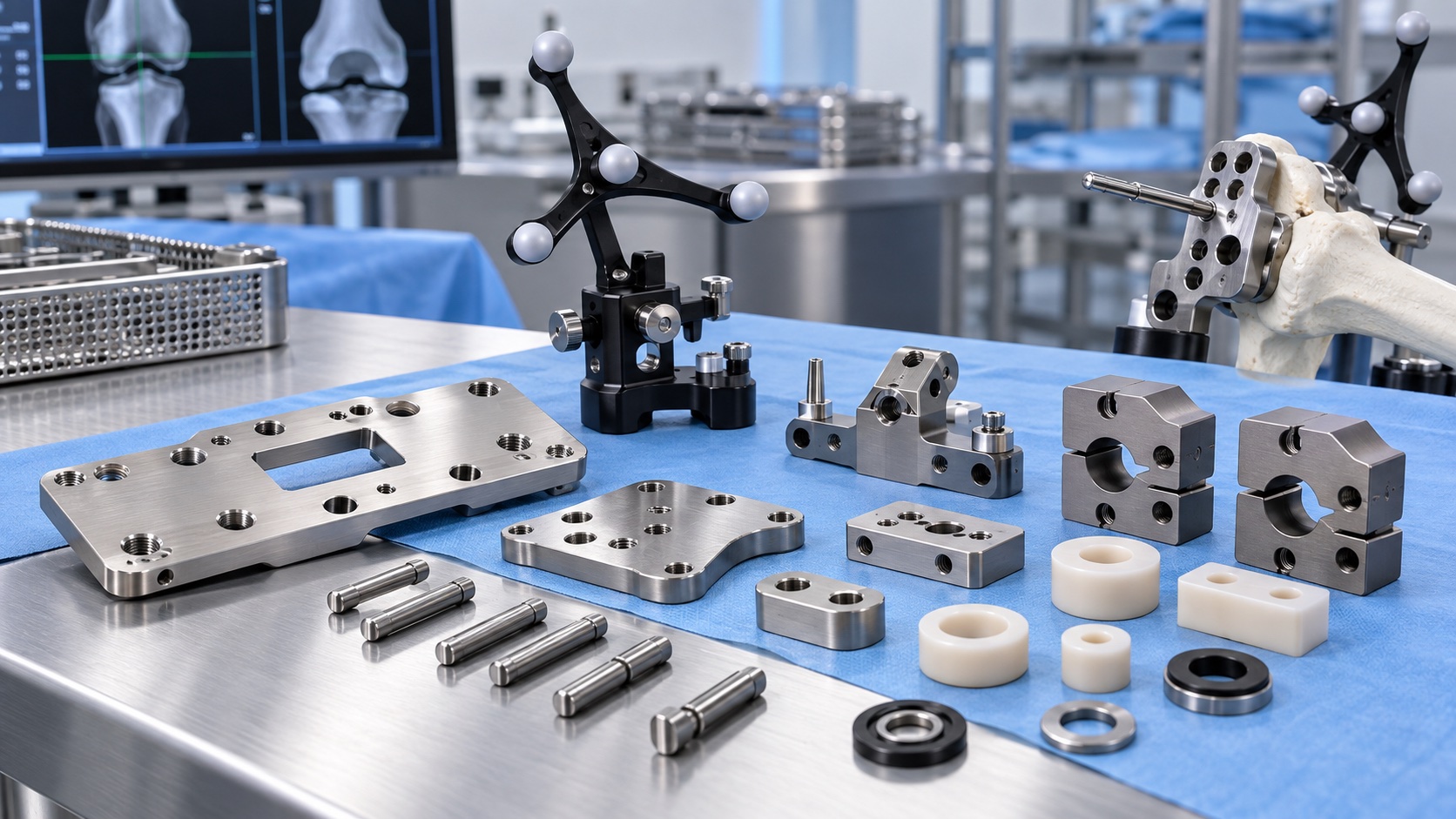
The most important parts in this type of assembly are usually the sterile adapter plate, the tracker bracket, the orthopedic positioning block and the clamp components that hold them. Materials are selected by function. 316L stainless steel is common for sterile interfaces because it provides corrosion resistance and can be passivated. Titanium is used when low weight and high stiffness are needed. PEEK spacers provide insulation, controlled separation and good stability through cleaning cycles.
Datum planning decides whether the machined set will assemble consistently. The functional reference should normally be the dowel pin pattern, central window or mating plane rather than an outside cosmetic edge. When screw counterbores, locating bores and window faces are finished from a controlled setup, the assembled tracker has less cumulative error. That is especially important when the part is repeatedly installed, removed, cleaned and reinstalled.

Thin plates present their own risk. A sterile adapter plate may include a large center opening, small threaded holes, counterbores and edge reliefs, leaving limited material to resist clamping force. Balanced roughing, low-stress fixturing and a final flatness pass help prevent bowing. Sharp corners should be replaced with controlled radii that reduce stress concentration and make cleaning easier.
Surface finish is not only cosmetic. Burrs around threaded holes or windows can trap residue, cut gloves or interfere with seating. For 316L stainless steel, deburring under magnification, controlled brushing and passivation review are part of a reliable process. If the part will touch a sterile barrier, edges must feel smooth without removing too much material from the functional datum.
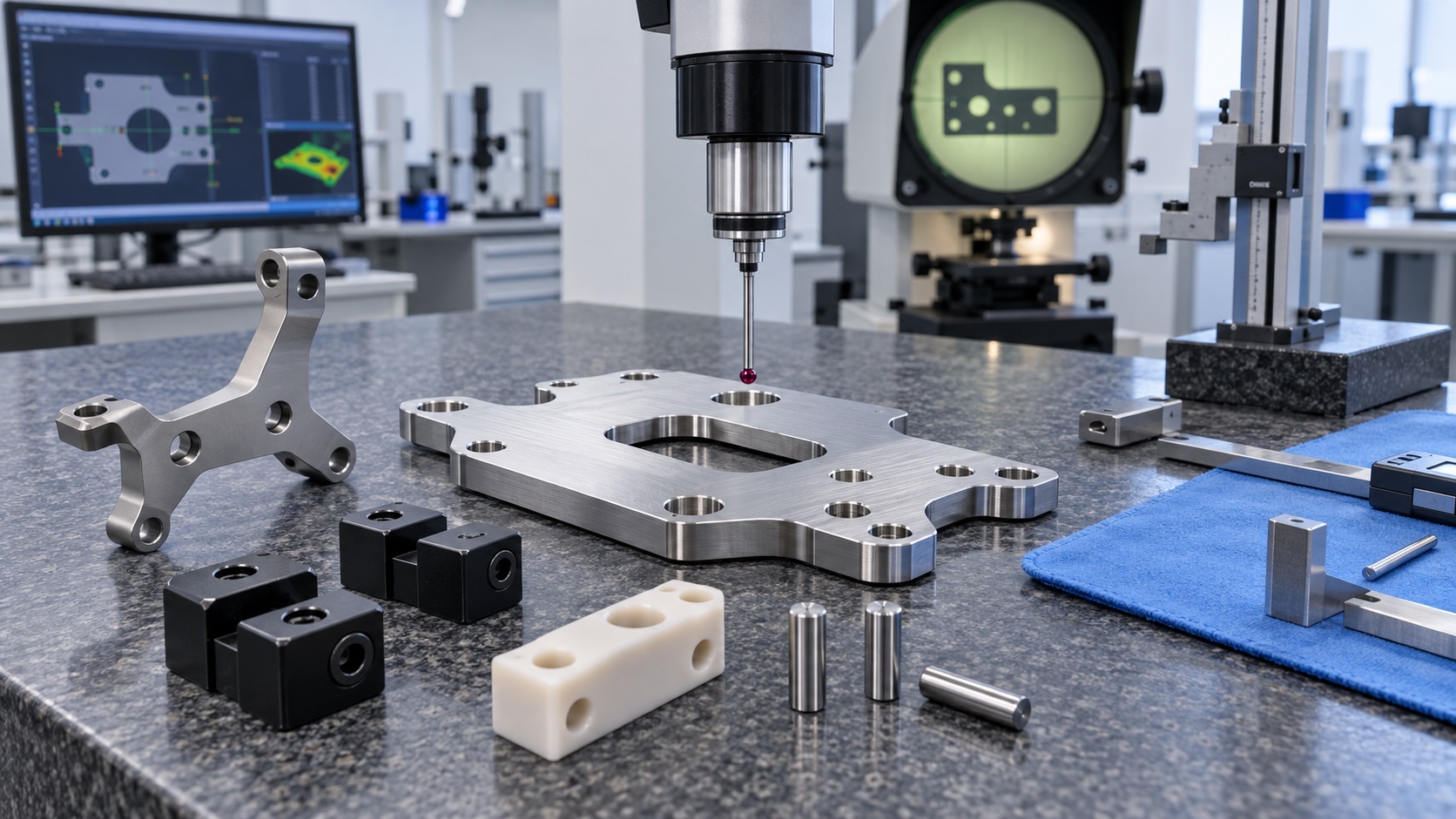
Inspection should follow the use of the part. A general outside dimension report is less useful than a CMM report that checks dowel pin bore position, window squareness, mating-face flatness, counterbore depth and perpendicularity. For clamp blocks, bore roundness and jaw alignment matter. For PEEK spacers, flatness and hole location should be checked without deforming the material during measurement.
Clean packaging closes the loop. Stainless plates, titanium blocks, PEEK spacers, screws and seals should be separated so they do not scratch each other during transit. Protective pouches and foam inserts keep the finished surfaces stable, while batch identification stays outside the clean contact area. For overseas medical device buyers, this reduces incoming inspection time and makes pilot assembly more predictable.

A good RFQ should include the 3D model, 2D drawing, sterilization or cleaning expectation, material certificates, passivation requirement, annual volume, critical-to-function dimensions and inspection report needs. With those points defined, the CNC supplier can quote tooling, inspection and packaging as part of the actual medical device workflow.
FAQ
Which dimensions are most critical in surgical navigation parts?
Dowel pin bore position, mating-face flatness, window squareness, clamp bore alignment and counterbore depth usually drive the assembly accuracy.
Why is 316L stainless steel used for sterile adapter plates?
316L provides corrosion resistance, stable handling surfaces and compatibility with passivation for medical device assemblies.
When should titanium be considered?
Titanium is useful for tracker brackets and clamp arms when weight reduction is important without losing stiffness.
How are thin adapter plates kept flat?
Balanced roughing, low-stress fixtures, controlled finishing passes and CMM flatness checks reduce bowing.
What deburring standard is important?
Edges around windows, threads, counterbores and contact faces should be smooth, burr-free and inspected under magnification.
What should buyers include in the RFQ?
Send 3D files, 2D drawings, critical dimensions, material and passivation needs, annual volume, inspection requirements and packaging expectations.
Contact: tanghangyun@oemach.com