
Surface treatment for precision parts should be selected by function first, then by appearance or price. Anodizing, electroless nickel plating and hard chrome plating solve different problems and change the final condition of holes, edges, threads and mating faces.
A CNC part can be dimensionally correct before finishing and still become too tight, too loose or visually unacceptable after finishing. Coating thickness, masking, burrs and post-finish cleaning all affect the delivered part.
OEMach confirms finish type, thickness range, critical allowance, masking zones and post-finish inspection before machining precision parts that require surface treatment.
Anodizing, Electroless Nickel and Hard Chrome Comparison
| Finish | Typical materials or use | Main advantage | What to confirm |
|---|---|---|---|
| Anodizing | Aluminum housings, brackets, plates and visible parts | Corrosion resistance, color options and stable appearance | Typical film thickness about 5-25 um; mask or allow for critical holes |
| Hard anodizing | Aluminum wear surfaces and sliding contact areas | Higher hardness and better wear resistance | Thicker film changes edges and fits more obviously |
| Electroless nickel | Aluminum, steel and stainless precision parts | Uniform coverage, corrosion resistance and conductivity | Typical thickness about 5-25 um; confirm coating uniformity and fit allowance |
| Hard chrome | Shafts, sliding faces and wear repair areas | High hardness, wear resistance and friction performance | Edge build-up and environmental restrictions should be checked early |
| Passivation or black oxide | Stainless steel or steel corrosion protection and appearance | Common process with small dimensional effect | Appearance consistency and rust-prevention expectations still need confirmation |
Anodizing Is Useful but Not Only Cosmetic
Anodizing is common for 6061 and 7075 aluminum housings, brackets, mounting plates and robot structures. It improves corrosion resistance and appearance consistency, but it is not always friendly to high-precision holes, threads, bearing seats or sealing faces.
If the part has an H7 bore, locating pin hole or thin mating slot, the drawing should state whether dimensions are accepted before or after anodizing. Critical faces may need masking, allowance or post-finish reinspection.
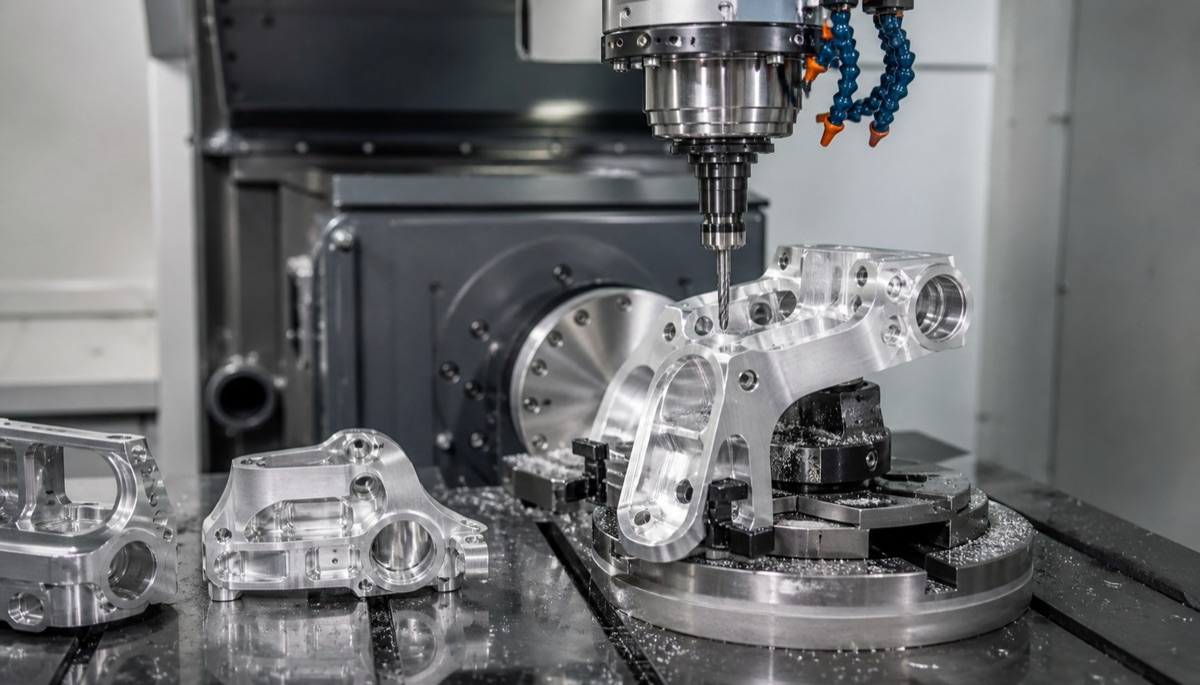
Electroless Nickel and Hard Chrome Are Different Choices
Electroless nickel is useful for complex shapes that need uniform coating, corrosion resistance or conductivity, such as sensor mounts, precision housings and some fixture parts. It covers evenly, but it still adds thickness and should be considered at fit locations.
Hard chrome is more focused on wear resistance and surface hardness. It is common for shafts, sliding contact faces or dimensional repair areas, but it is not automatically suitable for every small precision component, especially parts with complex internal holes or sharp edges.
What to Confirm Before Ordering
- The purpose of surface treatment: appearance, corrosion resistance, wear resistance, conductivity, insulation or dimensional repair.
- Critical holes, threads, sealing faces and conductive areas that should be masked or protected.
- Film thickness range and whether final acceptance dimensions are before or after finishing.
- Appearance grade, color difference requirement, scratch allowance and packaging method.
- Post-finish reinspection for critical fit features so assembly problems do not appear at the customer side.
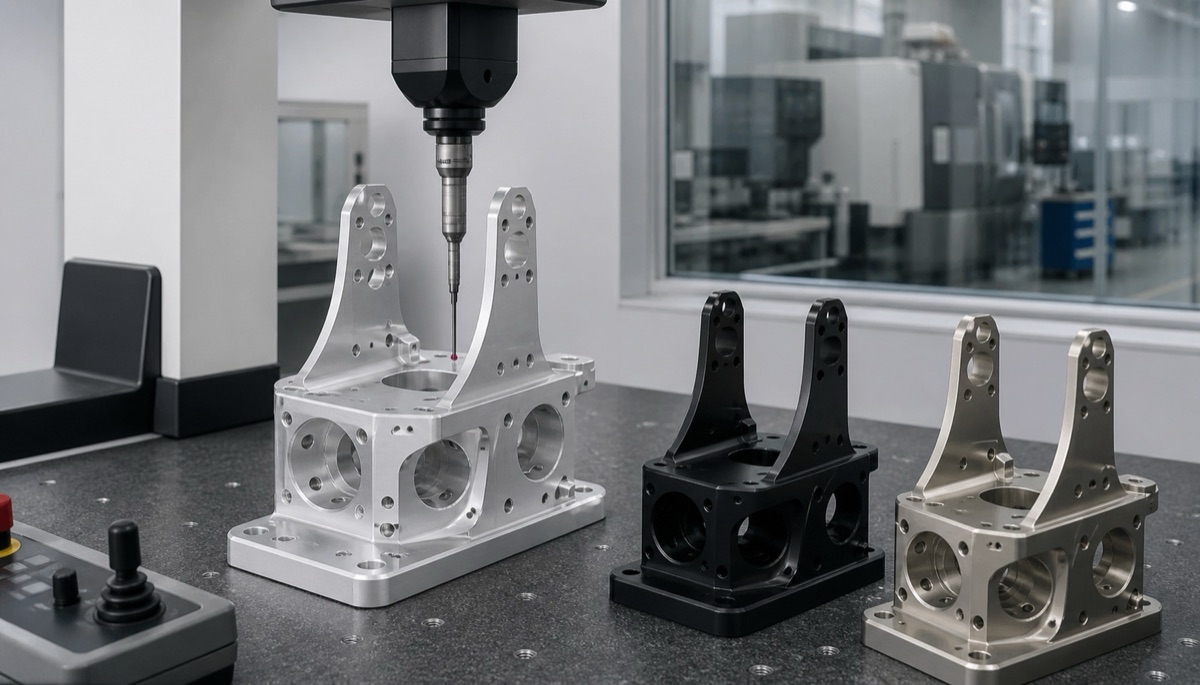
Example: Black Anodized Robot Mounting Seats
In one aluminum robot mounting-seat project, the customer needed black anodizing and tight locating holes. OEMach did not machine every hole directly to final finished size without discussion.
The team reserved hole size according to the expected film thickness, discussed masking for critical locations, and rechecked bore size and end-face condition after anodizing. Machining and finishing were treated as one process rather than two separate steps.
Common Mistakes
The first mistake is treating anodizing as a purely cosmetic step. It changes the surface condition and can affect precision fits.
The second mistake is assuming thicker coating is always better. Extra thickness can affect holes, slots, threads and assembly clearance.
The third mistake is ignoring packaging and scratch prevention. After surface treatment, transfer and shipping can still decide whether the part is accepted.
Summary
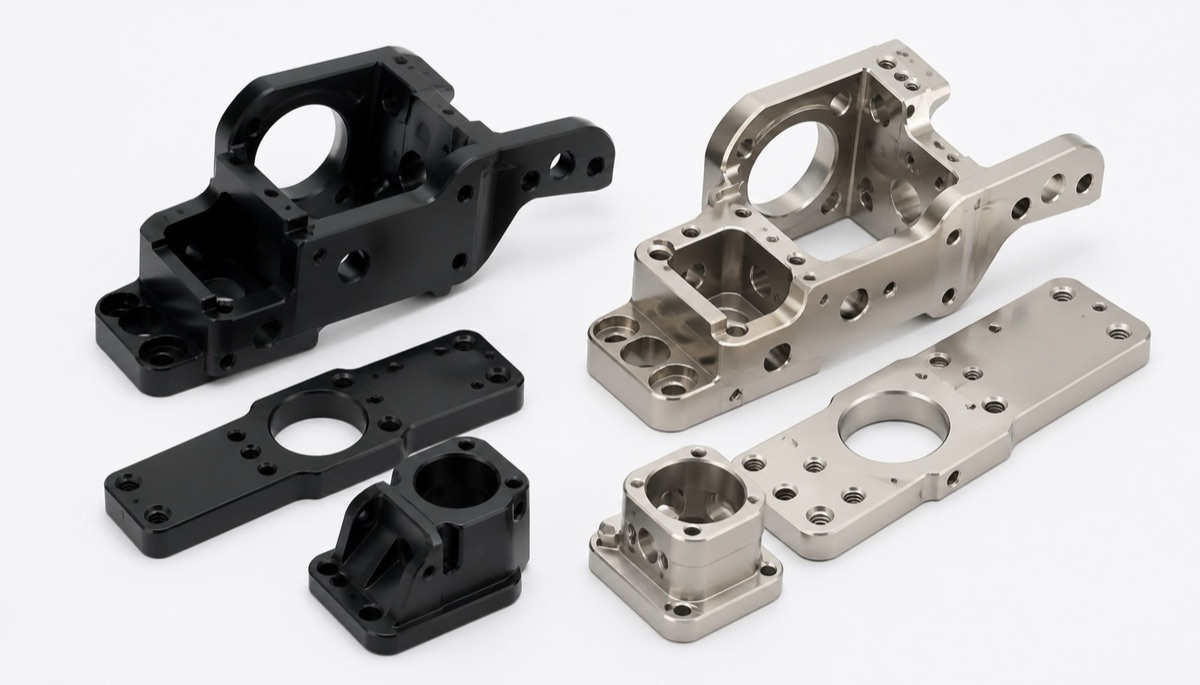
Surface treatment selection for precision CNC parts should consider coating thickness, wear resistance, conductivity, corrosion resistance, appearance and inspection. Anodizing suits aluminum appearance and corrosion resistance, electroless nickel suits uniform conductive corrosion-resistant coverage, and hard chrome suits high-wear surfaces or repair needs.
FAQ
Does anodizing change aluminum part dimensions?
Yes. The coating changes the surface condition, so critical holes and mating faces should be accepted by post-finish dimensions when required.
Is electroless nickel suitable for precision parts?
Yes, especially when uniform coverage, corrosion resistance or conductivity is required, but thickness and fit allowance must still be considered.
What problem does hard chrome plating solve?
It mainly improves surface hardness, wear resistance and sliding performance, and it can also be used in some dimensional repair cases.
What should be sent before surface treatment quotation?
Finish type, thickness, color, appearance grade, masking locations and post-finish inspection requirements should be provided.
Can OEMach coordinate machining and surface treatment?
Yes. OEMach can reserve machining allowance, coordinate finishing and recheck critical dimensions after treatment.
Ready to get a quote for your CNC machined parts?
Submit your engineering drawings to qiancj@oemach.com. We support prototype sampling and small-batch production with strict tolerance control.