
Work hardening in stainless steel CNC machining happens when the surface layer is pressed and rubbed instead of cut cleanly. The next tool pass then meets a harder surface, more heat, faster tool wear, more burrs and greater risk of dimensional drift.
For 304, 316L and similar stainless steels, the answer is not simply to slow the machine down. The core is to keep the cutting edge engaged in fresh material with enough chip thickness, stable cooling, clear chip evacuation and practical roughing and finishing stock.
OEMach reviews material grade, small holes, slots, thin edges, required roughness and inspection method before setting the machining route for precision stainless steel parts.
Work Hardening Control Points in Stainless Steel Machining
| Control point | Failure mode | Recommended action | Inspection focus |
|---|---|---|---|
| Tool condition | Dull edge, larger burrs and shiny hardened surfaces | Use sharp coated tools and replace them before the edge fails | Tool life, hole-mouth burrs and surface texture |
| Cutting parameters | Too-light feed causes rubbing and work hardening | Maintain stable chip load and avoid air cutting or polishing passes | Chip color, cutting sound and dimension fluctuation |
| Coolant and chips | Local heat, built-up edge and scratches | Use enough coolant and improve chip evacuation in deep holes and narrow slots | Hole-wall scratches and chip packing |
| Process stock | Finishing pass cannot cut through the hardened layer | Leave enough removable finishing stock after roughing | Allowance on critical faces and final size |
| Inspection rhythm | Deviation grows until rework becomes difficult | Check key size, roughness and burrs after the first article | Bore size, flatness, Ra value and burr condition |
Where Work Hardening Gets Out of Control
Narrow slots, deep holes, small threads, thin-wall edges and large finishing faces are common trouble areas. Chip space is limited, cutting heat is harder to remove, and a slightly worn tool can repeatedly squeeze the surface instead of shearing it.
If the drawing also requires Ra 0.8, small burrs or stable assembly feel, stainless steel cannot be treated like a simple structural material. Tool path, coolant direction and deburring method should be planned before quoting.
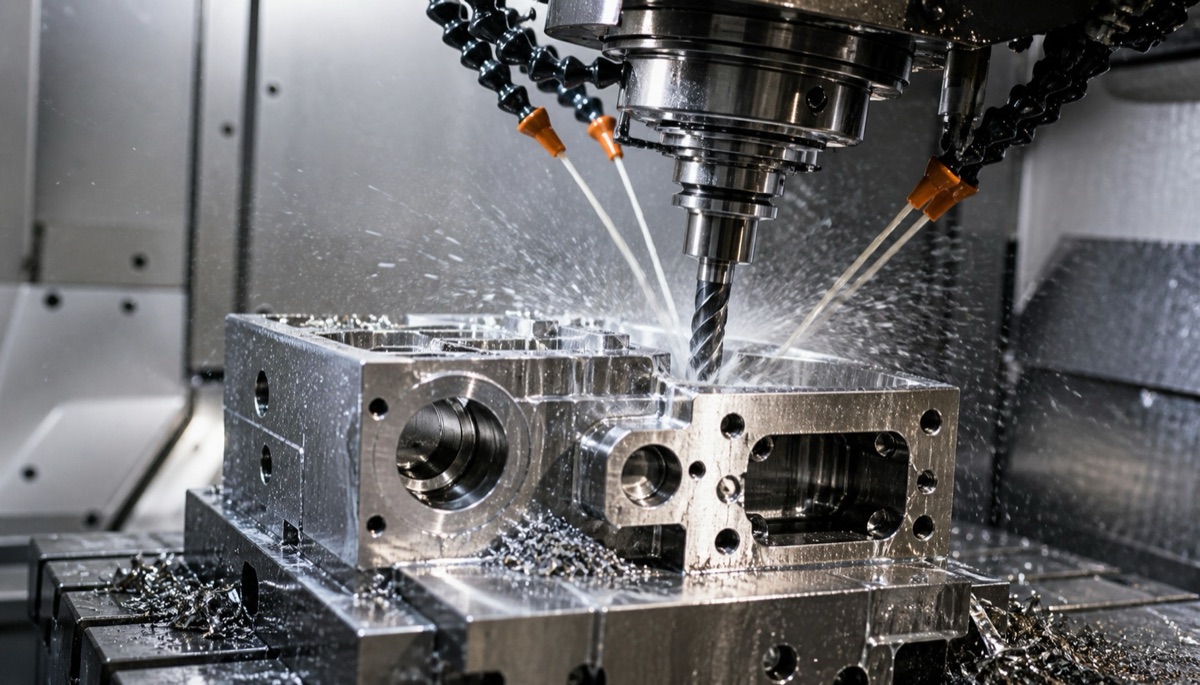
Recommended Process Logic
Roughing should remove unstable stock, but finishing allowance must not be left too thin. If the final cut only rubs a hardened layer, the tool wears quickly and the part becomes harder to recover.
Critical holes, grooves and assembly faces should use a fresh or well-controlled tool. A tool close to end of life may finish one piece, but it is a poor choice when the batch needs consistent burrs and surface quality.
Deep holes need chip evacuation discipline. Packed chips can scratch the wall, raise heat and make the next pass cut through a damaged surface.
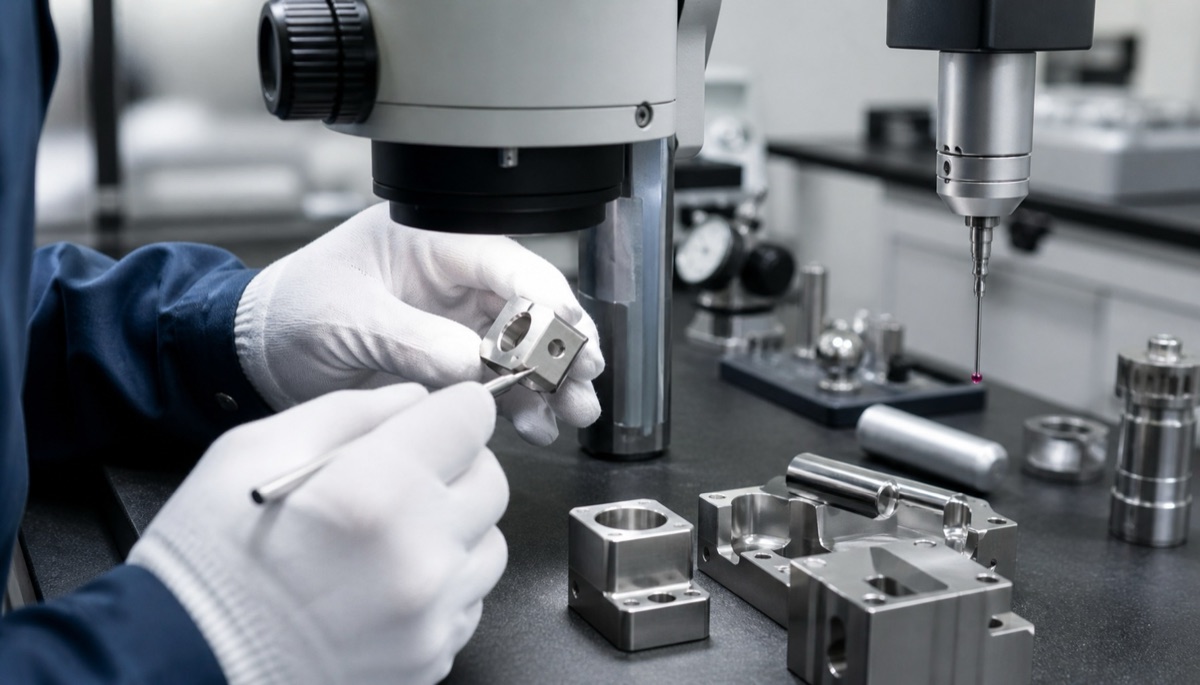
Thin Edges and Burrs Need Separate Control
Stainless steel burrs are tougher than aluminum burrs. Aggressive deburring can change a functional edge, while weak deburring leaves burrs that interfere with assembly.
For thin walls and edge features, OEMach separates machining, deburring and cleaning checks. The goal is to remove the burr without damaging the dimensional edge or visible surface.
Why First-Article Inspection Matters
Work hardening problems tend to repeat once the route is wrong. First-article inspection should review key holes, slots, surface roughness, flatness and burr condition before releasing the small batch.
In small-batch stainless steel parts, quantity may be low, but tool state still has a large effect on consistency. A clear tool-life rule is often more useful than relying only on machine accuracy.
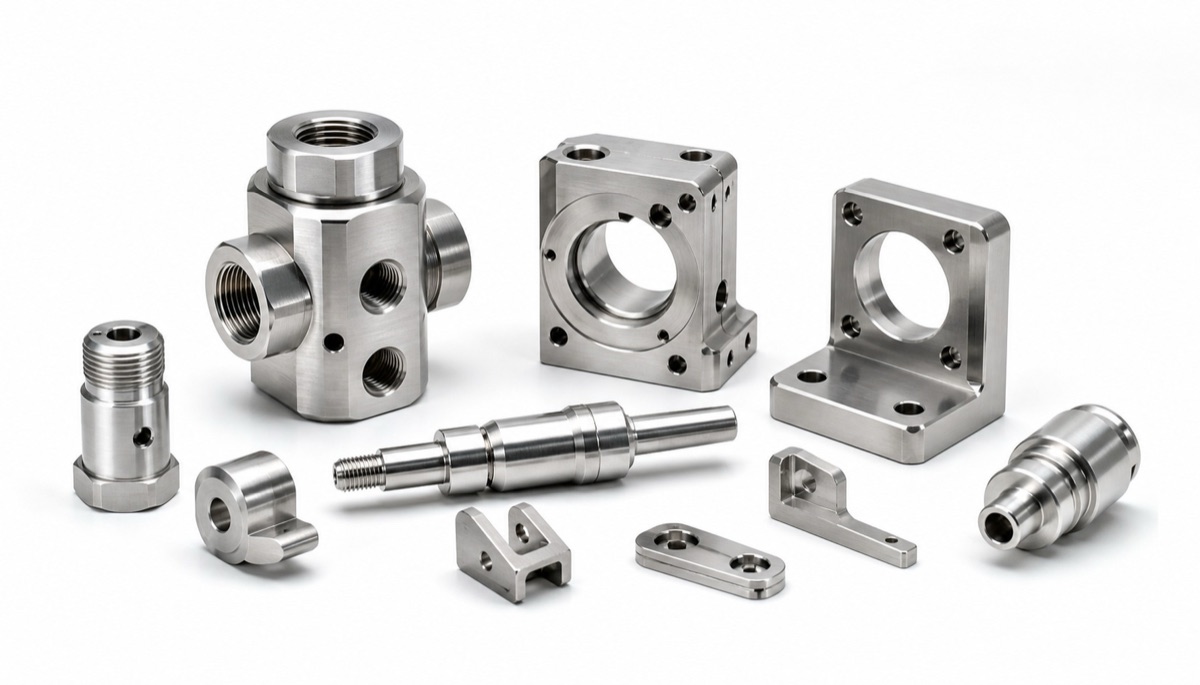
RFQ Checklist for Stainless Steel Precision Parts
- State the stainless grade, such as 304, 316L or a specified equivalent.
- Define roughness, polishing, passivation and appearance protection requirements.
- Mark narrow slots, small holes, deep holes and thin edges that are sensitive to burrs.
- Clarify acceptable burr level and whether visible tool marks are allowed.
- Confirm inspection method for key holes, flatness, Ra value and assembly surfaces.
Common Mistakes
The first mistake is assuming stainless steel becomes stable if it is machined slowly. Very low speed combined with too-light feed can increase rubbing and hardening.
The second is checking only dimensions while ignoring burrs and scratches. The third is forgetting tool-life control in small batches, where one worn tool can affect the whole lot.
Summary
Precision stainless steel work hardening is usually caused by dull tools, mismatched cutting parameters, light feed and insufficient cooling or chip evacuation. Control should focus on continuous cutting, stable tools, sufficient coolant, practical finishing stock and inspection before the problem repeats across a batch.
FAQ
What does work hardening mean in stainless steel machining?
It means the surface layer becomes harder after cutting pressure and rubbing, making the next pass harder to machine and increasing tool wear.
Is 316L harder to machine than 304?
In many cases yes. 316L is tough and tends to adhere to the tool, so cutting edge condition, cooling and chip evacuation matter more.
Can work hardening be fixed after it appears?
Some issues can be corrected by changing tool and allowance strategy, but critical features are safer when the hardened layer is avoided from the start.
Do stainless precision parts need special deburring?
Yes. Stainless burrs are tough, and poor deburring can scratch visible faces or change functional edge dimensions.
Can OEMach handle small-batch stainless steel CNC parts?
Yes. OEMach supports small-batch CNC machining, deburring and inspection for 304, 316L and other precision stainless steel parts.
Ready to get a quote for your CNC machined parts?
Submit your engineering drawings to qiancj@oemach.com. We support prototype sampling and small-batch production with strict tolerance control.