
The essential difference between 3-axis and 5-axis CNC machining is not simply the number of axes. It is the ability to control the tool angle, reach features from more directions and keep more surfaces in one datum setup.
A 3-axis machine moves along X, Y and Z. For flat plates, brackets and simple pockets, that is often enough. When a part has side holes, angled faces, deep cavities or features spread across several sides, repeated flipping and re-clamping can create accumulated error.
A 5-axis route can tilt the tool or the workpiece, shorten tool overhang, reduce secondary setups and protect datum consistency. OEMach normally compares 3-axis, 4-axis, 5-axis and fixture-based options before recommending the process.
3-Axis vs 5-Axis CNC Machining
| Factor | 3-axis CNC | 5-axis CNC | Decision signal |
|---|---|---|---|
| Motion | Linear X/Y/Z movement | Linear axes plus rotary or tilting axes | More feature directions increase 5-axis value |
| Setup count | Complex parts often need multiple flips | More faces can be completed in one setup | High datum consistency favors 5-axis |
| Tool access | Deep cavities may require long tools | Shorter tools can approach at better angles | Chatter, marks and long overhang point to 5-axis review |
| Cost logic | Lower hourly rate, but fixtures and setups may add cost | Higher hourly rate, but fewer transfers and less rework | Compare total process cost, not only machine rate |
| Typical parts | Plates, simple housings, standard brackets | Robot joint housings, optical brackets, impellers and complex medical fixtures | Complex geometry needs process review |
Which Parts Should Be Evaluated for 5-Axis?
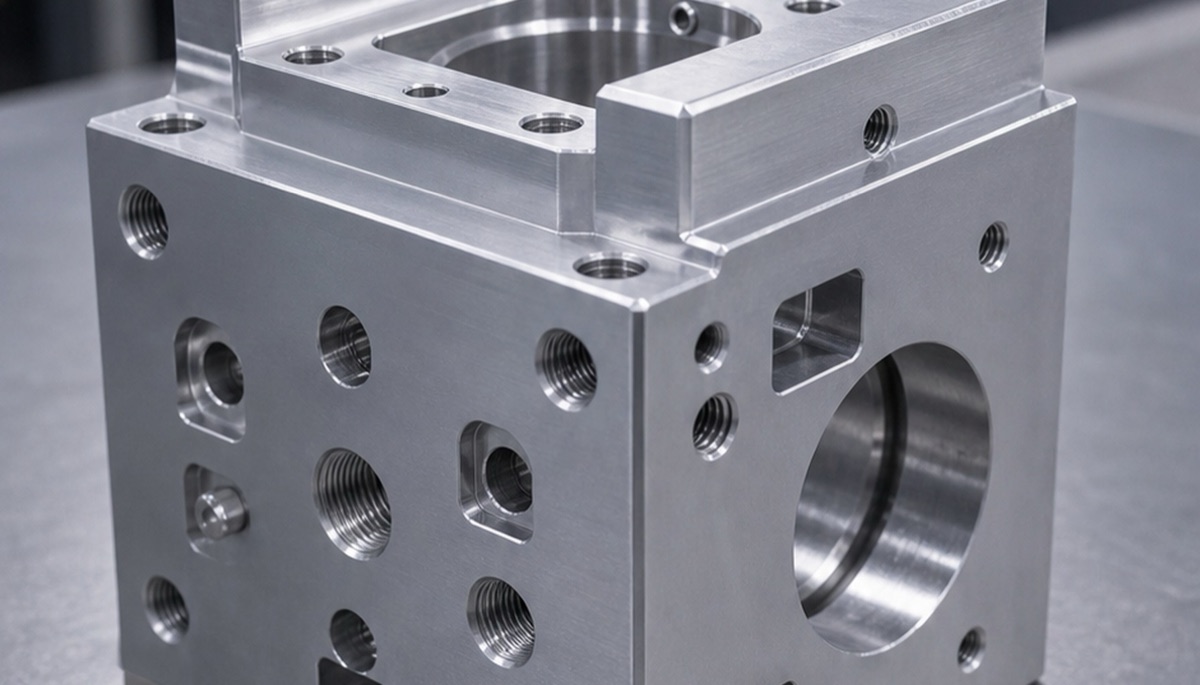
Robot joint housings are a typical example. Bearing bores, mounting holes, motor seats and locating faces may sit on different sides of the same part. If each side is machined after a separate setup, the accumulated location error can become the real risk.
Optical instrument brackets are another common case. Angled seats, light-weighted windows, dowel holes and lens-related faces often need a single reference logic. A 5-axis route can reduce fixture changes and help keep the optical datum chain clearer.
Deep-cavity thin-wall parts should also be reviewed. Tilting the tool allows shorter cutters and better contact angles, which can reduce vibration, tool marks and wall deflection.
When 3-Axis Is Still the Better Choice
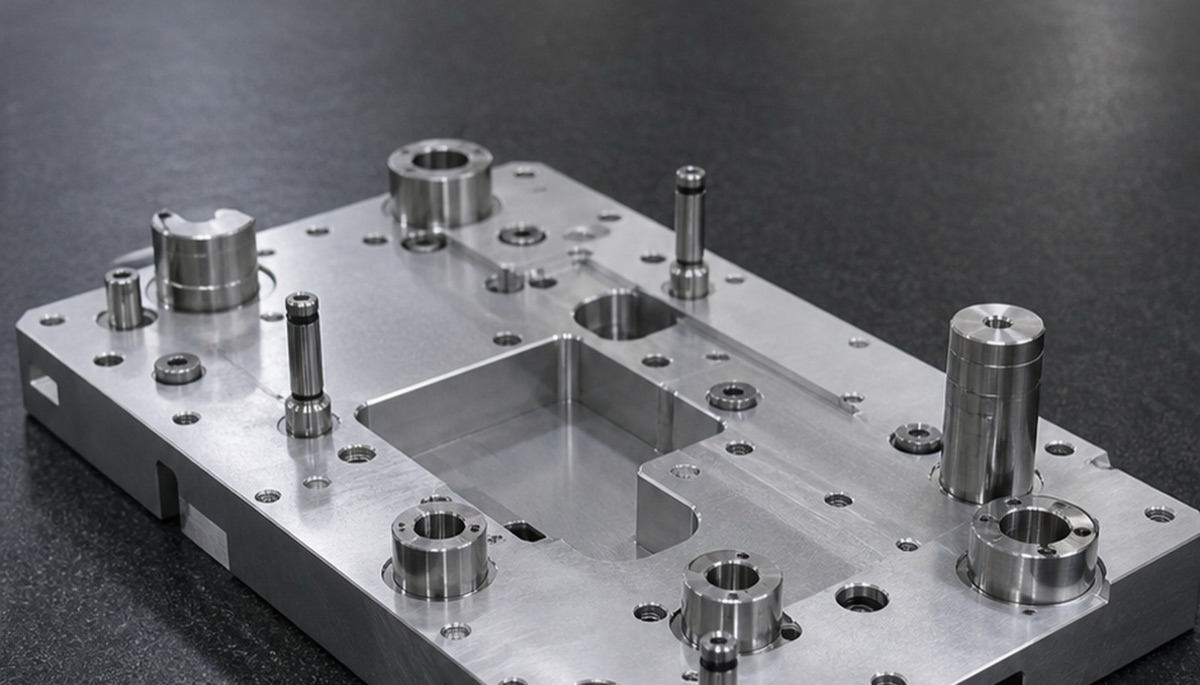
5-axis machining is not automatically better. Flat mounting plates, regular housings, simple brackets and one-direction hole patterns are often more economical on 3-axis machines with stable fixtures.
The correct question is not whether the supplier owns a 5-axis machine. The question is whether 5-axis machining can reduce setup transfer, lower rework probability, shorten validation or improve inspection reliability for this specific part.
For prototype and small-batch work, a mixed route is often practical: roughing on 3-axis, datum preparation, then 5-axis finishing for angled holes and critical mounting faces.
Why Tool Posture Matters
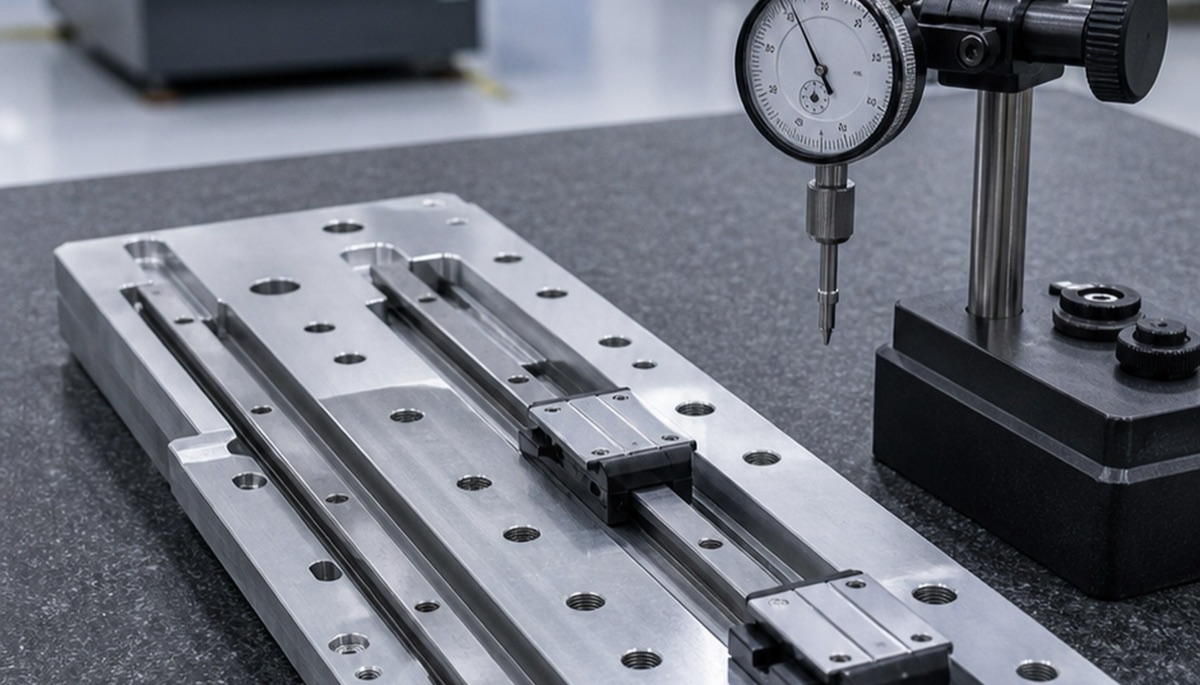
Long tools are flexible. When a deep pocket or vertical wall forces the cutter to extend far from the spindle, vibration and surface marks become more likely. 5-axis machining can keep the tool shorter by approaching the feature from a better angle.
Tool posture also affects cutting force direction. For thin walls and delicate edges, controlling the angle can reduce bending and help maintain a cleaner surface.
However, 5-axis accuracy still depends on machine calibration, tool length measurement, fixture rigidity, programming strategy and inspection. It should be treated as a process choice, not a magic accuracy upgrade.
RFQ Checklist for Engineers and Buyers
- Send both STEP files and 2D drawings with critical dimensions and GD&T.
- Mark bearing bores, dowel holes, sealing faces and assembly datums clearly.
- Explain which surfaces are functional and which are only clearance or appearance areas.
- Ask the supplier to compare 3-axis, fixture-based and 5-axis routes when the geometry is complex.
- Confirm whether the final inspection datum matches the assembly datum.
Common Misunderstandings
The first misunderstanding is that 5-axis always means higher precision. It often improves datum continuity, but final tolerance still depends on the full process.
The second is that every complex-looking part must use 5-axis. Some parts can be solved with an indexing fixture, 4-axis machining or a split process at lower total cost.
The third is comparing only hourly rates. Setup count, fixture design, rework risk and inspection effort can change the real cost picture.
Summary
Use 5-axis CNC machining when tool angle, reduced setups and datum consistency solve a real engineering problem. Use 3-axis machining when the geometry is simple enough to stay stable and economical. A reliable supplier should explain the process route, not just list machine names.
FAQ
Is 5-axis CNC always more accurate than 3-axis CNC?
No. 5-axis machining can reduce setup error and improve tool access, but final accuracy still depends on machine condition, fixtures, tools, programming and inspection.
Which parts usually need 5-axis machining?
Parts with angled holes, multi-sided features, deep cavities, complex curved surfaces or strict datum consistency are common 5-axis candidates.
Why is 5-axis machining more expensive?
The machine, programming, setup and validation cost more, but complex parts may still become cheaper overall when rework and extra fixtures are reduced.
Can 3-axis machining make angled holes?
Yes, with angle fixtures or repeated setups. The risk is datum transfer and accumulated positioning error on complex hole systems.
Can OEMach evaluate 3-axis and 5-axis routes?
Yes. OEMach can review drawings, models and assembly needs to compare 3-axis, 4-axis, 5-axis and combined machining routes.
Ready to get a quote for your CNC machined parts?
Submit your engineering drawings to qiancj@oemach.com. We support prototype sampling and small-batch production with strict tolerance control.