
CNC Machining Minimally Invasive Surgical Instrument Parts
Minimally invasive surgical instruments use small mechanical assemblies to transfer motion through a long, narrow shaft. The visible working end may look simple, but the parts behind that motion are demanding: articulating jaws, hinge pins, miniature clevis brackets, pull links, bushings and stop features must move smoothly while maintaining repeatable alignment. These components are usually produced in stainless steel or titanium because they need corrosion resistance, strength and stable surfaces after cleaning or sterilization. CNC machining is well suited for this work because it can control small holes, thin arms, pockets, slots and curved jaw geometry within a repeatable production process. The challenge is not only cutting the material; it is holding delicate features without distortion, removing burrs that could affect motion, and protecting finished surfaces through inspection and packaging.
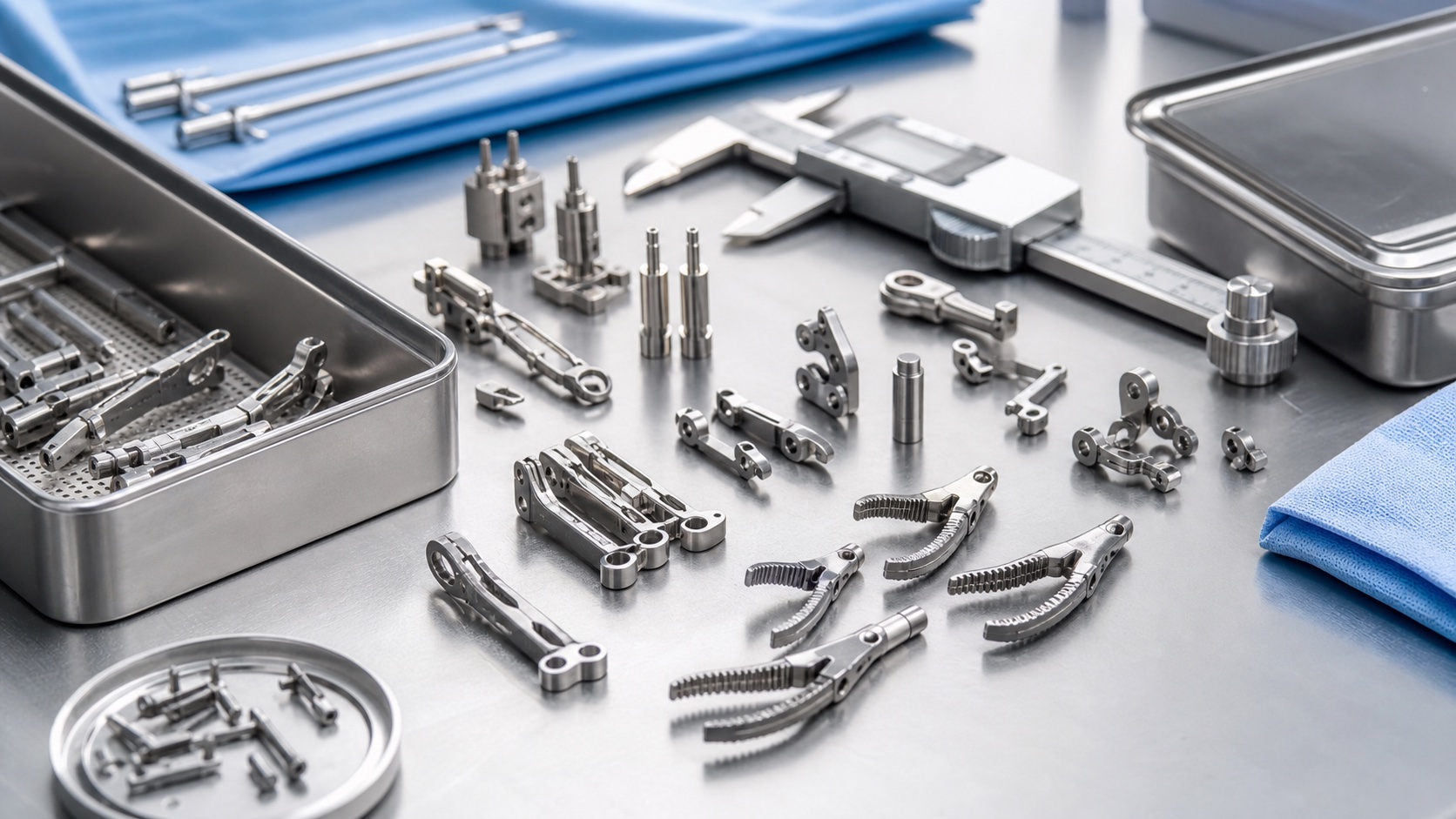
Application Requirements and Critical Features
For forceps, graspers, biopsy tools and similar endoscopic instruments, the articulating end must open and close without side play or rough contact. Hinge holes need consistent position and roundness so the pin can create a stable pivot. Clevis ears need parallelism and thickness control. Serrated jaw faces need clean edges without sharp loose burrs. Pull-link slots and relief pockets must fit mating components without binding. A drawing should identify which surfaces are functional, which edges require controlled break, and which cosmetic areas must be protected. Small design changes, such as adding a deburring access angle or clarifying a datum face, can make the machining process more reliable.
Material Selection for Medical Instrument Components
316L stainless steel is a common choice for reusable surgical instrument parts because it offers corrosion resistance, toughness and a surface that can be passivated or polished. Titanium is useful when lower weight or higher strength-to-weight performance is required, but it needs careful tool selection and heat control. Some non-contact covers or insulating elements may use PEEK or other engineering plastics. Each material changes the machining plan. Stainless steel rewards rigid workholding and sharp tools. Titanium requires controlled cutting temperature. Engineering plastics need stress-conscious clamping and sharp cutters to avoid raised edges.
Process Planning and Workholding
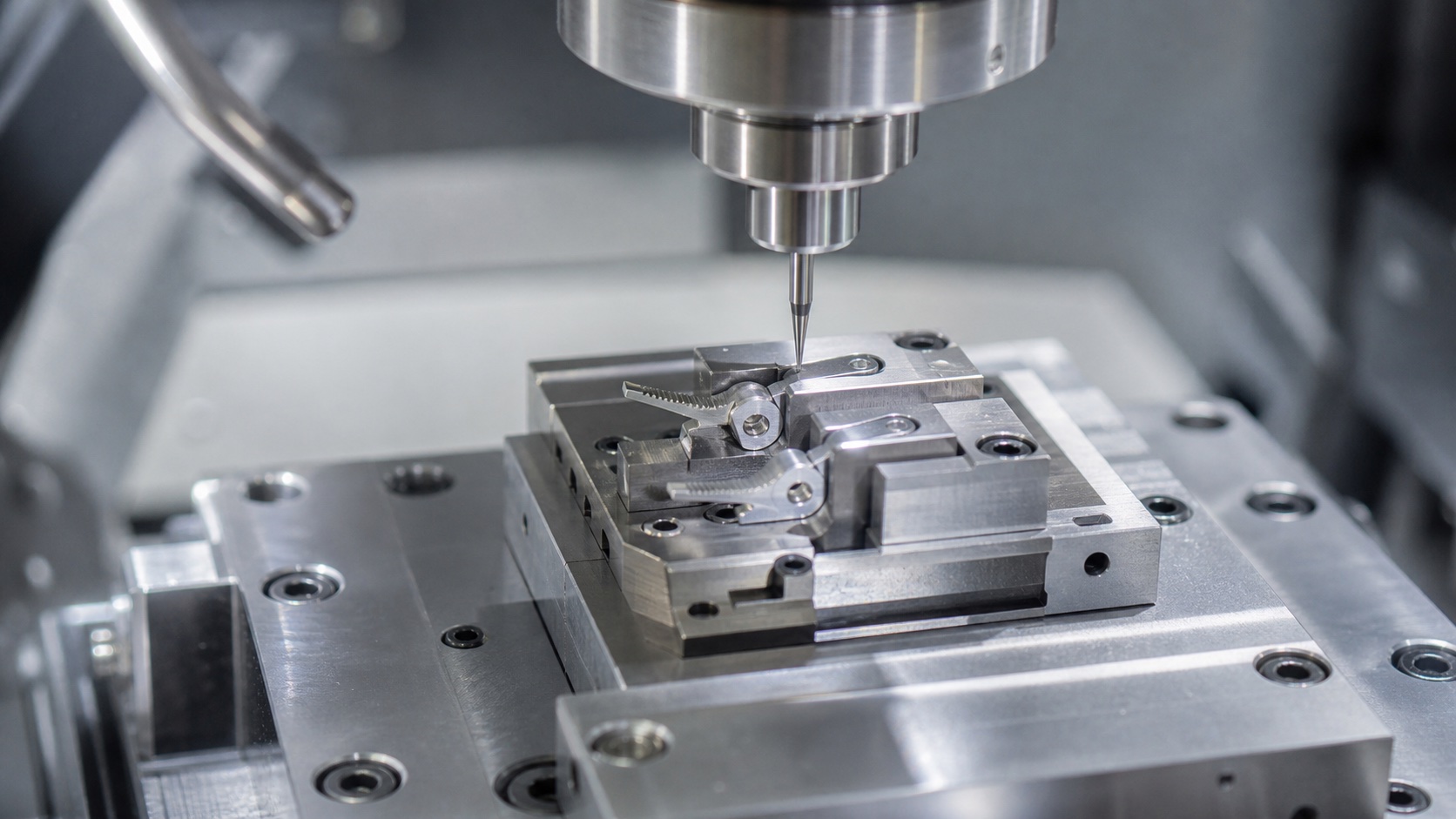
A typical process begins with a review of the 3D model, 2D drawing, tolerance stack and mating assembly. Roughing removes material while leaving enough stock for finishing. Semi-finishing stabilizes thin arms and pocket walls. Finishing then controls hinge holes, jaw profiles, datum faces and slot width. For parts with two hinge ears, custom soft jaws or nest fixtures are often needed to avoid bending. Five-axis machining can reduce repeated setups and help finish angled jaw faces or curved relief areas. When a part is too small to clamp directly, machining tabs, carrier plates or wire-cut blanks can be used before final separation.
Burr Control, Surface Finish and Cleanliness
Burr control is a central issue for surgical instrument parts. A tiny burr inside a hinge hole can change the feel of the joint. A raised edge on a jaw tooth can scratch a mating component. CNC chamfering, micro-deburring tools, controlled manual finishing and magnified inspection should be planned before production starts. Surface finish requirements should be realistic and tied to the part function: sliding surfaces and hinge bores may need smoother finishes, while hidden lightening pockets may allow standard machined texture. After machining, cleaning removes chips, oil and abrasive residue so parts can move into passivation, polishing or clean packaging.
Inspection and Delivery Documentation
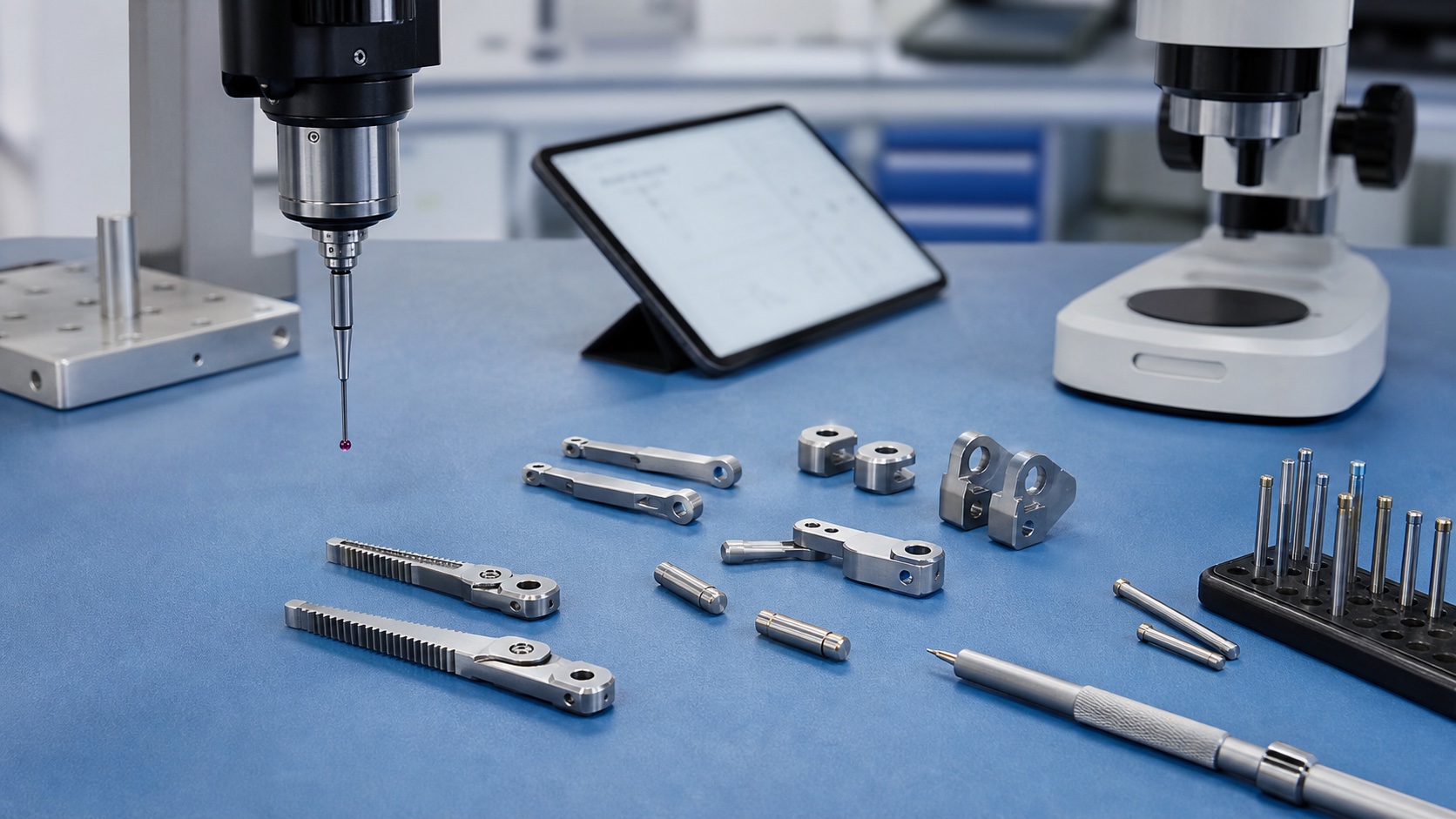
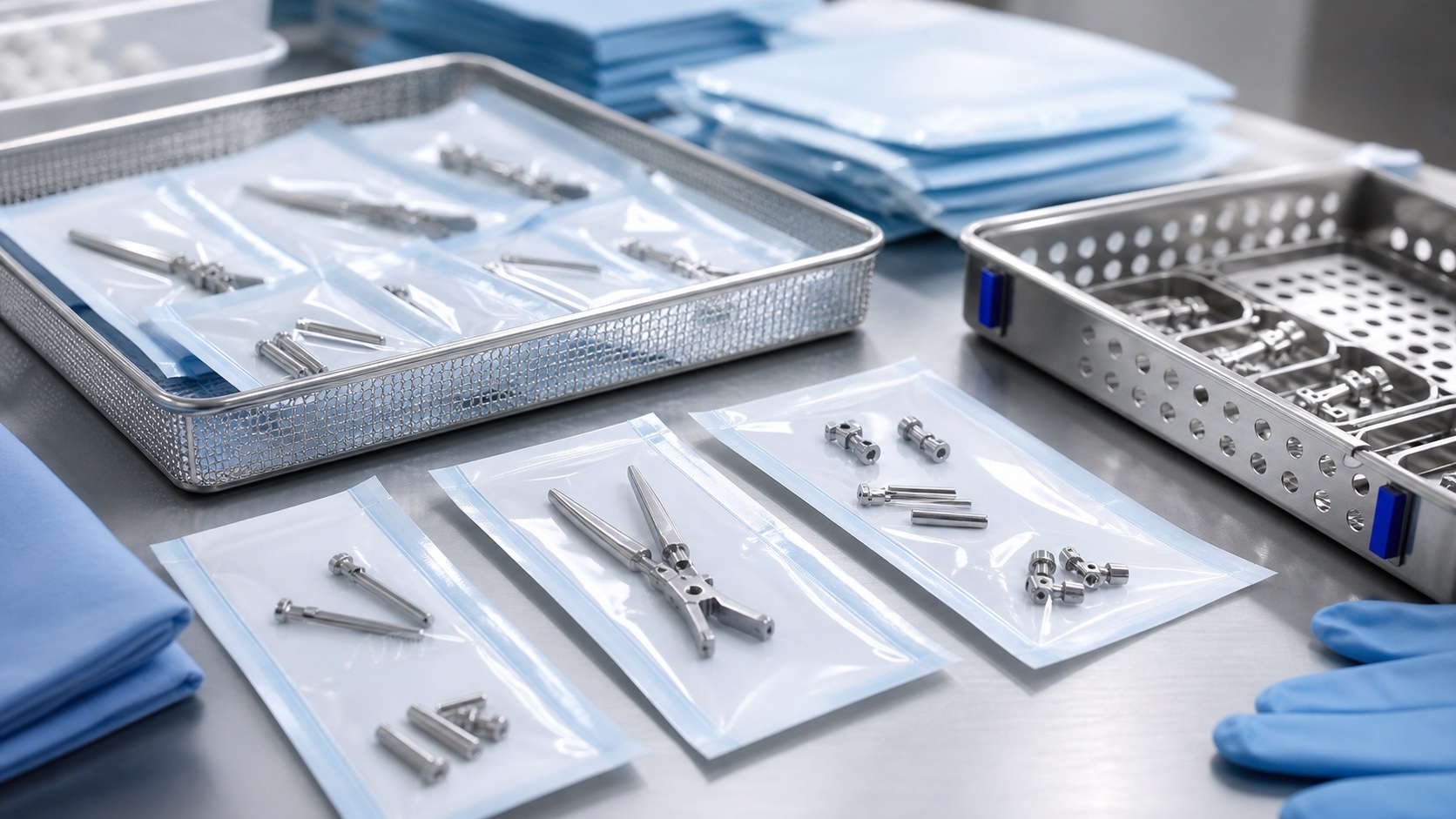
Inspection should focus on the geometry that controls assembly: hinge-hole diameter and coaxiality, ear spacing, slot width, jaw profile, flatness of mating faces and burr-free edges. CMM, optical measurement, gauge pins and microscopes are often used together because no single method sees every small feature equally well. For prototype and small-batch orders, first-article inspection helps confirm that the datum plan and process route are correct before the full quantity is finished. Clean packaging with separated parts, pins and matched sets reduces handling damage and keeps the delivery organized for incoming inspection.
FAQ
What drawings are needed for surgical forceps jaw components?
A 3D model, 2D drawing, material specification, tolerance notes, surface finish requirements and mating assembly information are recommended.
Why are hinge holes so critical?
Hinge holes control pivot alignment, opening feel and side play, so diameter, position, roundness and coaxiality must be checked carefully.
Can 316L stainless steel be CNC machined for medical instruments?
Yes. 316L is commonly machined for reusable medical instrument parts, with suitable tools, cooling, deburring and passivation planning.
How are burrs controlled on miniature jaw teeth?
Burrs are managed through toolpath direction, micro chamfers, sharp tooling, controlled hand finishing and inspection under magnification.
Is five-axis machining required?
Not always, but five-axis machining can reduce setups and improve access to angled jaws, curved pockets and small functional faces.
Can parts be packed as matched assemblies?
Yes. Jaw brackets, links and pins can be cleaned, separated and packed as matched sets when assembly fit is important.
Contact: tanghangyun@oemach.com