
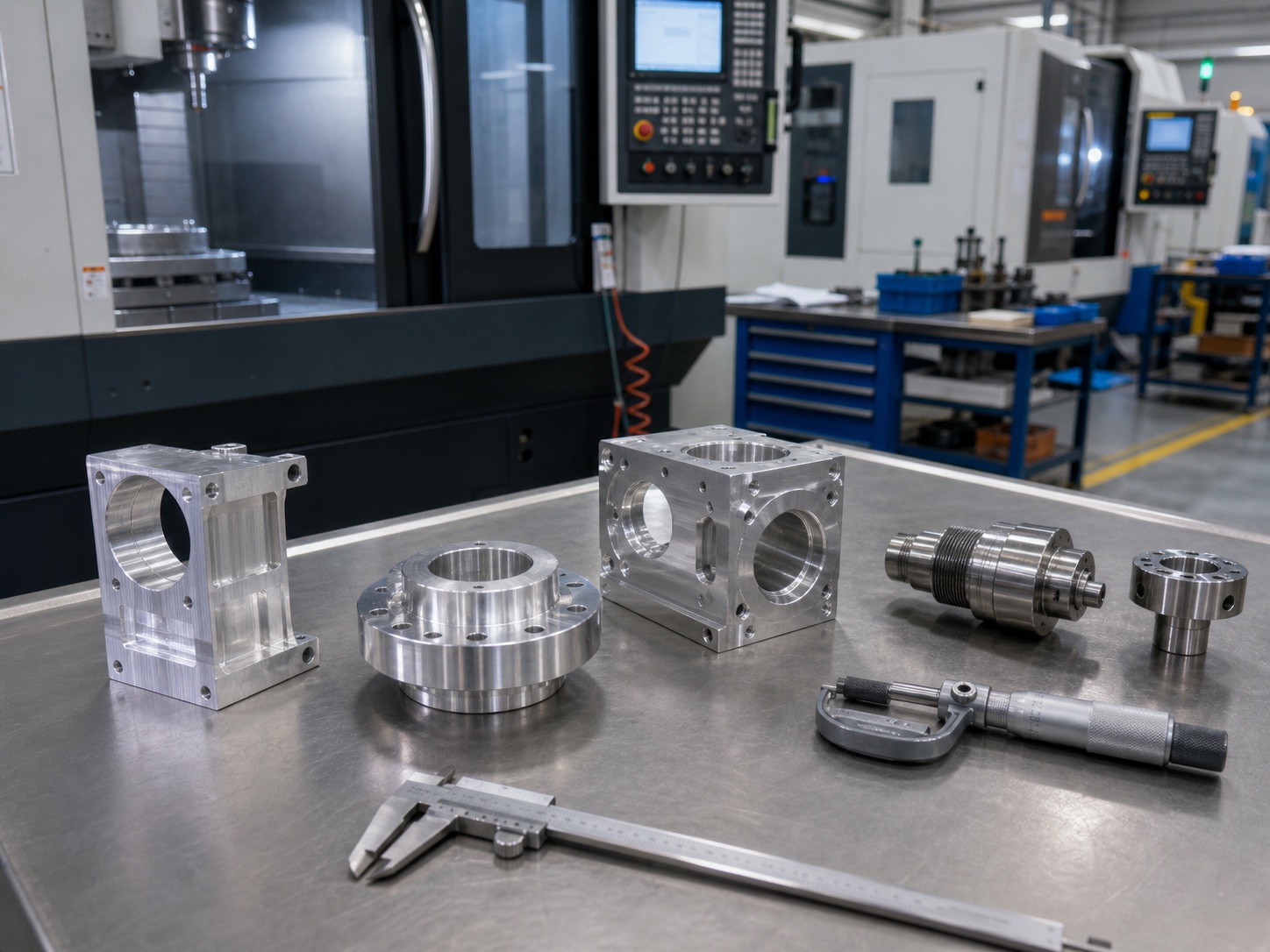
Summary:Small-batch custom machining depends on disciplined communication as much as cutting capability. OEMACHuses drawing review, revision control, first-piece confirmation and traceable shop-floor records to keep the commercial scope aligned with the actual manufacturing task.
Why quotation quality matters
A reliable quotation starts with the current drawing revision, model, quantity, material requirement, functional surfaces, finishing scope and delivery condition. Where general dimensional tolerances apply, the governing convention should be agreed before production.[Source: ISO 2768-1:1989]
Hole-and-shaft relationships also require a clear fit objective and tolerance-zone definition rather than an isolated nominal size.[Source: ISO 286-1:2010]
Practical workflow
Document intake and revision control
Register the active drawing and model, identify conflicts between them, and agree which document governs. Record later changes with a clear effective batch.
Manufacturability review
Review tool access, thin-wall deformation, datum continuity, hole patterns, burr-sensitive edges, finishing allowance and packaging risks. Geometrical requirements such as flatness, perpendicularity and position should be connected to functional datums.[Source: ISO 1101:2017]
Quotation and scope alignment
State material responsibility, machining scope, quantity, finishing, packaging, commercial boundaries and the conditions that may require requotation. This makes competing quotations easier to compare on the same basis.
Process planning
Plan setups around functional datums, separate roughing from finishing where needed, and control material removal on deformation-sensitive parts. General geometrical tolerances should only be applied after their scope has been confirmed.[Source: ISO 2768-2:1989]
First-piece confirmation
Confirm revision, critical dimensions, hole and slot relationships, threads, datums, edge condition and specified surfaces. Surface texture requirements should identify the relevant surface and specification context.[Source: ISO 21920-1:2021]
Batch machining and change control
Maintain consistency in programs, tooling, setups and document revision. Evaluate tool replacement, material changes or revised requirements before releasing affected work.
Cleaning, packaging and delivery
Remove chips and residues, isolate cosmetic or precision surfaces, protect threads and vulnerable edges, and verify quantity and revision before shipment.
Service commitment
A practical supplier should provide a clarification list, define quotation boundaries, freeze the production revision, perform agreed first-piece checks and retain suitable process and dimensional review records. Lead time remains subject to document completeness, material availability and manufacturing complexity.
FAQ
Can a quotation be prepared from a 3D model only?
A preliminary quotation may be possible, but tolerances, datums, threads, surface texture and finishing usually require additional technical documentation.
Why can low-volume parts have a higher unit cost?
Programming, review, setup and fixture preparation are project-level inputs that are distributed across fewer parts.
Should the end use be disclosed?
Sensitive project details are unnecessary, but functional surfaces and assembly relationships should be explained.
What belongs in first-piece confirmation?
The active revision, agreed critical features, datum relationships, threads, edge condition and specified surfaces.
How should a revision change be handled during production?
Pause affected operations, define the effective batch, assess work in progress and obtain agreement before continuing.
Scan to contact us
Contact: Allen
Email: shiziqiu@oemach.com
My whatsapp code