
TC4 titanium is machined at much lower cutting speeds than aluminum and many ordinary steels. The reason is not that the machine tool is too slow; the material concentrates heat near the cutting edge, springs back elastically and can stick to the tool.
TC4 is used for lightweight robot links, medical structural parts, aerospace-style brackets and compact high-strength components. Customers value its specific strength and corrosion resistance, while the machining side must accept slower cycles, stricter tool-life control and stronger cooling.
OEMach reviews cutter material, coating, edge sharpness, cutting speed, feed, coolant, chip evacuation and deburring before estimating TC4 titanium lead time. Applying aluminum-style assumptions to titanium is a quiet way to create schedule and quality problems.
TC4 Titanium Tool and Parameter Control
| Control item | Recommended direction | Reason | Risk if ignored |
|---|---|---|---|
| Tool material | Prefer solid carbide tools | Better rigidity and wear resistance | General-purpose tools wear quickly |
| Cutting edge | Sharp edge and suitable helix angle | Reduces squeezing and springback friction | A dull edge increases heat and rubbing |
| Cutting speed | Often around 20-60 m/min, adjusted by geometry | Keeps cutting-edge heat under control | Excessive speed can burn tools or chip edges |
| Cooling | Use sufficient coolant and smooth chip evacuation | Removes heat and chips from the cutting zone | Chips can scratch the surface again |
| Machining strategy | Use stable feed, moderate depth and avoid rubbing passes | Maintains real cutting instead of sliding | Work hardening, burrs and size drift increase |
Why TC4 Cannot Be Cut Like Aluminum
Aluminum conducts heat well, and chips can remove heat from the cutting zone efficiently. TC4 conducts heat poorly, so more heat stays near the tool edge and the workpiece surface.
TC4 also has elastic springback. After the cutter passes, the material tends to recover toward the tool, causing friction, vibration marks and surface pulling. Thin walls, deep cavities, small holes and long tool overhang make this worse.
For TC4, the RFQ should not ask only whether the part can be made. It should also ask how heat, chip evacuation and tool life will be controlled.
Tool Selection Must Follow the Part Structure
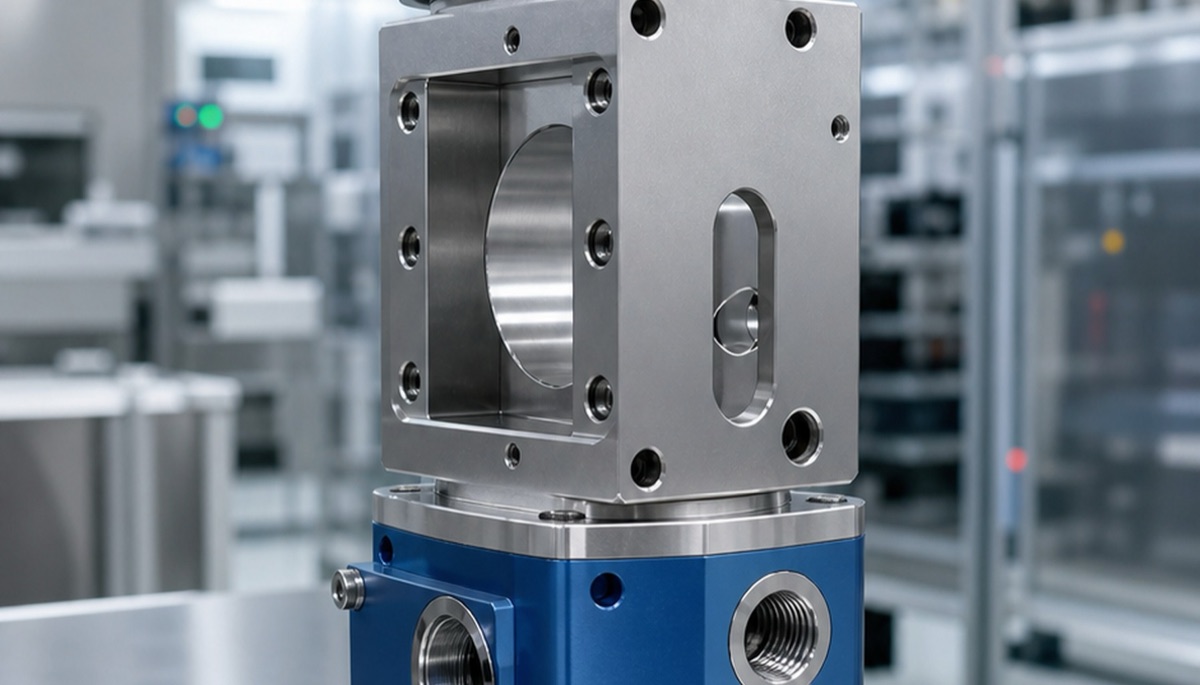
Solid carbide tools are usually preferred for TC4, with sharp edges and coatings suited for titanium's anti-adhesion and heat-resistance needs. Roughing focuses on chip evacuation and edge strength; finishing focuses on edge quality, dimensional stability and surface roughness.
Deep cavities and thin walls require controlled tool overhang to reduce vibration. Small holes and threaded features need careful chip breaking, coolant delivery and retract strategy so chips do not clog holes or leave stubborn thread burrs.
Deburring should be designed early. TC4 burrs are tough, and leaving all edge work to final manual deburring can harm edge consistency. Hole mouths, cross holes and thin edges are better planned inside the process route.
Engineering Example: Tool Life Before Lead-Time Pressure
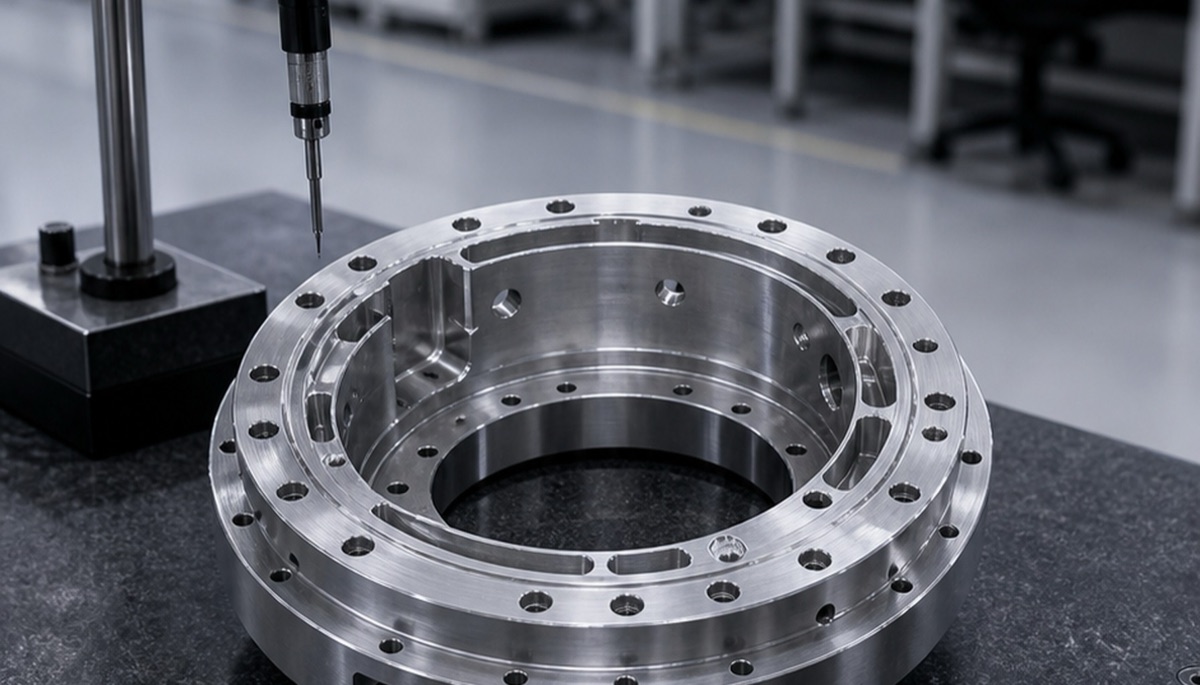
In one TC4 robot connection block project, the part had deep cavities, side holes and thin-wall lightening areas. The customer initially expected an aluminum-like lead time, but trial-cut review showed that aggressive speed would increase tool wear and hole-mouth burrs quickly.
OEMach adjusted the route to lower-speed stable cutting, layered stock removal and final finishing of critical holes. Tool life and tool-change timing were recorded during machining, while CMM inspection confirmed hole position and key-face flatness.
Single-part machining time increased, but the route became more stable for small-batch delivery. For TC4, reliable delivery is usually more valuable than chasing maximum speed for a short moment.
Five Questions Before Sending a TC4 RFQ
- Is the material clearly specified as TC4 titanium, and is it bar, plate or forged stock?
- Do critical dimensions, hole positions, threads and surface roughness need measured records?
- Can thin walls, deep cavities, cross holes or small threads accept radius or process-sequence adjustment?
- Are deburring, cleaning, passivation or individual packaging required?
- Is the lead time estimated by TC4 machining rhythm rather than by aluminum machining expectations?
Common Misunderstandings
The first misunderstanding is treating TC4 like high-strength aluminum and ignoring heat concentration and tool load. The second is asking only for price without checking tooling, cooling and burr strategy.
The third is reading low cutting speed as low factory efficiency. In titanium machining, slower stable cutting is often part of the quality-control method.
Summary
TC4 titanium CNC machining is slow because of poor thermal conductivity, elastic springback, adhesion and fast tool wear. Carbide tools, sharp cutting edges, suitable coatings, sufficient cooling, planned deburring and measured inspection are the foundation of stable titanium part delivery.
FAQ
Why is TC4 titanium CNC machining slow?
TC4 has poor thermal conductivity, elastic springback and adhesion tendency. Heat concentrates near the cutting edge, so high speed can quickly wear or damage the tool.
What tools are suitable for TC4 machining?
Solid carbide tools with sharp edges, suitable titanium-focused coatings, stable feed and sufficient coolant are commonly preferred.
What cutting speed is common for TC4?
A common engineering reference is about 20-60 m/min, but the final value depends on tool diameter, rigidity, coolant and machining stage.
Why are titanium burrs hard to remove?
TC4 is tough, so hole mouths, thin edges and cross holes can form stubborn burrs that need planned toolpath and post-process control.
Can OEMach machine small-batch TC4 parts?
Yes. OEMach supports TC4 connectors, brackets, medical parts and robot precision components with CNC machining and inspection.
Ready to get a quote for your CNC machined parts?
Submit your engineering drawings to qiancj@oemach.com. We support prototype sampling and small-batch production with strict tolerance control.