
CNC Machining Dental Implant Surgical Guide Sleeves and Drill Stop Components
Dental implant surgical guide systems rely on small precision components that control drill direction, depth and repeatability during guided procedures. Guide sleeves, drill stop collars, stainless bushings and PEEK guide blocks are compact parts, but their dimensional quality has a direct effect on assembly fit and clinical workflow. The bore must allow smooth drill passage without looseness, the shoulder must seat consistently, and every chamfer must be clean enough to avoid particle risk. CNC machining for these parts therefore requires more than a standard turning process; it needs stable micro-machining, burr control, material traceability, and packaging that protects tiny features until final assembly.
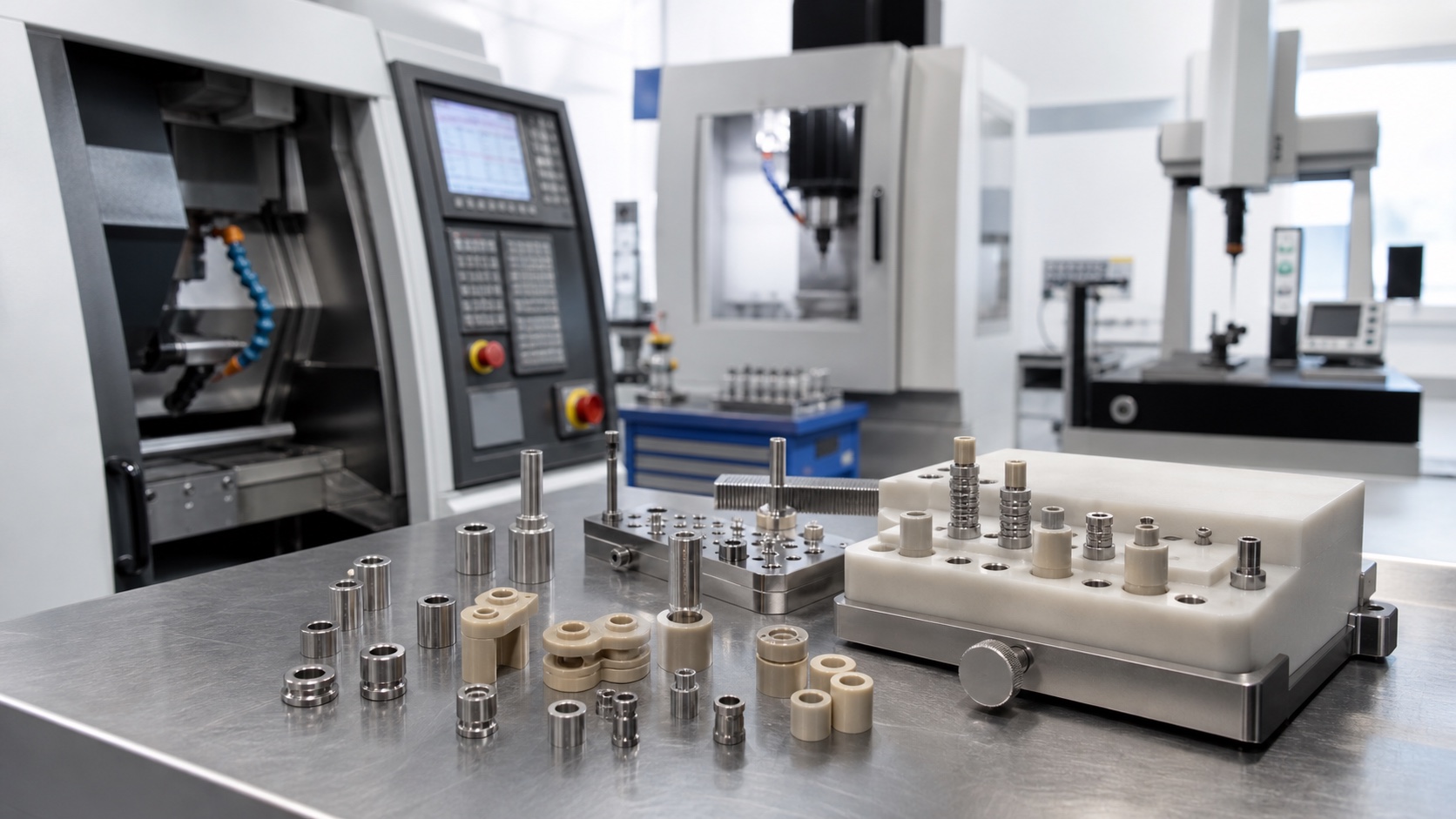
Functional Requirements
A dental guide sleeve normally has a precise internal bore, outer locating diameter, shoulder, groove or retention feature and carefully broken edges. Drill stops may include a controlled height, concentric bore, locking groove or mating surface for a guided drill system. Before production, the drawing should define the actual functional datums, acceptable burr condition, surface finish, cleaning expectation and whether the component is supplied alone or as part of a kit. For procurement teams, a 3D model is helpful, but a 2D drawing with bore tolerance, runout, material grade and inspection notes is still essential.
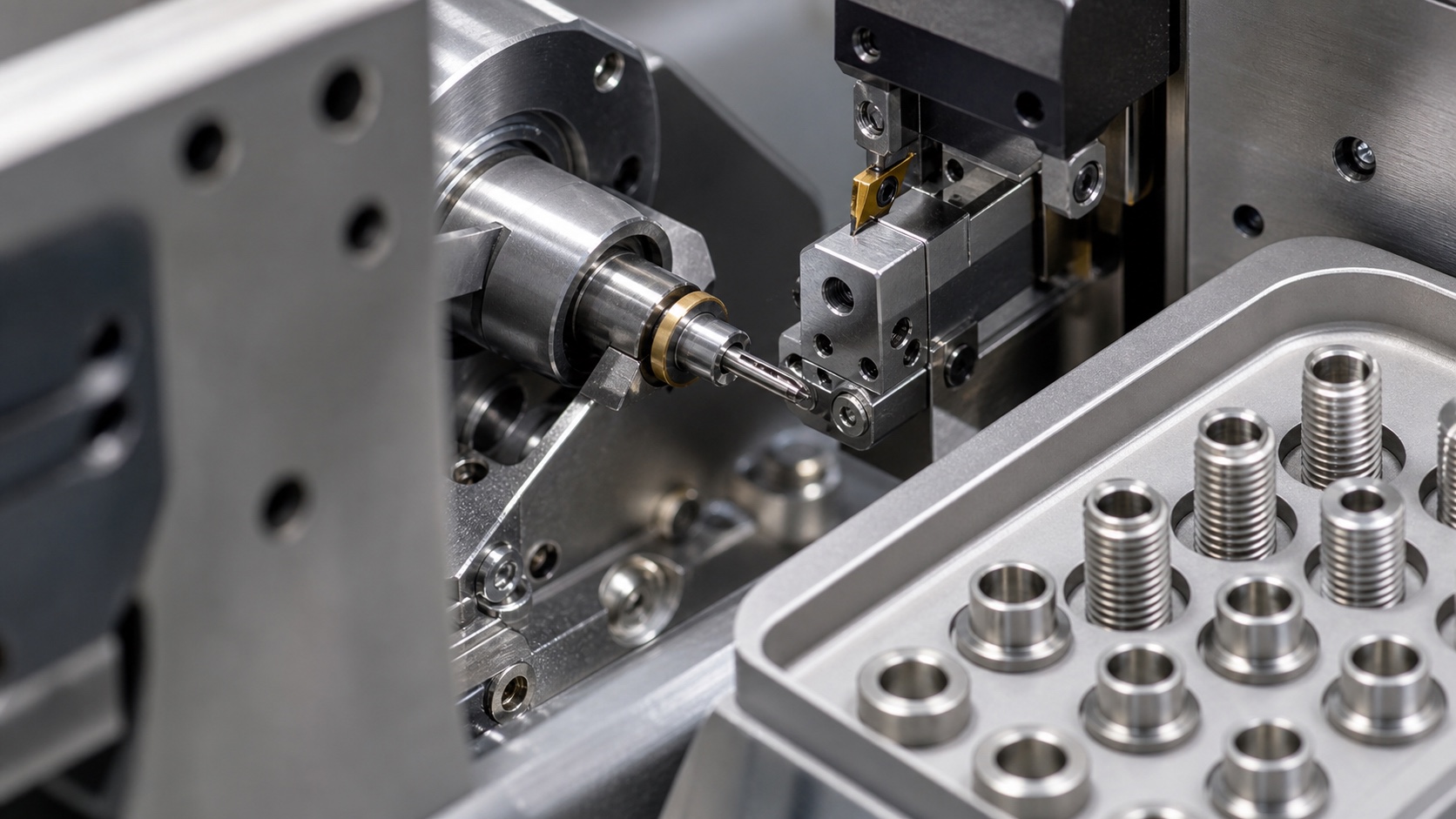
Material and Micro Turning Strategy
Titanium alloys and stainless steels are common choices for sleeves and collars because they provide strength, corrosion resistance and a clean metallic surface. Titanium demands sharp tools, controlled cutting speed and reliable chip evacuation because heat and built-up edge can quickly affect bore finish. Swiss turning or precision CNC turning is often used for small cylindrical parts because it supports concentric features and repeatable batches. If milling is required for flats, slots or cross holes, the operation should be planned so the part is not distorted after the final bore is finished.
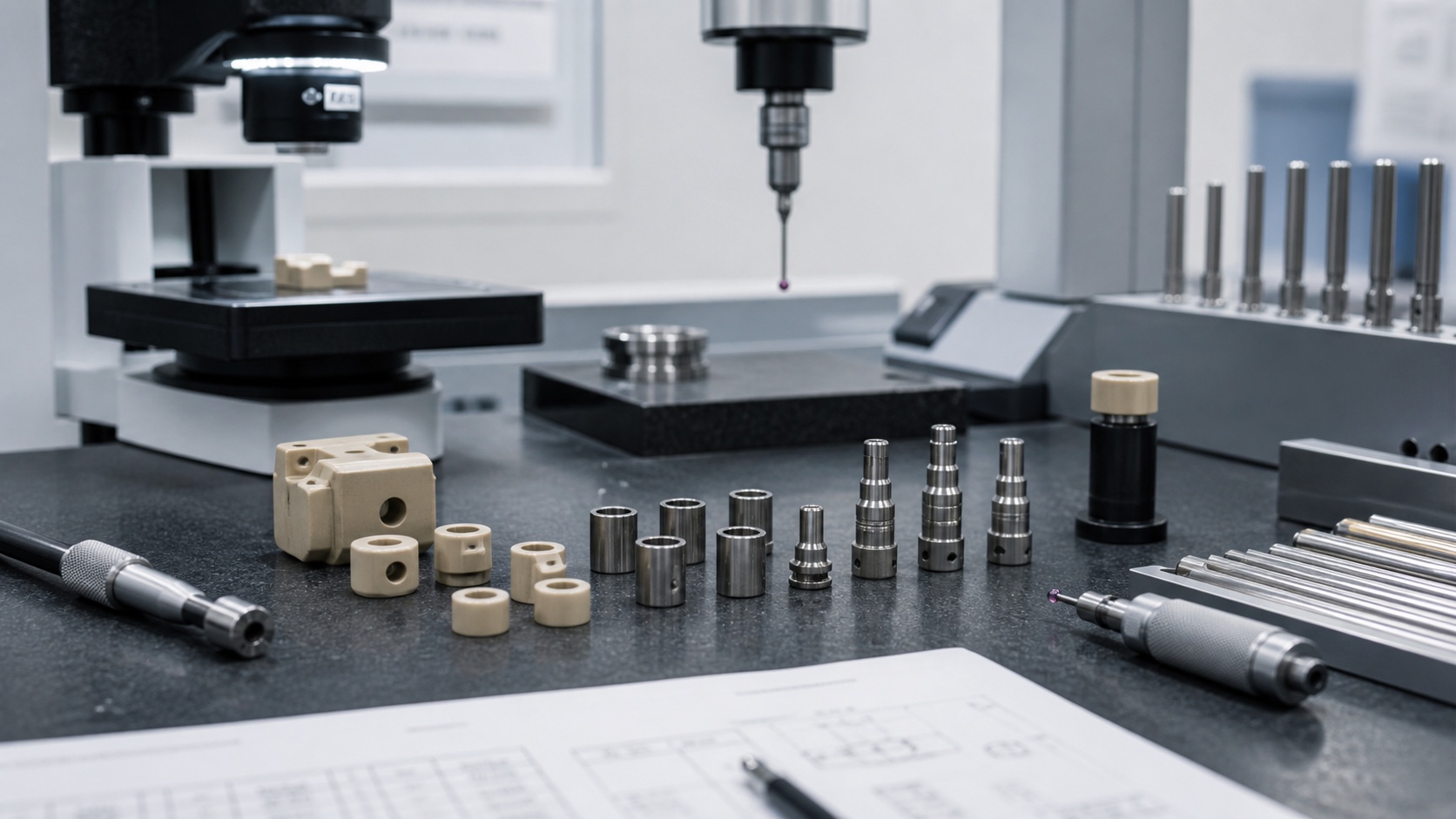
Bore Accuracy and Concentricity
The internal bore is usually the most important feature. Too tight and the drill may bind; too loose and guidance can become unstable. Tool runout, boring bar stiffness, reamer condition and measurement method all matter. Roughing and finishing should be separated, and the final pass should be stable enough to avoid chatter. When a sleeve has both an inner bore and an outer seating diameter, concentricity should be inspected against the functional datum, not only against a convenient machining surface. This is especially important when sleeves are pressed into PEEK or printed guide bodies.
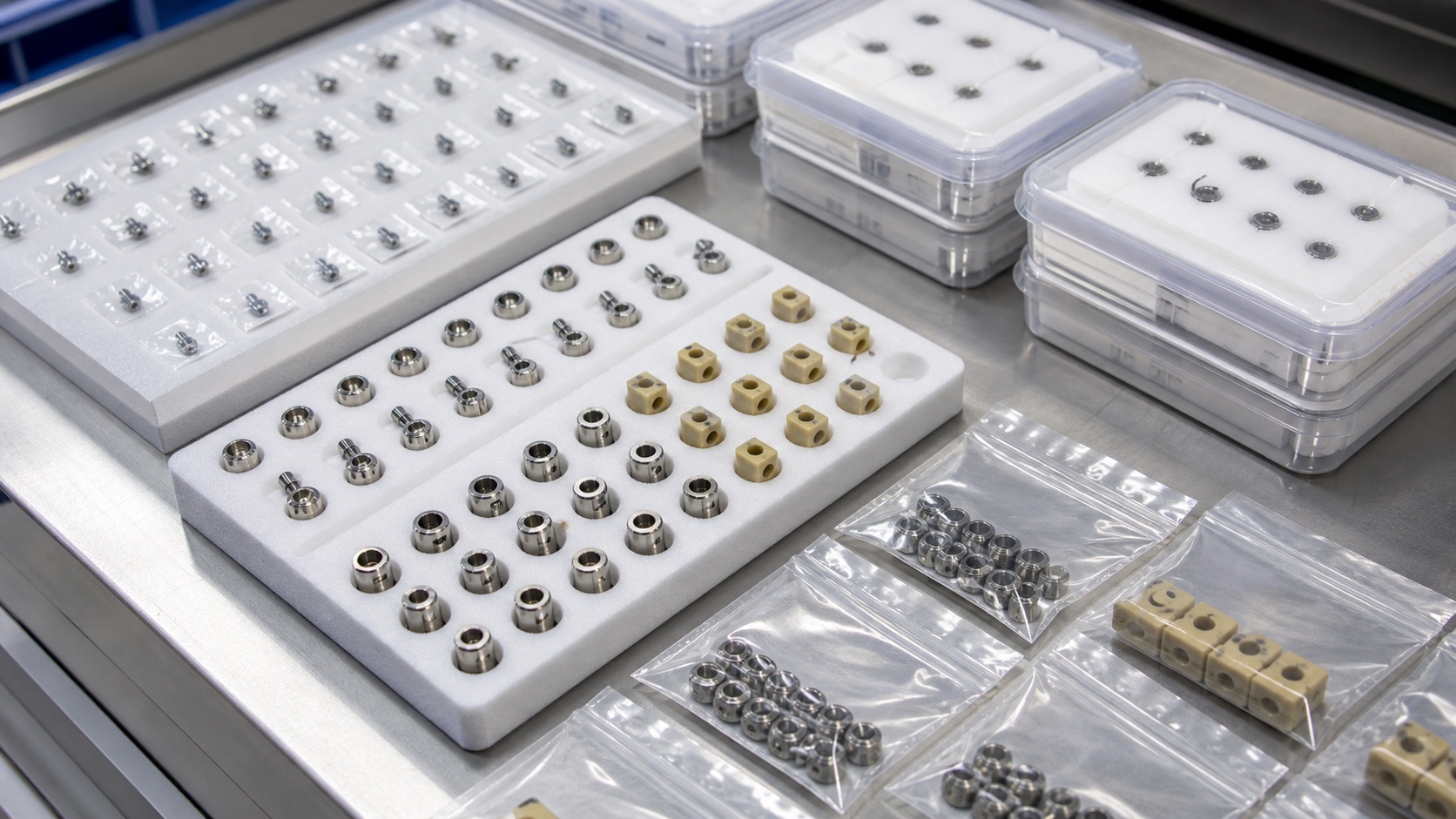
Burr Control, Cleaning and Surface Protection
Miniature collars and bushings can hide burrs inside grooves, at bore exits or around cross holes. These burrs can affect assembly and create particle concerns. Deburring should combine toolpath planning, small chamfers, controlled brushing and microscope review. Titanium parts may also require passivation or cleaning steps according to the customer specification. Handling trays should prevent sleeves from hitting each other because small dents on the bore edge are difficult to detect but easy to feel during assembly.
Inspection and Delivery
Inspection may include bore diameter, outer diameter, shoulder height, runout, groove position, chamfer size, thread quality and surface finish. Pin gauges, bore gauges, optical measurement and CMM can be selected according to tolerance and feature size. For first articles, a dimensional report helps confirm both the machining process and the inspection method. For production, lot labels, material certificates and clean packaging keep the receiving inspection process efficient.
FAQ
What files are needed to quote dental guide sleeves?
A 3D model, 2D drawing, material grade, bore tolerance, finish requirement, quantity and inspection scope are recommended.
Which feature is most critical on a guide sleeve?
The internal bore and its relationship to the outer locating diameter are usually the most critical features.
Can titanium dental sleeves be made in small batches?
Yes. Prototype and small-batch production are common, especially during guided surgery system development.
How are burrs inside tiny bores controlled?
Sharp tools, controlled chamfers, careful deburring and microscope inspection help control bore-edge burrs.
Can sleeves be packed individually?
Yes. Individual trays, foam inserts, small cases or sealed bags can be arranged to prevent part-to-part damage.
Can inspection reports be supplied?
Yes. First article and batch inspection reports can be prepared according to drawing requirements.
Contact email: tanghangyun@oemach.com