
Laser precision structural parts should be reviewed for heat before shape. Hole position, external profile and surface finish matter, but optical stability is often decided by thermal stability, heat-flow path, material expansion, assembly datum and dimensional change after finishing.
During operation, lasers generate heat. If a heat sink base, optical mount, copper thermal block, cavity housing or connector bracket uses the wrong material or machining datum, temperature rise can cause optical-axis drift, focus change, contact-face deformation or screw preload shift.
OEMach first confirms heat source location, heat-flow direction, optical datum faces, material combinations and inspection criteria before choosing an aluminum, copper, stainless steel or composite machining route.
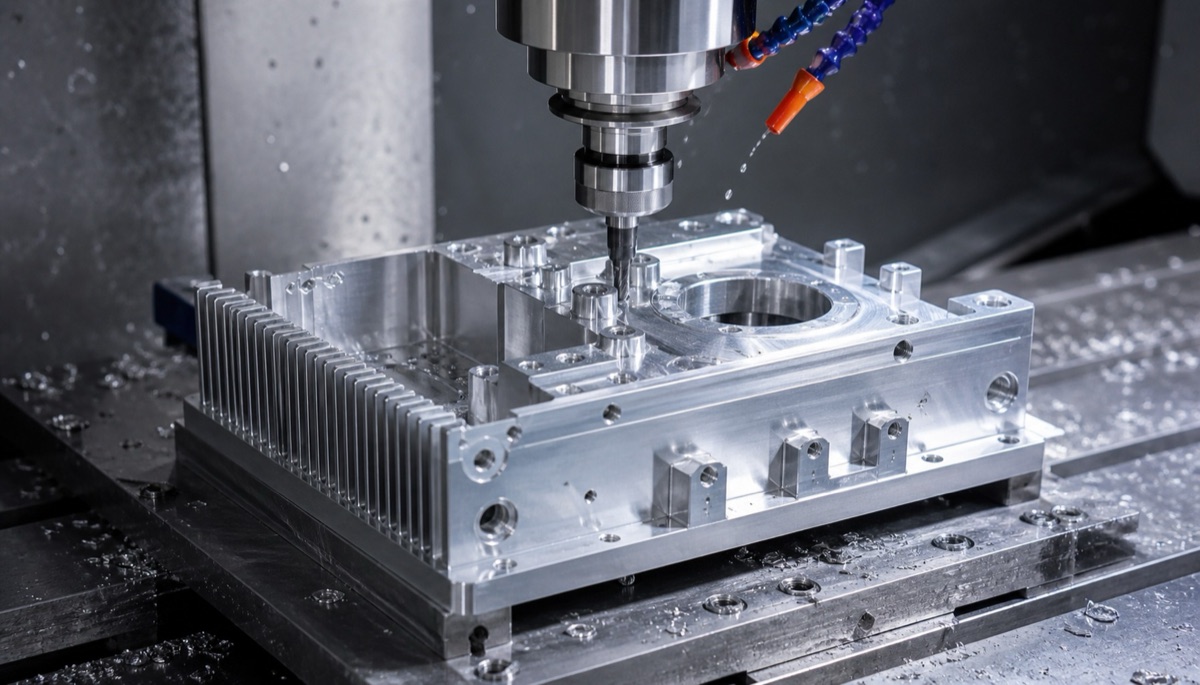
Material Selection and Thermal Stability
| Material | Typical location | Advantage | Machining and design note |
|---|---|---|---|
| 6061 or 7075 aluminum | Heat sink bases, housings and mounting plates | Low weight, good machinability and useful thermal conductivity | Evaluate anodizing thickness and thermal expansion |
| Copper alloy | Heat sinks, local thermal blocks and diode seats | Excellent thermal conductivity | Sticky cutting, higher weight and oxidation risk |
| Stainless steel | Rigid brackets, connectors and corrosion-resistant structures | Good stiffness and corrosion resistance | Low thermal conductivity, usually not the main heat sink |
| Titanium alloy | High-strength lightweight or insulation-related structures | High strength-to-weight ratio | High cost, slow machining and careful thermal design required |
| Combined structure | Aluminum base with copper heat sink or steel locating pieces | Balances heat flow, stiffness and cost | Thermal expansion mismatch and assembly datum must be verified early |
Why Thermal Stability Affects the Optical Path
Optical elements inside a laser, such as diodes, crystals, lenses and mirrors, are sensitive to mounting posture. If the structural part warps, hole spacing changes or local thermal expansion differs from the optical datum, the optical path can shift slightly.
This shift may not appear in room-temperature inspection. A CMM report can confirm cold dimensions, but an unsuitable thermal structure can still cause power fluctuation, focus drift or repeated alignment work under operating temperature.
Laser structural parts should be reviewed as a system: heat source, heat-flow path, optical datum, material combination, contact-face roughness, screw holes and surface treatment all influence the final behavior.
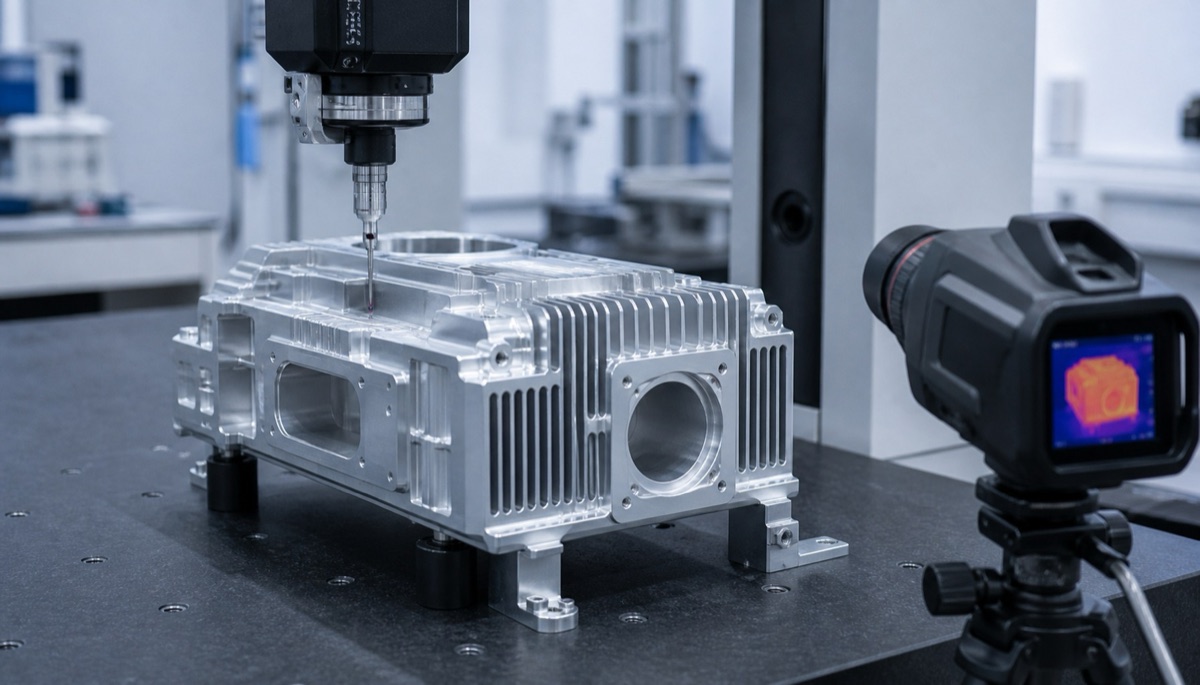
Datum Faces and Contact Faces Need Process Priority
Common critical areas include laser base contact faces, optical mounting holes, lens-seat steps, heat-sink fin roots, copper-block insertion faces and sealing surfaces. These features should not be treated like ordinary enclosure details.
If the contact face is not flat, heat transfer becomes uneven. If optical mounting holes do not follow the base datum, alignment requires repeated compensation. If anodizing or plating changes locating holes, assembly stress can alter optical posture.
OEMach usually recommends late-stage finishing of key contact faces, five-axis machining when it reduces datum changes, clear masking before surface treatment and post-finish reinspection of critical holes, contact faces and mounting datums.
Example: Aluminum Base Plus Copper Heat Sink
In one laser heat-sink base review, the structure combined an aluminum housing, copper thermal block and stainless locating piece. The original focus was external dimensions and hole positions, but drawing review showed that the datum relationship between the copper contact face and optical mounting face was more important.
OEMach split rough and finish machining of the aluminum base, finished the copper insertion face late in the process, machined critical mounting holes under a unified datum, and rechecked contact faces and hole positions after finishing. The inspection report separately recorded flatness near the heat source and positional accuracy of the hole pattern.
This approach manages thermal design, material combination, machining and inspection as one loop, reducing the risk of thermal alignment problems during prototype debugging.
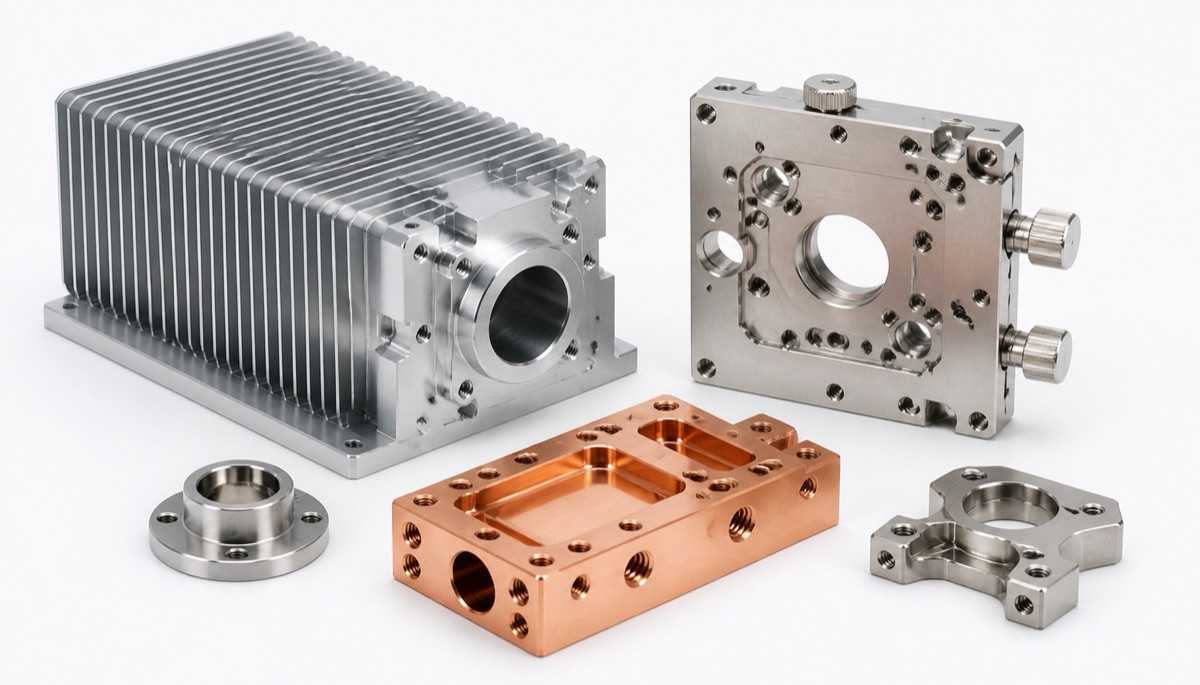
What to Prepare Before Ordering
- Mark heat source location, heat-flow direction, thermal contact faces and optical mounting datums.
- Clarify material combinations, such as aluminum, copper, stainless steel or composite assemblies.
- Define surface treatment, especially anodizing, nickel plating, blackening and masking areas.
- Add flatness, roughness and post-finish reinspection requirements for key contact faces.
- Share thermal test results or alignment feedback if available so the supplier can optimize the process.
Common Mistakes
The first mistake is quoting laser structural parts like ordinary housings, without reviewing heat source and optical datum. The second is selecting material only by thermal conductivity while ignoring thermal expansion and assembly stress.
The third is stopping at pre-finish dimensions. For laser precision parts, the final state after anodizing, plating, masking or cleaning is what matters for assembly.
Summary
For laser precision structural parts, thermal stability and material selection should be considered before dimensional tolerance. Heat-flow path, material conductivity, thermal expansion, optical datum and surface treatment together determine whether the structure can keep the optical path stable.
FAQ
Why does thermal stability matter for laser structural parts?
Temperature rise can change contact faces, hole spacing and optical mounting posture, causing optical-axis drift or focus change.
What materials are common for laser heat sink bases?
Aluminum alloys and copper alloys are common. Aluminum is light and efficient to machine, while copper conducts heat well for local heat sinks.
Is stainless steel suitable as a laser heat sink?
Usually not as the main heat sink because its thermal conductivity is lower, but it can be useful for rigid brackets, connectors or corrosion-resistant structures.
Can surface treatment affect laser part assembly?
Yes. Anodizing, nickel plating or blackening can change hole size, contact faces and final fit, so masking and post-finish inspection should be defined.
Can OEMach machine laser precision structural parts?
Yes. OEMach supports small-batch CNC machining of heat sink bases, optical mounts, copper thermal blocks and precision housings.
Ready to get a quote for your CNC machined parts?
Submit your engineering drawings to qiancj@oemach.com. We support prototype sampling and small-batch production with strict tolerance control.