
A custom CNC machining quote should not be judged only by the total price. The total tells you how much the batch costs; the line items tell you why it costs that amount. Material, programming, machining time, inspection, surface treatment, packaging, urgency and process risk can all change the final price.
Small-batch custom parts are different from standard catalog parts. Drawing complexity, material grade, stock condition, number of setups, tool wear, inspection requirement and outsourced surface treatment all affect cost. When two suppliers quote very different totals, the lower price is not automatically better.
Sometimes the lower quote omits CMM inspection, post-finish reinspection, deburring, tool risk or special packaging. Sometimes the higher quote simply makes those items visible. A clear breakdown helps engineering and purchasing compare the same scope.
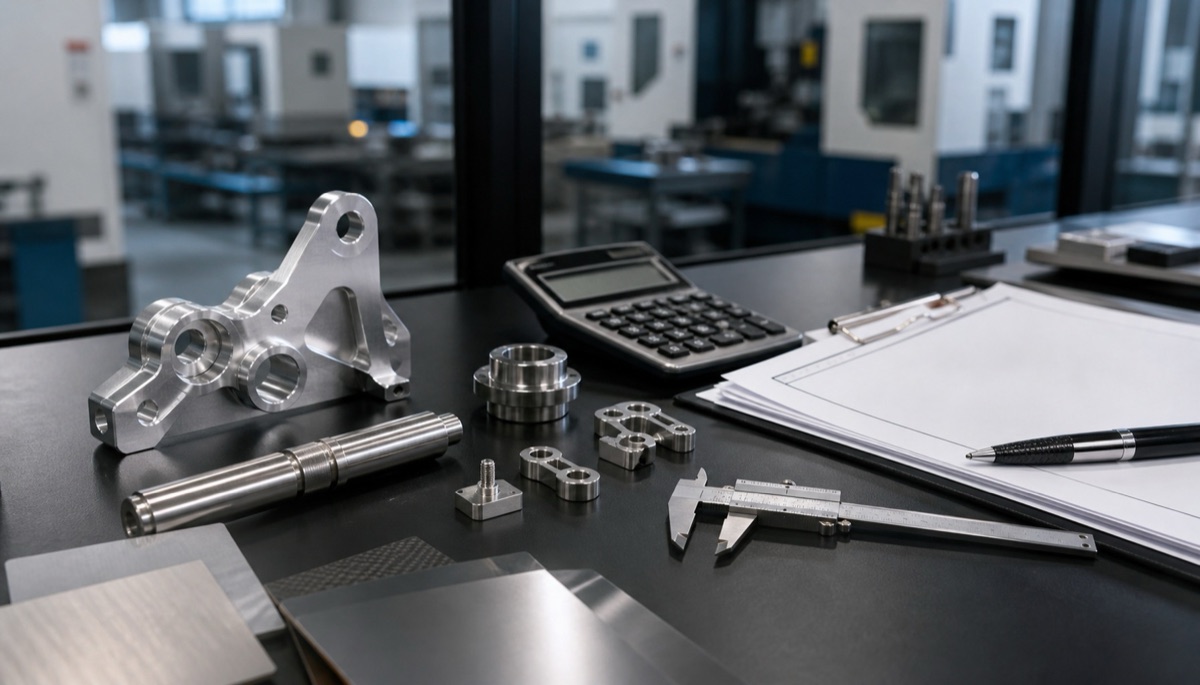
What Each Quote Line Item Usually Means
| Quote item | What it includes | Why it changes price | What buyers should check |
|---|---|---|---|
| Material | Grade, stock size, loss, certificate and preparation | Special materials and small stock purchases cost more | Check material state, certificate and scrap allowance |
| Programming | CAM work, toolpath verification and process review | Complex surfaces and multi-side parts take more planning | Ask whether prototype programming is listed separately |
| Machining | Machine time, setup, tools and fixture work | 5-axis, deep pockets, thin walls and hard materials increase cost | Look for a clear route, not only an hourly number |
| Inspection | CMM, first-article report, gauges and special fixtures | More critical dimensions mean more inspection time | Confirm report items match the drawing |
| Outsourcing and delivery | Heat treatment, anodizing, plating, packaging and logistics | Post-finish reinspection and scratch protection add work | Clarify responsibility boundary and lead time |
Why Small-Batch Quotes Look Expensive
Small-batch custom parts often have a higher unit price because fixed costs are spread across fewer pieces. Programming, setup, first-article inspection, tool preparation and engineering communication happen whether the order is five pieces or fifty.
For example, a complex aluminum mounting block may require nearly the same CAM and setup work for three pieces as for thirty pieces. Once the process is proven and the order repeats, the unit machining cost may fall. Without a line-item view, buyers cannot see where the future savings may come from.
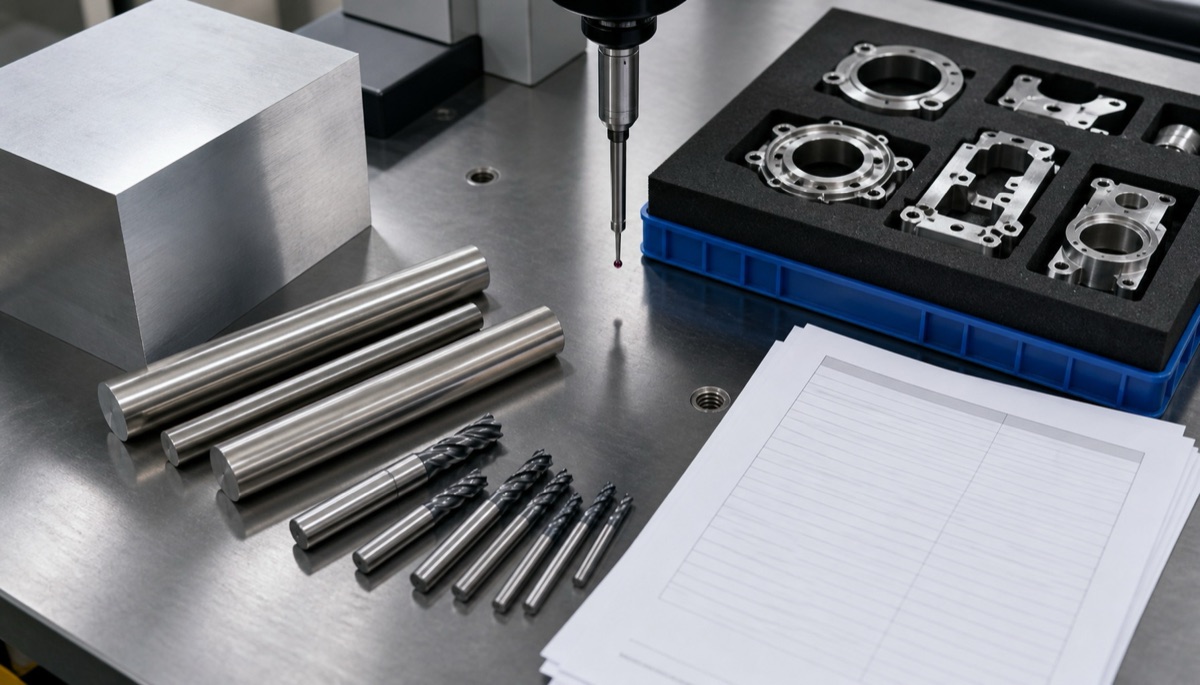
Low Total Price Does Not Always Mean Low Risk
A low total price may mean the supplier is efficient. It may also mean inspection, surface treatment, tool wear, post-treatment review or packaging has not been included. For precision parts, that difference matters.
Typical problems include drawings that require CMM reports while the quote omits inspection, anodized holes becoming tight without reinspection, stainless small holes carrying burrs, or thin-wall parts deforming because the route did not include enough process time.
A reliable quote should mention the main risks before production. Hiding risk inside a low price often transfers the cost to first-article failure or late rework.
Example: A Breakdown Prevented Scope Confusion
In one small-batch custom connector inquiry, the buyer initially requested only one total price. After drawing review, OEMach separated material, CNC machining, heat treatment, CMM inspection and black oxide treatment. The quote also explained why key holes should be rechecked after heat treatment.
At first the total looked higher than another supplier's number. After comparison, the buyer found that the lower quote did not include inspection and post-treatment reinspection. The final order followed the line-item quote, and the first-article records kept both pre-treatment and post-treatment dimensions.
The important result was not a marketing percentage. The real value was that both sides agreed on scope, inspection and responsibility before material was cut.
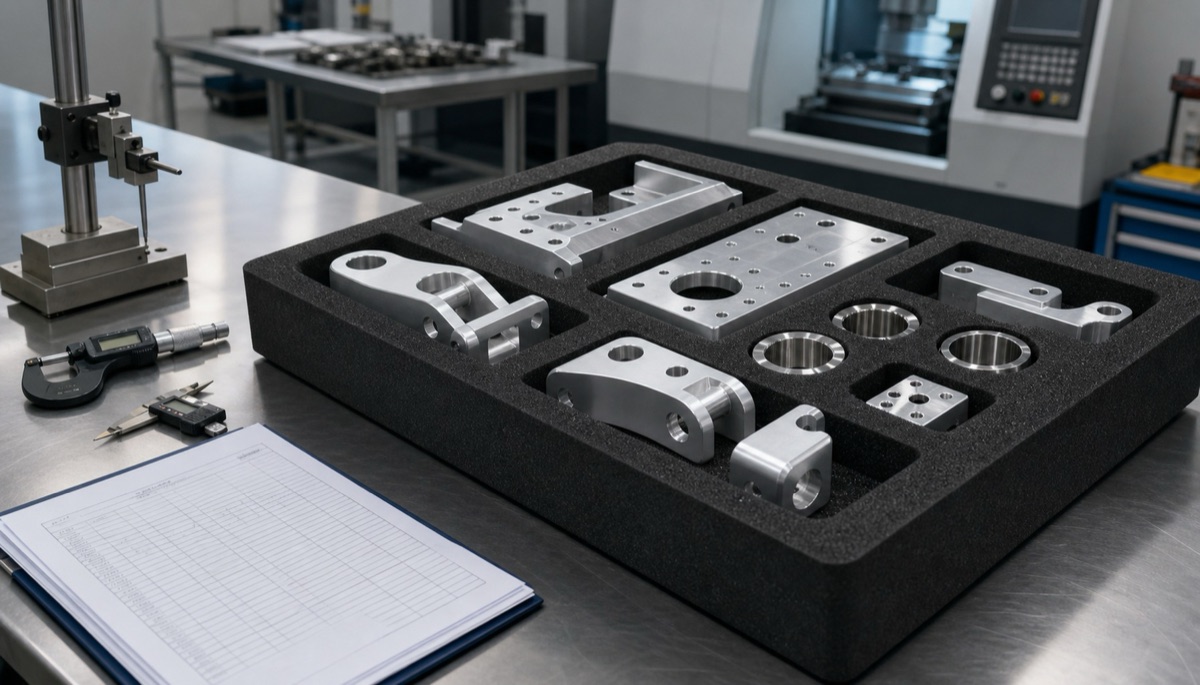
What to Send for a Faster Accurate RFQ
- Provide 2D drawings, 3D models, material grade, quantity and target delivery date.
- Mark critical dimensions, key holes, cosmetic faces and non-critical clearance areas.
- State whether CMM report, first-article report or full inspection is needed.
- Define heat treatment, anodizing, nickel plating, passivation, blasting or other finishing requirements.
- If repeat orders are likely, share expected future quantities so prototype and repeat pricing can be separated.
Common Misunderstandings
The first misunderstanding is treating a line-item quote as a markup tool. In reality, it shows whether the supplier understands the project. The second is looking only at machining cost while ignoring inspection and finishing, where many rework problems appear.
The third is comparing prototype price directly with batch price. Prototype work includes more fixed engineering cost, while repeat work can reuse stable process records.
Summary
For custom CNC machining, line-item quotes help buyers understand material, programming, machining, inspection, surface treatment and delivery risk. A supplier that can explain the breakdown is often better prepared to control the work. OEMach supports transparent quoting for prototype sampling and small-batch precision parts.
FAQ
Why should a CNC machining quote be broken down?
A breakdown shows material, programming, machining, inspection, finishing and delivery risk, reducing misunderstanding before production.
Why are small-batch parts more expensive per piece?
Fixed work such as programming, setup, first-article inspection and communication is spread across fewer parts.
Can inspection cost be removed from a quote?
For non-critical appearance parts it may be simplified, but key dimensions, assembly datums and high-precision parts should not skip inspection.
Is the lowest total price always the best?
No. Check whether inspection, surface treatment, tool wear, post-finish review and packaging are included.
Can OEMach provide line-item quotations?
Yes. OEMach can explain material, process, inspection, surface treatment and delivery items for small-batch custom parts.
Ready to get a quote for your CNC machined parts?
Submit your engineering drawings to qiancj@oemach.com. We support prototype sampling and small-batch production with strict tolerance control.