
Precision mechanical part machining should not start with the question of which process is more advanced. Turning, milling, grinding and wire EDM each solve a different type of geometry and accuracy problem. The correct route depends on where the part gets its accuracy: axis, plane, hole pattern, sharp internal corner, heat-treated surface or assembly datum.
A shaft, sleeve or flange usually starts from turning because the key accuracy comes from outside diameter, bore, end face and coaxiality. A bracket, housing, mounting plate or complex hole pattern usually starts from milling. High flatness, low roughness or post-heat-treatment finishing often needs grinding. Narrow slots, sharp internal corners, hardened inserts and irregular profiles may require wire EDM.
Many quote differences come from route selection, not from arbitrary pricing. If one supplier plans only three-axis milling while another includes heat treatment, grinding and wire EDM, the total price and delivery time will naturally differ.
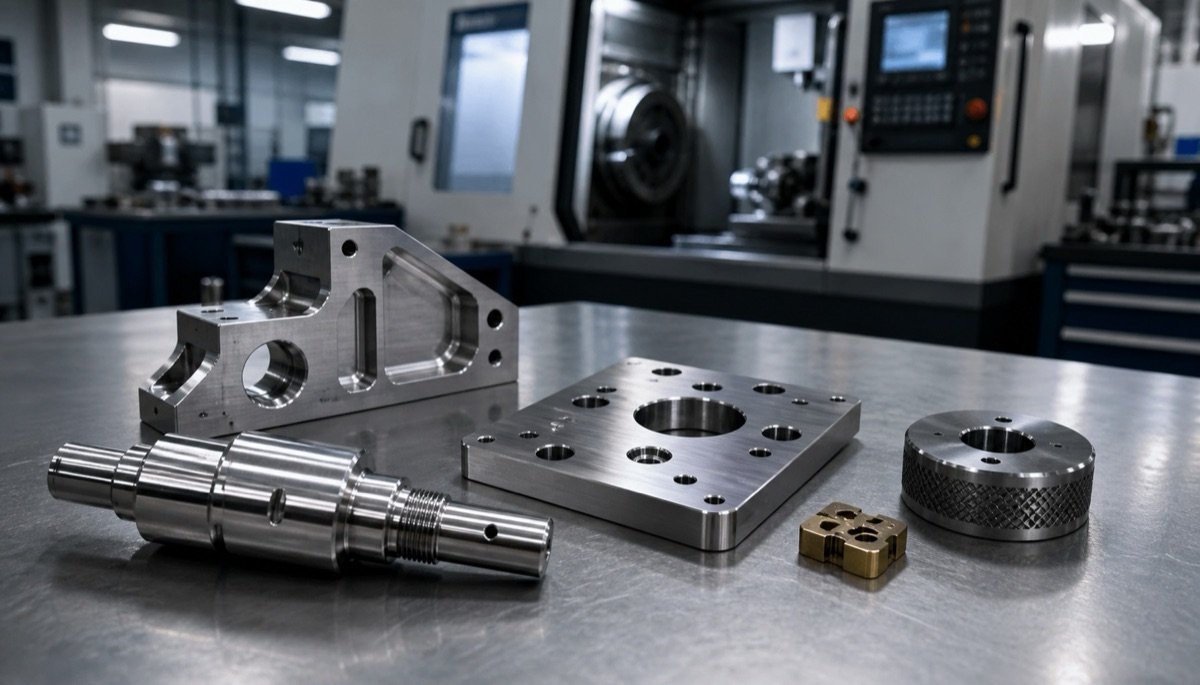
Where Each Process Fits Best
| Process | Best-fit parts | Main advantage | Main limitation |
|---|---|---|---|
| Turning | Shafts, sleeves, discs, flanges and rotational parts | Efficient control of OD, ID, end face and coaxiality | Side holes and irregular faces often need milling support |
| Milling | Brackets, housings, mounting plates, pockets and hole patterns | Flexible for planes, cavities, steps, holes and free-form structures | Very high flatness or surface finish may still need grinding |
| Grinding | Precision plates, guide faces, heat-treated steel parts and fitting faces | Stable size, flatness and surface roughness | Low removal efficiency; previous allowance and datum must be planned |
| Wire EDM | Sharp internal corners, narrow slots, hardened inserts and special profiles | Strong for small radii and hard materials | Slow cycle; surface texture and recast layer must be evaluated |
| Combined route | High-precision custom parts and transmission or fixture components | Balances shape, datum and final accuracy | Quote should explain each operation instead of hiding it in one total price |
Turning Fits Parts That Work Around an Axis
Turning is strongest when a part is fundamentally rotational. For bearing seats, sealing grooves, threaded connectors and shafts, the process can keep outside diameter, bore and end face in one datum logic.
The risk appears when a turned part is repeatedly moved between turning and milling without a clear locating plan. Coaxiality and runout may drift even if each single dimension looks acceptable. Turn-mill equipment or a carefully designed second operation can reduce datum conversion.
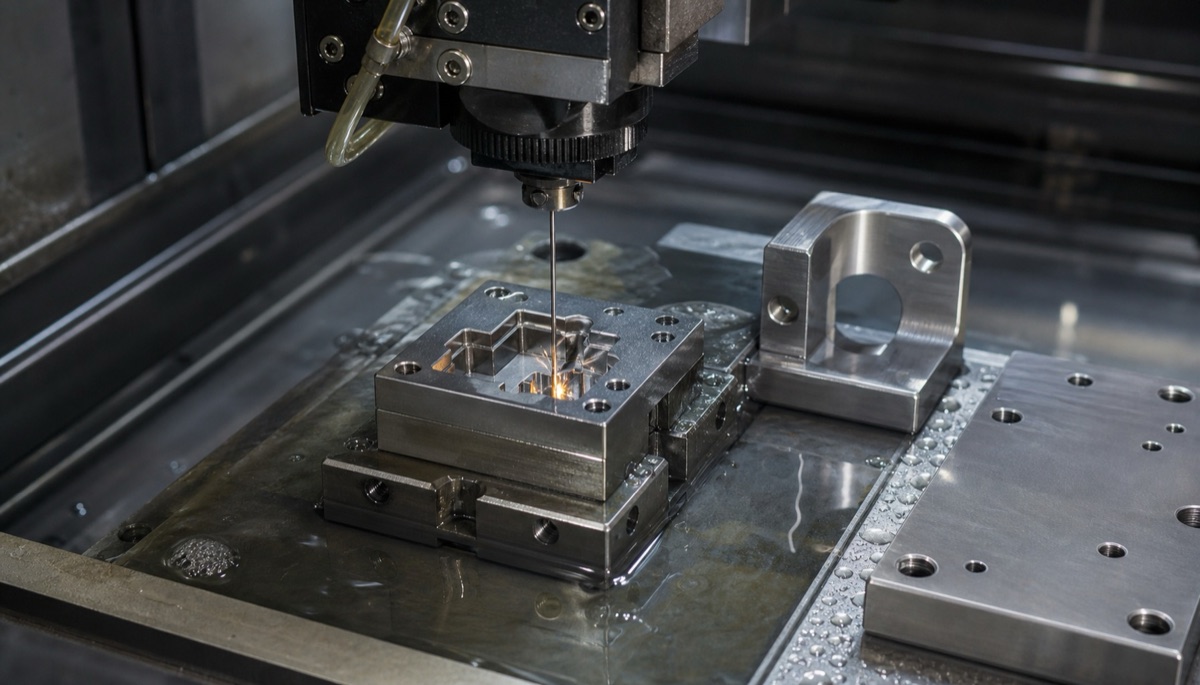
Milling Handles Complex Structures and Hole Patterns
Milling is the common route for prototype and small-batch custom parts because it can produce planes, pockets, bosses, slots, hole patterns and lightening structures. Three-axis machining is cost-effective when the part can be located simply; four-axis and five-axis machining become useful when they reduce flips and datum changes.
Milling also has limits. Thin walls deform under clamping, large planes can warp, deep cavities require long tools, and small internal corners are limited by cutter diameter. A good process review identifies these limits before cutting.
Grinding and Wire EDM Define the Accuracy Boundary
Grinding is not a rescue step that can fix every earlier error. It needs planned allowance, stable datum surfaces and a structure that can be supported during finishing. When flatness, parallelism, roughness or post-heat-treatment size is critical, grinding should be included from the first quotation.
Wire EDM is useful where a milling cutter cannot reach: sharp internal corners, narrow slots, hard tool-steel inserts, thin profiles or complex cut-through shapes. It is slower than normal CNC milling, but it can make geometry that milling would distort or over-radius.
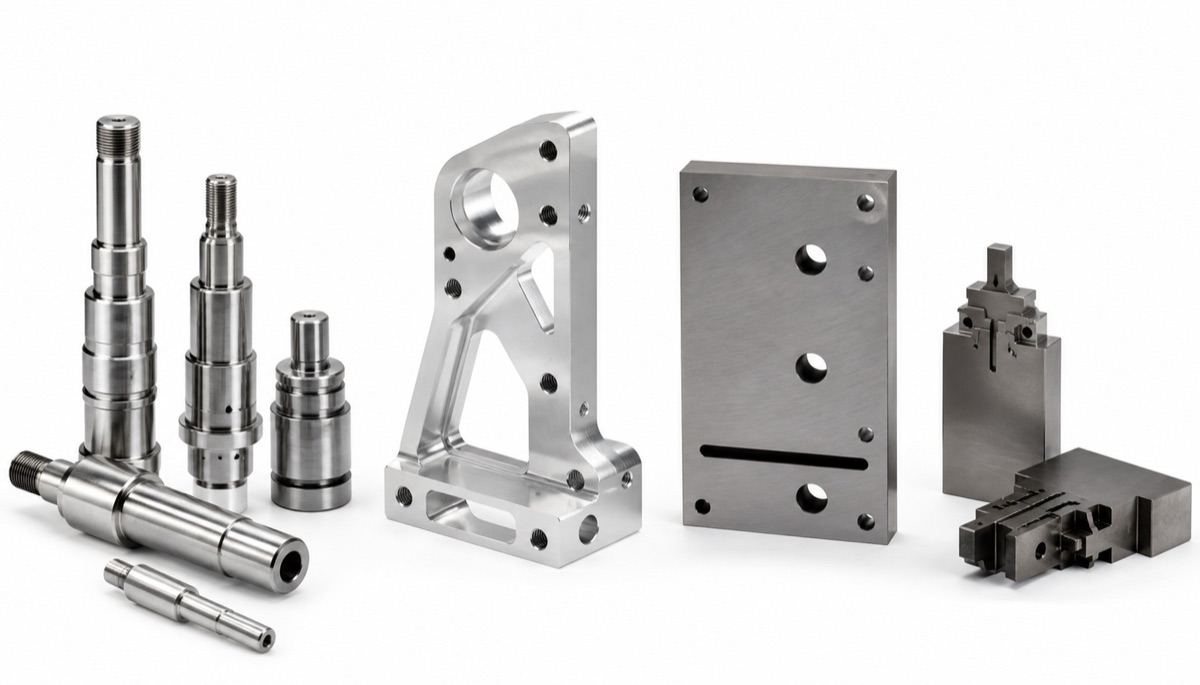
Example: One Part, Three Process Stages
In a precision connector review, the part combined a rotational shaft section, a mounting plane and a narrow slot. A simple milling-only route could not reliably control coaxiality, flatness and the small internal radius together.
OEMach split the route into turning for the shaft and end-face datum, milling for the mounting holes and weight-reduction features, wire EDM for the narrow slot profile, and local grinding for the fitting face. The final CMM report used the assembly datum, not only the machining setup datum.
The route took more planning at the quotation stage, but it reduced ambiguity during first-article review and made repeat orders easier to control.
How Buyers Can Judge a Quote
- Check whether the supplier explains why turning, milling, grinding or wire EDM is selected.
- Match each critical dimension to the process that can realistically control it.
- State heat treatment, hardness, flatness and roughness requirements before quoting.
- Ask whether the first-article report includes holes, faces, axes and fitting dimensions.
- For repeat orders, keep the same process route and inspection datum instead of restarting from price alone.
Summary
Turning, milling, grinding and wire EDM have different precision boundaries. Axis-based parts favor turning; complex structures and hole patterns favor milling; high flatness or post-heat surfaces may need grinding; sharp corners, narrow slots and hardened profiles may need wire EDM. OEMach helps engineering teams select the process route by function, not by a single machine label.
FAQ
When should a precision part use turning?
Use turning when the key accuracy comes from outside diameter, bore, end face, thread or coaxiality around one axis.
Which parts are best for CNC milling?
Brackets, housings, plates, pockets, bosses, hole patterns and irregular structures are usually good candidates for CNC milling.
When is grinding needed?
Grinding should be considered for high flatness, tight roughness, heat-treated steel parts and precision fitting faces.
What is wire EDM best for?
Wire EDM is suitable for sharp internal corners, narrow slots, hard materials, inserts and complex cut-through profiles.
Can OEMach combine several processes?
Yes. OEMach can combine turning, milling, grinding, wire EDM, surface treatment and inspection for small-batch precision parts.
Ready to get a quote for your CNC machined parts?
Submit your engineering drawings to qiancj@oemach.com. We support prototype sampling and small-batch production with strict tolerance control.