
TC4 titanium machining is slow because the material forces the process to control heat, tool wear and dimensional stability. It is not simply a factory delay. Poor thermal conductivity, high elasticity, high strength and concentrated cutting heat can quickly damage tools and push dimensions out of control if parameters are increased blindly.
Aluminum can remove material quickly, and stainless steel has a more familiar process window. TC4 titanium is a different balance among cutting heat, vibration and tool wear. When robot joint links, lightweight brackets, flanges or load-bearing mounts use TC4, the project usually needs longer machine time and higher cost.
OEMach first checks whether titanium is truly required. Then the process is reviewed around 5-axis access, stable low-speed cutting, coolant, tool life, rough/finish separation and CMM inspection.
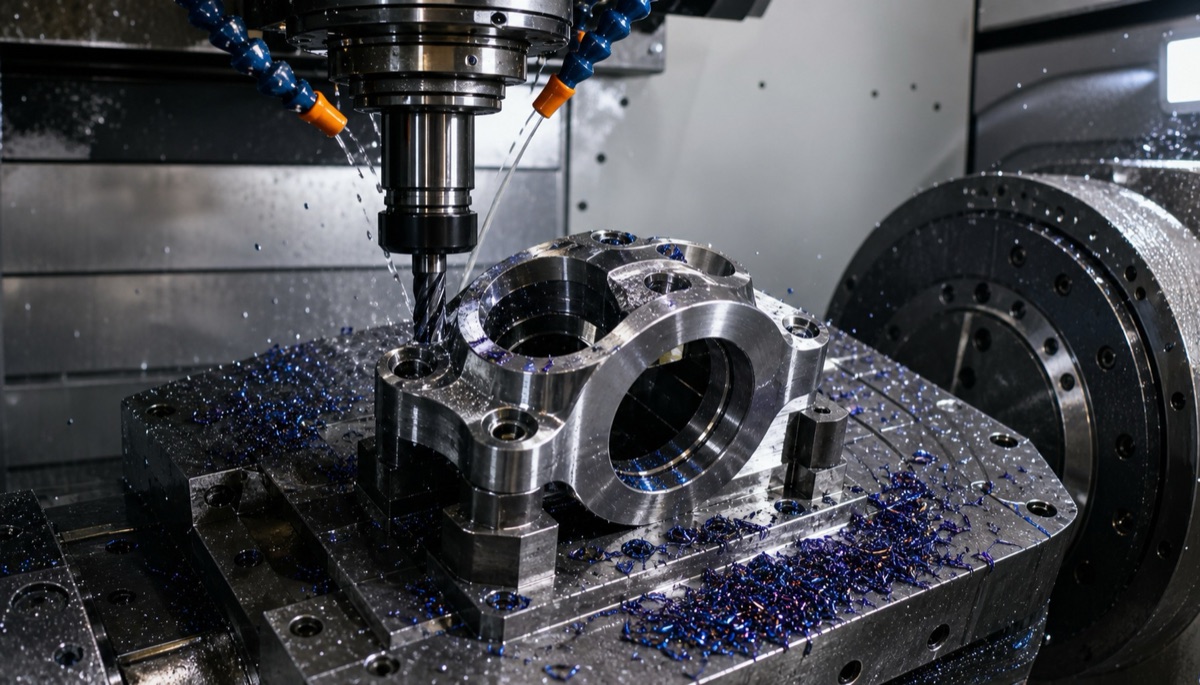
Why TC4 Titanium Cuts Slowly
| Reason | Machining behavior | Risk | Process suggestion |
|---|---|---|---|
| Poor heat conduction | Heat concentrates near the cutting edge | Tool burning, blue surface marks and dimensional drift | Strengthen cooling and avoid unreasonable cutting heat |
| High elasticity | Tool deflection and springback are obvious | Hole size, wall thickness and surface waviness are unstable | Control depth of cut and repeat finish critical features |
| High strength | Tool load is high | Chipping, chatter and lower efficiency | Use suitable coated tools and rigid fixturing |
| Tendency to gall | Chips can disturb the cutting edge | Surface pulling and burrs increase | Keep chip evacuation stable and control tool life |
| High inspection demand | Robot joint parts often have critical datums | First article passes but batch drift appears | Record hole, face and coaxial relationships with CMM |
Poor Heat Conduction Hits the Tool First
TC4 titanium does not move heat away efficiently during cutting. More heat stays near the tool tip instead of leaving through the workpiece and chips. Once tool temperature rises, wear accelerates and surface quality can decline quickly.
If the process follows aluminum-style high spindle speed and feed, the short-term removal rate may look attractive. In practice, tool life can collapse, hole sizes can drift, and the machined surface can become shiny, blue or torn.
This is why TC4 is often cut with lower parameters, strong coolant and stable chip evacuation. Slower cutting keeps the tool inside a controlled condition.
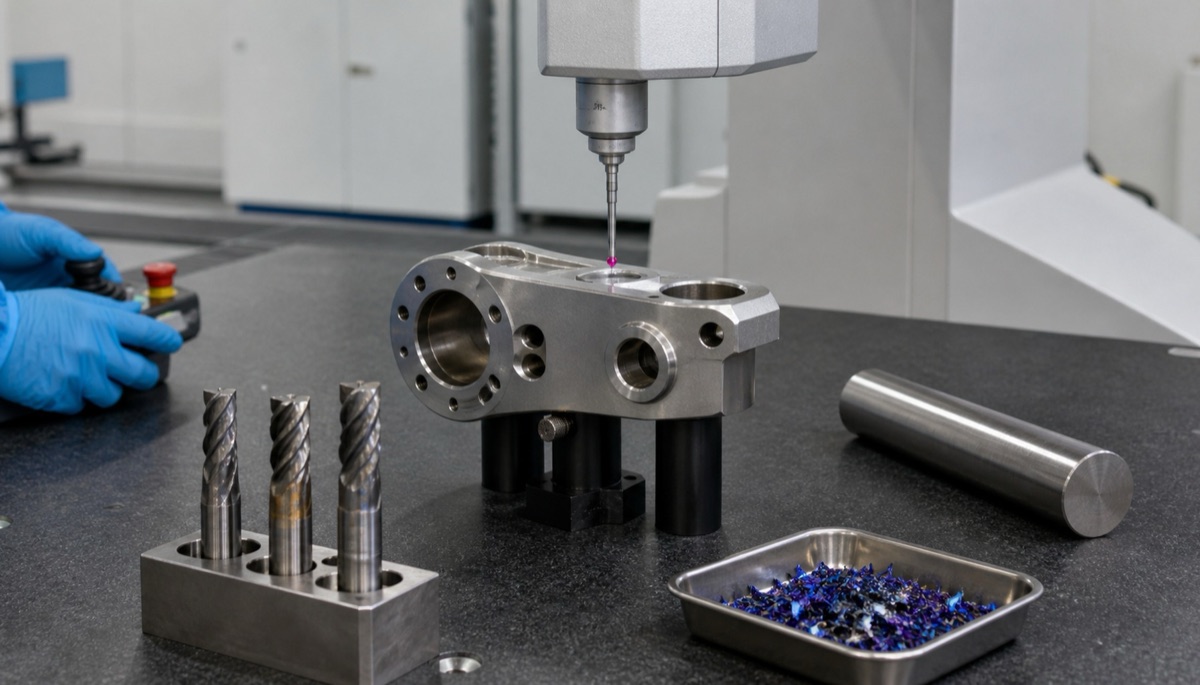
Elasticity and Vibration Affect Robot Joint Accuracy
Robot titanium parts are often used in joint links, lightweight load brackets or special mounting seats. These features commonly include hole positions, coaxiality, face contact and positional tolerance. TC4 elasticity makes tool deflection and springback more visible.
Thin lightweight structures are especially sensitive. A slightly higher cutting force can deform the part in the fixture; after release, the dimension can move again. Increasing the cut to save time only makes this more visible.
OEMach usually separates roughing and finishing, keeps stable allowance, finishes critical holes late, and uses 5-axis machining when it reduces flips. Inspection records the relationship among hole positions, end faces and assembly datums, not only isolated sizes.
Tool Life Defines the Real Cost
In TC4 quotes, tool cost and machine time are much higher than for ordinary aluminum parts. If a worn tool continues cutting, size drift, surface pulling and difficult burrs can follow.
TC4 cost should not be judged by one-piece cutting time alone. Tool life, tool-change rhythm, first-article validation and inspection time all belong in the estimate. For small-batch robot parts, stabilizing parameters during the first article is usually cheaper than repairing a drifting batch later.
Stable Cutting Improves Assembly Reliability
In one TC4 robot joint connector project, the initial concern was long machining lead time. OEMach explained the process logic and split the part into roughing, semi-finishing, critical-hole finishing and CMM inspection.
The machining used conservative cutting parameters to control tool wear and coolant condition. Critical holes were finished near the end, and face contact, hole pitch and coaxial relationships were inspected. Although cycle time was longer than aluminum, first-article assembly became more stable and rework risk was reduced.
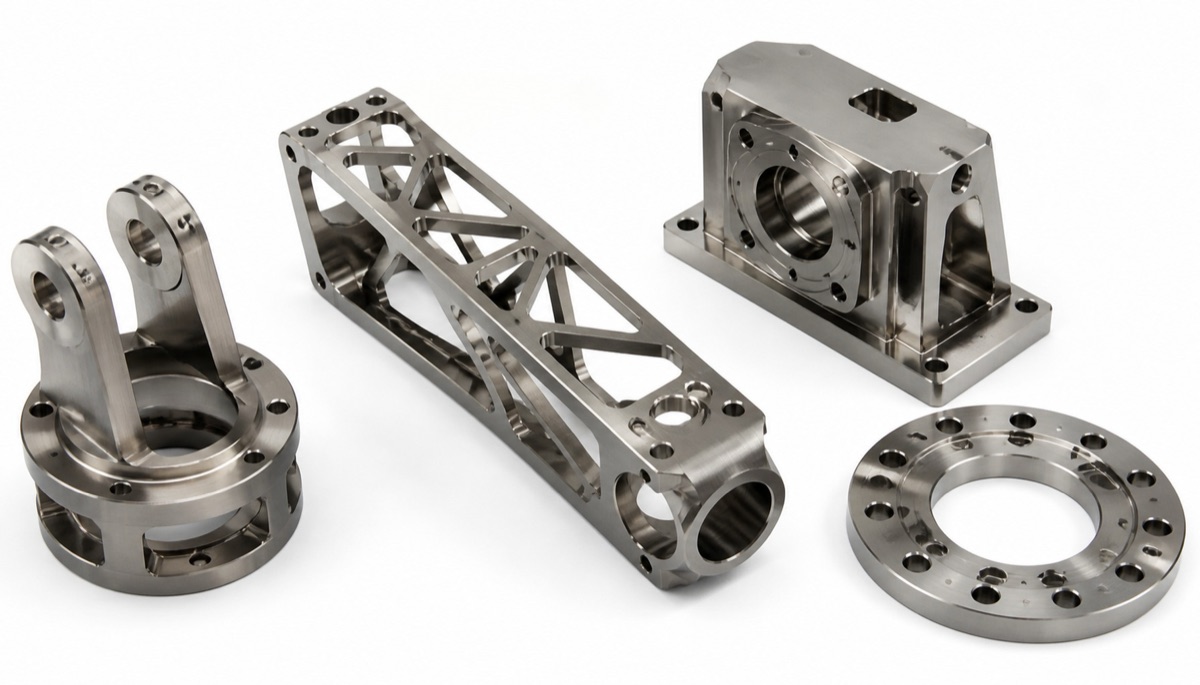
What R&D and Purchasing Should Confirm Before Ordering
- Does the part truly require TC4, or can 7075 aluminum or stainless steel meet the functional need?
- Which holes, bearing seats, end faces and thin lightweight areas are critical?
- Can the supplier adjust radii, wall thickness or process ribs according to titanium behavior?
- Are CMM reports, first-article reports and burr-removal requirements needed?
- Are cost and lead time estimated with titanium machining logic instead of aluminum prototype expectations?
Common Mistakes
The first mistake is demanding aluminum machining speed from TC4. The two materials follow different cutting logic. The second is looking only at material strength and ignoring machining cost.
The third mistake is sacrificing tool condition and surface quality for speed. Once titanium is torn or dimensions drift, rework cost is usually higher than the time saved.
Summary
TC4 titanium robot parts machine slowly because the material has poor heat conduction, high elasticity, fast tool wear and concentrated cutting heat. Slower cutting is not low efficiency; it protects the tool, dimensions and surface. OEMach is suited for early process review of small-batch high-precision titanium parts.
FAQ
Why is TC4 titanium slow to machine?
Because TC4 has poor heat conduction, high elasticity and high strength. Cutting heat concentrates near the tool edge and tool wear accelerates if parameters are pushed too high.
Do robot parts always need TC4 titanium?
No. TC4 should be evaluated when high specific strength, corrosion resistance or lightweight requirements are clear.
Why is TC4 machining more expensive than 7075 aluminum?
The cost comes from material price, tool wear, machine time, coolant control, inspection and deburring.
How can TC4 thin-wall deformation be controlled?
Use separate roughing and finishing, stable fixturing, controlled depth of cut and heat, then finish and inspect critical features late in the process.
Can OEMach machine TC4 robot parts?
Yes. OEMach can support small-batch TC4 robot joint parts, lightweight brackets, flanges and mounting seats with CNC machining and inspection records.
Ready to get a quote for your CNC machined parts?
Submit your engineering drawings to qiancj@oemach.com. We support prototype sampling and small-batch production with strict tolerance control.