
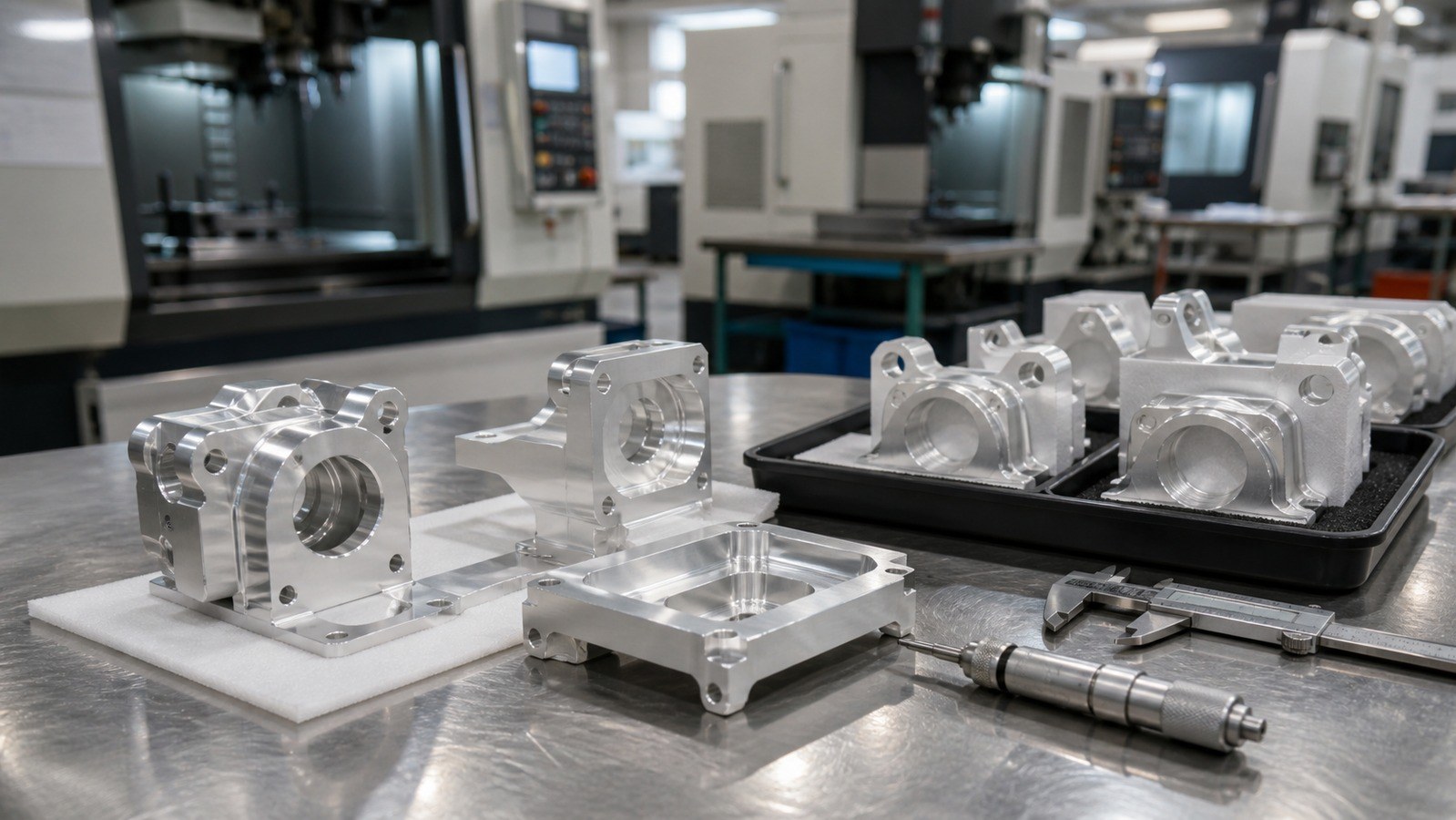
Summary:Surface defects on anodized aluminum parts rarely originate from one isolated operation. Material batches, machining texture, blasting, cleaning, rack contact, handling, and packaging all affect the delivered appearance. OEMACHreviews cosmetic zones, datum strategy, surface texture, and transport protection together before trial production.
Why defects become visible after anodizing
Minor clamp marks, inconsistent tool paths, oil residue, and local polishing can be difficult to notice on a freshly machined surface. Blasting and anodizing change how the surface reflects light, making local differences easier to see. Surface texture requirements should therefore be expressed with a defined evaluation method rather than a vague cosmetic statement. [Source: ISO 21920-1:2021]
Main dent and scratch risks
Direct stacking allows corners and trapped chips to damage adjacent parts. Hard jaws or contaminated soft jaws can also leave repeated pressure marks. A practical setup defines datum surfaces, permitted clamping zones, and protected cosmetic faces before programming begins.
When flatness, perpendicularity, or positional relationships matter, the protection plan must remain compatible with datum transfer and geometric control. [Source: ISO 1101:2017] Clean separators, dedicated trays, controlled deburring, and limited manual handling help preserve the surface through each operation.
Causes of color variation
Different material batches may react differently after surface treatment. Tool wear, cutting direction, feed behavior, local blending, blasting coverage, cleaning residue, and rack contact can also affect the visible result. Blasting may soften shallow machining texture, but it cannot reliably conceal dents or deep scratches.
For appearance-sensitive batches, the supplier and buyer should agree on material traceability, permitted rack locations, protected zones, and an approved visual reference. Surface texture should be specified and evaluated through controlled technical requirements. [Source: ISO 21920-1:2021]
Managing coating-related dimensional risk
Anodizing should be considered during the dimensional review, especially around precision bores, mating surfaces, threads, sliding features, and electrical contact areas. Fit and tolerance decisions should follow the functional relationship between mating features. [Source: ISO 286-1:2010]
General tolerances may support dimensions without individual indications when both parties have agreed on the applicable system, but they should not replace explicit control of functional dimensions. [Source: ISO 2768-1:1989]
Process recommendations
Divide the part into functional, cosmetic, clamping, and rack-contact zones. Maintain a consistent route for material, machining, blasting, cleaning, and anodizing. Use a controlled sample or agreed visual reference for color and texture decisions.
After treatment, prevent bare part-to-part contact. Packaging should remain clean and dry while constraining movement. Thin walls, sharp corners, and projecting features benefit from individual positioning and soft separation.
Service process and commitment
OEMACH follows a practical sequence: drawing review, application confirmation, cosmetic-zone definition, process planning, first-piece confirmation, batch machining, in-process checks, surface-treatment coordination, and packaging review. If functional dimensions conflict with treatment requirements, the issue is returned for confirmation before production proceeds.
Public manufacturing references such as Jingsheng Precision, Yinbaoshanxin, Haitian Precision, and online manufacturing platforms represent different production and sourcing models. Buyers should still evaluate a supplier against the actual geometry, volume, cosmetic boundary, and equipment required for the project.
FAQ
Can blasting hide scratches before anodizing?
It may soften shallow texture, but dents, deep scratches, and local repair marks can remain visible. Cosmetic review should occur before blasting.
Why can parts with the same color requirement look different?
Material condition, machining texture, blasting, cleaning, rack contact, and viewing conditions can all affect appearance.
Should precision bores and threads be anodized?
The decision depends on fit and function. Treatment or masking boundaries should be confirmed during process review. [Source: ISO 286-1:2010]
Is first-piece confirmation useful for a small batch?
Yes. It aligns datum use, machining texture, rack location, color reference, and packaging expectations before the batch continues.
What shows that a supplier can manage cosmetic parts?
Useful signs include defined protected zones, separated handling, material traceability, controlled rack locations, and packaging that prevents movement.
What should be reviewed before packing?
Review surface cleanliness, edge condition, protection of bores and threads, separation between parts, and restraint inside the package.
Scan to contact us
Contact: Allen
Email: shiziqiu@oemach.com
My whatsapp code