
CNC Machining Medical Wearable Monitoring Device Parts: Housings, Shafts, Spacers and Clips
Medical wearable monitoring devices often combine compact housings, small shafts, insulation spacers and retaining clips in a very limited assembly space. CNC machining supports these parts when prototype and low-volume builds need clear dimensions, stable fit and clean delivery.
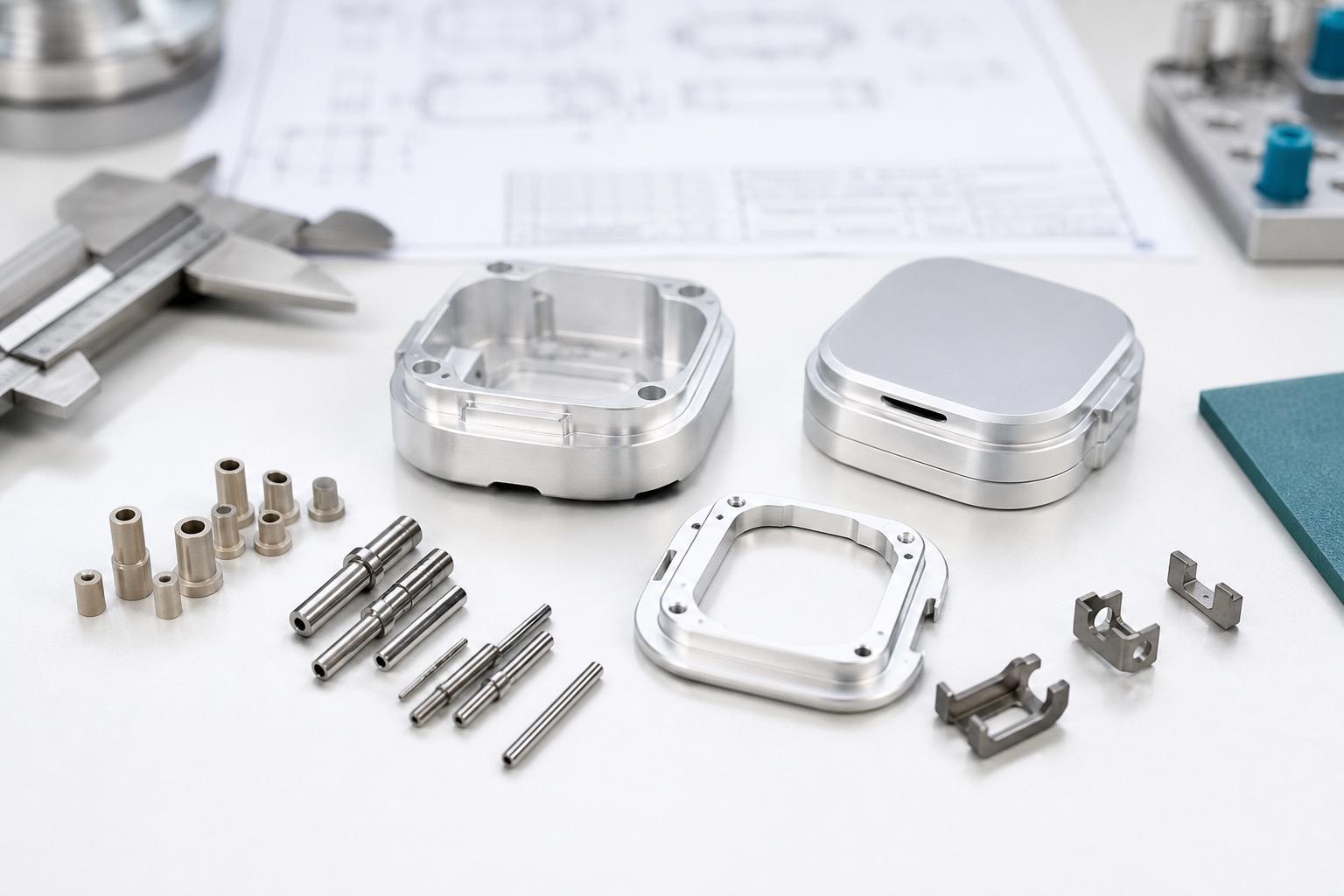
Part Scope and Materials
Typical parts include aluminum top or rear covers, stainless shafts for buttons or latch features, PEEK spacers for insulation and titanium clips for retention. Each material brings a different machining and deburring requirement.
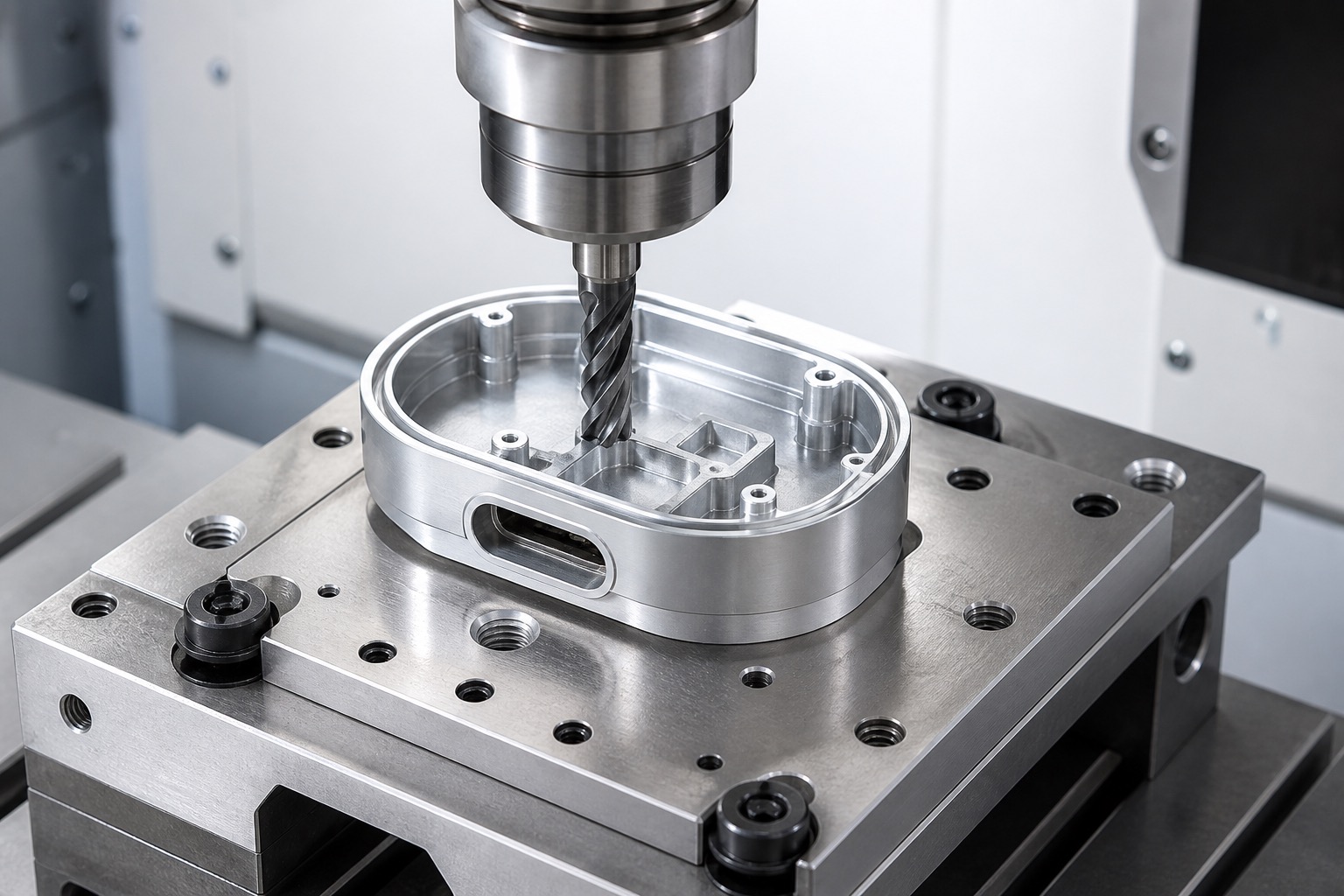
Machining Strategy
Thin-wall aluminum housings need stable fixturing, balanced roughing and finishing passes, and careful control of gasket grooves, screw bosses and port openings. Small stainless shafts need diameter consistency and burr-free ends.
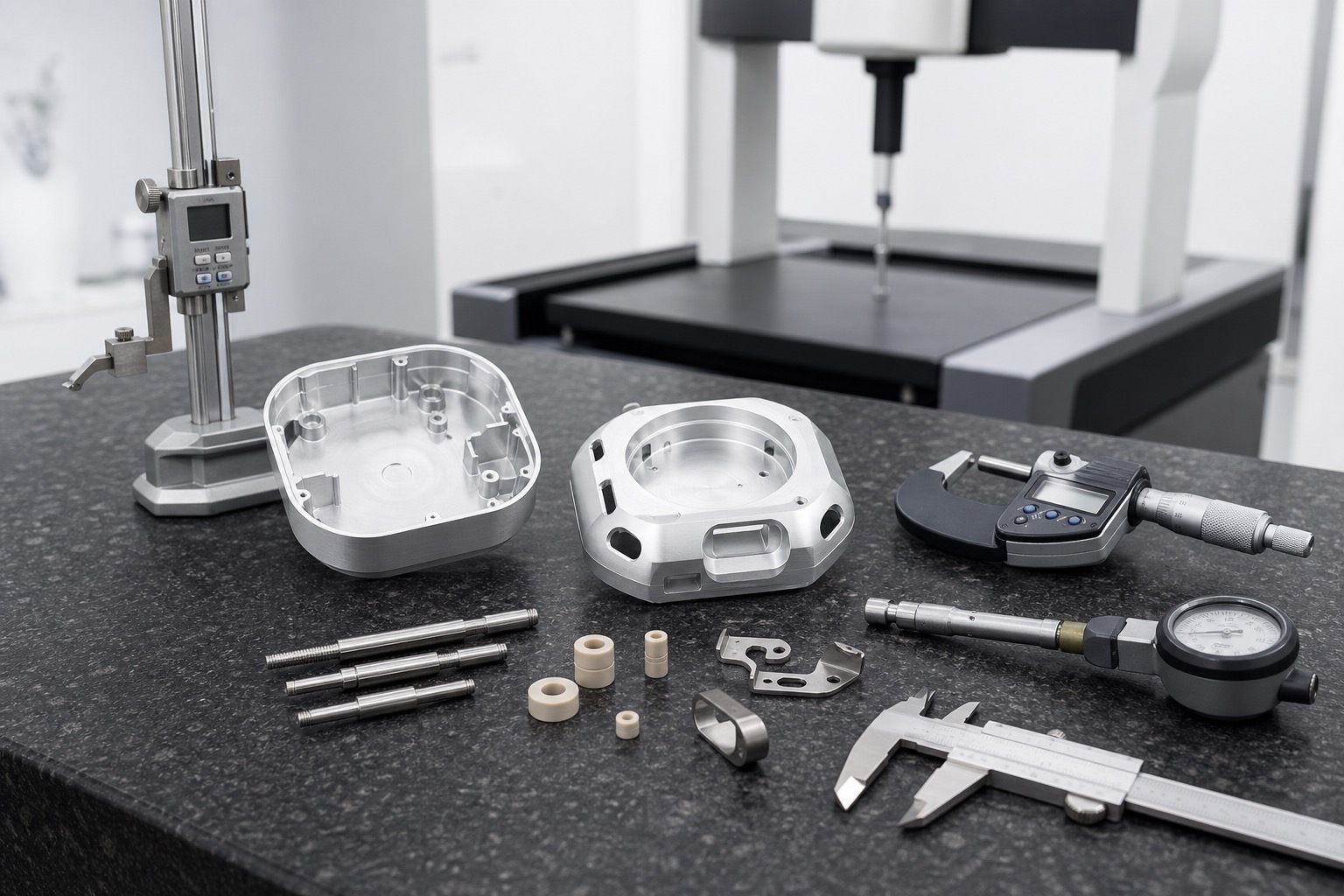
Inspection Planning
Inspection should focus on gasket groove width, port position, wall thickness, screw hole location, spacer height, shaft diameter and clip fit. CMM, height gauges, micrometers, pin gauges and thread gauges can be combined.
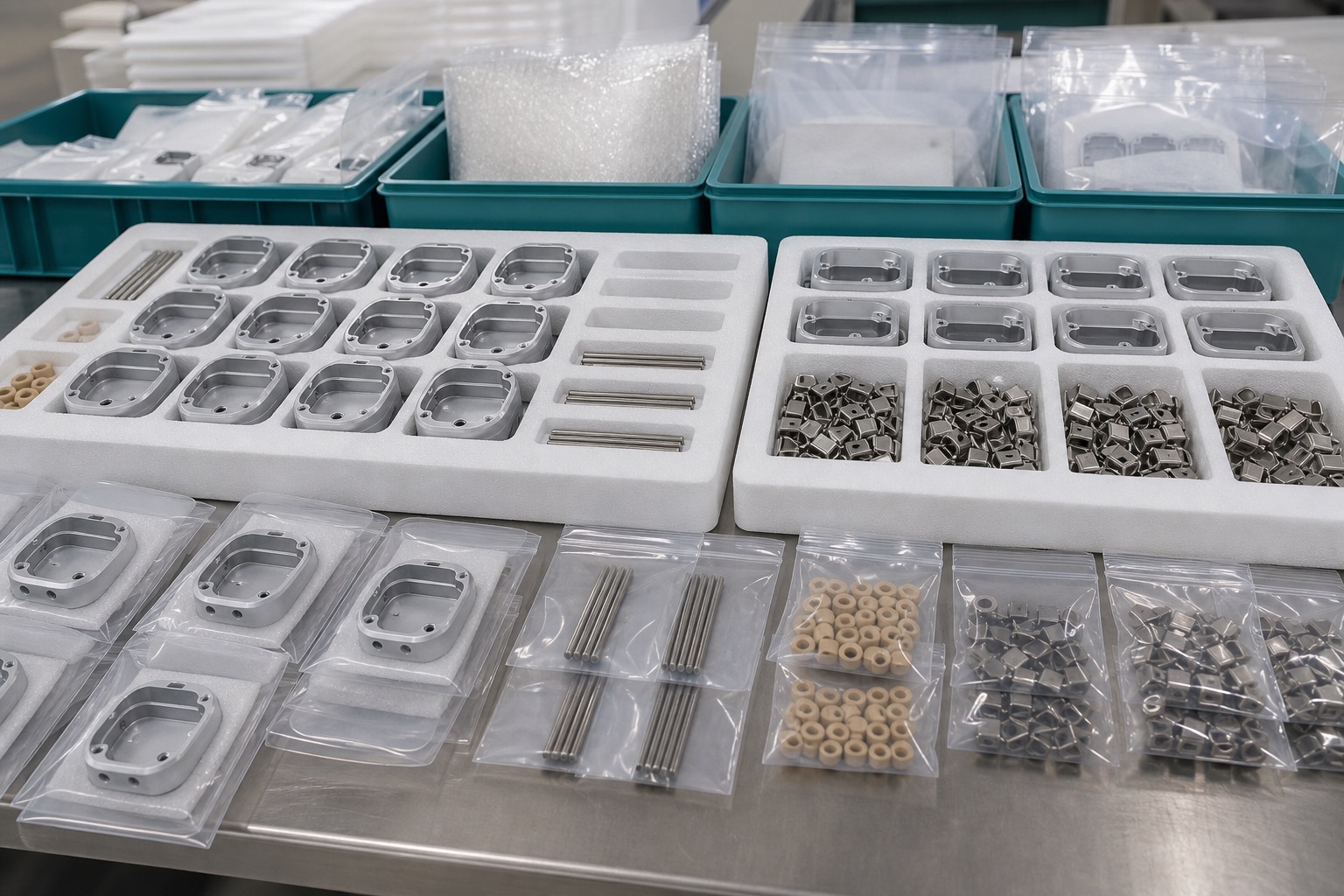
Clean Packaging
After machining and finishing, small components should be separated by part number and protected from scratches. Foam trays, clean bags and revision labels reduce mix-ups during assembly.
FAQ
Which wearable device parts are suitable for CNC machining?
Aluminum housings, rear covers, stainless shafts, PEEK spacers, titanium clips, button parts and prototype fixtures are common candidates.
Why use aluminum for wearable housings?
Aluminum offers light weight, good machinability, stable geometry and anodizing options for compact medical electronics.
What makes these parts difficult?
Thin walls, small ports, gasket grooves, tiny screws, cosmetic surfaces and mixed materials require careful planning.
How is inspection planned?
Critical features such as grooves, ports, holes, wall thickness, spacer heights and shaft diameters are checked according to drawings.
Can parts be packed for clean assembly?
Yes. Parts can be separated by part number, protected in trays or bags and labeled by revision.
What RFQ data should be sent?
CAD, 2D drawings, material, finish, quantity, critical dimensions, inspection level and packaging rules are recommended.
Email: tanghangyun@oemach.com