
CNC machining 6061 and 7075 aluminum requires different parameter and process choices because strength, hardness, heat, stress and anodizing behavior are different.
When CNC machining 6061 and 7075 aluminum, the parameter difference comes from material strength, hardness, internal stress, cutting heat and surface-treatment behavior. 6061 is balanced and has a wider machining window. 7075 is stronger and better for lightweight load-bearing parts, but it is more sensitive to tool condition, workholding and stock allowance.
For ordinary brackets, housings, fixtures and mounting plates, 6061 is often easier to manage. For high-strength connectors, robot joint brackets or lightweight load-bearing plates, 7075 is worth evaluating. The key point is that 7075 should not simply reuse the same process habits as 6061.
OEMach chooses spindle speed, feed, depth of cut, cooling, workholding and roughing/finishing separation according to wall thickness, material removal, hole accuracy, anodizing requirements and lead time.
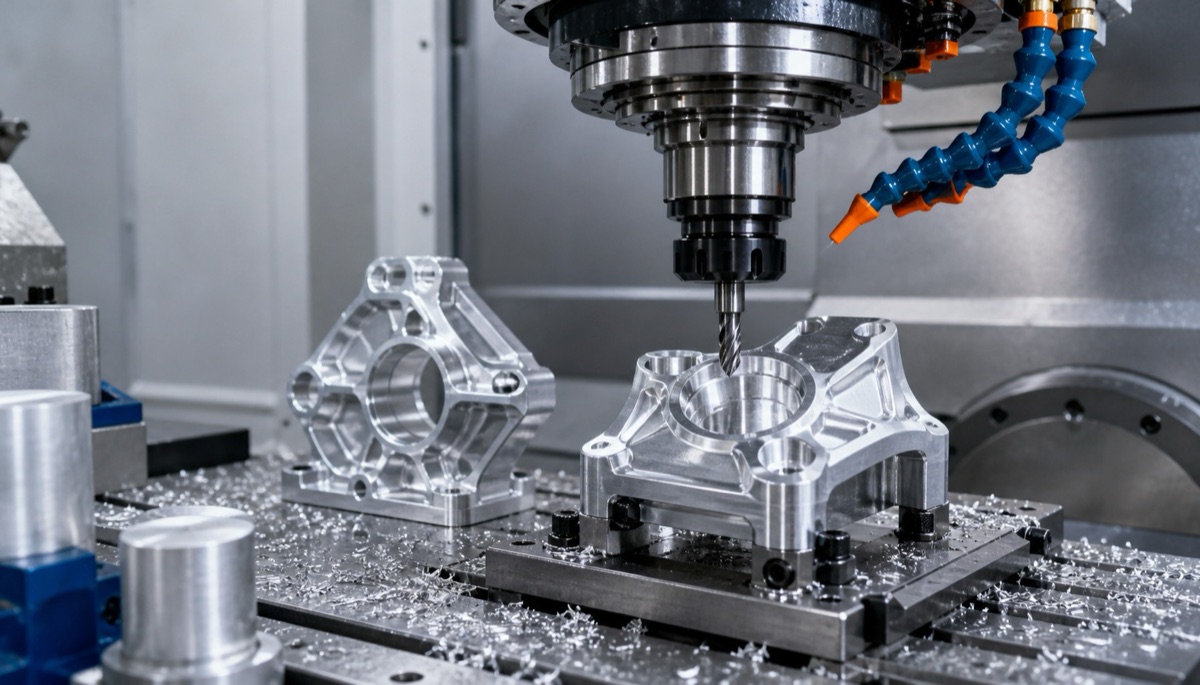
6061 vs 7075 CNC Machining Reference
This table is not a fixed recipe. Actual cutting needs adjustment based on tool diameter, machine rigidity, wall thickness and surface-treatment requirements.
| Comparison item | 6061 common behavior | 7075 common behavior | Process suggestion |
|---|---|---|---|
| Machining window | Good machinability and higher parameter tolerance | Higher strength with more visible tool load | For 7075, pay closer attention to sharp tools and chip evacuation |
| Speed and feed | Can often use more aggressive parameters | Usually needs steadier feed and depth-of-cut control | Adjust by tool, machine rigidity and surface quality |
| Internal stress | Generally easier to control | Thin-wall and high-removal parts deform more easily | Separate roughing and finishing; consider stress release when needed |
| Surface treatment | Anodized appearance is usually more stable | Anodizing color and surface state are more sensitive | Confirm color, masking and film thickness early |
| Application | General structures, housings and fixtures | High-strength lightweight load-bearing parts | Grade by function, not only material name |
6061 Has a Wider Window for General Structures
The advantage of 6061 is stability, availability, machinability and mature surface treatment. For common aluminum housings, base plates, connectors and equipment fixtures, it often balances cost, lead time and machining quality well.
6061 can usually accept more active cutting parameters, but thin-wall deformation and large pocket removal still matter. Robot housings and optical brackets with flatness or hole-position requirements still need controlled clamping force and machining sequence.
In 6061 projects, OEMach often uses separate roughing and finishing, soft-jaw workholding, a final skim on key faces and post-anodizing sampling inspection to keep small-batch consistency.
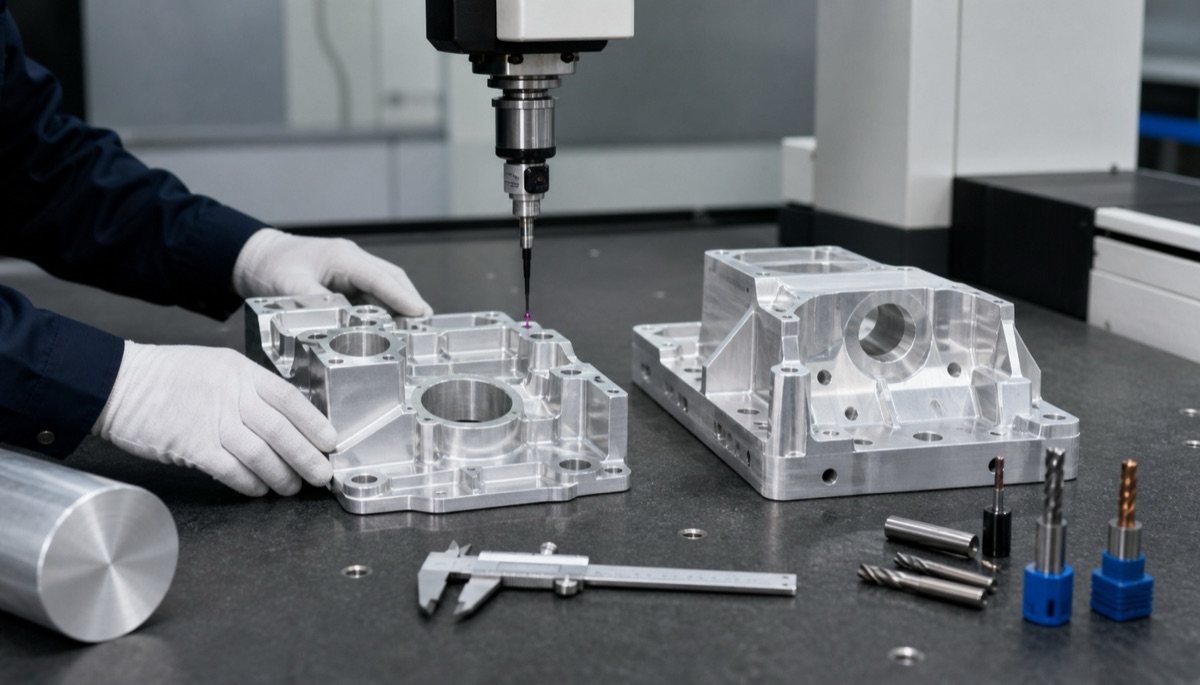
7075 Is Stronger, But More Demanding
7075 is suitable for high-strength, lightweight and load-bearing applications, but it exposes internal stress, tool wear and surface-treatment risk more readily. A thin-wall 7075 part with heavy material removal can spring back or warp if it is cut too aggressively.
Process planning for 7075 usually needs stable stock allowance, staged machining and sharp tools. Depth of cut, feed and cooling should not chase speed alone. Critical holes and seating faces are better left for later finishing so early deformation does not affect final dimensions.
If black anodizing or hard anodizing is required, color consistency and film condition should be discussed early. Procurement that asks only for material strength but not finish and inspection requirements can easily create rework later.
Same Geometry, Different Process Route
In one lightweight robot bracket review, one version used 6061 for prototype validation while another used 7075 for load testing. The geometry looked similar, but the manufacturing routes were not identical.
The 6061 version prioritized fast sampling and used efficient 3-axis machining with local reorientation. The 7075 version used 5-axis machining to reduce datum changes, released stress after roughing, finished critical holes and seating faces late, and recorded key dimensions with CMM.
The 7075 route took longer, but it gave better confidence for load testing and assembly stability. This shows why 6061 and 7075 should not be copied from one parameter sheet.
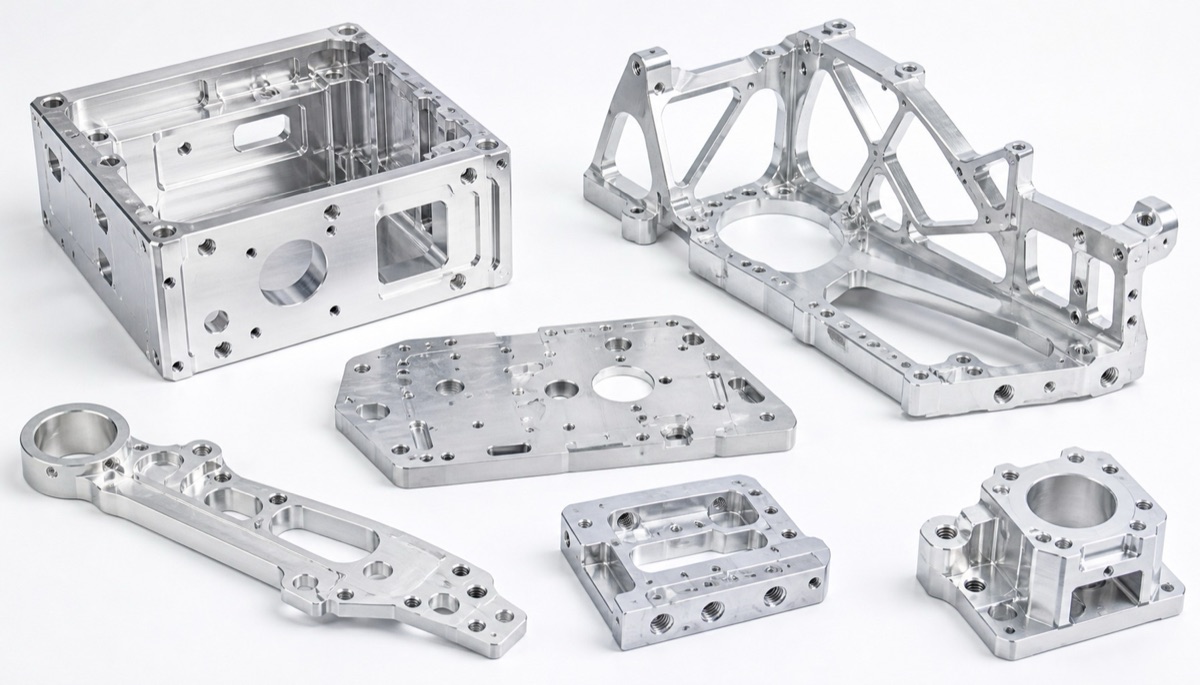
How to Write the RFQ More Clearly
State material grade and condition clearly, such as 6061-T6 or 7075-T651.
Mark critical holes, seating faces, cosmetic faces and ordinary clearance areas instead of making the whole part equally high precision.
State anodizing, color, film thickness and post-treatment reinspection requirements.
For high-removal or thin-wall parts, allow the supplier to evaluate roughing/finishing separation or stress-release steps.
Ask for first-article measured values for critical dimensions so repeat orders can keep the same process standard.
For R&D teams, choosing a CNC supplier that can explain 6061 and 7075 process differences is more reliable than looking only at the lowest quote.
Common Mistakes
The first mistake is assuming 7075 is always better because it is stronger. 7075 can also bring higher cost, deformation risk and surface-treatment sensitivity.
The second mistake is using the same toolpath and parameters for 6061 and 7075. Material behavior changes tool load and dimensional stability.
The third mistake is asking only for machining price while ignoring anodizing requirements. Surface treatment can affect final size and appearance consistency.
FAQ
Are 6061 and 7075 machining parameters very different?
Yes. 6061 has a wider machining window, while 7075 has higher strength, more internal-stress sensitivity and higher tool load.
Can 7075 use higher spindle speed to improve efficiency?
Not blindly. Tool condition, machine rigidity, depth of cut, cooling and part structure must be considered to avoid tool wear or deformation.
Is 6061 suitable for robot parts?
Yes. Many general brackets, housings and mounting components can use 6061. High-strength load-bearing structures may justify 7075.
What are the anodizing risks for 7075?
7075 is more sensitive in anodizing color and surface condition. Cosmetic parts should confirm color, film thickness, masking and reinspection early.
Can OEMach machine both 6061 and 7075?
Yes. OEMach supports CNC machining of 6061 and 7075 aluminum, 5-axis machining, thin-wall deformation control and CMM inspection.
Summary
The parameter difference between 6061 and 7075 comes from strength, hardness, internal stress, cutting heat and surface-treatment behavior. 6061 is more balanced, while 7075 suits high-strength lightweight parts but needs tighter control of tooling, allowance, workholding and anodizing risk.
Ready to get a quote for your CNC machined parts?
Submit your engineering drawings to qiancj@oemach.com. We support prototype sampling and small-batch production with strict tolerance control.