
CNC Machining Medical Sterilization Equipment Parts: Stainless Steel Rails, Brackets and Trays
Medical sterilization equipment depends on many precision metal parts that are not visible to the end user but are essential for repeatable operation. Tray rails, chamber brackets, clamp supports, guide blocks and slotted carriers must resist cleaning exposure, support airflow or drainage, and keep mechanical alignment stable during loading and maintenance. CNC machining is often selected for these parts because it can hold critical hole patterns, flatness, edge quality and repeatable assembly features across prototypes and low-volume production.
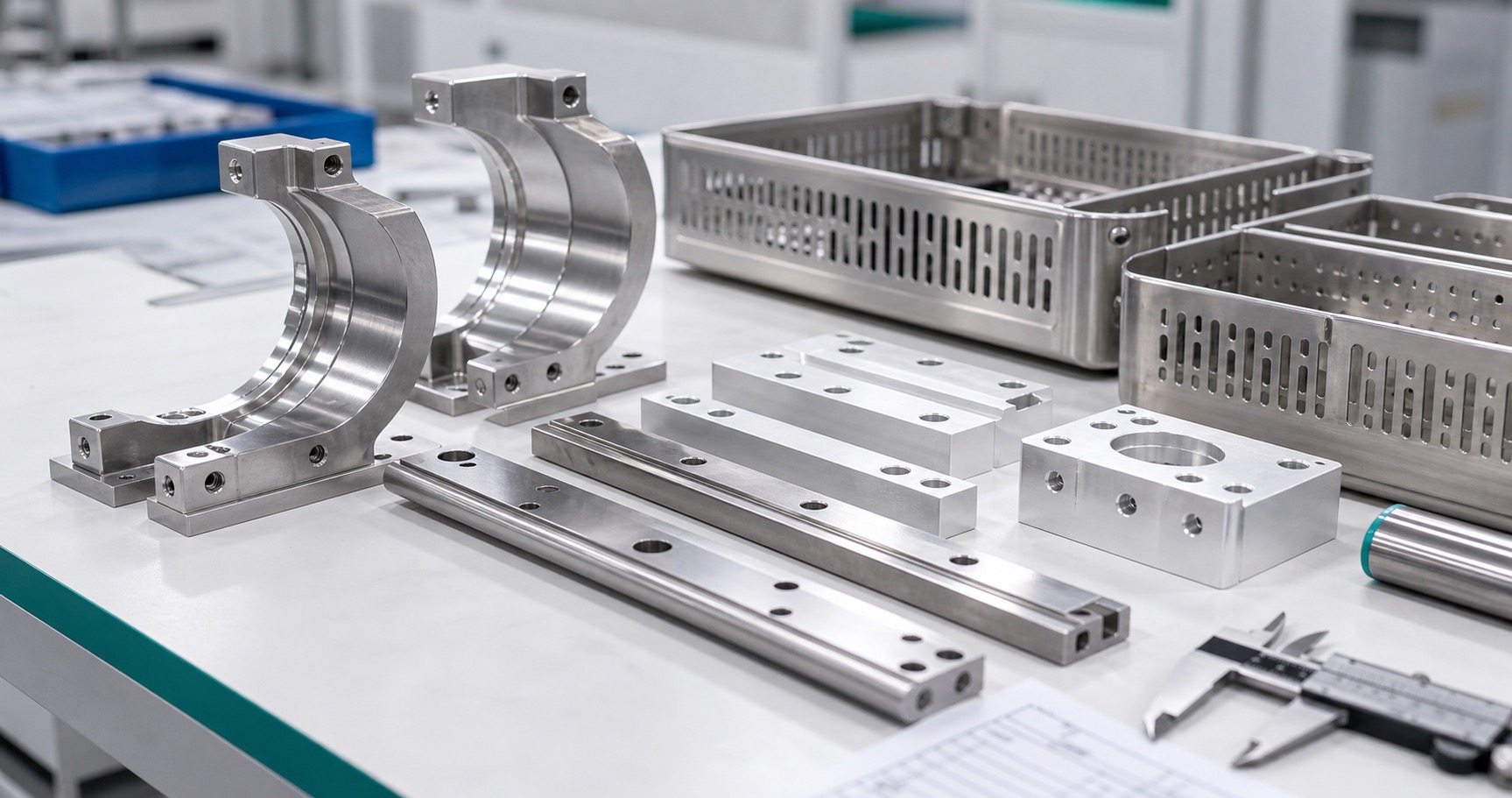
Part Families and Materials
Typical components include stainless steel tray side rails, circular clamp brackets, aluminum mounting blocks, guide bars and replacement parts for sterilization modules. 304 and 316 stainless steels are common when corrosion resistance and cleanability are important. Aluminum can be used for protected structural blocks or fixture components where weight and machining efficiency matter. Material choice should reflect heat exposure, cleaning chemistry, load, contact surfaces and the final equipment validation plan.
Slot Machining and Fixturing
Long vent slots are among the most sensitive features. Thin rails can vibrate during milling, and slot edges can form burrs if the tool path and support method are weak. A stable fixture, balanced roughing and finishing passes, proper cutter engagement and controlled feed rate help maintain slot geometry. When parts are thin or long, machining sequence should reduce stress and prevent bowing after unclamping.
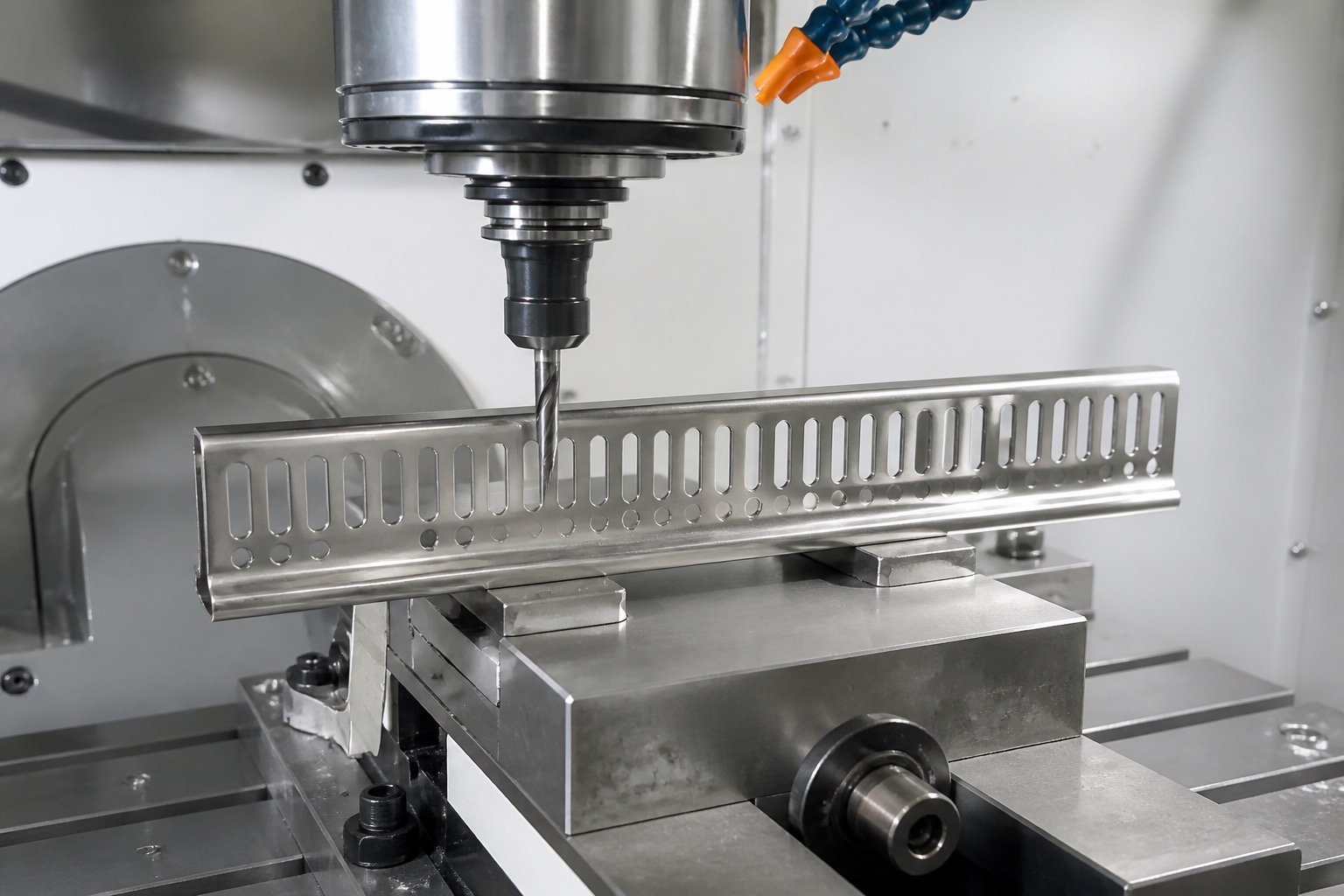
Edge Quality and Cleanability
For sterilization equipment, burrs are not only a cosmetic concern. Sharp internal edges can interfere with cleaning, damage gloves, trap residue or scratch mating parts. Controlled deburring should remove sharp edges while preserving functional dimensions. Slot openings, threaded holes, cross holes and guide surfaces require special attention because they are easy to over-round or leave partially finished.
Inspection Strategy
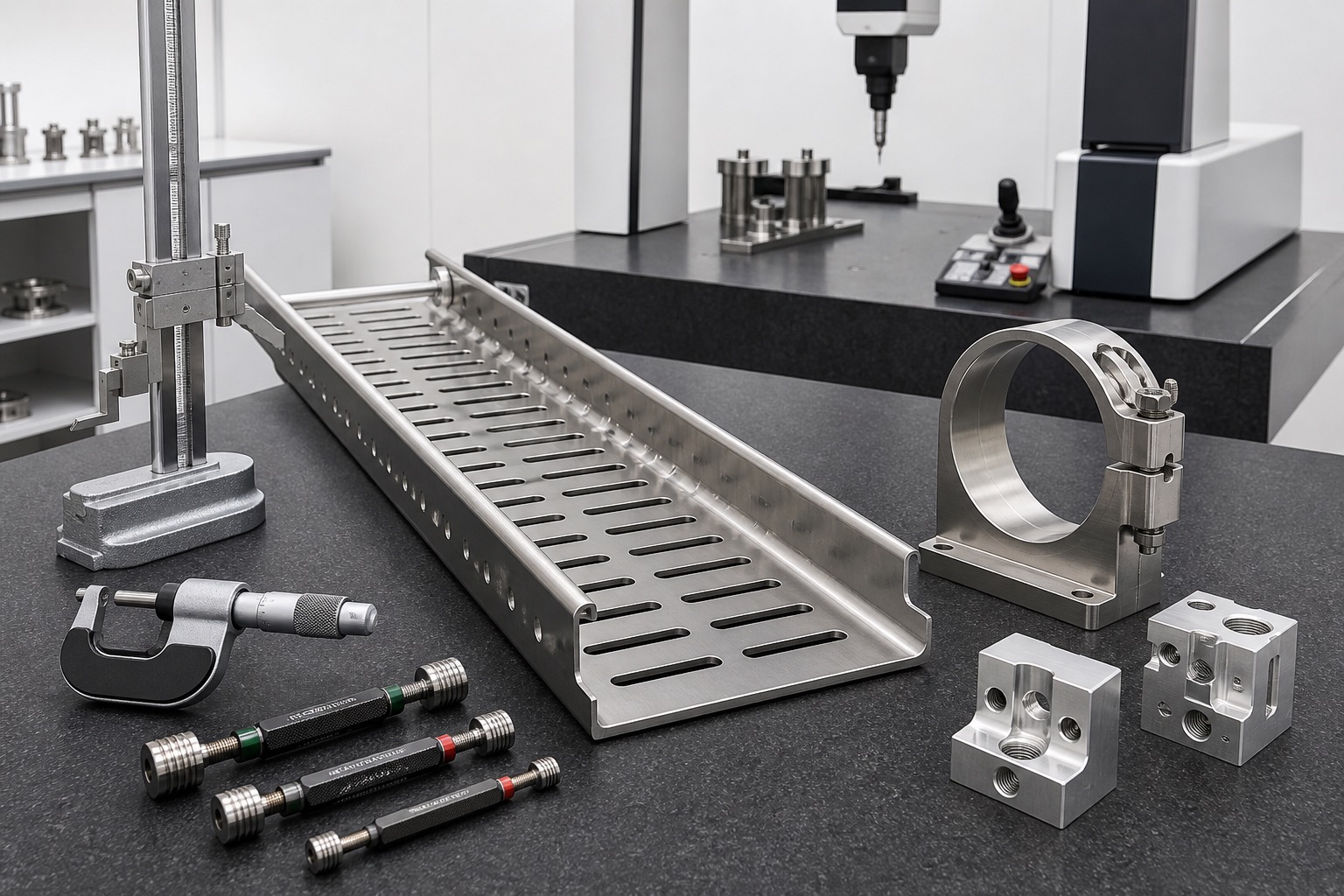
Inspection should focus on the features that affect assembly, airflow, drainage and repeated use. CMM inspection can verify hole patterns, bracket geometry and datum relationships. Height gauges, micrometers, plug gauges and thread gauges handle flatness, thickness, bore size and threaded features. First article inspection is useful before producing a larger batch, especially when the drawing contains long slots, thin walls or welded assembly interfaces.
Finishing, Packaging and Delivery
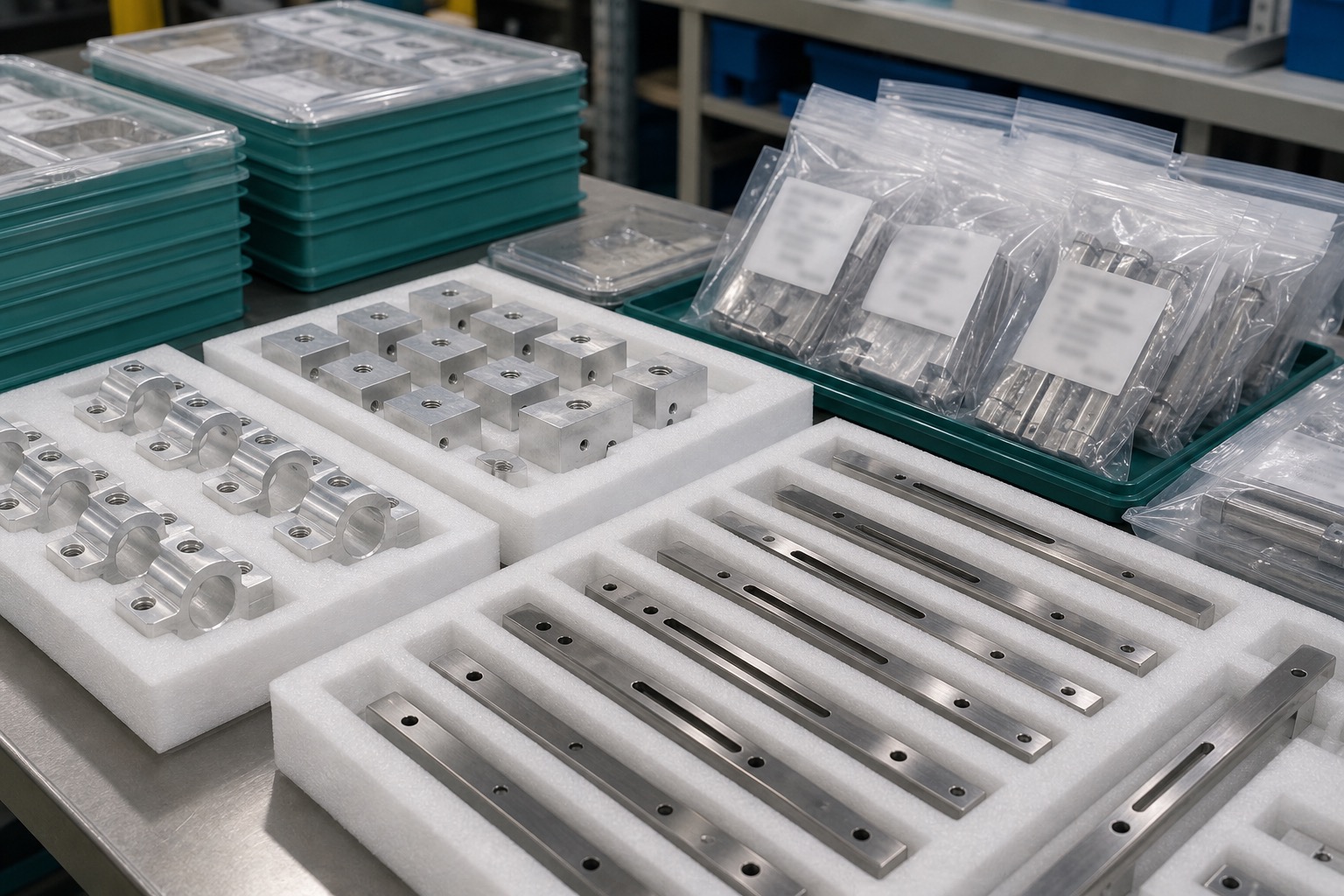
Surface finishing may include passivation for stainless steel, bead blasting for consistent appearance or protective handling steps after machining. Finished parts should be separated by part number and revision, protected from scratches, and packed in trays or sealed bags. Clean, organized delivery helps the equipment manufacturer move from incoming inspection to assembly with fewer delays.
FAQ
Which sterilization equipment parts are suitable for CNC machining?
Slotted tray rails, chamber brackets, guide rails, mounting blocks, clamp brackets and prototype fixtures are suitable when hole position, edge quality and repeatability matter.
Why is stainless steel common for sterilization equipment?
Stainless steel offers corrosion resistance, cleanability and dimensional stability under repeated cleaning or heat exposure, depending on the selected grade and process.
What features need special control?
Long vent slots, mounting hole patterns, flat sealing or seating faces, threaded interfaces, radiused edges and burr-free openings usually need special process control.
How are burrs controlled on slotted rails?
Tool choice, cutting sequence, support fixtures, light finishing passes and manual or mechanical deburring standards are combined to avoid sharp internal slot edges.
What inspection documents can be requested?
First article reports, CMM inspection, thread gauge records, material certificates and surface finish checks can be prepared according to project requirements.
What should buyers send for a quote?
CAD files, 2D drawings, material grade, finish, quantity, critical dimensions, inspection level, packaging rules and target delivery date help build an accurate quote.
Email: tanghangyun@oemach.com