
For custom CNC parts, the fastest accurate quote comes from sending the model, drawing, material, quantity, tolerance, finish, inspection and delivery requirements together.
The quickest way to get an accurate quote for custom CNC parts is not to send repeated reminders. It is to send complete RFQ information at the beginning: 3D model, 2D drawing, material, quantity, finish, tolerances, inspection requirements and target delivery date.
A screenshot, approximate size or short message such as “please estimate this part” can only produce a rough range. Real cost depends on details such as deep pockets, thin walls, hole-position tolerance, anodizing, CMM reports, urgent delivery and mating components.
OEMach treats RFQ communication for custom parts as an early DFM review. When the information is complete, the quote is faster, clearer and closer to the real delivery cost.
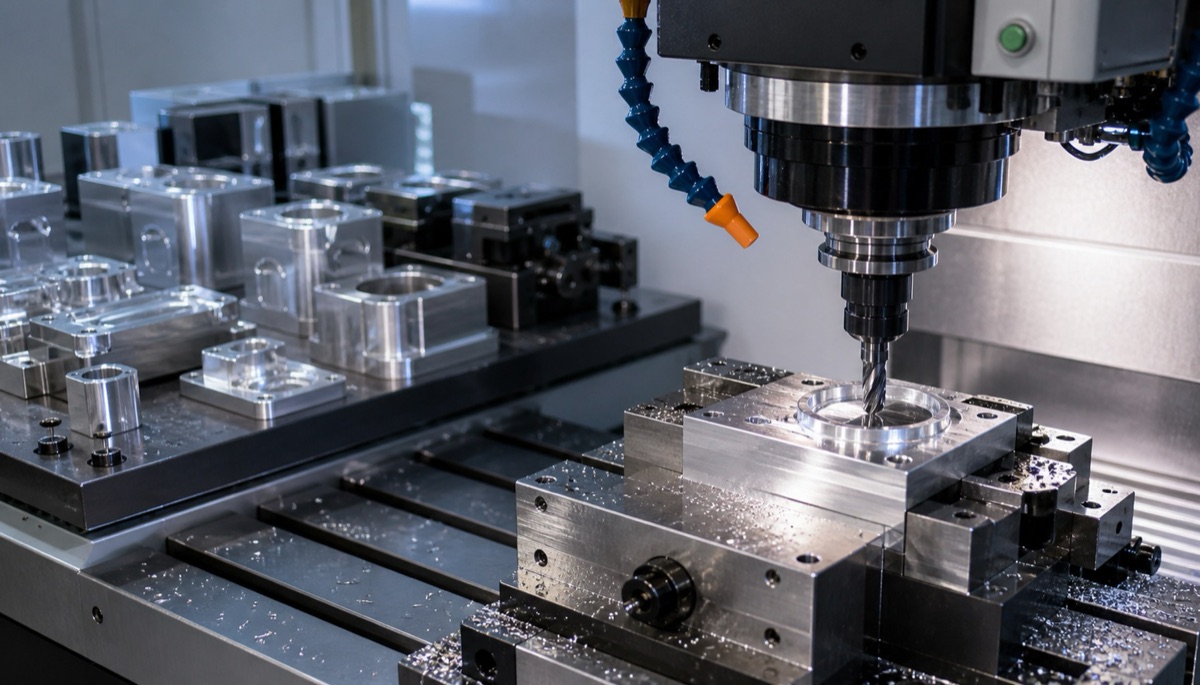
RFQ Checklist for Faster Accurate Quotes
| Information | Why it matters | Recommended format | If it is missing |
|---|---|---|---|
| 3D model | Shows geometry, tool access, workholding and machining difficulty | STEP, STP, Parasolid or native CAD export | The supplier can only estimate structure and may miss machining time |
| 2D drawing | Defines tolerances, GD&T, roughness and technical notes | PDF or DWG with critical dimensions marked | High-precision features and inspection cost may be underestimated |
| Material and quantity | Affects material cost, procurement time and setup amortization | Grade, temper or state, quantity and buyer-supplied material status | The price range and lead time may change later |
| Surface treatment | Affects thickness, appearance, outsourcing, masking and reinspection | Anodizing, blasting, nickel plating, black oxide, passivation or heat treatment | Late additions can change price and schedule |
| Inspection and delivery | Determines CMM, first-article report and production priority | Report needs, urgency, packing and delivery window | The supplier can only quote a standard machining assumption |
3D Models Show Geometry; 2D Drawings Define Acceptance
The 3D model helps the machining team understand shape, pocket depth, thin walls, chamfers, hole direction and possible setup orientation. Without a model, complex custom parts are hard to evaluate for tool reach, refixturing, 4-axis needs or 5-axis needs.
The 2D drawing defines how the part will be accepted. Critical dimensions, flatness, perpendicularity, coaxiality, position tolerance, roughness and cosmetic requirements should be visible on the drawing.
A model without a drawing can underestimate tolerance and inspection effort. A drawing without a model can underestimate machining time. Together, they are the foundation of a fast and reliable quote.
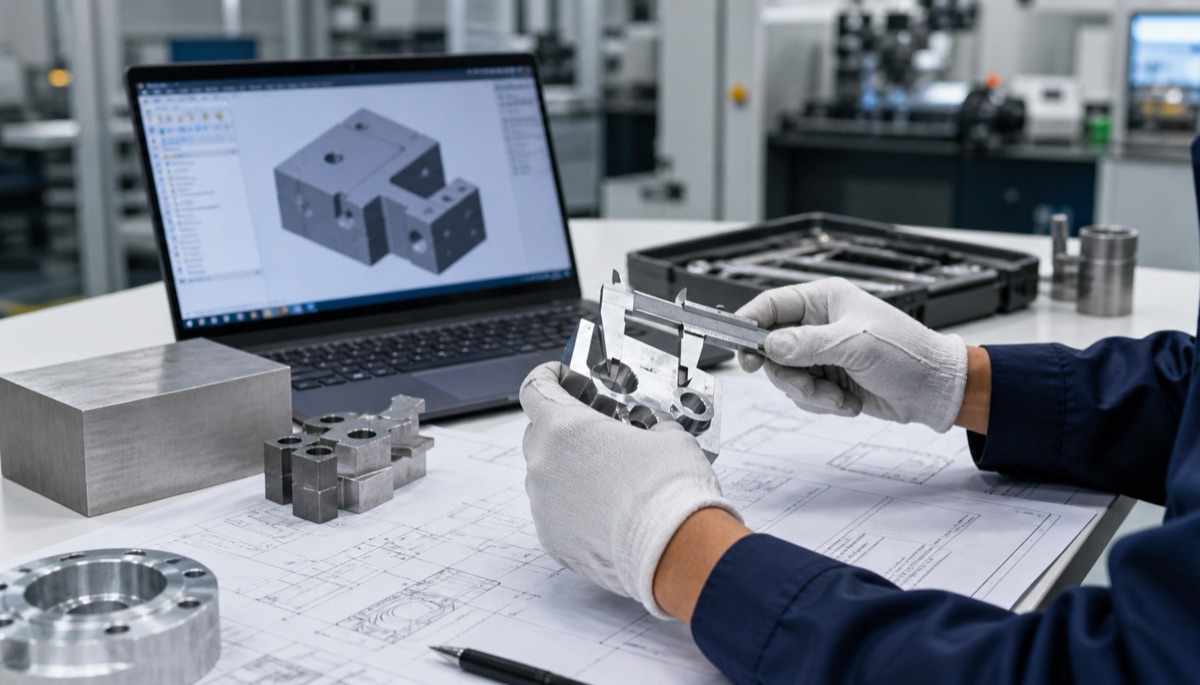
Material, Quantity and Finish Change the Cost Structure
Custom part cost is not only machine time. Material grade, blank size, quantity, urgency and surface treatment all change the quotation. A 6061 bracket and a 7075 bracket may look similar, but material price, stress behavior and finishing requirements can differ.
Quantity is also important. A single prototype and a 20-piece pilot batch do not share programming, fixture and first-article inspection costs in the same way. If the buyer only asks for “one price,” the supplier has to guess whether the quote is for a prototype or a small-batch unit price.
Surface treatment should be stated early. Anodizing, blasting, black oxide, nickel plating, passivation and heat treatment can affect both final dimensions and delivery timing. Masking and post-treatment inspection should also be clarified before quotation.
Clear Tolerances Reduce Quote Changes
Many quote revisions happen because tolerances and inspection were unclear at the RFQ stage. Ordinary outer profiles, critical holes, datum faces and cosmetic surfaces carry very different cost implications.
If key dimensions require ±0.005 mm or ±0.01 mm control, the supplier may need a more stable process, dedicated workholding and measured inspection records. CMM, full-dimensional reports or first-article reports also add inspection time.
OEMach recommends marking only the critical dimensions tightly and leaving non-functional features practical. This makes the quote more transparent and exposes manufacturing risk earlier.
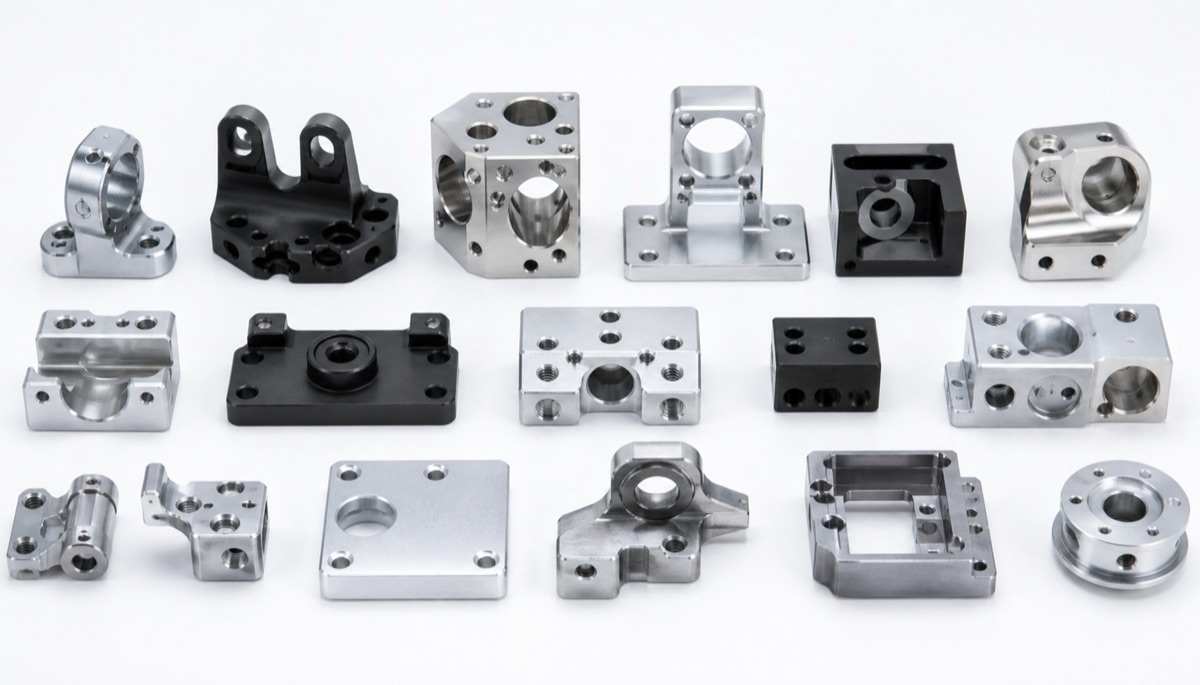
Copyable RFQ Format
Part name and application: equipment or module, load-bearing role, assembly role and cosmetic visibility.
Files: 3D model, 2D drawing, revision number and whether DFM feedback is allowed.
Material and quantity: grade, temper or state, quantity, batch split and whether material is supplied by the buyer.
Surface treatment: anodizing, blasting, plating, black oxide, heat treatment, color and cosmetic expectations.
Precision and inspection: critical dimensions, tolerances, GD&T, CMM or first-article report requirements.
Delivery and packaging: target delivery date, urgency and any scratch-prevention or clean-packaging requirement.
FAQ
Is a 3D model required for a custom CNC quote?
For complex parts, it is strongly recommended. Without the model, toolpaths, workholding, deep pockets and refixturing difficulty are hard to evaluate.
Can a supplier quote from only a 2D drawing?
Simple parts can be estimated, but complex parts should include both a model and drawing so machining time and tolerance risk are not missed.
Why state surface treatment before quotation?
Finishing affects outsourcing cost, lead time, coating thickness, masking and final fit dimensions.
Does urgent delivery affect the quote?
Yes. Rush work may require schedule insertion, overtime machining or expedited outside processing, which can affect price and delivery confidence.
Can OEMach quote after a DFM review?
Yes. OEMach can review material, tolerances, surface treatment, inspection and manufacturability before confirming a quote.
Summary
Fast accurate RFQs for custom CNC parts depend on complete information. Send the model, drawing, material, quantity, finish, tolerance, inspection and delivery requirements together. The more complete the input, the less guesswork remains in process planning and pricing.
Ready to get a quote for your CNC machined parts?
Submit your engineering drawings to qiancj@oemach.com. We support prototype sampling and small-batch production with strict tolerance control.