
Choosing 2024, 6061 or 7075 aluminum for robot parts depends on strength, weight, machining stability, anodizing, cost and delivery risk.
When selecting aluminum for robot parts, 2024, 6061 and 7075 should not be judged by strength alone. Each grade brings a different balance of strength, toughness, machining stability, surface treatment behavior, cost and lead time.
For ordinary brackets, housings, cable clamps and low-load mounting plates, 6061 is often the most balanced choice. For lightweight load-bearing links, joint connectors and high-strength brackets, 7075 deserves evaluation. For certain fatigue-sensitive or aerospace-style structures, 2024 can be considered, but corrosion protection and finishing requirements must be reviewed early.
OEMach usually starts by asking where the part is used, whether it carries load, whether it is visible, whether it will be anodized, and whether critical features require ±0.005 mm to ±0.02 mm control. Material choice and machining route should be decided together.
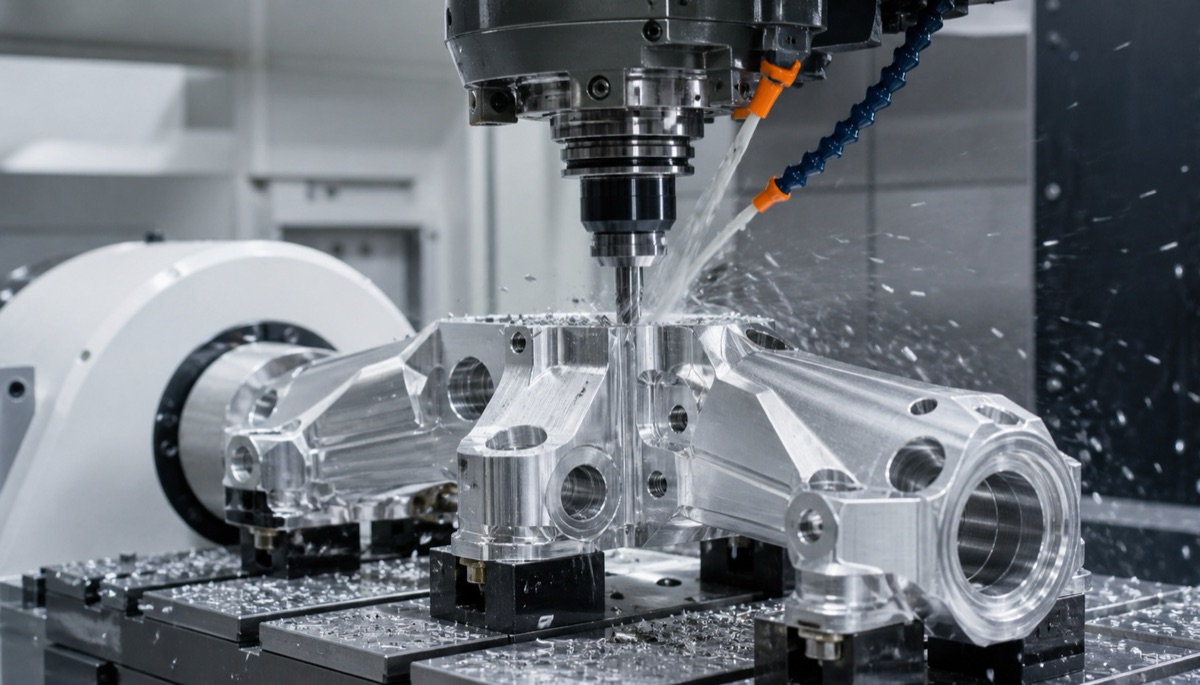
How 2024, 6061 and 7075 Differ
| Material | Typical robot applications | Main advantages | Machining and sourcing notes |
|---|---|---|---|
| 6061 | Housings, brackets, fixtures, ordinary connection plates | Balanced properties, good machinability, stable supply and common anodizing behavior | Strength is not the highest; thin walls and large pockets still need deformation control |
| 7075 | Lightweight load-bearing links, joint connectors, high-strength support plates | High strength-to-weight ratio for structural parts | Higher cost; internal stress and anodizing color variation should be evaluated |
| 2024 | Specific load-bearing parts and fatigue-sensitive structures | Good strength and machinability in the right application | Lower corrosion resistance than 6061; coating and protection need more care |
| Material temper | T6, T651 and other condition choices | Affects strength, stress level and machining stability | Confirm temper before quotation, not only the alloy number |
| Alternatives | Prototypes, pilot builds, cost-down or urgent sourcing | Can choose a more available grade by function | Substitution must be validated by strength, assembly, finish and inspection requirements |
6061 Fits Many General Robot Structures
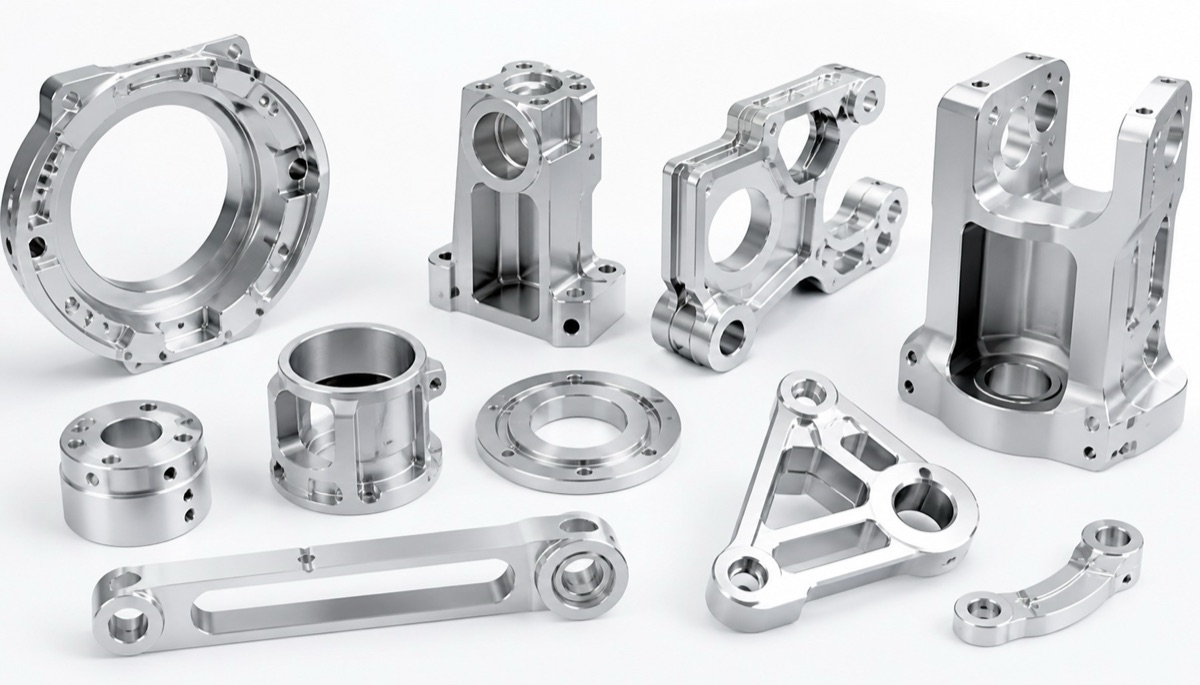
6061 is popular because it is balanced. It machines well, is widely available, and is commonly used with clear anodizing, black anodizing, blasting and cosmetic finishes. For robot covers, sensor brackets, mounting plates, cable supports and non-heavy-load connectors, 6061 often balances cost, delivery and machining stability.
It is not a universal answer, though. Thin housings, large lightening pockets, long arms and multi-sided hole patterns can still warp during machining. A stable process may use roughing and finishing separation, soft jaws, vacuum holding, temporary ribs or staged machining.
If 6061 is chosen only because it is cheaper, the load path should still be reviewed. Shock, vibration and joint loads may require a thicker structure, ribs or a stronger alloy.
7075 Offers Strength, But It Is Not Automatically Better
7075 is often considered for lightweight load-bearing robot components because it offers high strength at low weight. Joint links, high-load adapter plates, reduced-weight brackets and end-effector load plates may all be candidates.
The tradeoff is process sensitivity. Internal stress, thin-wall material removal, toolpath balance, clamping pressure and anodizing appearance can all affect delivery. A part may pass as a first sample but become unstable in small batches if the route is not controlled.
For 7075 projects, OEMach often recommends separated roughing and finishing, more balanced material removal, refinish cuts on critical faces, and inspection records for bearing bores, locating holes and mounting datums. Anodizing thickness and appearance should be confirmed before production.
2024 Should Be Reviewed With Corrosion and Fatigue in Mind
2024 is not the default robot aluminum for most projects, but it may appear in specific load-bearing or fatigue-related designs. It can offer good strength and cutting performance, but its corrosion behavior requires more planning than 6061.
If a drawing specifies 2024, buyers should confirm material temper, heat-treatment condition, corrosion protection and downstream surface treatment. For robot projects, material performance is only useful when it also supports assembly stability, repeatability and availability.
When 2024 delivery or finishing risk is high, it can be worth discussing whether 7075 or reinforced 6061 is a better route. This is not a simple grade swap; it should be validated against load, weight, machining, surface treatment and inspection.
A Practical Material Review Method
In one lightweight robot link review, the original drawing used 6061. After checking wall thickness, alternating load at both ends and a large lightening pocket, the process team proposed evaluating a high-strength version while keeping a 6061 version for assembly validation.
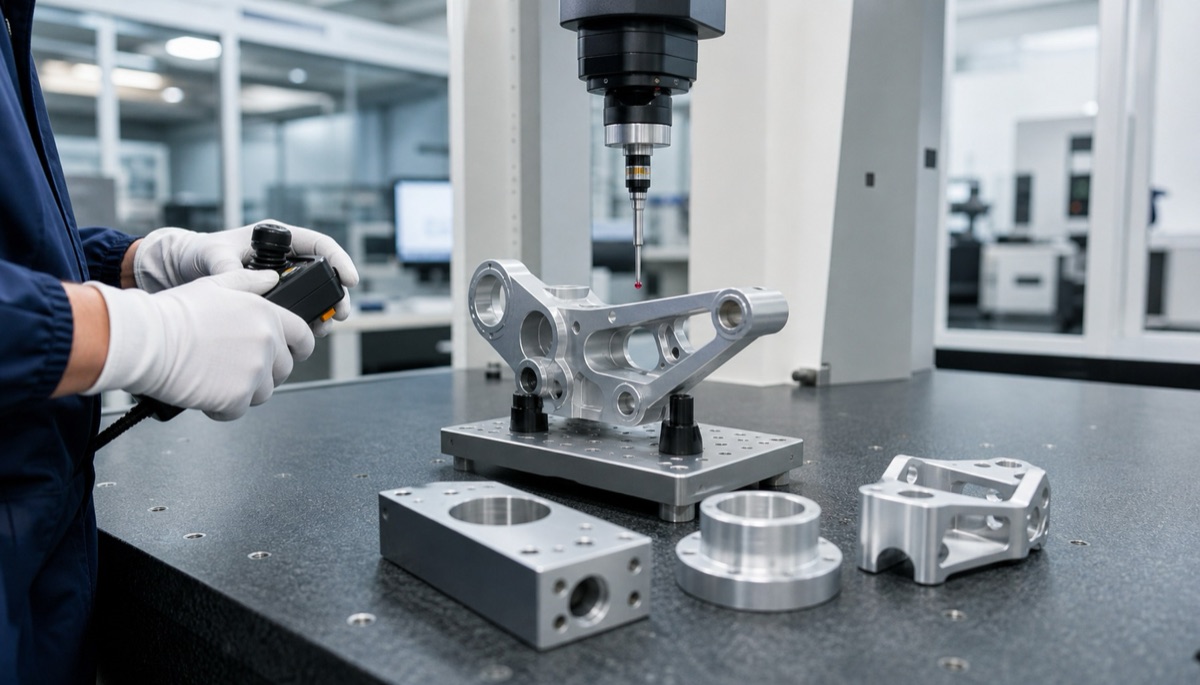
The process used multi-axis machining to reduce refixturing, stress-release time after roughing, and final machining on locating holes and mating faces. Critical hole positions and fit features were recorded with measured values rather than only a pass result.
This kind of review does not force one material for every case. It connects material choice, CNC route and inspection plan so prototype decisions can lead into a more stable pilot batch.
Questions Before RFQ
Is the part load-bearing, cosmetic, fixed, or a lightweight moving component?
Will it require clear anodizing, black anodizing, blasting, hard anodizing or electroless nickel plating?
Do critical holes, bearing seats or locating faces require ±0.005 mm, ±0.01 mm or ±0.02 mm control?
Is the material temper clear, such as T6 or T651?
Will the first article require CMM reporting, post-finish reinspection and assembly feedback records?
FAQ
Should robot aluminum parts use 6061 or 7075?
6061 is common for general brackets, housings and mounts. 7075 is worth evaluating for high-strength lightweight load-bearing parts, depending on load, wall thickness, finish and cost.
Is 2024 aluminum suitable for robot parts?
It can be suitable for certain load-bearing or fatigue-sensitive parts, but corrosion protection, surface treatment and material availability should be checked carefully.
Why is 7075 machining usually more expensive?
7075 material costs more and is more sensitive to stress release, thin-wall deformation, anodizing appearance and inspection requirements.
Can 6061 be used for high-precision robot components?
Yes. With suitable structure, stable workholding and clear critical dimensions, 6061 can be used for many precision brackets and mounting parts.
Can OEMach help with aluminum material selection?
Yes. OEMach can review drawings, load requirements, quantity, surface treatment and inspection needs to recommend 2024, 6061, 7075 or practical alternatives.
Summary
Selecting 2024, 6061 or 7075 for robot aluminum parts is not a simple strength ranking. The right choice depends on load, weight, deformation risk, anodizing behavior, cost, lead time and inspection requirements. Material selection should be reviewed together with CNC process planning and tolerance control.
Ready to get a quote for your CNC machined parts?
Submit your engineering drawings to qiancj@oemach.com. We support prototype sampling and small-batch production with strict tolerance control.