
Collaborative and industrial robot parts are both CNC machined, but their machining priorities differ in load, safety, weight, rigidity, surface finish and inspection.
Collaborative robot parts and industrial robot parts are both part of robot CNC machining, but they should not be treated as the same design problem. The difference comes from how the robot is used. Collaborative robots work closer to people, so they emphasize lightweight structures, rounded edges, lower inertia, consistent appearance and easier maintenance. Industrial robots usually work at higher payload, higher duty cycle and higher impact levels, so rigidity, wear resistance and long-term dimensional stability become more important.
If a collaborative robot part is designed like a heavy industrial robot component, the result may be unnecessary weight and cost. If an industrial robot part is designed like a light cosmetic cover, stiffness and service life may suffer.
OEMach starts by understanding whether the part serves a collaborative, light-duty environment or a high-load industrial environment. That decision affects material, wall thickness, machining route, surface treatment, burr control and inspection focus.
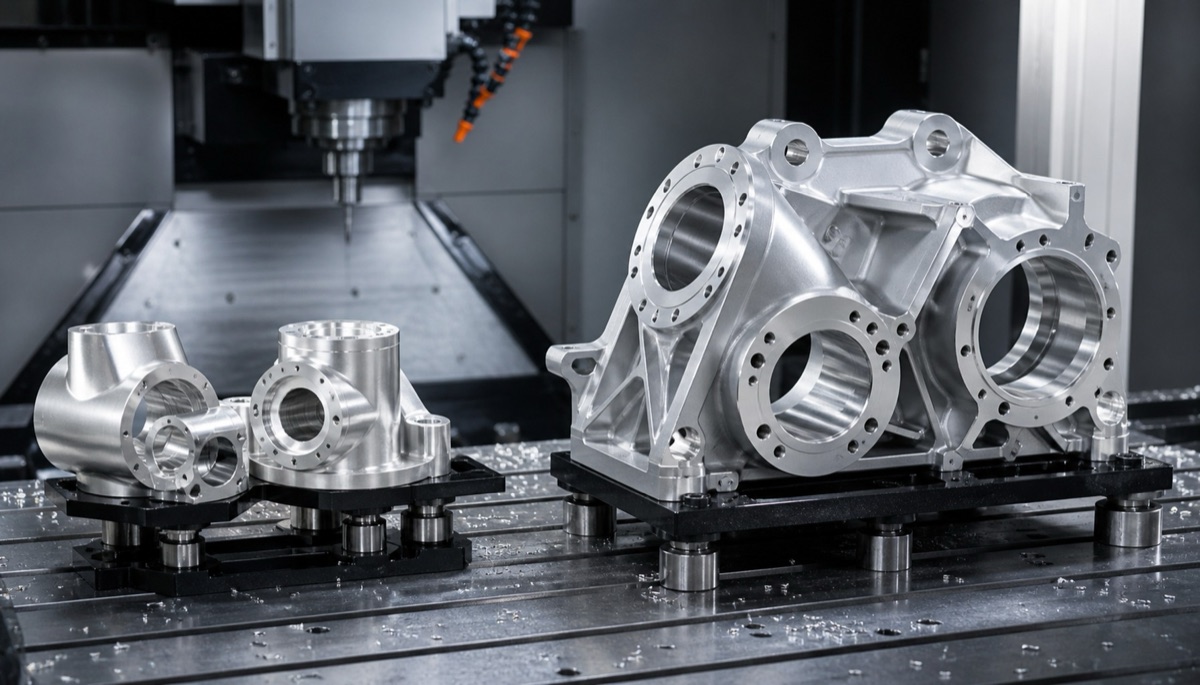
Key Differences in Robot Part Machining
| Dimension | Collaborative robot parts | Industrial robot parts | Machining focus |
|---|---|---|---|
| Load and stiffness | Medium or low load, low inertia, lightweight structure | High load, high stiffness and impact resistance | Wall thickness, ribs, material strength and bearing-seat stability |
| Human contact | Rounded edges, safe touch surfaces and appearance consistency matter more | Appearance is secondary to function and durability | Deburring, edge breaks, surface feel and pinch-risk control |
| Material choice | Aluminum alloys, engineering plastics and lightweight hybrid structures are common | High-strength aluminum, steel, stainless steel, castings or heat-treated parts are common | Balance strength, weight, treatment and cost |
| Inspection focus | Mounting planes, thin-wall pockets, cosmetic consistency and assembly ease | Bearing bores, gearbox hole patterns, coaxiality and face runout | Inspection datums must follow functional load paths |
| Surface treatment | Anodizing, blasting, matte texture and consistent visible finish | Black oxide, nickel plating, hard coating, corrosion and wear resistance | Final dimensions, masking and function surfaces after treatment |
Collaborative Robots Need Lightweight and Safe Contact
Collaborative robots often operate in laboratories, work cells and human-machine collaboration areas. Their components should reduce inertia and collision risk while keeping assembly stable. Joint covers, end flanges, sensor brackets, cable mounts and lightweight frames often use aluminum alloys or engineering plastics.
Machining these parts requires attention to thin-wall deformation, cosmetic scratches, consistent chamfers and surface feel after anodizing or blasting. Many collaborative robot parts are both functional parts and visible parts that users may touch.
For this reason, strength is not the only target. Edge rounding, burr removal, consistent anodized appearance, weight-reduction pockets and convenient assembly all influence the final product experience.
Industrial Robots Need Rigidity and Long-Term Durability
Industrial robots face repeated motion, higher payload and long duty cycles. Gearbox housings, heavy-load brackets, base flanges, bearing seats and motor covers must control hole patterns, coaxiality, face runout and contact surfaces.
Materials may include high-strength aluminum, steel, stainless steel, castings or heat-treated components. The machining route may need roughing and finishing separation, stress relief, heat treatment, boring, grinding and CMM inspection.
Appearance can be simple, but functional surfaces cannot be vague. A small position error in a bearing bore can be more serious than a light tool mark on a non-functional face.
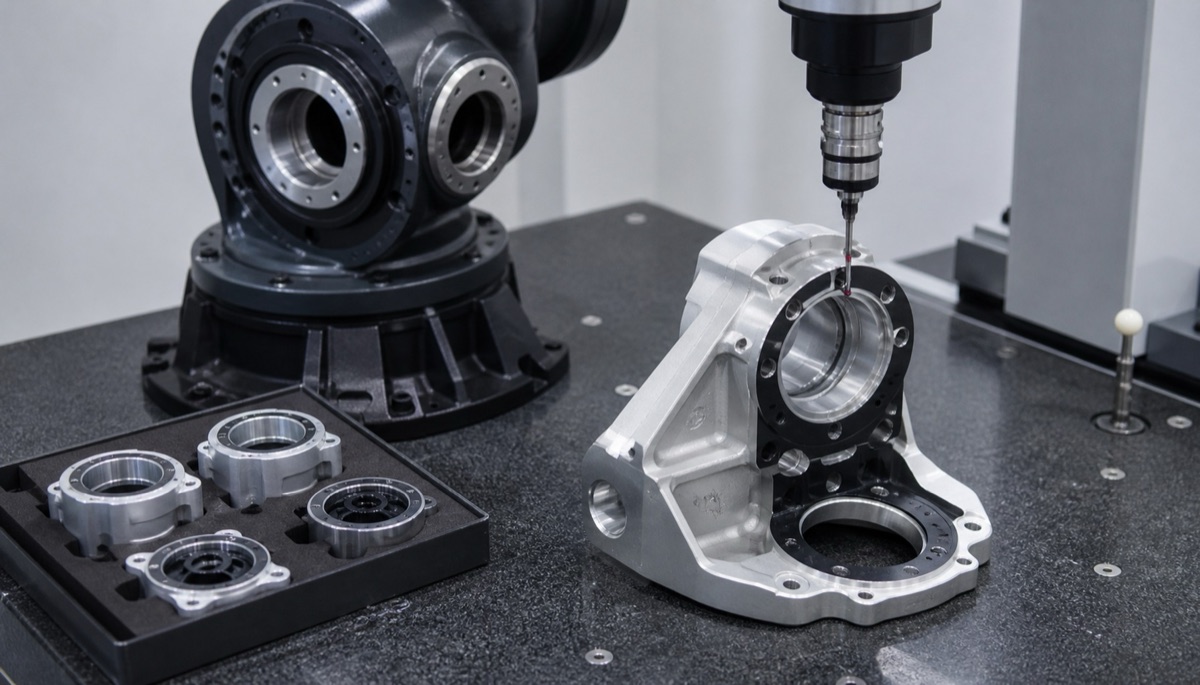
The Same Part Name Can Need Different Process Routes
Two robot joint housings may share a similar name while needing different manufacturing priorities. A collaborative robot housing may focus on weight reduction, visible anodized surfaces, rounded edges and clean cable routing. A high-load industrial joint housing may focus on bearing bores, gearbox interfaces and thick contact faces.
The collaborative version may require controlled thin-wall machining, soft jaws, careful deburring and surface-treatment allowance. The industrial version may require roughing and finishing separation, precision boring, stronger datum control and more detailed CMM records.
Both are robot parts, but the control logic is different. The application scenario should decide which features receive the tightest tolerance, which faces need special finishing and which dimensions must be documented in inspection.
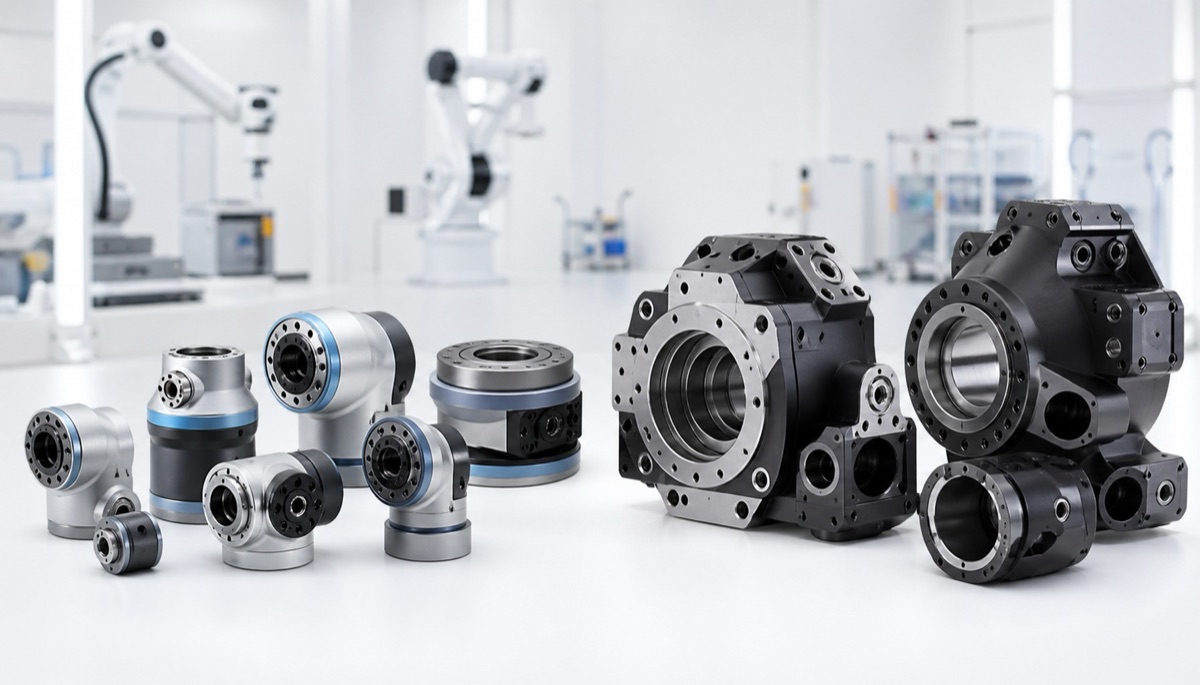
What to Define Before Sending RFQ Files
State whether the part is used in a collaborative robot, industrial robot, humanoid robot module, actuator, joint, base or end-effector system.
Separate functional surfaces: bearing bores, locating holes, mounting faces, contact edges, cosmetic faces and cable channels should not share the same priority.
Choose material by strength, stiffness, weight, machining stability and cost, not by weight alone.
Confirm surface treatment before machining. Anodizing, plating, hard coating and blasting can affect final size, friction, masking and appearance.
Use first-article inspection and assembly feedback to prepare for pilot batches or repeat orders.
Common Misconceptions
One misconception is that collaborative robot parts only need to be light. If lightweight design sacrifices stiffness, positioning and service life can suffer.
Another misconception is that industrial robot parts should simply be thicker. Added mass does not automatically improve rigidity if the structure and load path are not designed well.
A third misconception is using the same inspection focus for both robot types. Collaborative parts may require more attention to visible surfaces and touch-safe edges, while industrial parts often require deeper control of load-bearing features.
FAQ
What matters most in collaborative robot parts machining?
Lightweight design, low inertia, rounded edges, clean deburring, appearance consistency, assembly ease and safe human contact are common priorities.
What matters most in industrial robot parts machining?
High stiffness, impact resistance, bearing bores, gearbox interfaces, face runout, long-term wear resistance and batch stability are common priorities.
Can both robot types use aluminum alloys?
Yes, but the reason may differ. Collaborative robots often use aluminum for lightweight and appearance, while industrial robots must also validate strength, wall thickness and bearing-seat stability.
How does surface treatment differ?
Collaborative parts often focus on anodizing, blasting and touch feel. Industrial parts often focus on corrosion resistance, wear resistance, hard coating, black oxide or nickel plating.
Can OEMach advise on robot part machining strategy?
Yes. OEMach can review the robot application and suggest material, workholding, surface treatment, tolerance and inspection strategies for prototypes and small batches.
Summary
Collaborative and industrial robot parts differ because their load, safety, weight, appearance and durability requirements differ. Collaborative robot machining emphasizes lightweight design, smooth edges and visible finish, while industrial robot machining emphasizes stiffness, bearing features and long-term repeatability.
Ready to get a quote for your CNC machined parts?
Submit your engineering drawings to qiancj@oemach.com. We support prototype sampling and small-batch production with strict tolerance control.